The Italian communes
about 1100 Central and northern Italy (for example Pisa, Genoa, Milan)
In short
In many towns of central and northern Italy the richest and most active citizens decided to govern themselves, without obeying the bishop or the count. So the communes were born, led at first by elected consuls and later by a podestà, a chief magistrate often called in from another town so that he would be fair. Each commune had its town hall, its own laws and an army of citizens. Rivalries between neighbouring communes were fierce and often led to war.
Why it matters In the communes, many citizens took part in governing their own town for the first time.
Source: Treccani, entry “Comune”
Study card about 4 minutes of reading
The story
Cities that govern themselves
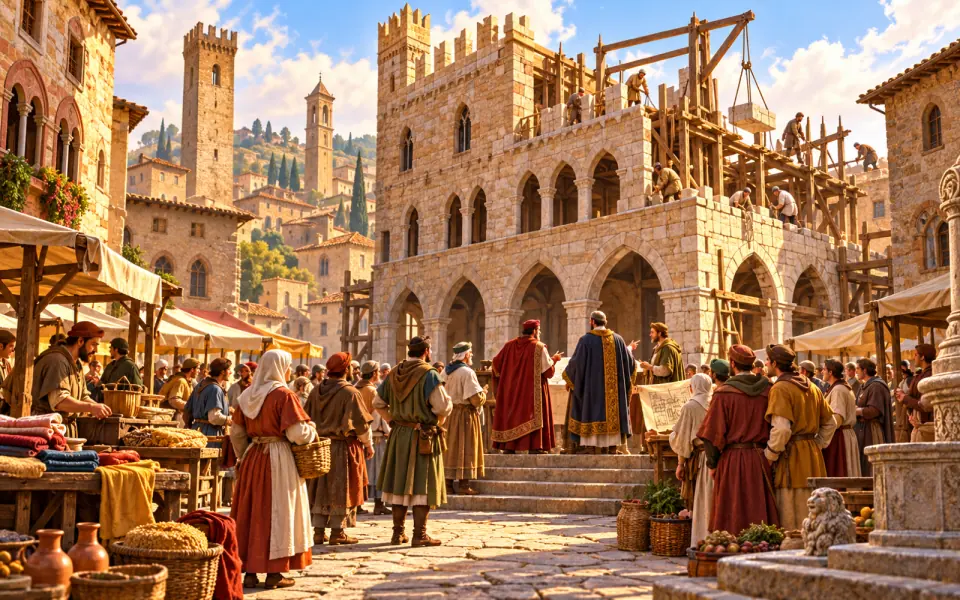
In northern and central Italy in the Middle Ages, the towns were the liveliest part of the country. Above them, at least on paper, were the German kings and emperors, and the pope. But the king and the emperor were usually far away, beyond the Alps, and the bishops or counts who governed for them did not always manage to make themselves obeyed. Towards the end of the 11th century, the richest and most important citizens, that is, merchants, craftsmen and minor nobles, began to agree among themselves to organise themselves.
They made an oath, the “coniuratio”, by which they promised to help one another and to defend the interests of the town. That association of citizens took the name “commune”. The first communes were formed between the end of the 11th and the beginning of the 12th century, in towns such as Pisa, Genoa, Milan, Asti, Lucca, Bologna and others. There is no exact day of birth: they came into being slowly, without revolutions.
Consuls, councils and podestàs
The communes were led by magistrates called “consuls”, usually two or more, chosen every year from the most prominent families. Because their term was short, they could not hold power for too long. Alongside them were councils of citizens who discussed and voted on decisions, and a general assembly, the “arengo”, in which all the men who had the right to vote gathered in the square or in church. Women, the poor and foreigners were excluded.
With the quarrels between families, which sometimes ended in battles in the street, many communes, from the end of the 12th century, turned to a “podestà”, that is, an outsider magistrate, chosen for one year and paid by the town, who had to govern impartially. The podestà arrived with his retinue of judges and officials, and could have no relatives in the town.
The towns built the symbols of the new power: the town hall, the tower with the bell to call the citizens together, walls, squares and fountains. Rich families raised tall stone towers, which served to defend themselves and to show off their power: a few can still be seen at San Gimignano.
Against Barbarossa
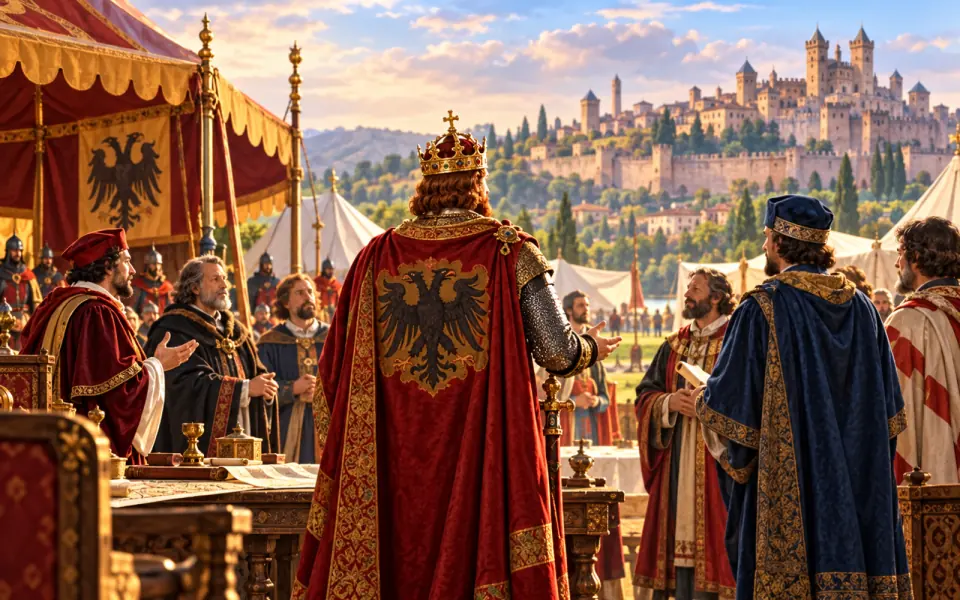
The emperors did not accept the independence of the communes. Frederick Barbarossa, from 1154, came down into Italy several times to bring them back under control, and destroyed Milan in 1162. In reaction, in 1167 many towns of the north, which had previously fought one another, joined together in the Lombard League. On 29 May 1176, at Legnano, near Milan, the army of the League defeated the imperial one. In 1183, with the Peace of Constance, the emperor recognised the right of the communes of the League to govern themselves, make laws and have their own militias, keeping the supreme sovereignty, with the investiture of the consuls.
Each commune went to war with its carroccio, a great cart drawn by oxen, carrying the altar, the bells and the banner of the town. It was the symbol of the town's honour: losing it in battle was a terrible disgrace, and so the soldiers defended it to the end. At Legnano, according to tradition, the bravest foot soldiers gathered around the carroccio.
An age of splendour and quarrels
In the communes the guilds, banking, taxation and the first public schools were born. The towns were adorned with churches and palaces. But there were constant divisions: the communes made war on one another, and inside each town rival parties clashed, such as the Guelphs, close to the pope, and the Ghibellines, close to the emperor. From the 1200s, power often passed to one family or one lord: the signorie replaced the communes.
Why it happened
The power of the empire was distant and weak in Italy, and economic growth created a rich class of merchants and craftsmen able to organise themselves. The towns, protected by their walls, were already strong from a military point of view.
Common interests, such as defending trade and protecting the citizens' property, pushed them to create lasting institutions, which could decide quickly and make the rules respected.
What changed
The Italian communes opened the way to a form of government in which citizens take part in decisions, even if in a limited way. Many scholars consider them a forerunner of modern political life.
The independence of the communes encouraged an exceptional flowering of art, trade and culture: Dante, Giotto, the Florentine banks and the Renaissance came from it. Italy, however, remained divided into many city-states, and for this reason did not have a large unified state until the 19th century.
The rise of the maritime republics, such as Venice, Genoa, Pisa and Amalfi, shows how towns could become powers of the Mediterranean.
Key people and places
People
- Frederick Barbarossa
- Emperor from 1155 to 1190 (about 1122-1190): he tried to subdue the Italian communes.
- Alberto da Giussano
- Figure linked to the tradition of Legnano: more legend than certain history.
- Pope Alexander III
- Pope from 1159 to 1181: ally of the Lombard League.
Places
- Pisa
- One of the first towns to give itself consuls, and a maritime republic.
- Genoa
- Ligurian city that in 1099 formed the “compagna”, an association of its citizens.
- Legnano
- Small Lombard town where in 1176 the League defeated Barbarossa.
Good to know
- The magistrates of the communes, the consuls, stayed in office for only one year.
- The podestà had to be an outsider, so as not to favour any family.
- San Gimignano still keeps many of its medieval towers.
- The Peace of Constance dates from 1183.
- The name “commune” comes from the oath between citizens, called “coniuratio”.
Find out more
- Wikipedia, “Medieval commune” en.wikipedia.org
- Wikipedia, “Lombard League” en.wikipedia.org
- Wikipedia, “Battle of Legnano” en.wikipedia.org
- Wikipedia, “Peace of Constance” en.wikipedia.org
Related events
- The growth of medieval townsabout 1050 · Late Middle AgesThe growth of towns made the birth of the communes possible.
- Frederick Barbarossa1155 · Late Middle AgesFrederick Barbarossa fought against the communes.
- The University of Bolognaabout 1088 · Late Middle AgesThe universities were born to train the jurists of the communes.
- The gold florin1252 · Late Middle AgesThe gold florin was the coin of the commune of Florence.
Before and after, in the era “Late Middle Ages”
Event 6 of 25
 BeforeThe growth of medieval townsabout 1050
 BeforeThe East–West Schism1054
 BeforeThe Bayeux Tapestryabout 1070
 BeforeThe University of Bolognaabout 1088
 BeforeThe First Crusade1096–1099
- You are hereThe Italian communesabout 1100
 AfterRomanesque cathedralsabout 1100
 AfterWatermills and windmillsabout 1100
 AfterGothic style at Saint-Denis1144
 AfterHildegard of Bingenabout 1150
 AfterPaper arrives in Europeabout 1150
 AfterFrederick Barbarossa1155
 AfterFrancis of Assisiabout 1182
 AfterFibonacci and the Liber abaci1202
 AfterMagna Carta1215
 AfterThe gold florin1252
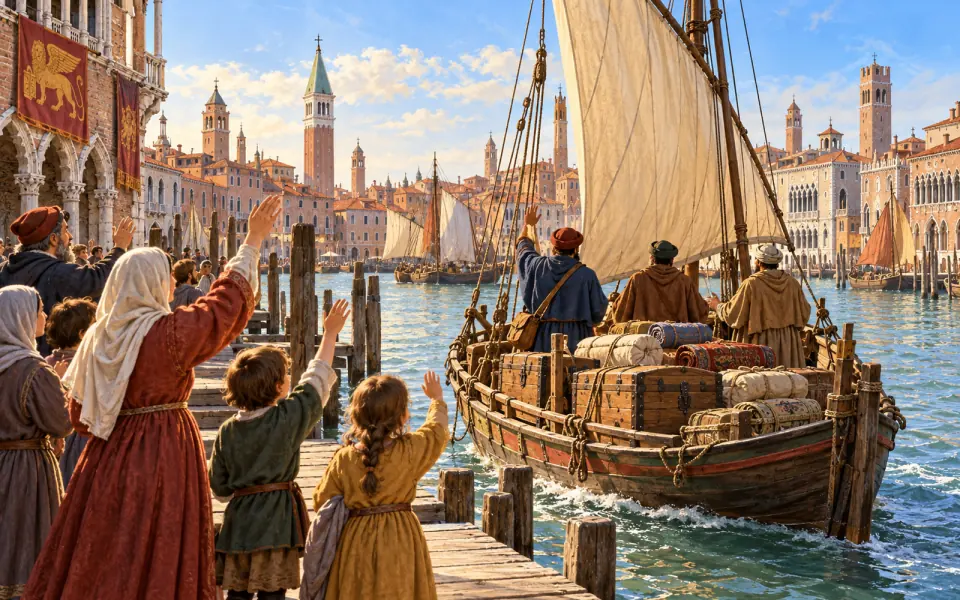 AfterMarco Polo sets off for Asia1271
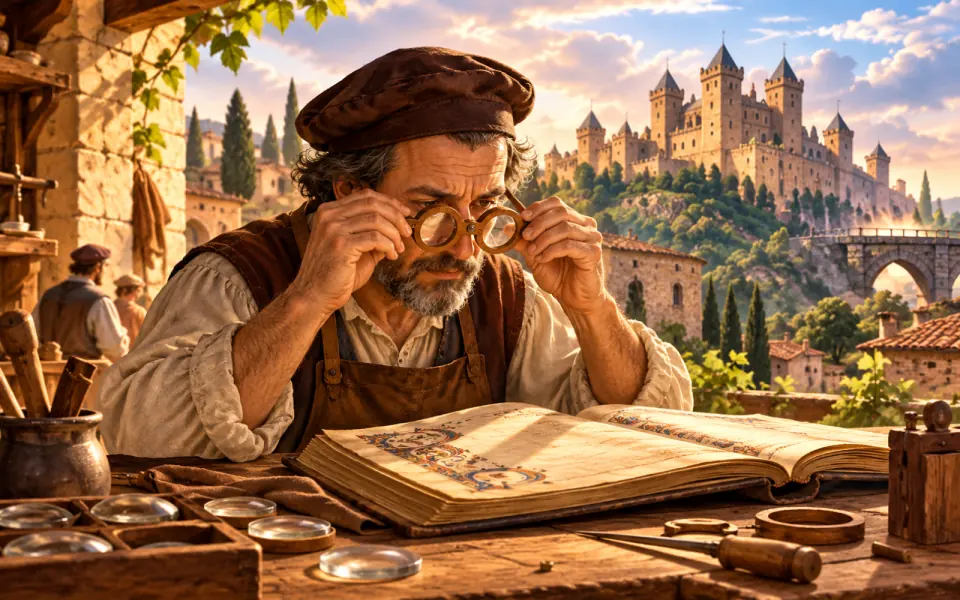 AfterSpectaclesabout 1286
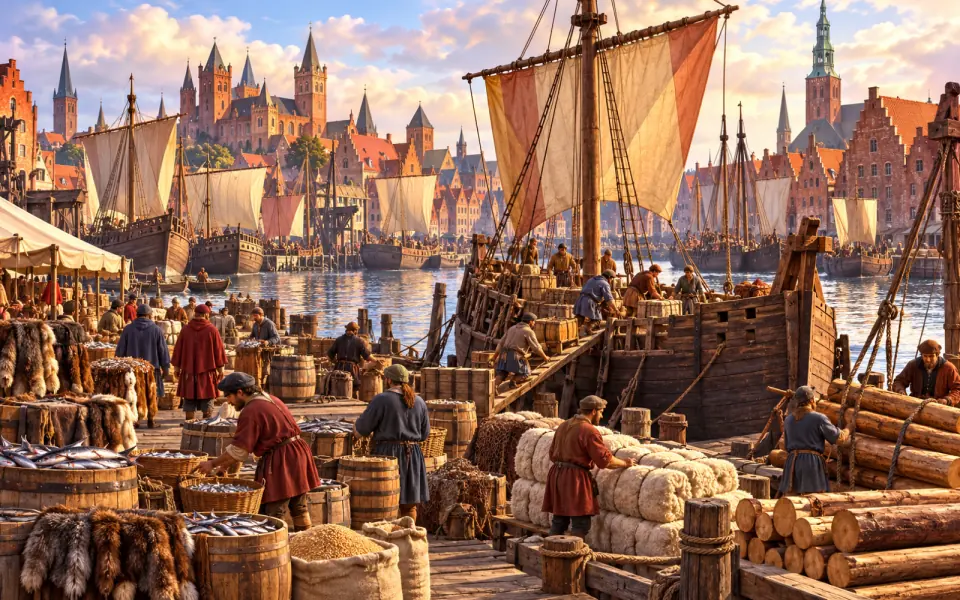 AfterThe Hanseatic League and northern tradeabout 1300
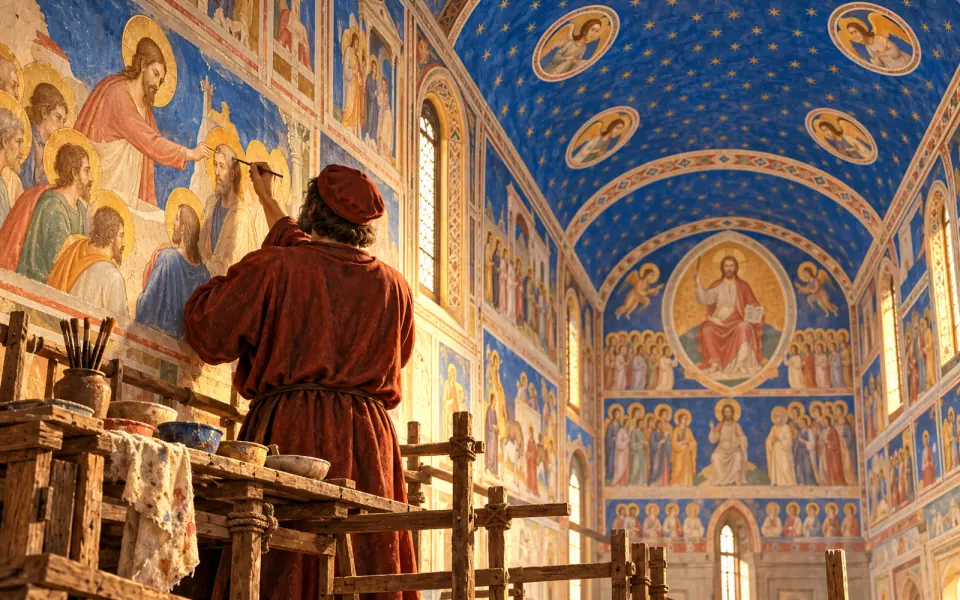 AfterGiotto paints in Paduaabout 1305
 AfterDante begins the Divine Comedyabout 1307
 AfterThe Hundred Years' War1337–1453
 AfterThe Black Death1347–1352
 AfterPublic mechanical clocksabout 1350
 AfterJoan of Arc1429
Listen / Read next
- Music to read by: Cinematic JourneyEpic film-style music, no lyrics, by Ciro Simone IrmiciSpotifyYouTube Music
Meanwhile, elsewhere in the world
Other events of the era “Late Middle Ages”
- The growth of medieval towns
- The East–West Schism
- The Bayeux Tapestry
- The University of Bologna
- The First Crusade
- Romanesque cathedrals
- Watermills and windmills
- Gothic style at Saint-Denis
- Hildegard of Bingen
- Paper arrives in Europe
- Frederick Barbarossa
- Francis of Assisi
- Fibonacci and the Liber abaci
- Magna Carta
- The gold florin
- Marco Polo sets off for Asia
- Spectacles
- The Hanseatic League and northern trade
- Giotto paints in Padua
- Dante begins the Divine Comedy
- The Hundred Years' War
- The Black Death
- Public mechanical clocks
- Joan of Arc
