Marco Polo sets off for Asia
1271 From Venice to China
In short
Marco Polo was a young Venetian merchant when he set off for Asia with his father Niccolò and his uncle Maffeo. They travelled for years along the Silk Road and reached the court of Kublai Khan, the Mongol emperor of China. Marco stayed in China for about seventeen years and carried out tasks for the emperor. Back home and taken prisoner by the Genoese, he told his travels to Rustichello da Pisa, who wrote them down in the book known in English as The Travels of Marco Polo.
Why it matters The Travels made Asia known to Europeans and inspired travellers and explorers, including Christopher Columbus.
Source: Treccani, entry “Polo, Marco”
Study card about 4 minutes of reading
The story
Venetian merchants at the court of the Great Khan
In the 1200s Asia was almost unknown to Europeans. Then a people of nomadic horsemen, the Mongols, led by Genghis Khan and his descendants, conquered an immense empire, from China to Russia, and made the roads of Asia safer: for a few decades a traveller could go from one side of the continent to the other with relative peace of mind. Merchants and missionaries took advantage of this.
Among them were two Venetian brothers, Niccolò and Matteo Polo. Around 1260 they set out from Constantinople to trade, pushed on into Central Asia and reached the court of the Great Khan Kublai, grandson of Genghis Khan and emperor of China. Kublai received them with curiosity and asked them to return with an ambassador of the pope and with oil from the lamp of the Holy Sepulchre. In 1269 they were back in Venice.
The journey
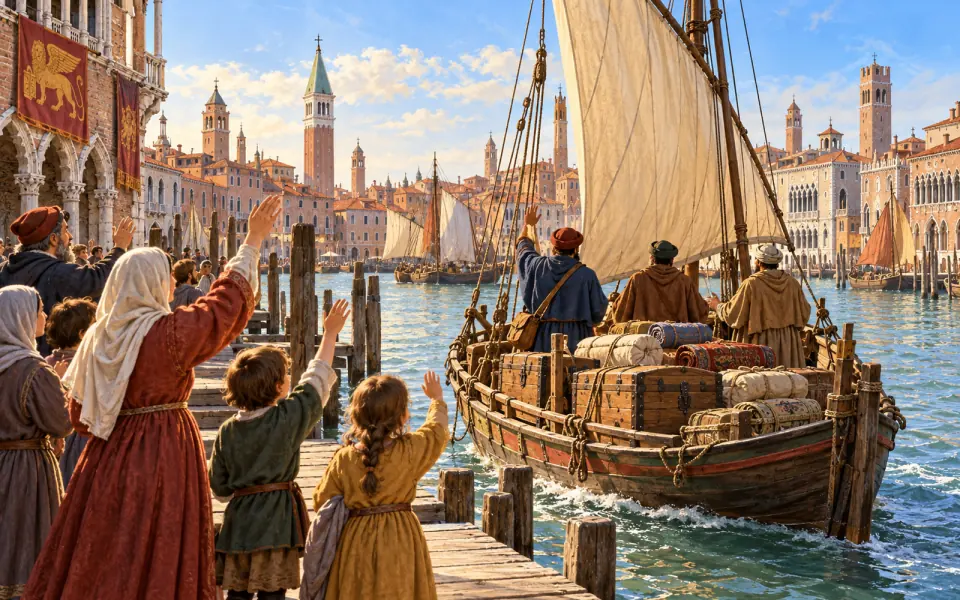
Marco, Niccolò's son, was born in Venice in 1254. His father had met him only when he was grown up, because he had left before he was born. In 1271, when Marco was seventeen, the three Polos set out again from Venice for China. They passed through Acre, Anatolia, Persia, the desert, the Pamir mountains and the oases of the Silk Road. The journey lasted more than three years: they stopped at Kashgar and Dunhuang and at last, around 1275, reached Kublai's summer palace.
Marco was a bright young man, learned the languages and customs of the Mongols, and made himself valued by the khan. He stayed at his court for about seventeen years, and was sent on missions to various parts of the empire, perhaps as an inspector or official. He saw enormous cities, such as Hangzhou, canals, bridges, markets and ships bigger than European ones.
The return
In 1291-1292 the Polos obtained permission to return: they were to escort a Mongol princess, Kökečin, who was going to marry a prince of Persia. They set out by sea with a fleet, passing Sumatra, Ceylon and India, a voyage lasting over two years, during which many of the crew died. After leaving the princess in Persia, they returned to Venice in 1295, after twenty-four years away. It is said that nobody recognised them, so changed were they.
The book
A few years later, in 1298, Marco was perhaps among the fighters in the naval battle of Curzola, between Venice and Genoa, and was taken prisoner by the Genoese. In prison in Genoa he met a writer from Pisa, Rustichello, to whom he dictated his memories. From this came “The Travels of Marco Polo” (in Italian “Il Milione”), originally titled “Devisement du monde”, that is, “Description of the World”, written in Old French. The book describes the cities, peoples and products of Asia, paper money, coal that burns like wood, the postal service with relay horses, the spice islands and Japan, which he called Cipangu.
The book was a great success, and was copied in hundreds of manuscripts and translated into many languages. Many people, however, judged it exaggerated. It is said that on his deathbed, in 1324, Marco declared that he had not told half of what he had seen.
Did he really see everything?
Even today some scholars doubt that Marco reached China: in the book the Great Wall, tea, printing with type and chopsticks are missing. Others reply that many details are accurate and that the book contains information that nobody in Europe could have invented. Most historians think he really was in Asia, even if he perhaps reported many things heard from others.
Why it happened
The Mongol peace, the pax Mongolica, made travel in Asia possible, and trade with the East made Italian merchants, above all Venetians and Genoese, ready for long journeys. The Polo family were looking for business, and found it.
Kublai Khan was curious about foreigners and willingly employed them, because he did not trust the local nobles: an intelligent young European was useful to his government.
What changed
The Travels opened Europeans' eyes to Asia. For the first time there was a long and detailed account of the lands, peoples, goods and customs of the East. Maps such as Fra Mauro's world map and the Catalan Atlas of 1375 used its information.
The book inspired the explorers of the following centuries. Christopher Columbus owned a copy, full of notes, and the Portuguese too looked for the lands described by Polo. Columbus wanted to reach Cipangu, that is, Japan.
Marco Polo has become a symbol of the meeting of civilisations. His account shows how extensive the contacts between Europe and Asia already were in the 1200s.
Key people and places
People
- Marco Polo
- Venetian merchant and traveller (1254-1324): he told of his travels in Asia.
- Niccolò and Matteo Polo
- Marco's father and uncle: the first to reach Kublai's court.
- Kublai Khan
- Great Khan of the Mongols and emperor of China (1215-1294): he welcomed the Polos.
- Rustichello of Pisa
- Writer from Pisa: he collected and wrote down Marco's account in prison.
Places
- Venice
- Home town of Marco and the Polos, a great trading power.
- Khanbaliq (now Beijing)
- Kublai Khan's winter capital.
- Silk Road
- Network of roads and caravan routes that crossed Asia.
Good to know
- Marco Polo was away from Venice for twenty-four years.
- The Travels was written in Old French, not in Italian.
- Marco Polo described paper money to Europeans in great detail.
- Columbus owned a copy of the Travels full of notes.
- The book was dictated in prison in Genoa.
Find out more
- Wikipedia, “Marco Polo” en.wikipedia.org
- Wikipedia, “The Travels of Marco Polo” en.wikipedia.org
- Wikipedia, “Kublai Khan” en.wikipedia.org
- Wikipedia, “Silk Road” en.wikipedia.org
Related events
- The First Crusade1096–1099 · Late Middle AgesThe Crusades had opened contacts with the East.
- Fibonacci and the Liber abaci1202 · Late Middle AgesFibonacci too learned from trading journeys in the Mediterranean.
- The Hanseatic League and northern tradeabout 1300 · Late Middle AgesThe great trade routes also linked northern Europe.
- The gold florin1252 · Late Middle AgesItalian merchants used the florin and bills of exchange.
Before and after, in the era “Late Middle Ages”
Event 17 of 25
 BeforeThe growth of medieval townsabout 1050
 BeforeThe East–West Schism1054
 BeforeThe Bayeux Tapestryabout 1070
 BeforeThe University of Bolognaabout 1088
 BeforeThe First Crusade1096–1099
 BeforeThe Italian communesabout 1100
 BeforeRomanesque cathedralsabout 1100
 BeforeWatermills and windmillsabout 1100
 BeforeGothic style at Saint-Denis1144
 BeforeHildegard of Bingenabout 1150
 BeforePaper arrives in Europeabout 1150
 BeforeFrederick Barbarossa1155
 BeforeFrancis of Assisiabout 1182
 BeforeFibonacci and the Liber abaci1202
 BeforeMagna Carta1215
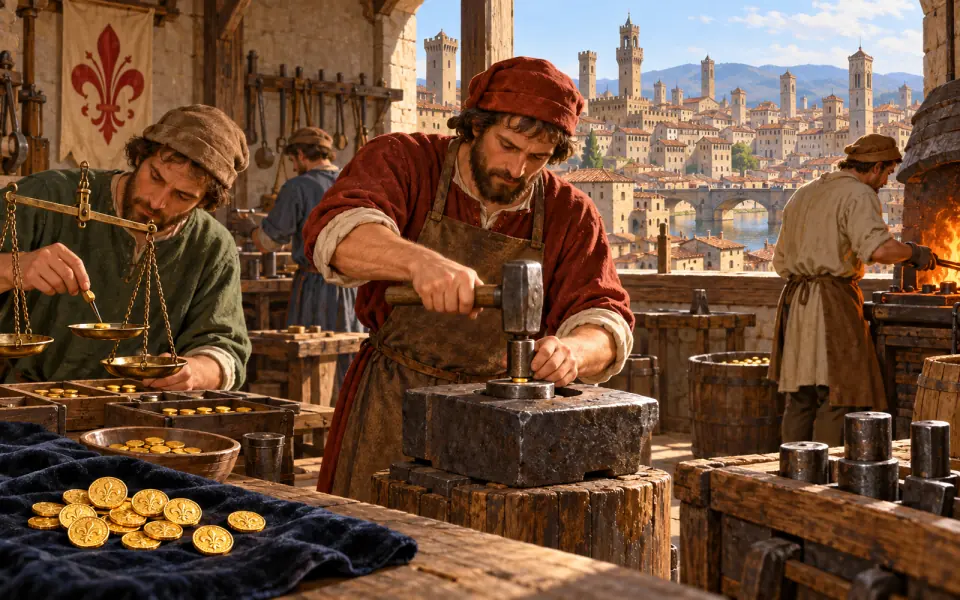 BeforeThe gold florin1252
- You are hereMarco Polo sets off for Asia1271
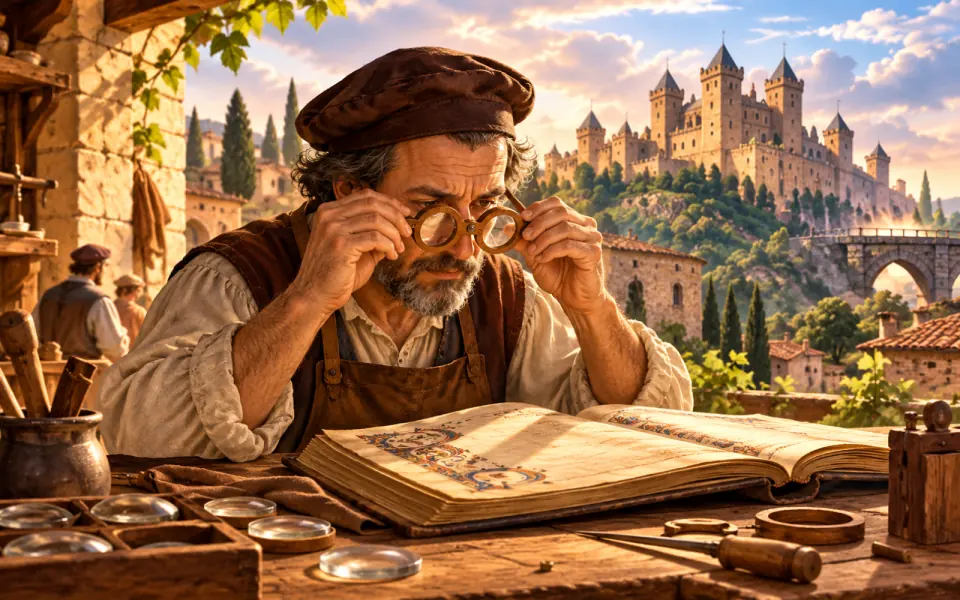 AfterSpectaclesabout 1286
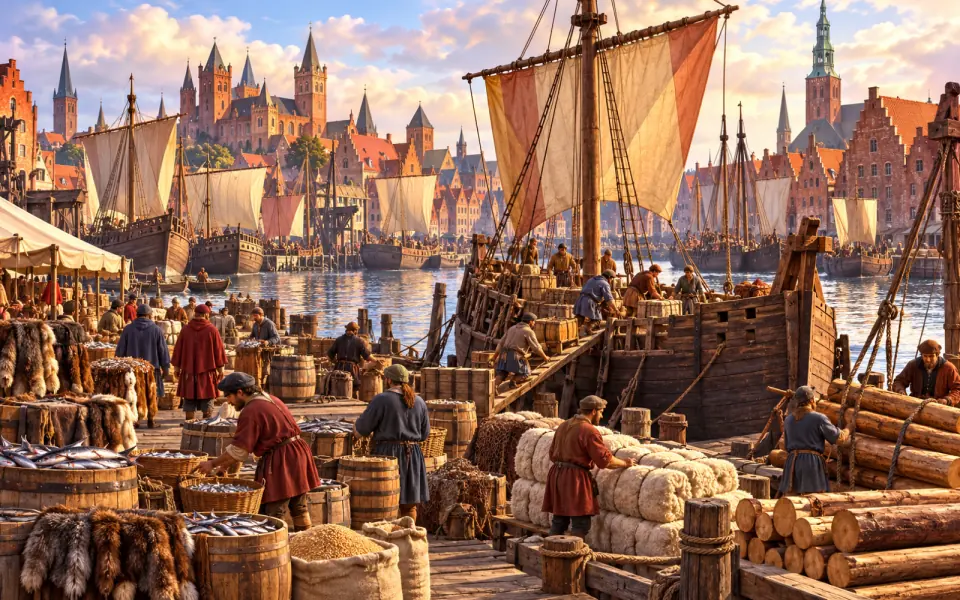 AfterThe Hanseatic League and northern tradeabout 1300
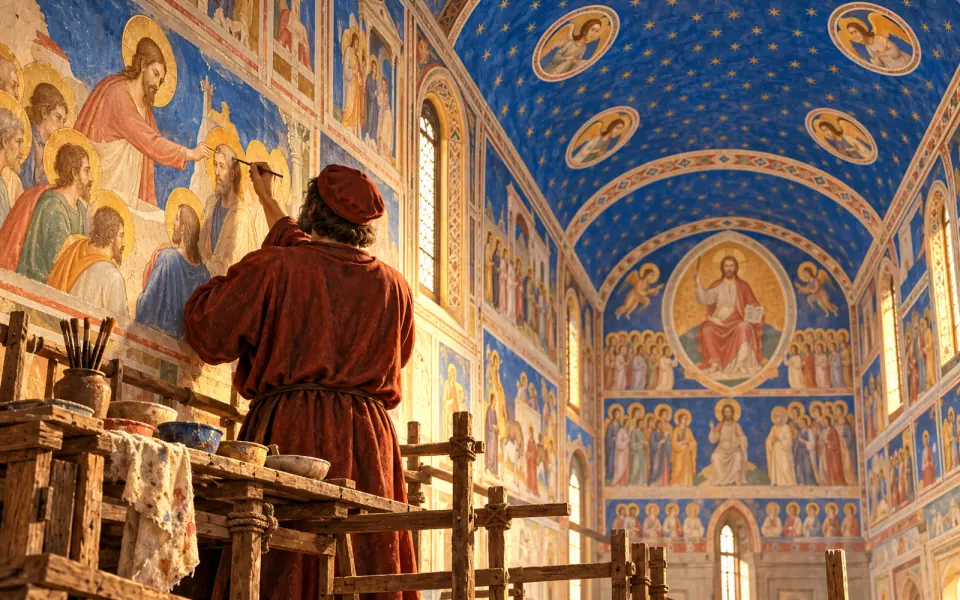 AfterGiotto paints in Paduaabout 1305
 AfterDante begins the Divine Comedyabout 1307
 AfterThe Hundred Years' War1337–1453
 AfterThe Black Death1347–1352
 AfterPublic mechanical clocksabout 1350
 AfterJoan of Arc1429
Listen / Read next
- Music to read by: Cinematic JourneyEpic film-style music, no lyrics, by Ciro Simone IrmiciSpotifyYouTube Music
Meanwhile, elsewhere in the world
Other events of the era “Late Middle Ages”
- The growth of medieval towns
- The East–West Schism
- The Bayeux Tapestry
- The University of Bologna
- The First Crusade
- The Italian communes
- Romanesque cathedrals
- Watermills and windmills
- Gothic style at Saint-Denis
- Hildegard of Bingen
- Paper arrives in Europe
- Frederick Barbarossa
- Francis of Assisi
- Fibonacci and the Liber abaci
- Magna Carta
- The gold florin
- Spectacles
- The Hanseatic League and northern trade
- Giotto paints in Padua
- Dante begins the Divine Comedy
- The Hundred Years' War
- The Black Death
- Public mechanical clocks
- Joan of Arc
