Francis of Assisi
about 1182 Assisi, Umbria
In short
Francis was born in Assisi, in Umbria, the son of a rich cloth merchant. As a young man he dreamt of becoming a knight, but after an illness and a crisis of the spirit he gave everything up to live in poverty and help the weakest. With his companions he founded the order of Friars Minor, who preached as they travelled from village to village. He loved nature and wrote the Canticle of the Creatures, one of the first poems in the Italian language.
Why it matters His message of simplicity and respect for all creatures still speaks to believers and non-believers alike.
Source: Treccani, entry “Francesco d'Assisi, santo”
Study card about 5 minutes of reading
The story
The merchant's son
Francis was born at Assisi, in Umbria, in 1181 or 1182. His father, Pietro di Bernardone, was a rich cloth merchant, and as a young man Francis led a merry life: fine clothes, parties with friends, songs in French, and the dream of becoming a knight. In 1202 he took part in a battle between Assisi and neighbouring Perugia, was taken prisoner and stayed almost a year in a cell. When he came home he was ill, and something in him had changed.
He began to feel dissatisfied with the life he was leading. He started to pray in abandoned little churches. One day, in the ruined church of San Damiano, in front of a crucifix, he seemed to hear a voice saying to him: “Go and repair my house.” He thought it meant that church, and began to restore it with his own hands. To get the money, he sold some of his father's cloth.
“Father, from today my father is in heaven”
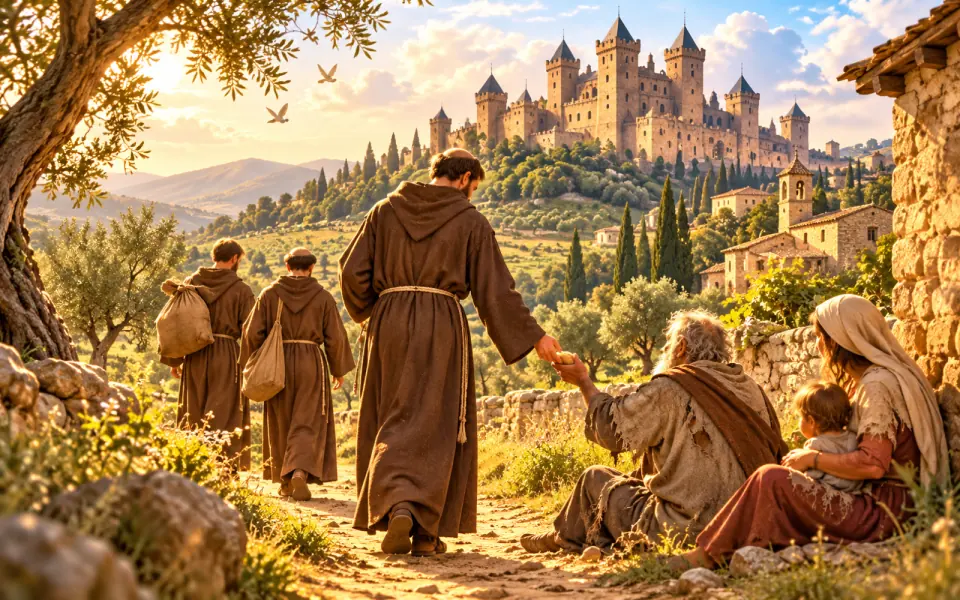
Pietro was furious. He brought his son before the bishop of Assisi, asking for his money back and for him to be cut out of the inheritance. Francis, in 1206, in front of everyone, took off his clothes, gave them back to his father and said he no longer wanted to depend on him, but only on the Father who is in heaven. The bishop covered him with his cloak. From that day Francis chose a life of complete poverty, dressed in a simple rough habit, barefoot, begging for alms.
Soon others followed him. They lived together near Assisi, in the little church of the Porziuncola, working with their hands for the peasants and for the sick, especially for lepers, whom others avoided, and preaching in a simple way. In 1209 or 1210 Francis went to Rome and obtained from Pope Innocent III permission to live by a very short rule, taken from the Gospel. The order of the Friars Minor, later called Franciscans, was born.
In 1212 a young noblewoman of Assisi, Clare, ran away from home to follow him; with other women she founded an order for women, the Poor Clares.
The Canticle of the Creatures
Francis loved nature and animals, and thought of all created things as brothers and sisters. Stories are told about him such as the sermon to the birds and the meeting with a fierce wolf at Gubbio, which he is said to have persuaded to stop attacking people. These are tales that grew out of legend, but they express well his way of looking at the world. In 1223, at Greccio, he prepared the first nativity scene, with living people and animals.
In 1219 he even went to Egypt, where the crusaders were besieging Damietta, and met the sultan al-Malik al-Kamil: he wanted to preach peace. He was received with respect and came back safe and sound. In 1224, on Mount La Verna, according to his biographers, he received the stigmata, that is, the marks of Jesus's wounds on his body.
Towards the end of his life, almost blind and ill, he composed the “Canticle of the Creatures”, or “Canticle of Brother Sun”, one of the first poetic texts of Italian literature written in the vernacular, that is, in the everyday language and not in Latin. In it he praised God for the sun, the moon, the wind, water, fire and “our sister Mother Earth”. He died at the Porziuncola on 3 October 1226, aged forty-four. Two years later he was proclaimed a saint.
His body was carried to the basilica built in his honour and, for fear that it might be stolen, was hidden so well that the friars found it only in 1818, after long searching. Today the tomb is in the crypt of the basilica at Assisi, and every year many visitors come to it from all over the world.
Why it happened
In the 1200s towns had grown and there was a sharp gap between rich merchants and the poor. Many Christians, seeing the wealth of certain bishops and monasteries, wished for a simpler Church, close to the Gospel.
Francis, who knew the world of money well from having grown up in it, was able to offer an alternative that attracted young people, without clashing with the Church. His sincere and joyful character did the rest.
What changed
The mendicant orders, such as the Franciscans and the Dominicans, changed religious life: the friars did not live shut away in monasteries but in the towns, among the people, and they preached, taught and cared for the sick. Many of them became professors in the universities.
Art and literature were influenced: the stories of Francis were painted by Giotto and his followers, and the Canticle opened the way to poetry in the vernacular, as far as Dante. The great basilica of Assisi, begun in 1228, is one of the most visited places in Italy.
Francis is now patron saint of Italy (since 1939) and, for many, a symbol of peace and respect for the environment. In 2013 a pope chose his name.
Key people and places
People
- Francis of Assisi
- Friar and saint (1181/82-1226): he founded the order of the Friars Minor.
- Pietro di Bernardone
- Cloth merchant of Assisi, Francis's father.
- Clare of Assisi
- Founder of the Poor Clares (1193/94-1253): she followed Francis at the age of eighteen.
- Innocent III
- Pope from 1198 to 1216: he gave verbal approval to the Franciscan rule.
- Al-Malik al-Kamil
- Sultan of Egypt (about 1180-1238): he received Francis in 1219.
Places
- Assisi
- Umbrian town where Francis was born and where he is buried.
- Porziuncola
- Little church near Assisi, cradle of the Franciscan order.
- La Verna (Tuscany)
- Mountain where, in 1224, Francis received the stigmata.
Good to know
- At Greccio, in 1223, Francis set up the first nativity scene with real people and animals.
- The “Canticle of the Creatures” is one of the first poetic texts written in vernacular Italian.
- Francis went to Egypt and met a sultan during the Fifth Crusade.
- He has been patron saint of Italy since 1939.
- He took off his clothes in front of the bishop of Assisi to give up his inheritance.
Find out more
- Wikipedia, “Francis of Assisi” en.wikipedia.org
- Wikipedia, “Canticle of the Sun” en.wikipedia.org
- Wikipedia, “Clare of Assisi” en.wikipedia.org
- Wikipedia, “Basilica of Saint Francis of Assisi” en.wikipedia.org
Related events
- Giotto paints in Paduaabout 1305 · Late Middle AgesGiotto painted stories of Saint Francis.
- Dante begins the Divine Comedyabout 1307 · Late Middle AgesDante spoke of Francis in the Paradiso.
- The First Crusade1096–1099 · Late Middle AgesFrancis met the sultan during a crusade.
- The growth of medieval townsabout 1050 · Late Middle AgesFrancis lived in the world of the growing towns.
Before and after, in the era “Late Middle Ages”
Event 13 of 25
 BeforeThe growth of medieval townsabout 1050
 BeforeThe East–West Schism1054
 BeforeThe Bayeux Tapestryabout 1070
 BeforeThe University of Bolognaabout 1088
 BeforeThe First Crusade1096–1099
 BeforeThe Italian communesabout 1100
 BeforeRomanesque cathedralsabout 1100
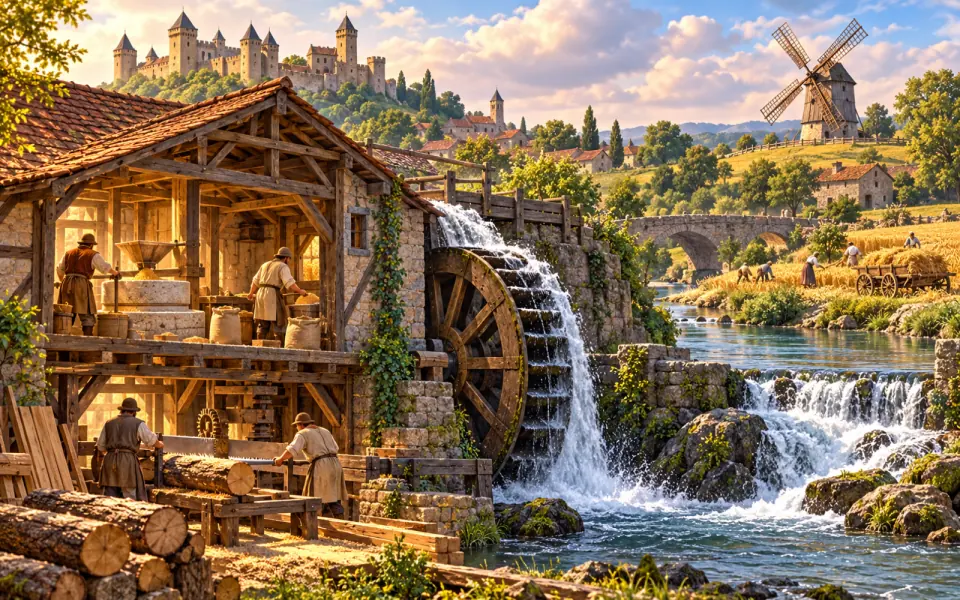 BeforeWatermills and windmillsabout 1100
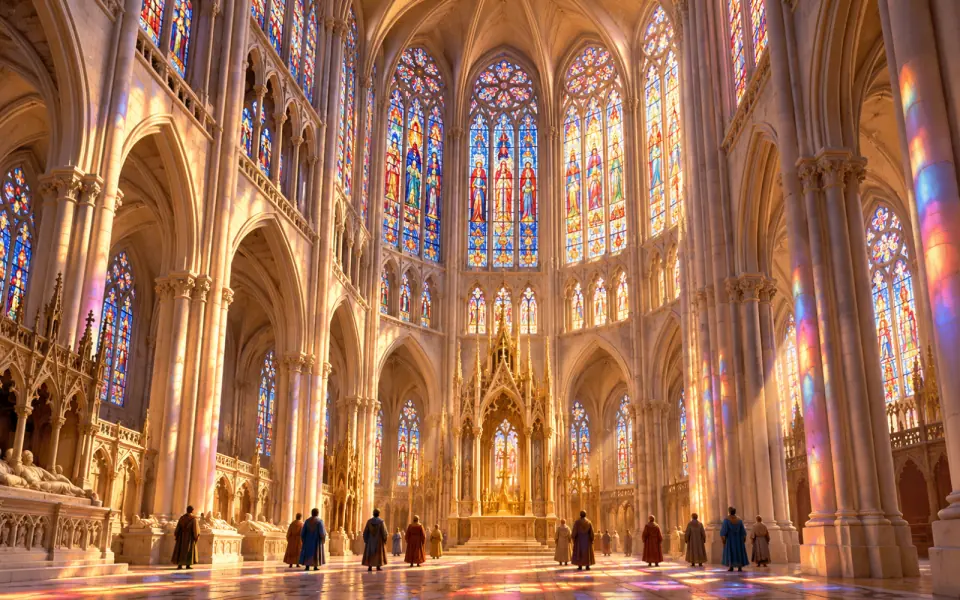 BeforeGothic style at Saint-Denis1144
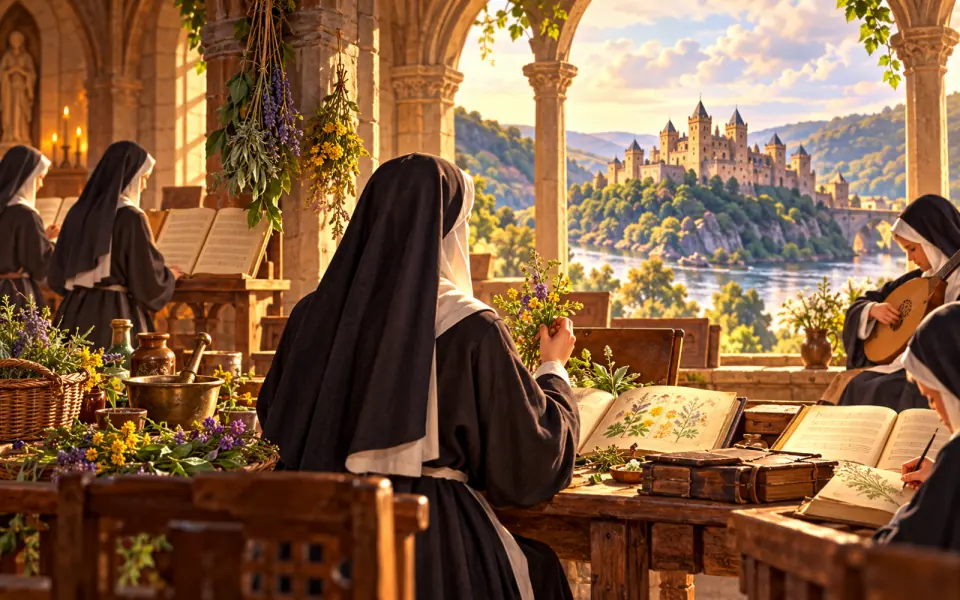 BeforeHildegard of Bingenabout 1150
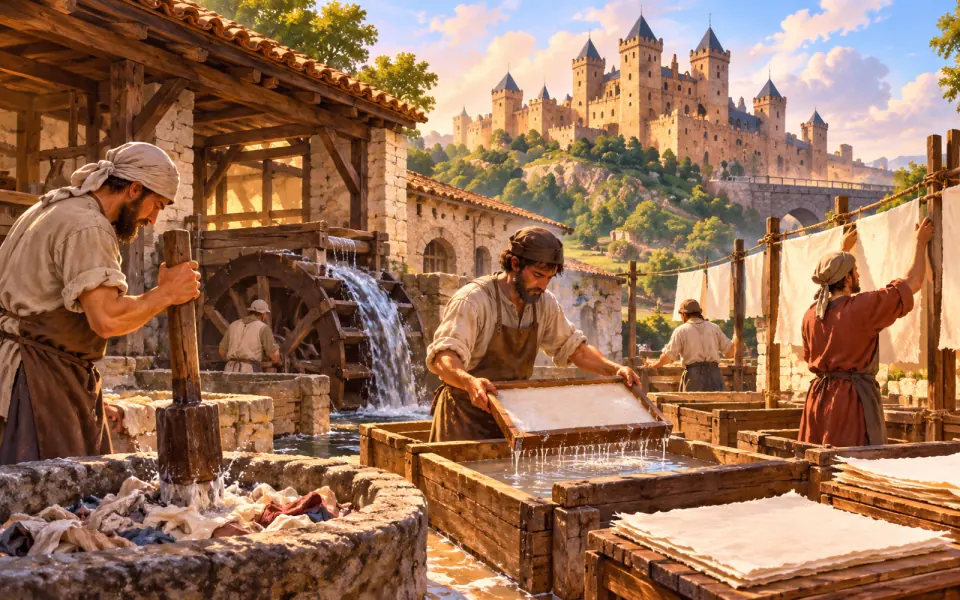 BeforePaper arrives in Europeabout 1150
 BeforeFrederick Barbarossa1155
- You are hereFrancis of Assisiabout 1182
 AfterFibonacci and the Liber abaci1202
 AfterMagna Carta1215
 AfterThe gold florin1252
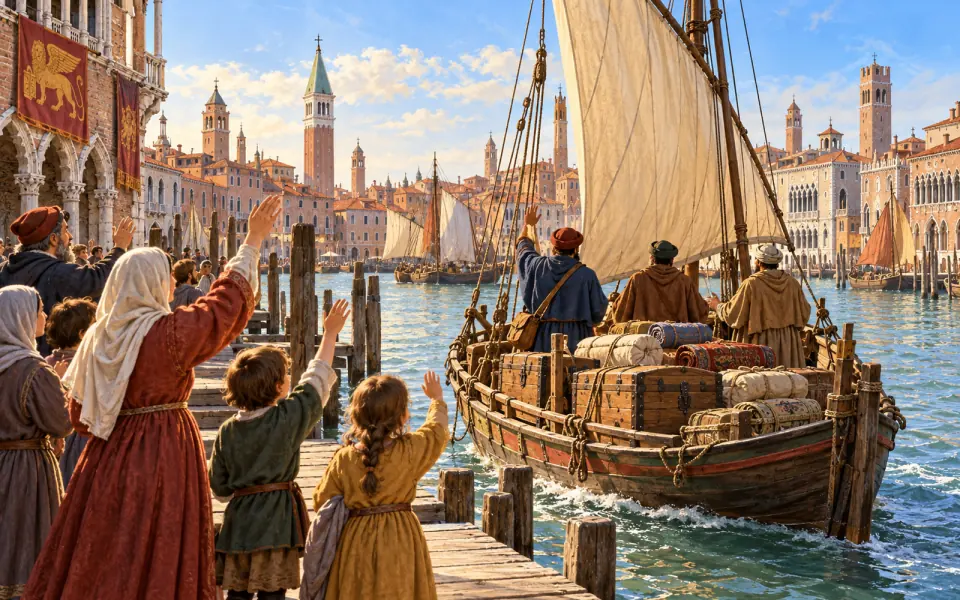 AfterMarco Polo sets off for Asia1271
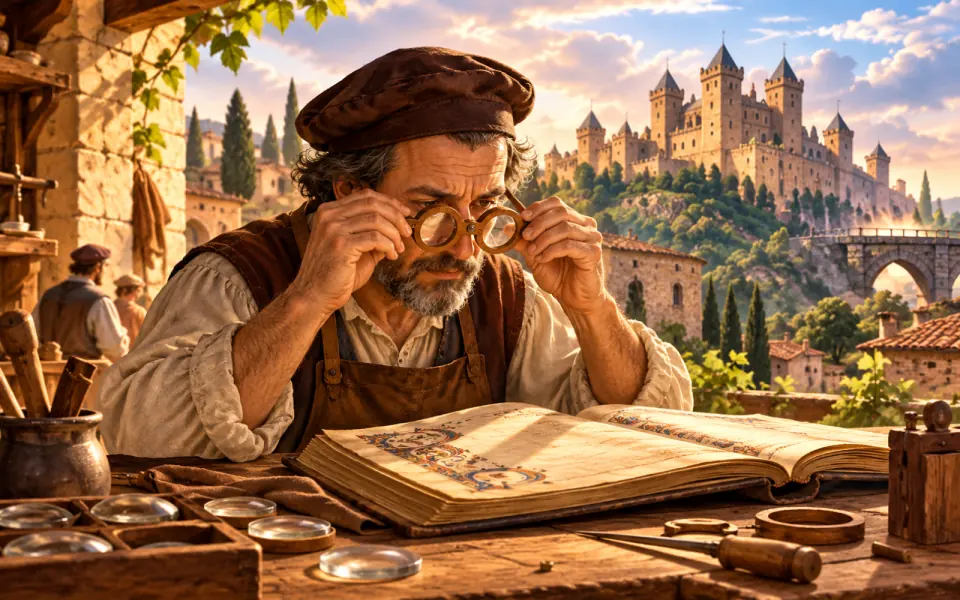 AfterSpectaclesabout 1286
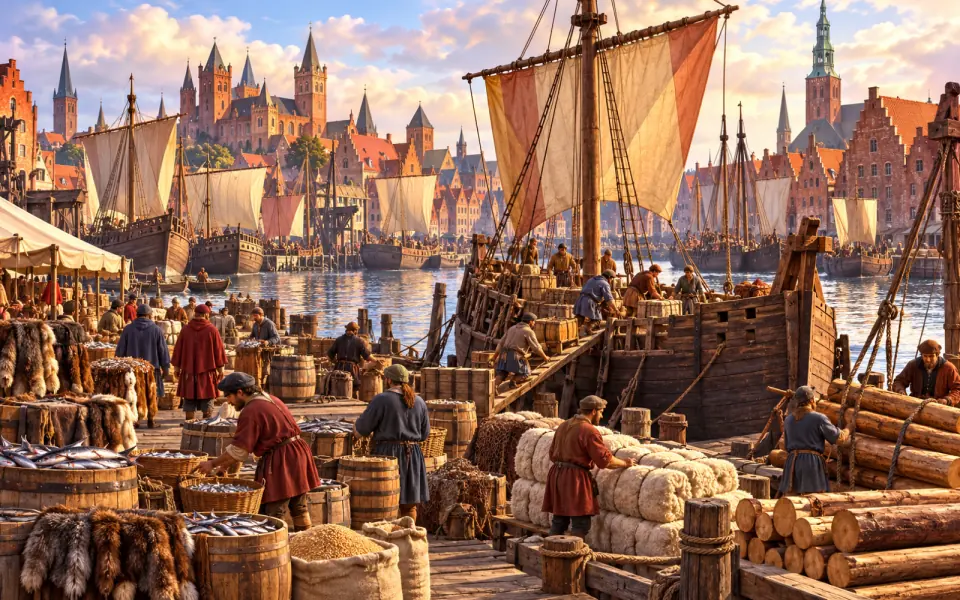 AfterThe Hanseatic League and northern tradeabout 1300
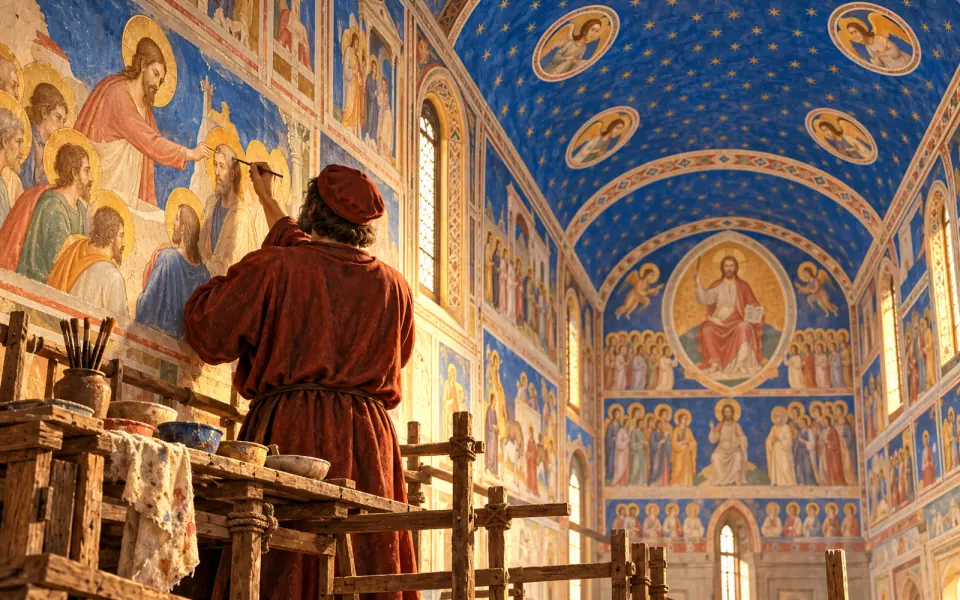 AfterGiotto paints in Paduaabout 1305
 AfterDante begins the Divine Comedyabout 1307
 AfterThe Hundred Years' War1337–1453
 AfterThe Black Death1347–1352
 AfterPublic mechanical clocksabout 1350
 AfterJoan of Arc1429
Listen / Read next
- Music to read by: Cinematic JourneyEpic film-style music, no lyrics, by Ciro Simone IrmiciSpotifyYouTube Music
Meanwhile, elsewhere in the world
Other events of the era “Late Middle Ages”
- The growth of medieval towns
- The East–West Schism
- The Bayeux Tapestry
- The University of Bologna
- The First Crusade
- The Italian communes
- Romanesque cathedrals
- Watermills and windmills
- Gothic style at Saint-Denis
- Hildegard of Bingen
- Paper arrives in Europe
- Frederick Barbarossa
- Fibonacci and the Liber abaci
- Magna Carta
- The gold florin
- Marco Polo sets off for Asia
- Spectacles
- The Hanseatic League and northern trade
- Giotto paints in Padua
- Dante begins the Divine Comedy
- The Hundred Years' War
- The Black Death
- Public mechanical clocks
- Joan of Arc
