Era 8 of 12 · from 1000 to 1453
Late Middle Ages
The Late Middle Ages run from the year 1000 to the fall of Constantinople, in 1453. In Europe the population grows, towns fill with merchants and craftsmen, and in Italy the communes are born. Great cathedrals are built, first Romanesque and then Gothic, and the first universities open. Merchants like Marco Polo travel all the way to China, and inventions such as spectacles and mechanical clocks appear. There are some very hard times too, such as the Crusades, the Hundred Years' War and the Black Death.
In Italian schools it is usually studied in lower secondary year 1

The 25 events, in time order
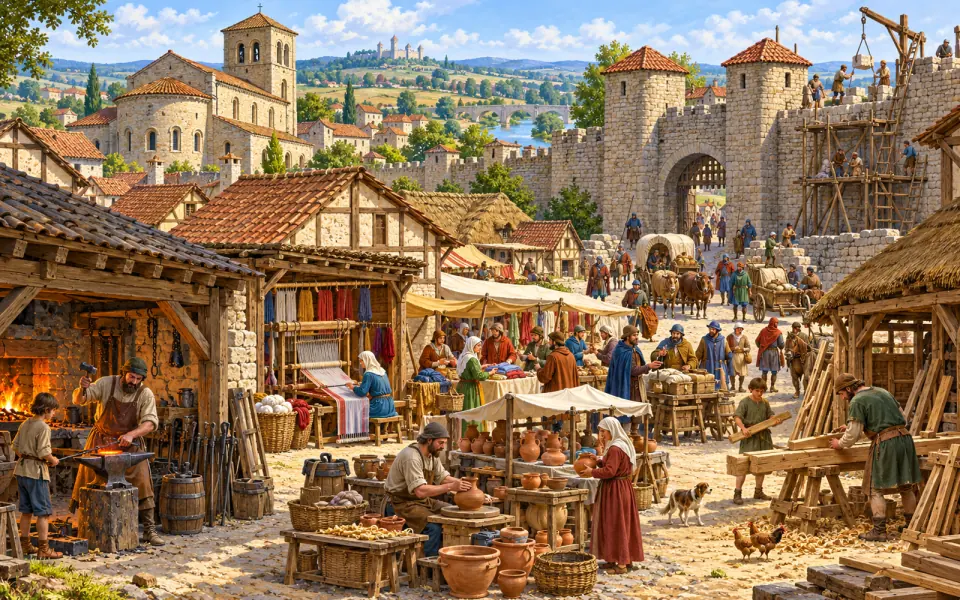 daily lifeThe growth of medieval townsabout 1050
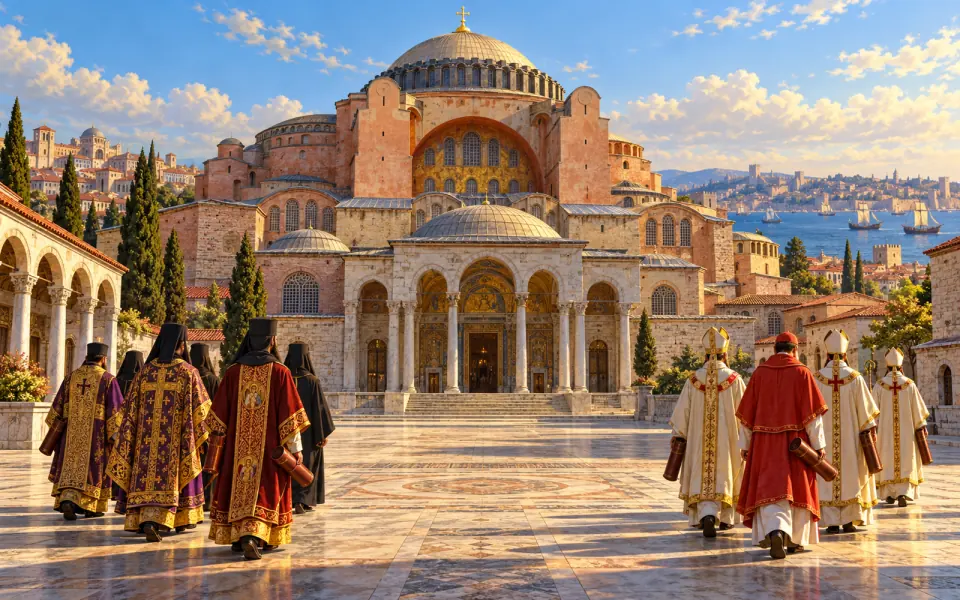 politicsThe East–West Schism1054
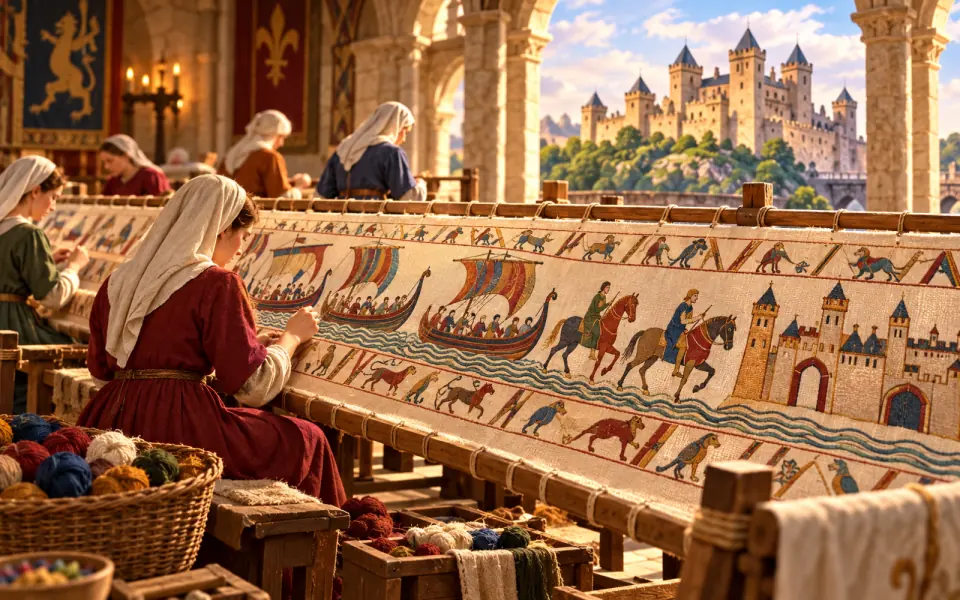 artThe Bayeux Tapestryabout 1070
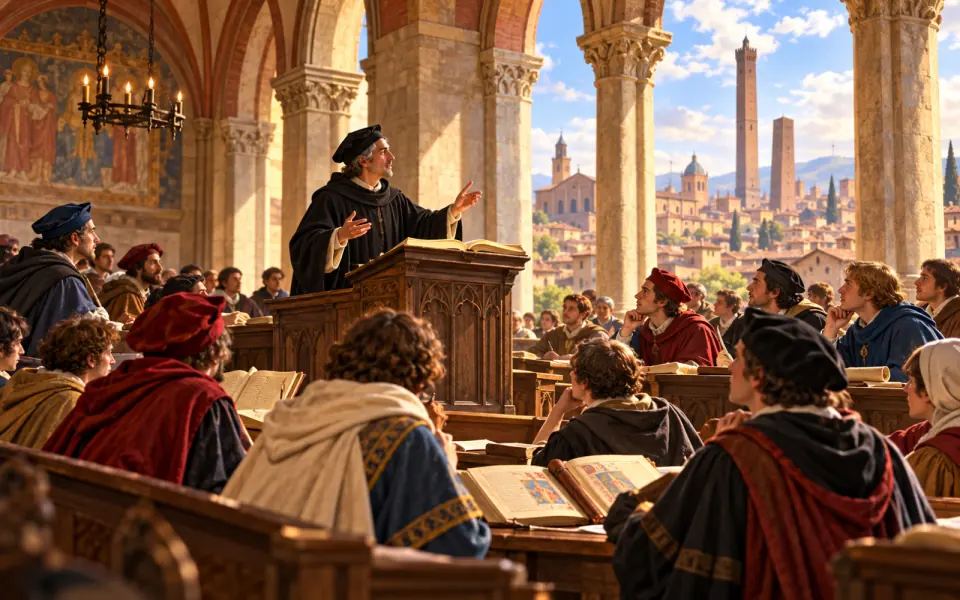 artThe University of Bolognaabout 1088
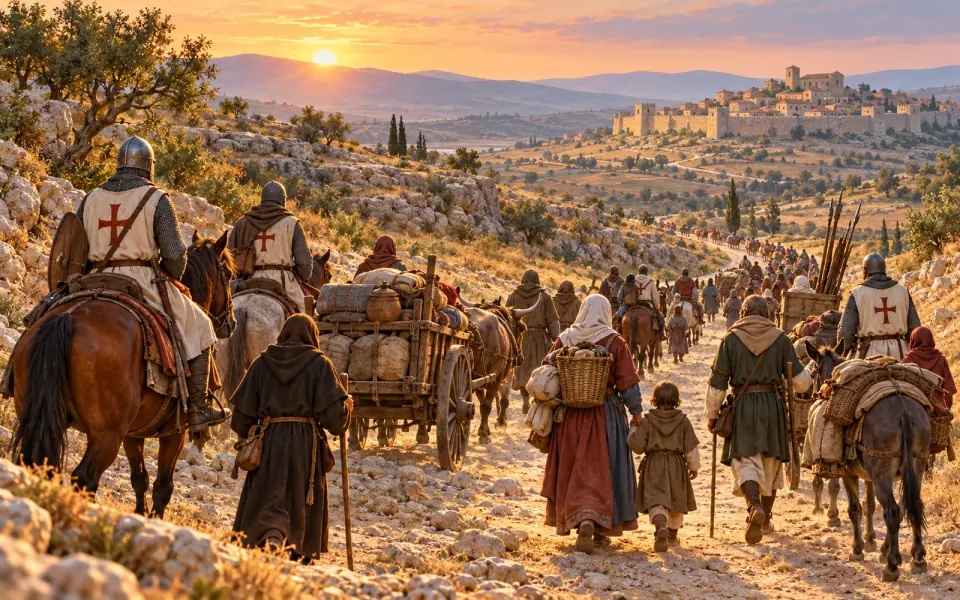 politicsThe First Crusade1096–1099
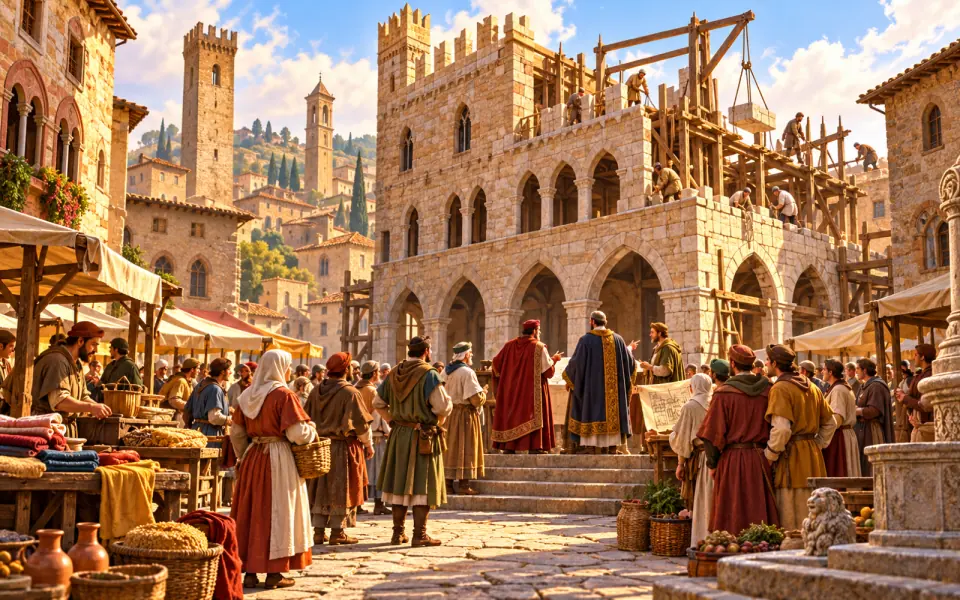 politicsThe Italian communesabout 1100
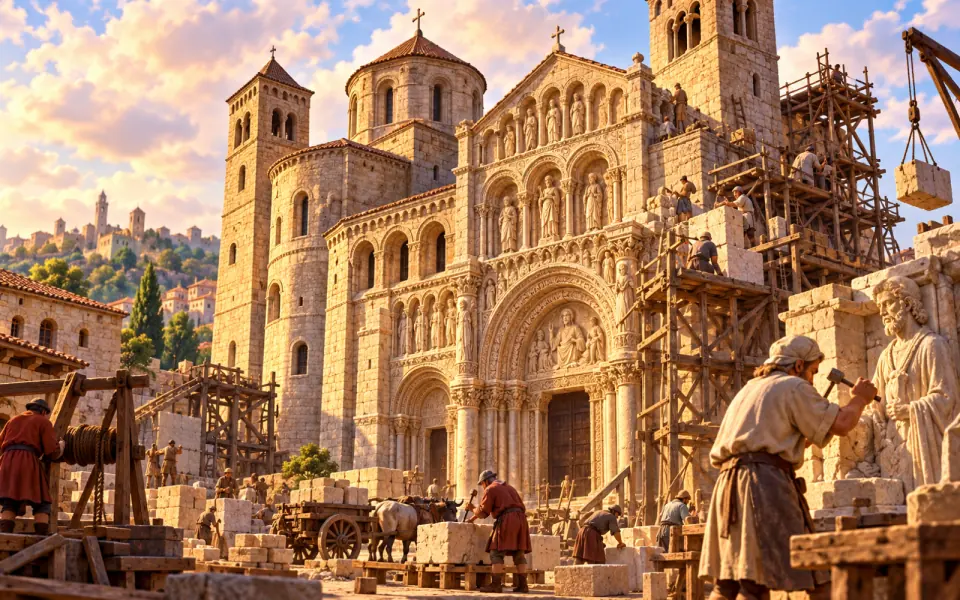 artRomanesque cathedralsabout 1100
 science and technologyWatermills and windmillsabout 1100
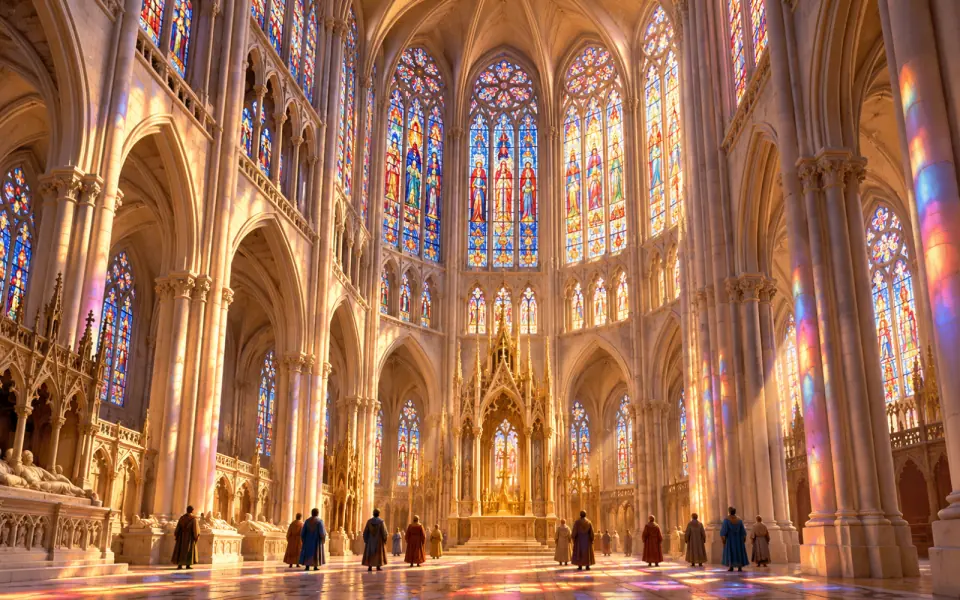 artGothic style at Saint-Denis1144
 peopleHildegard of Bingenabout 1150
 science and technologyPaper arrives in Europeabout 1150
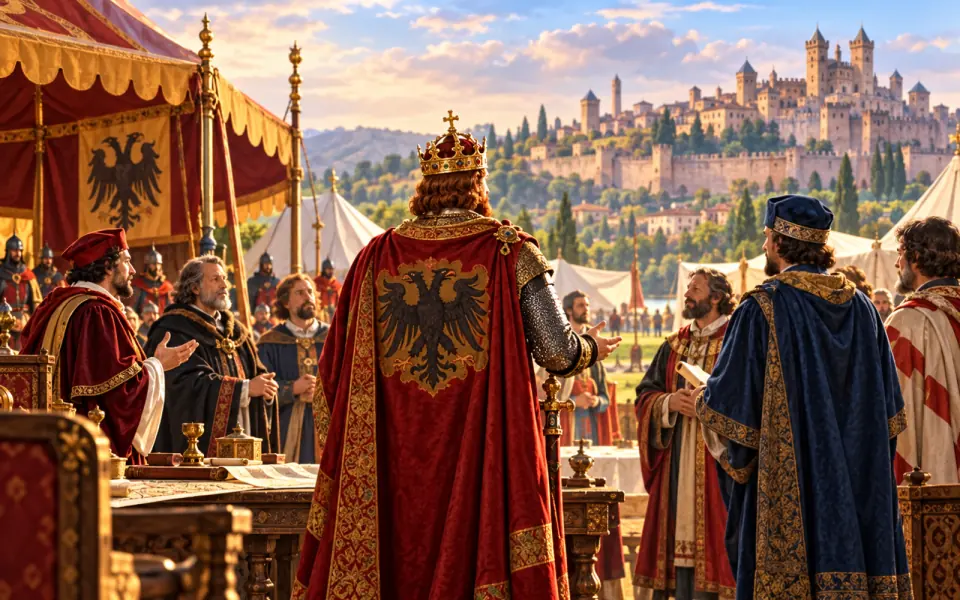 peopleFrederick Barbarossa1155
 peopleFrancis of Assisiabout 1182
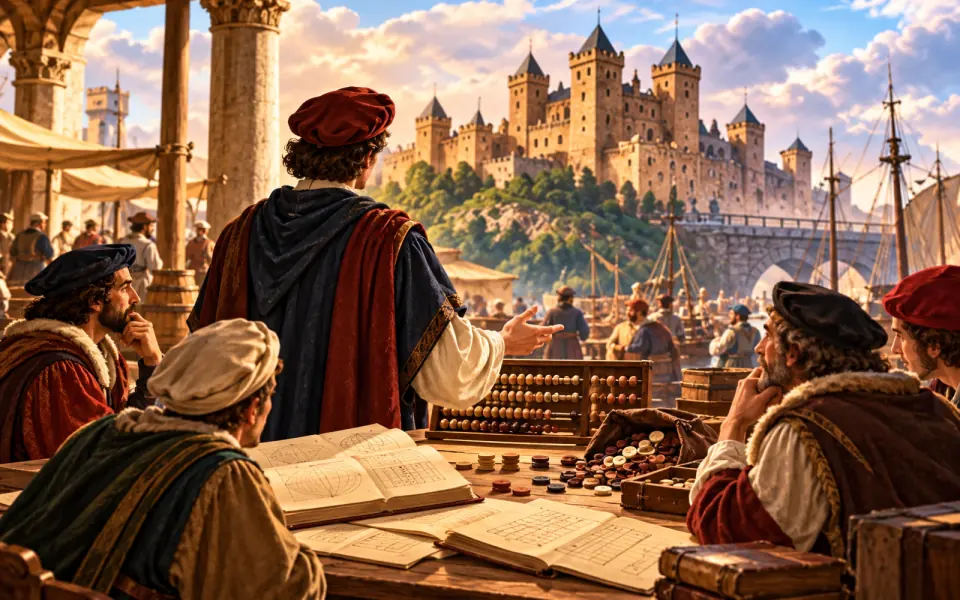 science and technologyFibonacci and the Liber abaci1202
 politicsMagna Carta1215
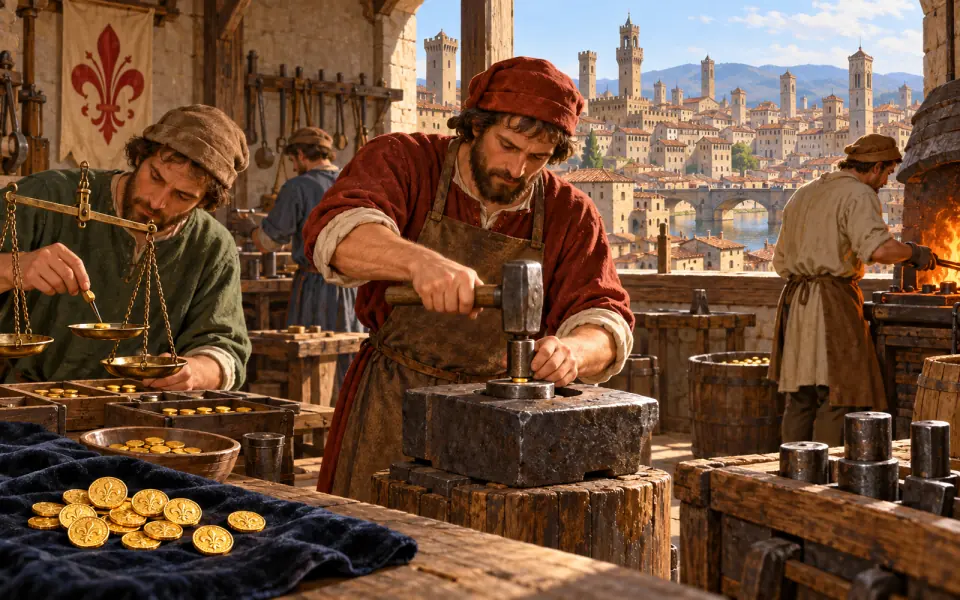 daily lifeThe gold florin1252
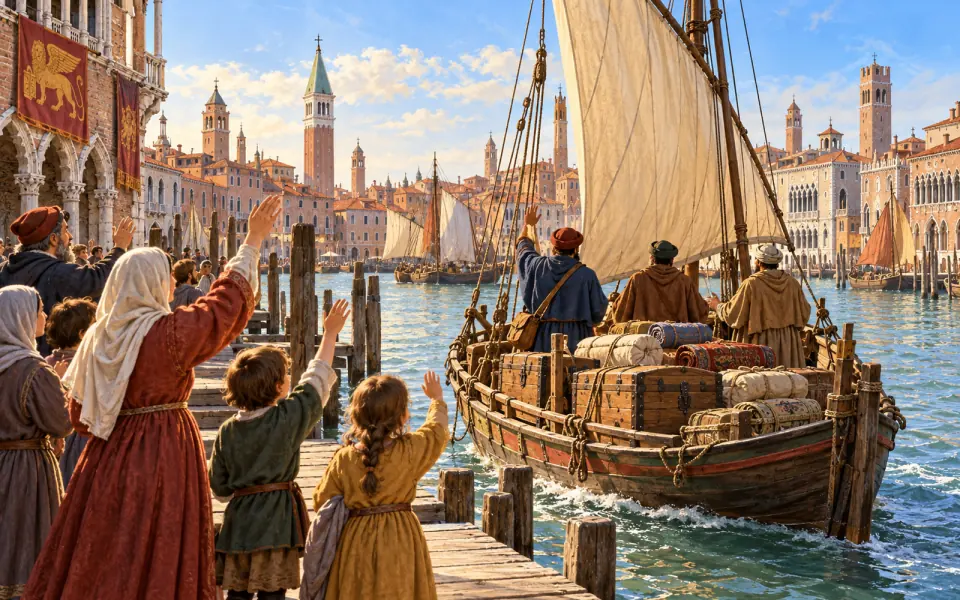 peopleMarco Polo sets off for Asia1271
 science and technologySpectaclesabout 1286
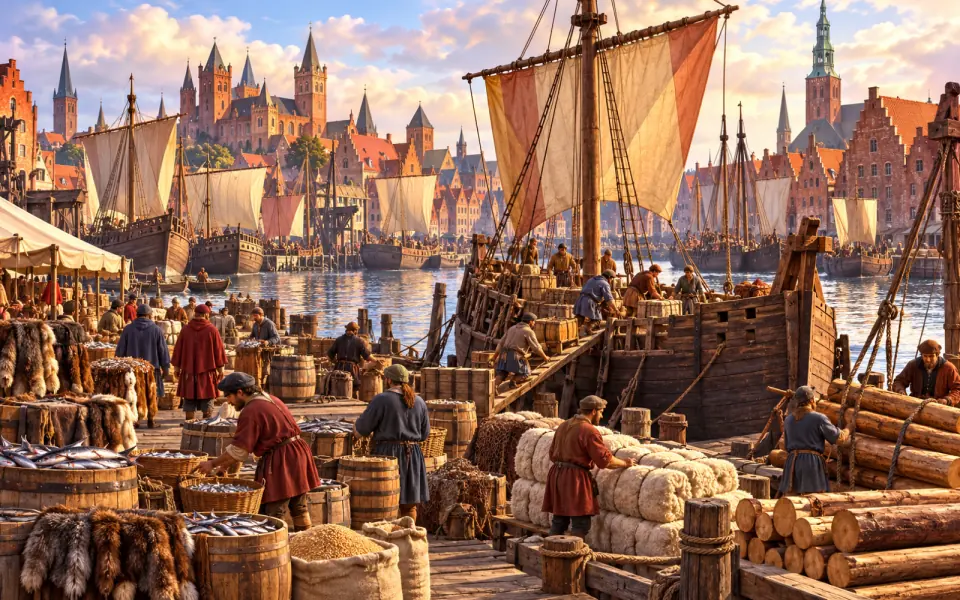 daily lifeThe Hanseatic League and northern tradeabout 1300
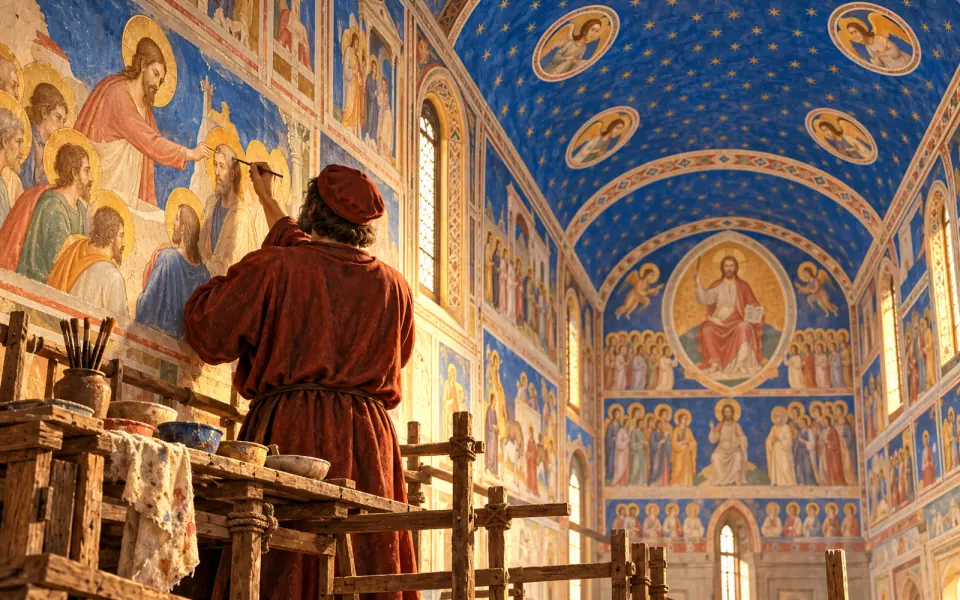 artGiotto paints in Paduaabout 1305
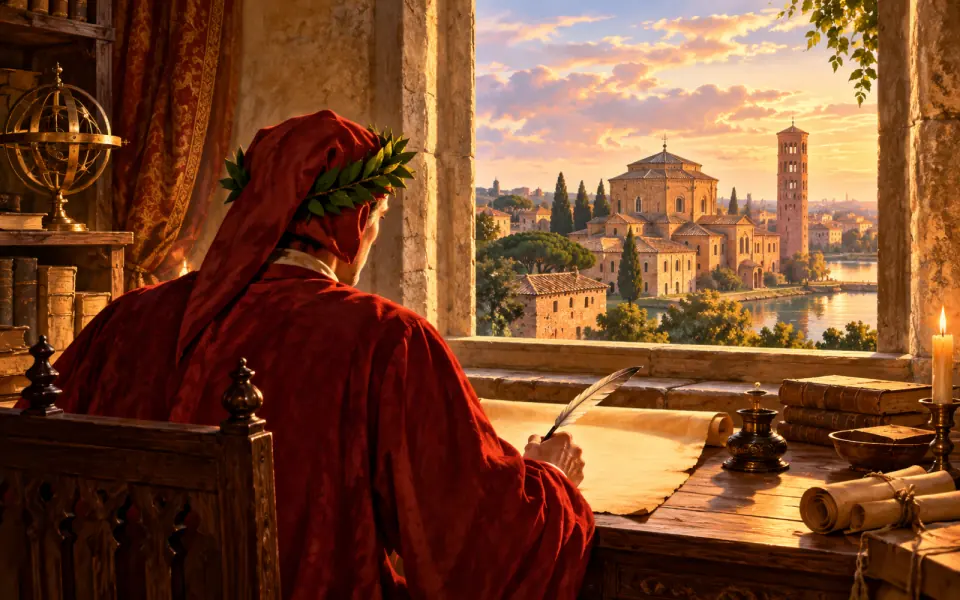 artDante begins the Divine Comedyabout 1307
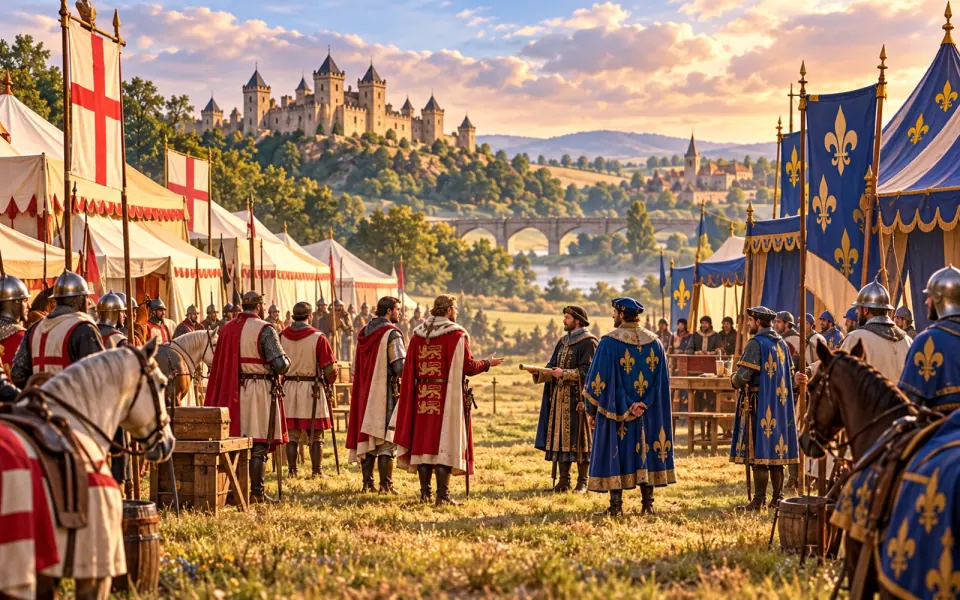 politicsThe Hundred Years' War1337–1453
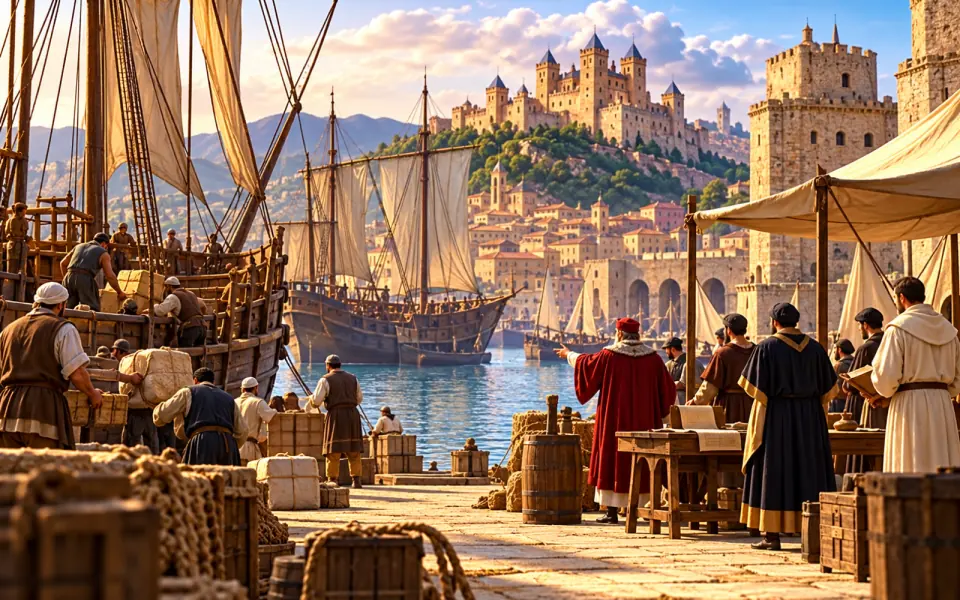 daily lifeThe Black Death1347–1352
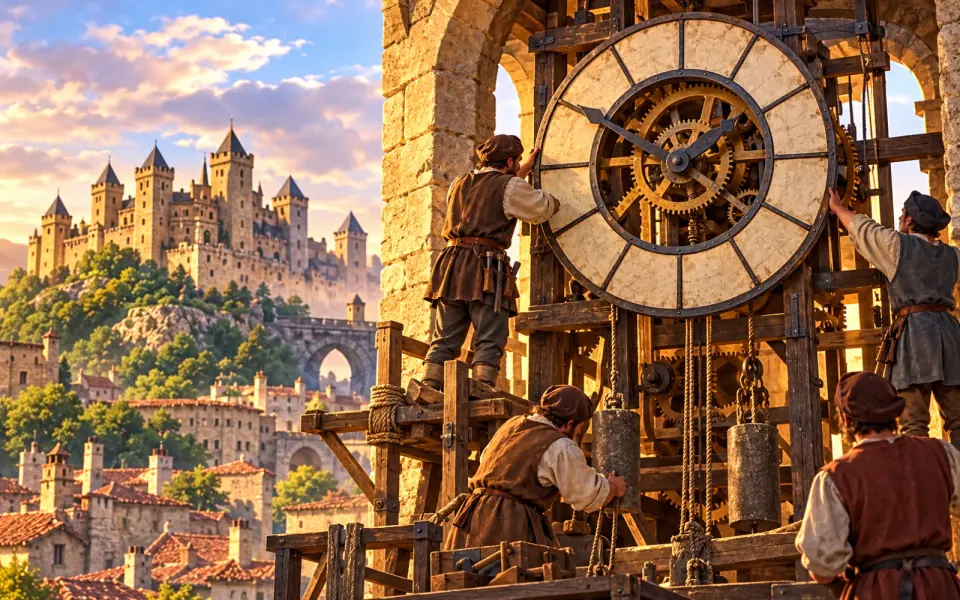 science and technologyPublic mechanical clocksabout 1350
 peopleJoan of Arc1429
Did you know?
- The Hundred Years' War actually lasted 116 years, from 1337 to 1453, with long breaks between one round of fighting and the next.
- The founding date of the University of Bologna, 1088, was chosen in the 1800s by a committee led by the poet Giosuè Carducci.
- In Fibonacci's Liber abaci there is a problem about a pair of rabbits that gives rise to a famous series of numbers: 1, 1, 2, 3, 5, 8, 13…
Test yourself
Ten questions on the era: multiple choice, before or after, put in order, match.
Quiz: Late Middle Ages