The East–West Schism
1054 Constantinople and Rome
In short
For centuries the Christians of Rome and those of Constantinople had had different customs, languages and ideas: in the West people prayed in Latin, in the East in Greek. The biggest disagreement was about the authority of the Pope in Rome over the whole Church. In 1054 the Pope's representatives and the Patriarch of Constantinople excommunicated each other, meaning they shut each other out of the Church community. Since then there have been a Catholic Church and an Orthodox Church. In 1965 Pope Paul VI and Patriarch Athenagoras cancelled those old excommunications.
Why it matters This split still shapes the religious map of Europe and the world today.
Source: Encyclopaedia Britannica, “Schism of 1054”
Study card about 4 minutes of reading
The story
One Church, two worlds
For the first thousand years the Christians of Europe and the Near East formed a single Church, although with differences. In the west, in the old Western Roman Empire, people spoke Latin and the bishop of Rome, the pope, had a special authority. In the east, in the Byzantine Empire, people spoke Greek and the most important city was Constantinople, whose bishop, called the patriarch, had great prestige. There were other ancient patriarchates, such as Alexandria, Antioch and Jerusalem.
Over time the two halves had drifted apart. The different languages made it hard to understand each other, journeys were long, and invasions had divided the empire. Councils, that is, assemblies, were held in Rome and in Constantinople, and each side said its decisions applied to everyone. Who really ruled the Church? The pope, or the bishops together? People had been arguing about this for a long time.
The reasons for the quarrel
There were several reasons for disagreement. The most important was the pope's authority: in Rome it was said that the bishop of Rome, heir of Saint Peter, held primacy over the whole Church; in Constantinople Rome was given first place of honour, but not the right to give orders to the others.
Then there was a difference in the Creed, the prayer in which Christians declare their faith. In the West a Latin word had been added, “filioque”, which means “and from the Son”: the Holy Spirit, it was said, proceeds from the Father “and from the Son”. The Easterners disagreed both about the meaning and about whether the text could be changed without a council of everyone.
Other differences concerned rites. In the west, unleavened bread, that is, bread without yeast, was used for Mass; in the east, leavened bread. In the west priests could not marry; in the east married priests were allowed, but not bishops. These seemed like details, but for many believers they were very important questions, because they touched the way people prayed.
16 July 1054
In 1053 the patriarch of Constantinople, Michael Cerularius, had the Latin-rite churches of the city closed. Pope Leo IX replied by sending a group of legates, that is, representatives, to Constantinople, led by Cardinal Humbert of Silva Candida, a man of rigid character. The pope, meanwhile, had died in April 1054, and so strictly speaking the legates no longer had the authority to decide.
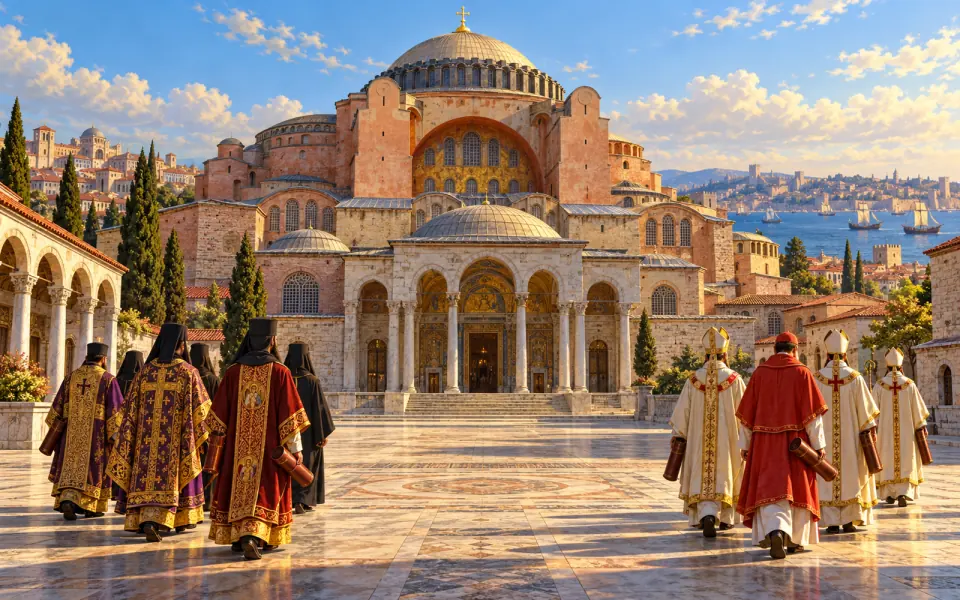
The talks with Cerularius were bitter. On 16 July 1054, a Saturday, during the liturgy, the legates entered the basilica of Hagia Sophia and laid on the altar a bull, that is, a solemn document, excommunicating the patriarch and his supporters. Then they went out, shaking the dust from their sandals, as if to say they wanted nothing more to do with that place. A few days later Cerularius called a synod and in turn excommunicated the legates.
A slow break
At the time, in fact, many people did not think that the Church had been broken. It was a quarrel between individuals, involving only a few leaders, and relations between believers went on for years. Over time, however, other events widened the rift. The Crusades brought Latins and Greeks into contact and into conflict. In 1204 the Western crusaders took and sacked Constantinople, something the Greeks never forgot. Attempts at reunion, such as at the Council of Lyon (1274) and the Council of Florence (1439), had no lasting success.
Only on 7 December 1965, after the Second Vatican Council, did Pope Paul VI and Patriarch Athenagoras cancel the excommunications of 1054 together: an important gesture, even though the two Churches remain separate.
Why it happened
The differences of language, culture, rites and organisation had piled up over centuries, while the two worlds, Latin and Greek, drifted further and further apart. Politics mattered too: the Byzantine Empire and the papacy, sometimes allies and sometimes rivals, both wanted to control the lands of southern Italy.
What set off the crisis of 1054 was the character and rigidity of the two main figures, the patriarch and the cardinal, and the question of who had the last word.
What changed
Christendom split into two great Churches: the Catholic Church, with the pope in Rome, and the Orthodox Churches, with their patriarchs and their national Churches, such as the Greek and the Russian. Today there are about two hundred and fifty million Orthodox Christians in the world.
The division affected the history of Europe: for centuries western and eastern Europe had different religions, scripts and political cultures. Russia, converted from the Byzantine world, followed the Orthodox path.
Relations today are better: popes and patriarchs meet, and the Churches talk about almost everything, but they have not yet come back together.
Key people and places
People
- Michael Cerularius
- Patriarch of Constantinople from 1043 to 1058 (about 1000-1059): he excommunicated the pope's legates.
- Humbert of Silva Candida
- Cardinal and theologian (about 1000-1061): he led the legates and wrote the bull.
- Leo IX
- Pope from 1049 to 1054 (1002-1054): he died a few months before the meeting.
- Paul VI
- Pope from 1963 to 1978 (1897-1978): he cancelled the excommunications in 1965.
Places
- Constantinople (now Istanbul)
- Capital of the Byzantine Empire and seat of the patriarch.
- Hagia Sophia
- The great basilica where the bull was laid on 16 July 1054.
- Rome
- Seat of the pope and centre of the Latin Church of the West.
Good to know
- The legates left the bull on the altar of Hagia Sophia on 16 July 1054.
- Pope Leo IX had already been dead for three months when his legates excommunicated the patriarch.
- For Catholics the Holy Spirit proceeds “from the Father and the Son” (filioque), for the Orthodox from the Father.
- The excommunications of 1054 were lifted only in 1965.
- There are about 250 million Orthodox Christians in the world today.
Find out more
- Wikipedia, “East–West Schism” en.wikipedia.org
- Wikipedia, “Michael I Cerularius” en.wikipedia.org
- Wikipedia, “Filioque” en.wikipedia.org
- Wikipedia, “Eastern Orthodox Church” en.wikipedia.org
Related events
- The First Crusade1096–1099 · Late Middle AgesThe Crusades brought Latins and Greeks closer and set them against each other.
- Frederick Barbarossa1155 · Late Middle AgesBarbarossa clashed with the popes in the same period of history.
- Romanesque cathedralsabout 1100 · Late Middle AgesRomanesque churches were built in the West in the period of the schism.
- Francis of Assisiabout 1182 · Late Middle AgesSaint Francis lived in a Europe already divided between Eastern and Western Churches.
Before and after, in the era “Late Middle Ages”
Event 2 of 25
 BeforeThe growth of medieval townsabout 1050
- You are hereThe East–West Schism1054
 AfterThe Bayeux Tapestryabout 1070
 AfterThe University of Bolognaabout 1088
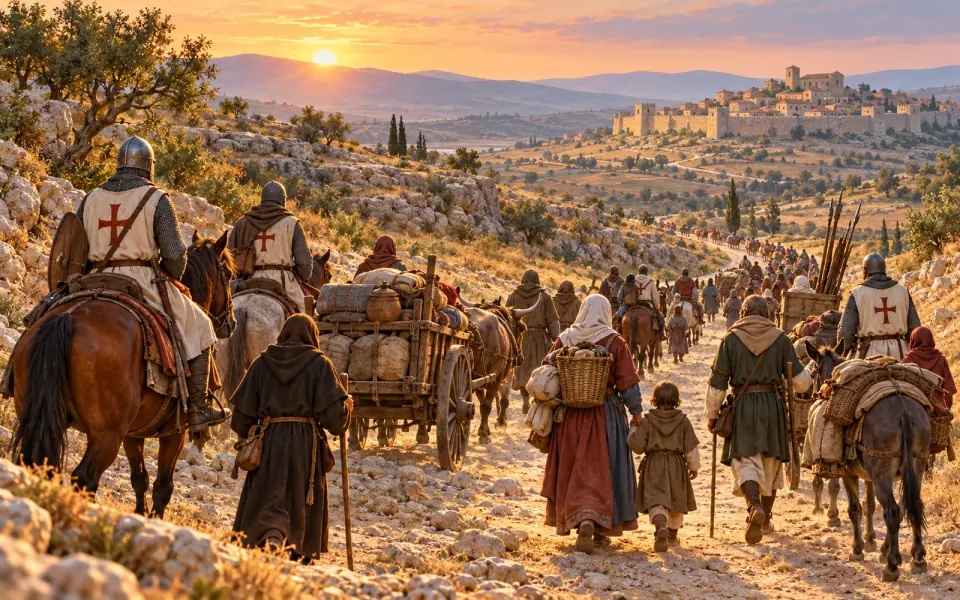 AfterThe First Crusade1096–1099
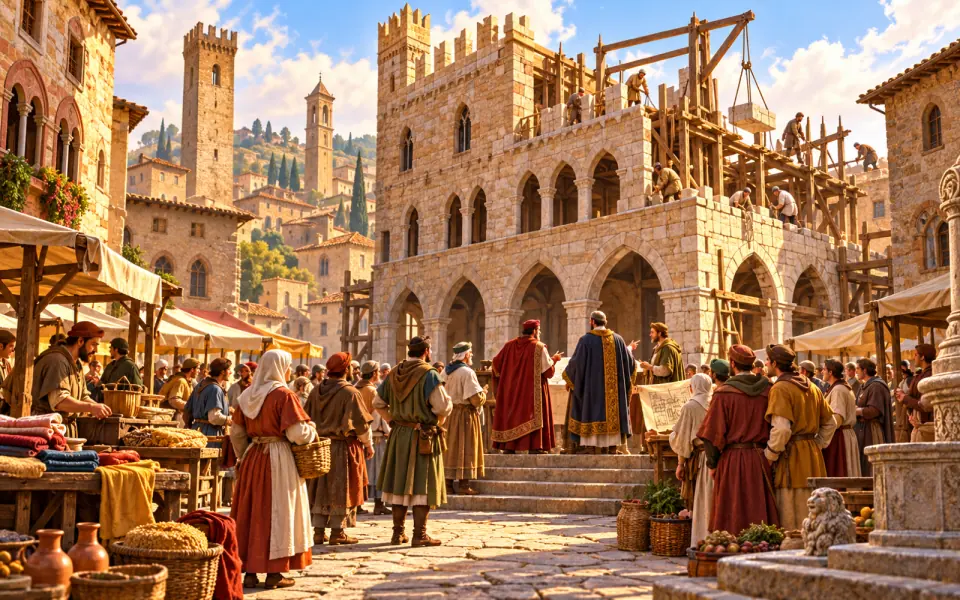 AfterThe Italian communesabout 1100
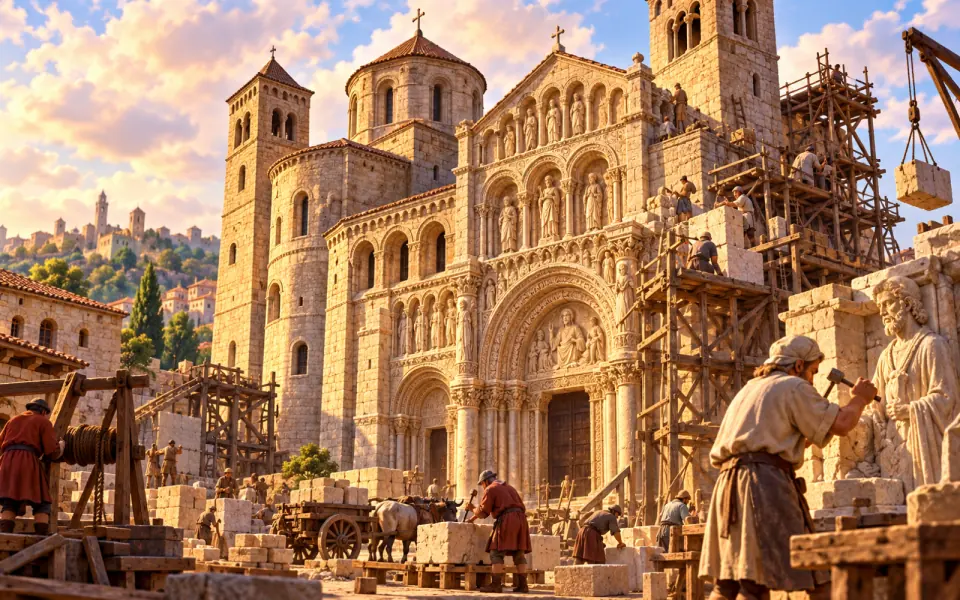 AfterRomanesque cathedralsabout 1100
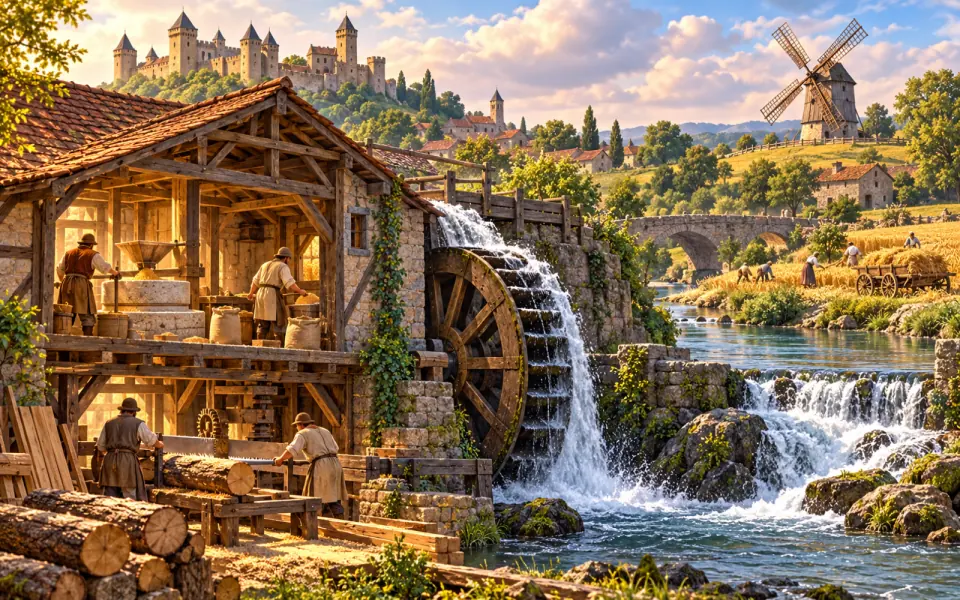 AfterWatermills and windmillsabout 1100
 AfterGothic style at Saint-Denis1144
 AfterHildegard of Bingenabout 1150
 AfterPaper arrives in Europeabout 1150
 AfterFrederick Barbarossa1155
 AfterFrancis of Assisiabout 1182
 AfterFibonacci and the Liber abaci1202
 AfterMagna Carta1215
 AfterThe gold florin1252
 AfterMarco Polo sets off for Asia1271
 AfterSpectaclesabout 1286
 AfterThe Hanseatic League and northern tradeabout 1300
 AfterGiotto paints in Paduaabout 1305
 AfterDante begins the Divine Comedyabout 1307
 AfterThe Hundred Years' War1337–1453
 AfterThe Black Death1347–1352
 AfterPublic mechanical clocksabout 1350
 AfterJoan of Arc1429
Listen / Read next
- Music to read by: Cinematic JourneyEpic film-style music, no lyrics, by Ciro Simone IrmiciSpotifyYouTube Music
Meanwhile, elsewhere in the world
Other events of the era “Late Middle Ages”
- The growth of medieval towns
- The Bayeux Tapestry
- The University of Bologna
- The First Crusade
- The Italian communes
- Romanesque cathedrals
- Watermills and windmills
- Gothic style at Saint-Denis
- Hildegard of Bingen
- Paper arrives in Europe
- Frederick Barbarossa
- Francis of Assisi
- Fibonacci and the Liber abaci
- Magna Carta
- The gold florin
- Marco Polo sets off for Asia
- Spectacles
- The Hanseatic League and northern trade
- Giotto paints in Padua
- Dante begins the Divine Comedy
- The Hundred Years' War
- The Black Death
- Public mechanical clocks
- Joan of Arc
