The Great Pyramid of Giza
about 2560 BC Giza, Egypt
In short
The Great Pyramid of Giza was built for the pharaoh Khufu and was originally about 146 metres high. It took more than two million stone blocks, each weighing on average more than two tonnes. It was not slaves who worked on it, but teams of workers who were paid and fed and lived in a village near the building site. For almost four thousand years no man-made building was taller.
Why it matters It is the only one of the Seven Wonders of the Ancient World still standing.
Source: Encyclopaedia Britannica, “Pyramids of Giza”
Study card about 6 minutes of reading
The story
A sum that makes your head spin
Let us do some calculations. The Great Pyramid of Giza is made, according to estimates, of about two million three hundred thousand blocks of stone. If the builders put it up in about twenty years, a block had to be laid every few minutes, day after day, summer and winter. Each block weighs on average more than two tonnes: like a small car. Some, in the King's Chamber, weigh tens of tonnes. Yet the pyramid, built around 2560 BC for the pharaoh Khufu (Cheops in Greek), still has an almost perfectly square base, with sides about 230 metres long and lined up, with a tiny error, with the four points of the compass.
Today it is about 139 metres tall, because it has lost its top and its outer casing. At first it measured about 146 metres, like a forty-storey building. For almost four thousand years it was the tallest structure in the world; it was overtaken only in 1311, when the spire of Lincoln Cathedral in England was finished, about 160 metres high.
How it was built
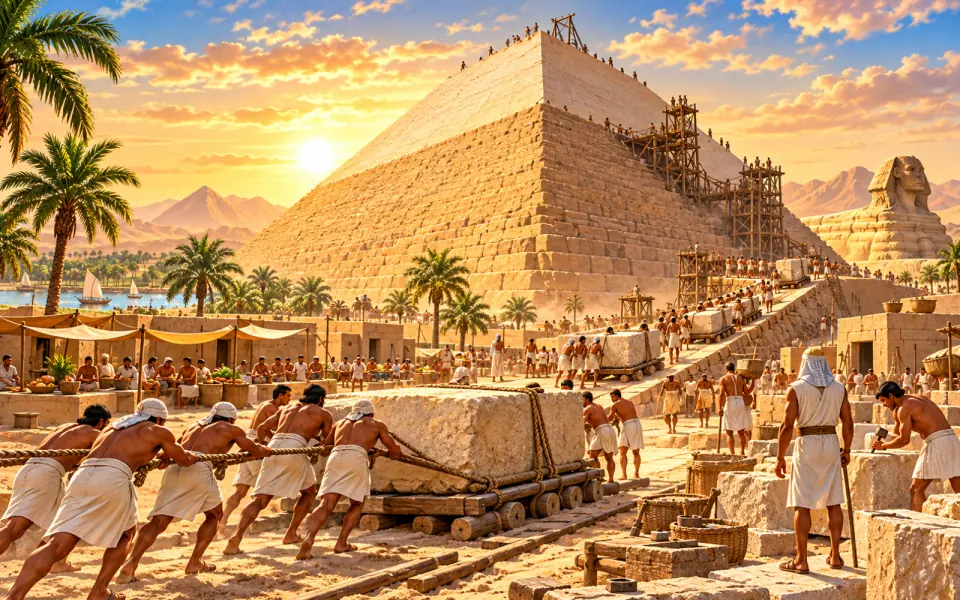
The main stones are local limestone, cut in quarries a few steps from the building site. For the outer casing, of smooth white stone, a finer limestone was used, brought from Tura, on the opposite bank of the Nile. For the inner chambers, enormous blocks of pink granite came from the south, from Aswan, more than 800 kilometres away. All this travelled on boats, with the Nile flood bringing the river closer to the site.
We do not know for certain how the blocks were raised. Scholars suggest ramps of brick and rubble, straight, spiral or partly inside the pyramid itself, and the use of wooden sledges, levers and ropes. A scene painted in a tomb shows a man pouring water in front of a loaded sledge: wet sand makes it slide better. Anyone who proposes a single solution perhaps forgets that the method may have changed as the pyramid rose.
Who built it
The Greek historian Herodotus, two thousand years later, told that a hundred thousand men worked for twenty years (an exaggerated figure), and many thought they were slaves. But the excavations of the last thirty years, led by Mark Lehner and Zahi Hawass, have shown something else. South of the pyramid there was a real town of workers, with bakeries, breweries, storehouses and dormitories. Animal bones tell us that they ate bread, beer and a lot of beef. Their tombs, near the pyramid, were built with care, and some skeletons show signs of treated injuries, such as broken bones that were set again. These are traces of workers who were looked after and respected.
The work gangs had names written in red paint in the hidden chambers above the King's Chamber: “Friends of Khufu” and, in another pyramid, “Drunkards of Menkaure”. Probably the groups competed to see who worked best. Scholars estimate that in all 10,000 to 40,000 people worked on the site, depending on the estimate, permanent and seasonal. Many farmers came in the months of the flood, when the fields were under water and there was nothing else to do.
A recent discovery has added an extraordinary detail. In 2013 the French archaeologist Pierre Tallet found at Wadi al-Jarf, on the Red Sea, the oldest inscribed papyri: the diary of an official named Merer, who for a few months led a team of about forty men. Merer noted down the boat journeys to carry limestone blocks from Tura to Giza, in the last years of Khufu's reign. It is like a building-site logbook from 4,500 years ago.
What is inside
The entrance, on the north side, leads to a rising corridor. You reach the Grand Gallery, about eight and a half metres high, with a corbelled ceiling, and then the King's Chamber, of granite, with a large empty sarcophagus. There are two other chambers, the so-called Queen's Chamber and one cut into the rock beneath the pyramid. In 2017 scholars using modern instruments, such as cosmic-ray (muon) detection, discovered an empty space at least thirty metres long above the Grand Gallery. What it is for, nobody yet knows.
Near the pyramid, in 1954, in a pit sealed with blocks, a cedar boat about 43 metres long was found, taken apart into more than twelve hundred pieces: Khufu's “solar boat”, perhaps used for his funeral or meant for the journey into the afterlife.
A doubt about the king
We know little about Khufu. His only known statue is a small ivory figure just over seven centimetres tall. He was the most famous of the pyramid-building pharaohs, but all that has come down to us of him is his pyramid. Even the dates of his reign vary according to scholars: it is usually said to be 2589 to 2566 BC, which is why dates for the building, like the 2560 BC we use here, are always approximate.
Why it happened
The Great Pyramid was the result of a religious idea, inherited from predecessors (see the card on the step pyramid): the king was a god, and his tomb had to be a staircase to heaven and a monument visible from afar. With Snefru, Khufu's father, the shape became smooth, and Khufu chose to make it as large as possible.
Then a perfect organisation was needed. The king ruled a united kingdom, with a bureaucracy of scribes, an army of workers, quarries and boats. The Nile flood made it possible to bring the blocks close to the site. Without so efficient a machine of state, the pyramid would have remained a dream.
Finally there was Khufu's personal power. At that moment the pharaoh was at the peak of his prestige: he could ask the whole country to work for him. With his successors, kings had to share power with priests and officials, and pyramids became smaller.
What changed
The Great Pyramid was admired from antiquity. The Greeks included it among the seven wonders of the world, and it is the only one still standing. The Romans came to visit it and to leave inscriptions. In the Middle Ages the Arabs stripped it of its white stone casing to build palaces and mosques in Cairo, and that is why it looks stepped today.
For scholars the pyramid is a continuing challenge: it shows that a society more than four thousand five hundred years ago knew how to measure, organise, transport and build on an immense scale. Every new technology, from cosmic rays to robots, helps to find new secrets, like the empty space discovered in 2017.
Today it is a symbol known all over the world and attracts millions of visitors. Near Giza the Grand Egyptian Museum has been built, which houses, among other things, Khufu's boat. And the discovery of the workers' village has changed a commonplace, that of the whipped slaves: the pyramid was a great collective and organised work, and those who worked on it were fed and respected.
Key people and places
People
- Khufu (Cheops)
- Pharaoh of the 4th dynasty (reigned about 2589 to 2566 BC), for whom the Great Pyramid was built.
- Merer
- An official from the time of Khufu, author of the papyrus diary found at Wadi al-Jarf in 2013, which tells of the transport of the limestone blocks.
- Mark Lehner
- American archaeologist who for years has been digging the workers' city at Giza and has shown how it was organised.
- Zahi Hawass
- Egyptian archaeologist, for years head of Egypt's antiquities, who led the excavation of the workers' tombs.
Places
- Giza (Egypt)
- A plateau near Cairo with the three great pyramids (Khufu, Khafre and Menkaure) and the Sphinx.
- Tura (Egypt)
- White limestone quarries on the east bank of the Nile, from which the smooth casing of the pyramid came.
- Wadi al-Jarf (Red Sea)
- An ancient Egyptian harbour where the papyri of Merer's diary were found in 2013.
Good to know
- For almost 4,000 years the Great Pyramid was the tallest monument in the world, until Lincoln Cathedral, in 1311.
- The work gangs gave themselves names such as “Friends of Khufu”, written in red paint in hidden chambers that nobody was meant to see.
- In 1954 a cedar boat 43 metres long was found near the pyramid, taken apart into more than 1,200 pieces.
- The sides of the pyramid are lined up with the four points of the compass with an error of less than a tenth of a degree.
- In 2017 cosmic rays revealed an empty space above the Grand Gallery, at least 30 metres long, still unexplained.
Find out more
- World History Encyclopedia, “Great Pyramid of Giza” worldhistory.org
- Wikipedia, “Great Pyramid of Giza” en.wikipedia.org
- Wikipedia, “Giza Necropolis” en.wikipedia.org
- World History Encyclopedia, “Pyramid” worldhistory.org
- Museo Egizio, Turin (in English) museoegizio.it
Related events
- The Step Pyramid of Djoserabout 2650 BC · River civilisationsDjoser's step pyramid is the first step towards the Great Pyramid.
- Egyptian mummificationabout 2600 BC · River civilisationsKhufu's mother, Hetepheres, is one of the first mummies with preserved organs.
- The unification of Egyptabout 3100 BC · River civilisationsOnly a united state like the one born with Narmer could organise such a building site.
- The Ziggurat of Urabout 2100 BC · River civilisationsThe ziggurat of Ur is another great monument built to bring people closer to the gods.
- Roman concreteabout 150 BC · Ancient RomeRoman concrete is another building technique that has defied the centuries.
Before and after, in the era “River civilisations”
Event 10 of 25
 BeforeThe first Sumerian citiesabout 4000 BC
 BeforeCuneiform writingabout 3200 BC
 BeforeEgyptian hieroglyphsabout 3200 BC
 BeforeThe unification of Egyptabout 3100 BC
 BeforeUruk, the great cityabout 3000 BC
 BeforeThe Egyptian calendarabout 2800 BC
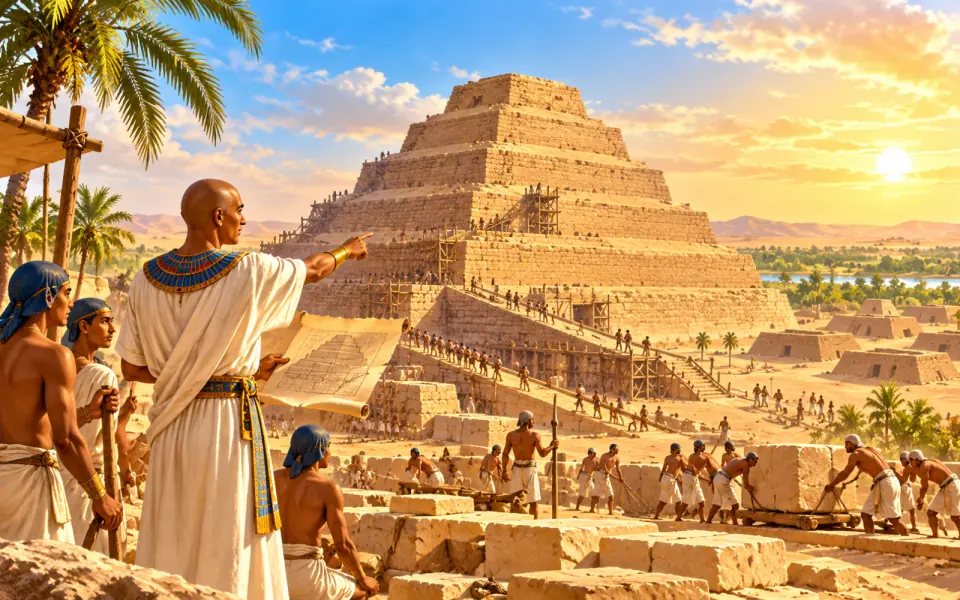 BeforeThe Step Pyramid of Djoserabout 2650 BC
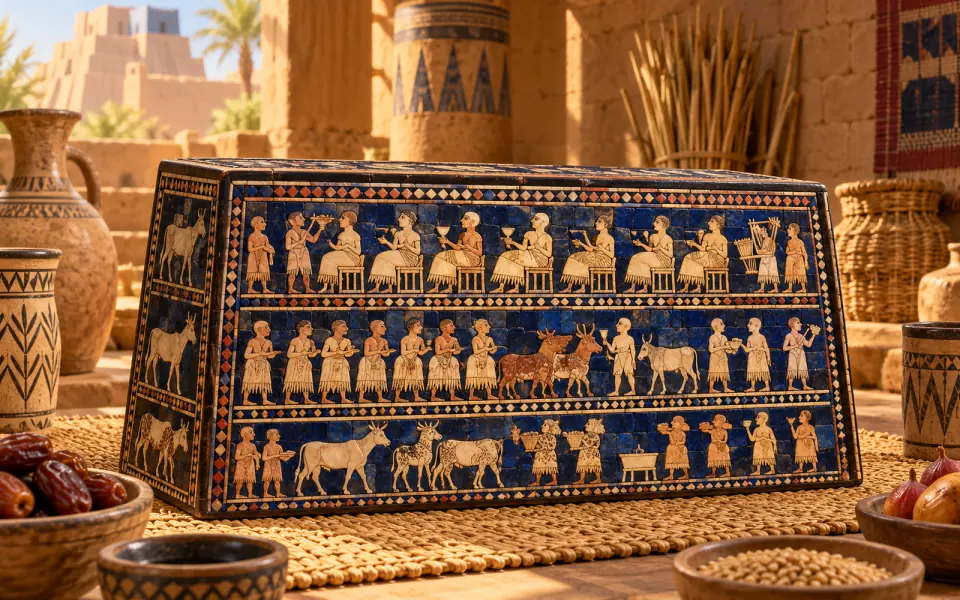 BeforeThe Standard of Urabout 2600 BC
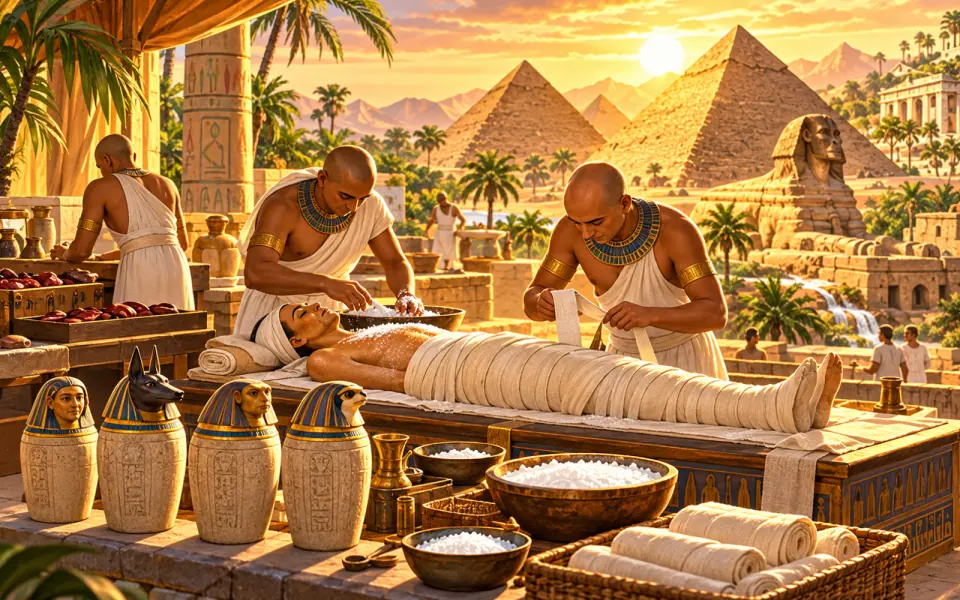 BeforeEgyptian mummificationabout 2600 BC
- You are hereThe Great Pyramid of Gizaabout 2560 BC
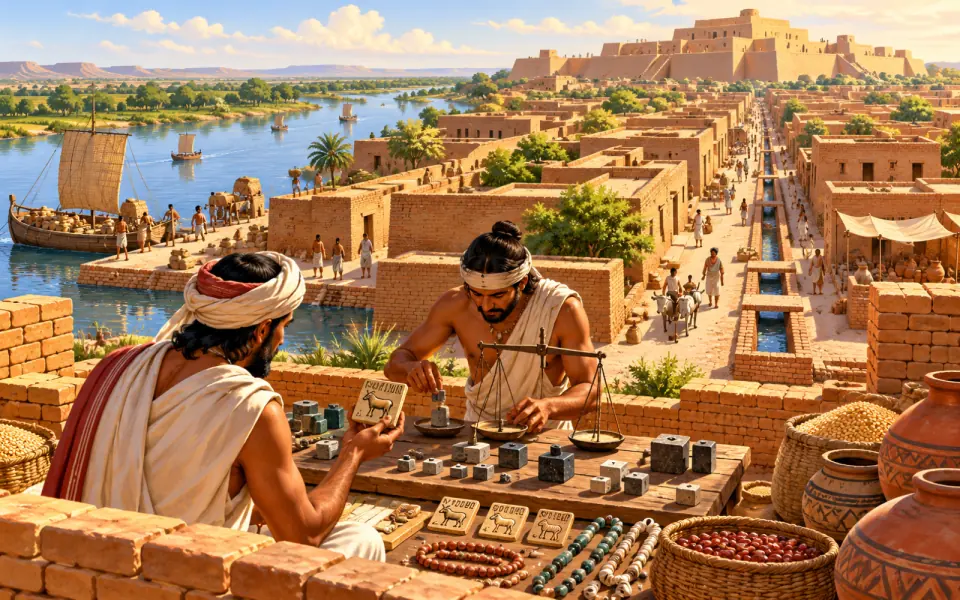 AfterThe cities of the Indus Valleyabout 2500 BC
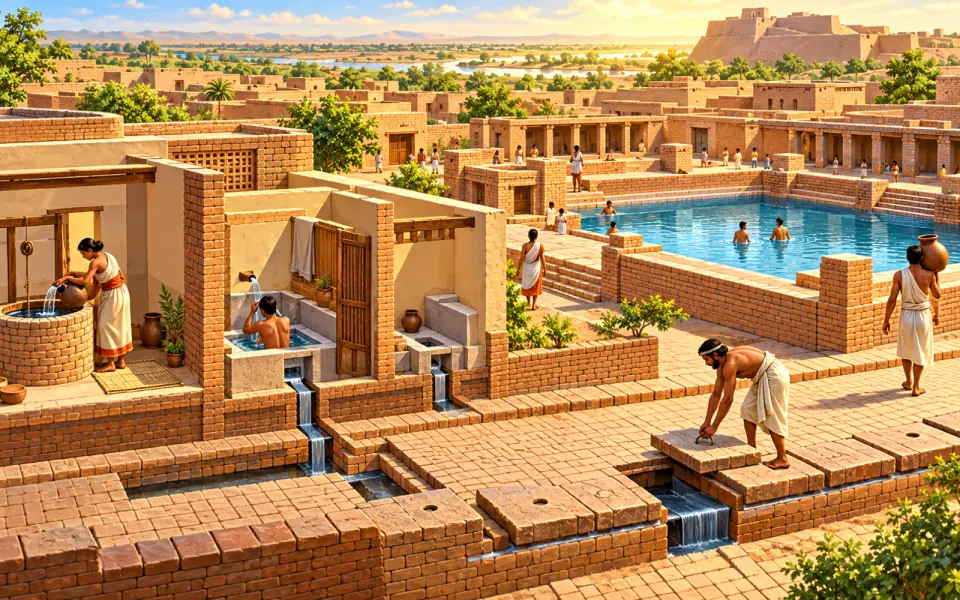 AfterThe drains and baths of Mohenjo-daroabout 2450 BC
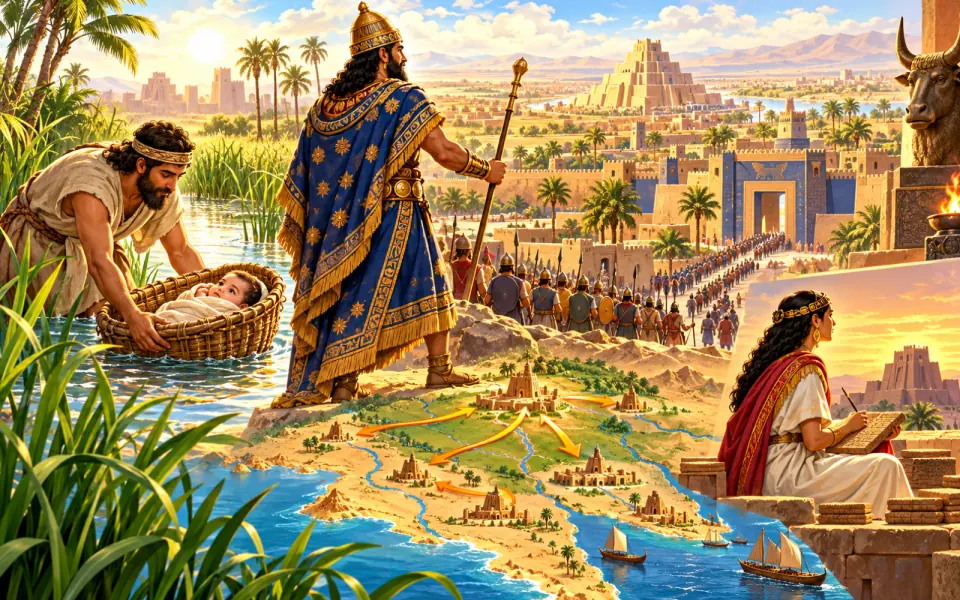 AfterSargon and the Akkadian Empireabout 2334 BC
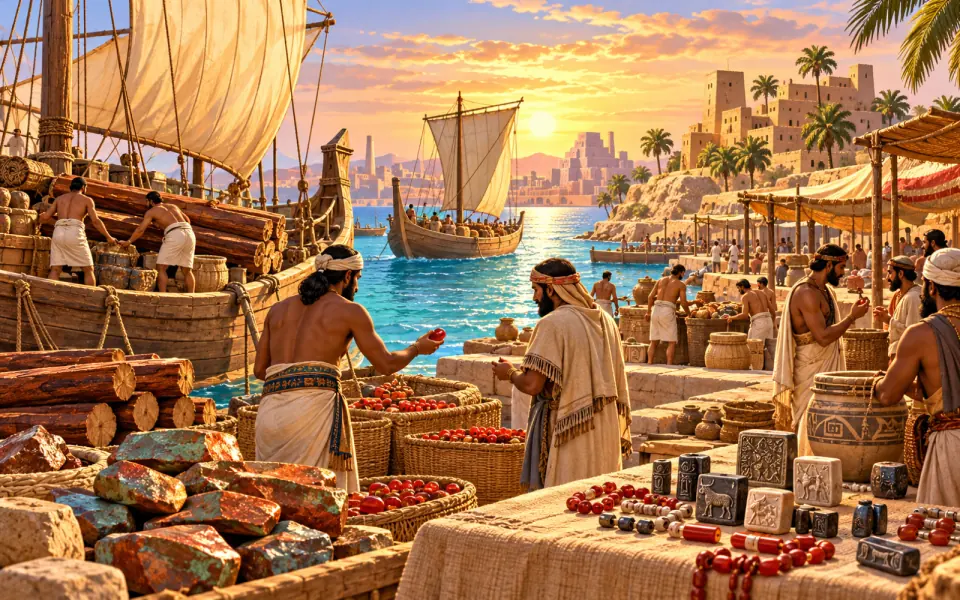 AfterTrade between the Indus and Mesopotamiaabout 2300 BC
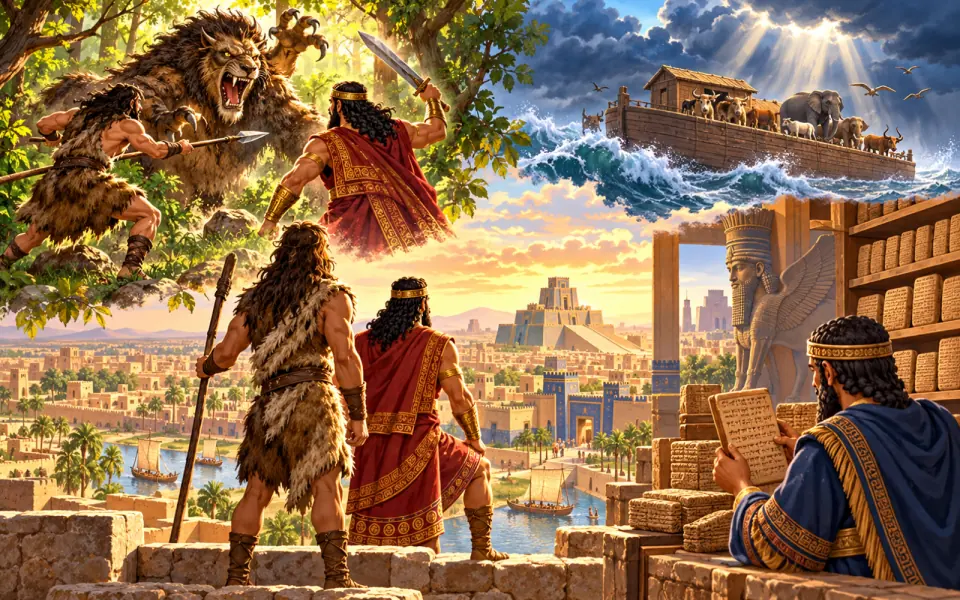 AfterThe Epic of Gilgameshabout 2100 BC
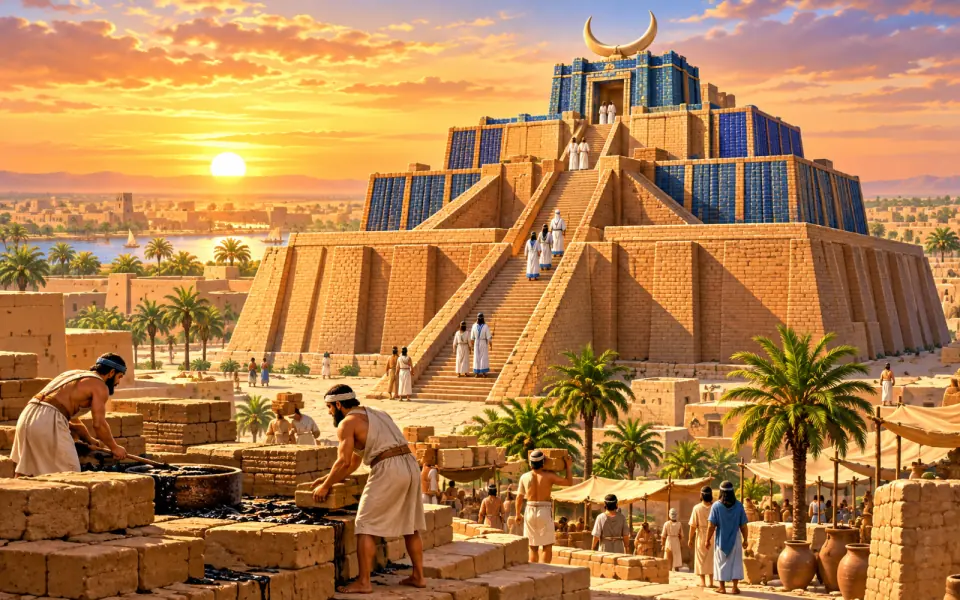 AfterThe Ziggurat of Urabout 2100 BC
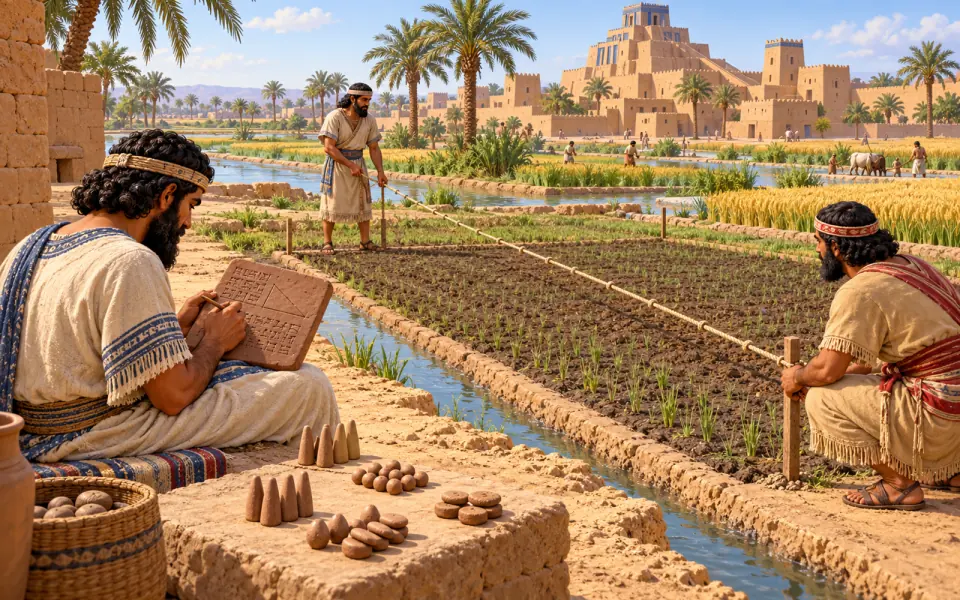 AfterBabylonian mathematicsabout 1800 BC
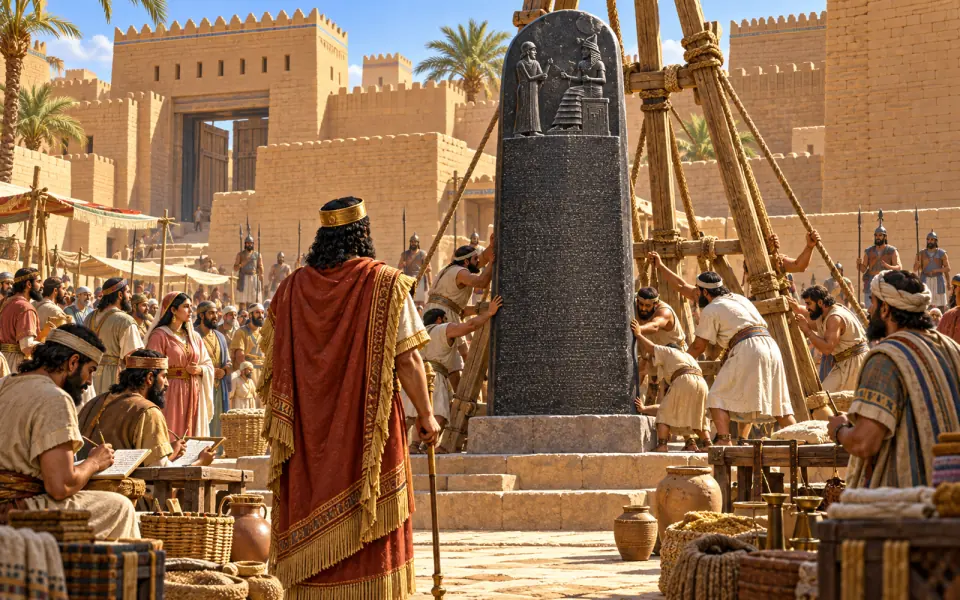 AfterThe Code of Hammurabiabout 1754 BC
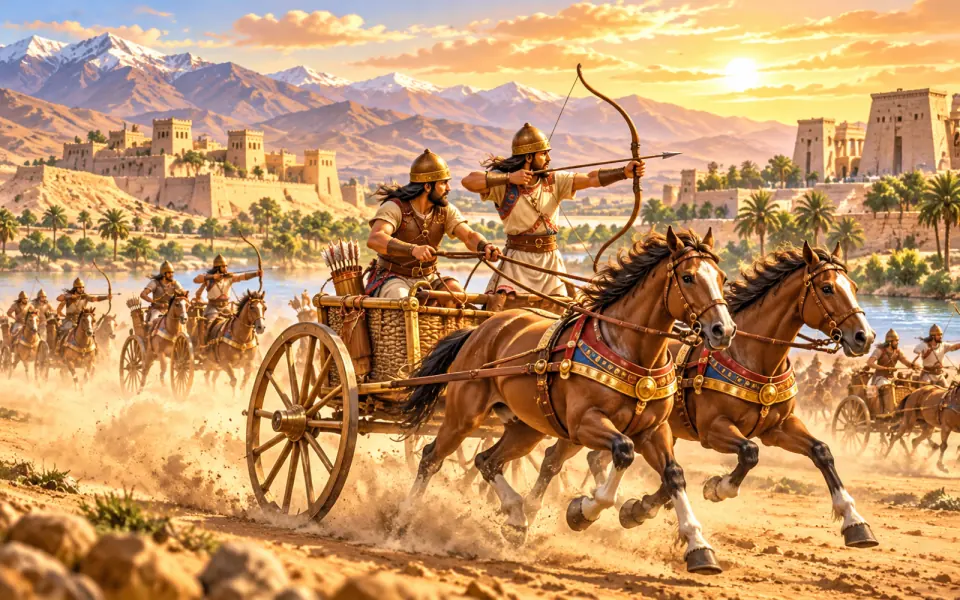 AfterWar chariotsabout 1700 BC
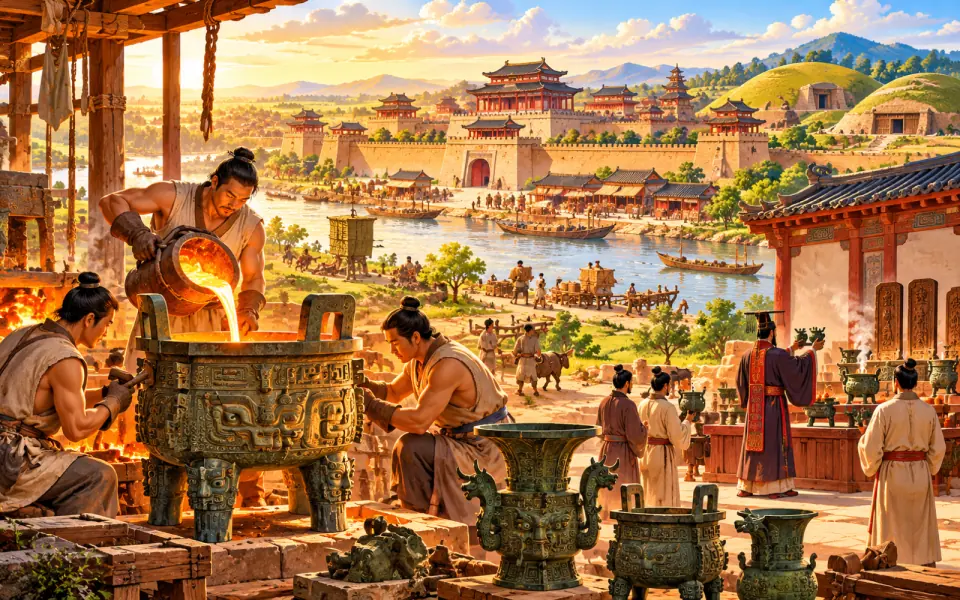 AfterThe Shang dynastyabout 1600–1046 BC
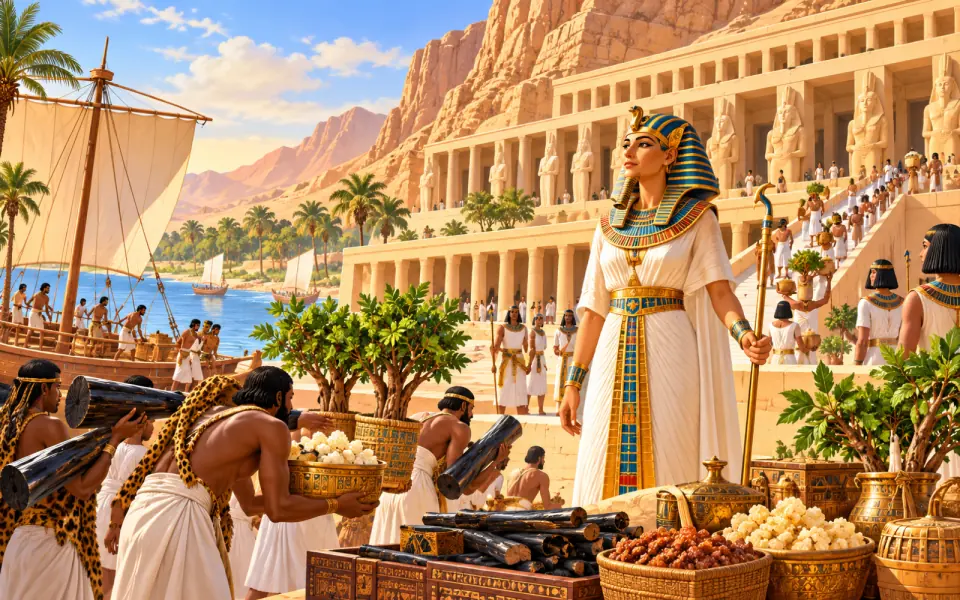 AfterHatshepsut, the woman pharaohabout 1479–1458 BC
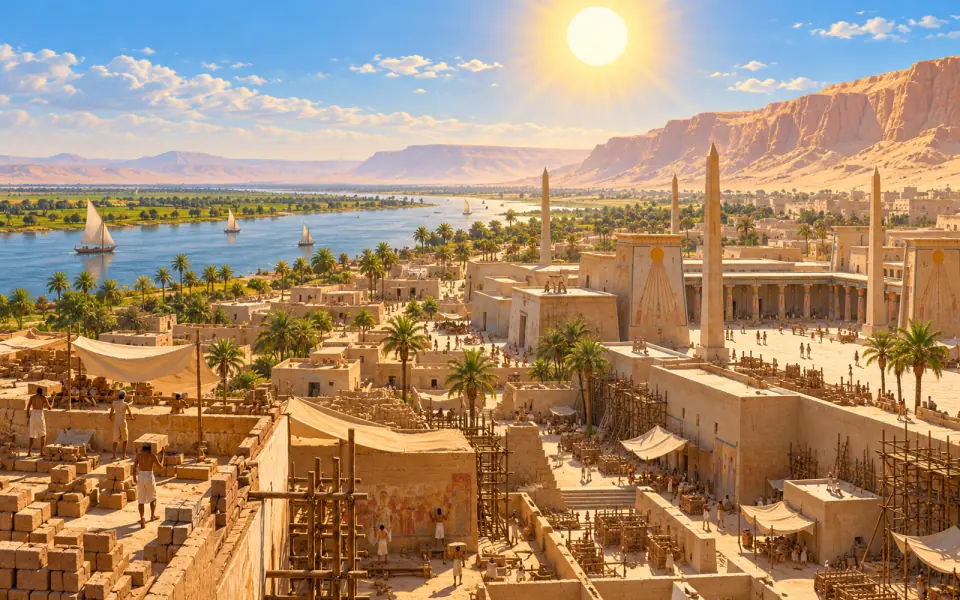 AfterThe reign of Akhenatenabout 1353–1336 BC
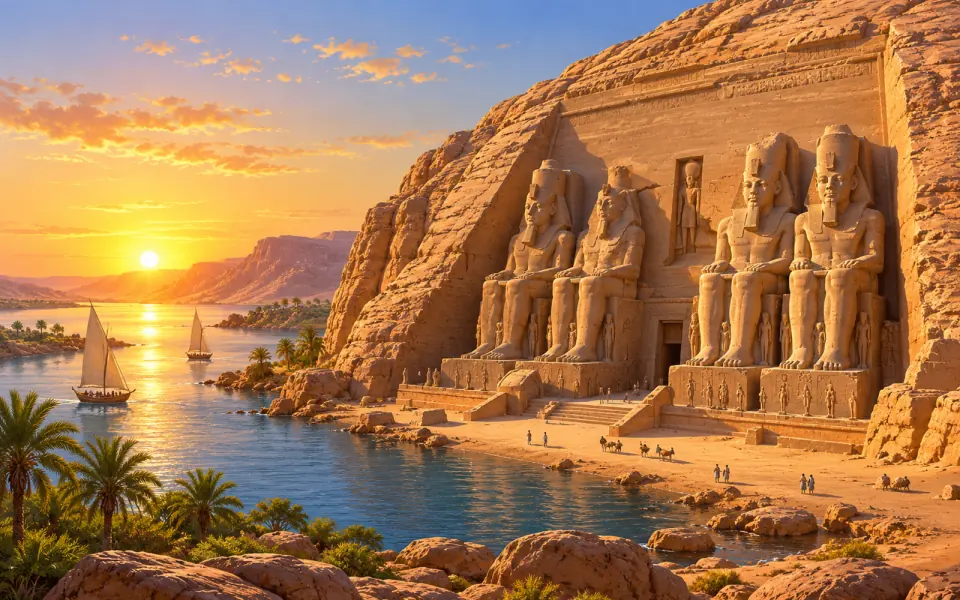 AfterThe reign of Ramesses IIabout 1279–1213 BC
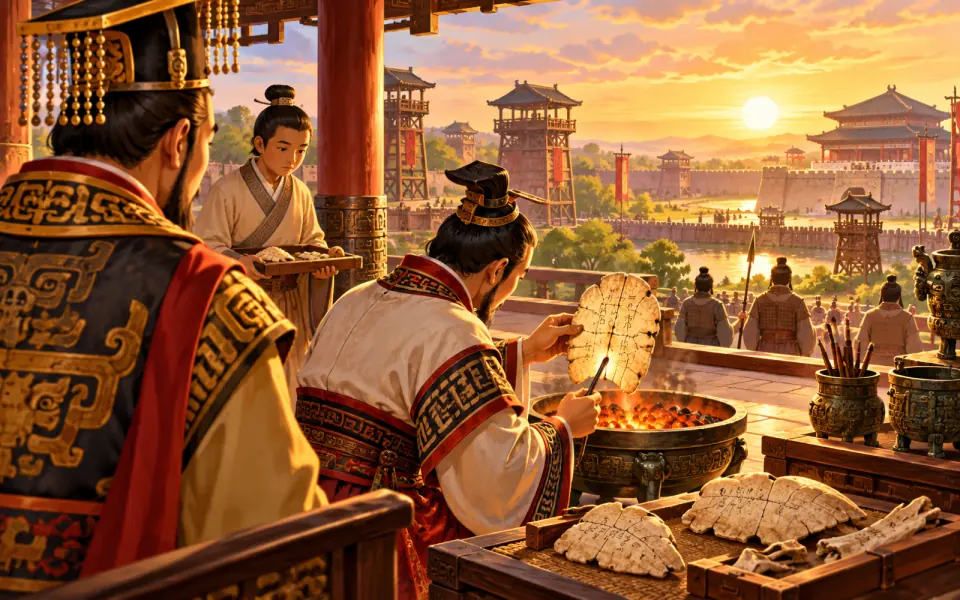 AfterWriting on oracle bonesabout 1250 BC
 AfterThe Bronze Age collapseabout 1200 BC
Listen / Read next
- Music to read by: Cinematic JourneyEpic film-style music, no lyrics, by Ciro Simone IrmiciSpotifyYouTube Music
Meanwhile, elsewhere in the world
Other events of the era “River civilisations”
- The first Sumerian cities
- Cuneiform writing
- Egyptian hieroglyphs
- The unification of Egypt
- Uruk, the great city
- The Egyptian calendar
- The Step Pyramid of Djoser
- The Standard of Ur
- Egyptian mummification
- The cities of the Indus Valley
- The drains and baths of Mohenjo-daro
- Sargon and the Akkadian Empire
- Trade between the Indus and Mesopotamia
- The Epic of Gilgamesh
- The Ziggurat of Ur
- Babylonian mathematics
- The Code of Hammurabi
- War chariots
- The Shang dynasty
- Hatshepsut, the woman pharaoh
- The reign of Akhenaten
- The reign of Ramesses II
- Writing on oracle bones
- The Bronze Age collapse
