Egyptian hieroglyphs
about 3200 BC Abydos, Egypt
In short
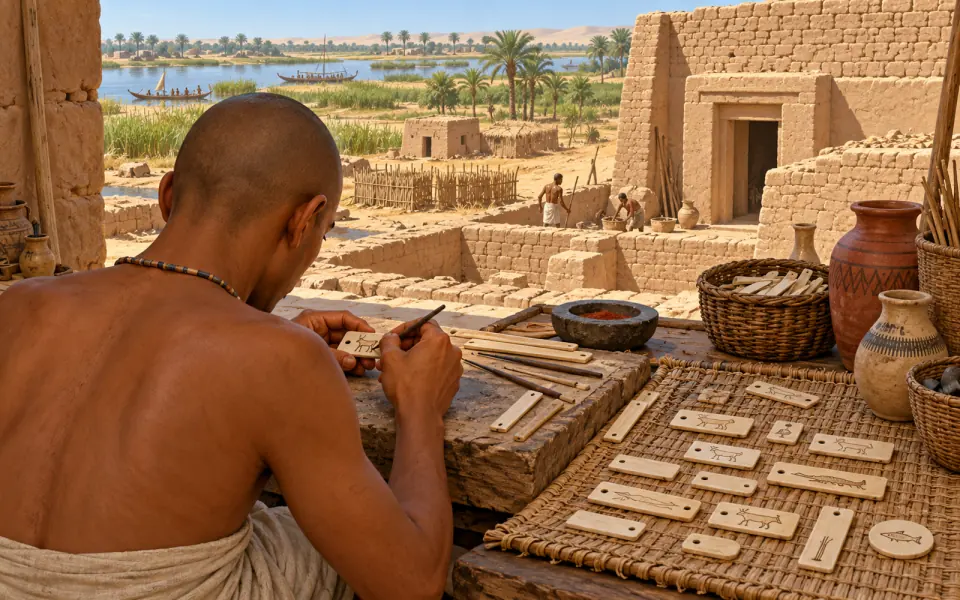
In a king's tomb at Abydos, in Egypt, small bone and ivory labels have been found bearing some of the oldest known hieroglyphs. Hieroglyphs mixed pictures standing for things with signs standing for sounds. The Egyptians carved them on temples and painted them in tombs; for everyday documents they used a quicker script. In 1822 the Frenchman Champollion managed to decipher them thanks to the Rosetta Stone.
Why it matters Thanks to hieroglyphs we can read what the Egyptians themselves told about their own lives.
Source: Encyclopaedia Britannica, “Hieroglyph”
Study card about 7 minutes of reading
The story
Little labels in a very ancient tomb
In the desert near Abydos, in Upper Egypt, there is a cemetery that the Arabs call Umm el-Qa'ab, “the mother of broken pots”, because the ground is covered with sherds left by very ancient offerings. The first kings of Egypt were buried here. In the 1980s the German archaeologist Günter Dreyer, of the German Archaeological Institute, dug a mud-brick tomb with twelve rooms, which scholars call U-j. It had been robbed already in ancient times, but among the rubble about 190 small labels of bone and ivory were left, as big as a postage stamp, with a little hole for string. On each one a few signs were carved. And similar signs were painted or carved on a great many jars.
Those signs, dated to around 3300 BC, are among the oldest hieroglyphs known. The labels probably showed where goods came from or whose they were: a sign for a place, a sign for a quantity, a sign for a name. In Egypt, too, as in Mesopotamia, writing was born in a setting of administration and accounts, near the storehouses of a powerful man. The owner of the tomb, perhaps a king named Scorpion (a name read from a scorpion-shaped sign), was therefore a man who needed to keep his wealth in order.
How hieroglyphs work
The word “hieroglyph” comes from Greek and means “sacred carved writing”: the Greeks used it when they saw those pictures on temple walls. The Egyptians themselves called them “the words of the god”. Each sign is a little picture: a bird, a hand, a wave, an eye. But a sign can be used in three different ways.
The first is to be a picture that shows the very thing it portrays: a picture of a sun means “sun”. The second is to stand for a sound: a picture of a mouth stands for the letter r. The third is to be a “determinative”, that is, a silent sign placed at the end of a word to say what kind of thing is being talked about: a figure of a seated man for jobs, two legs for words of movement, a papyrus scroll for abstract ideas. They do a bit the same job as the pictures that go with a difficult word.
The signs used in texts of the classical period numbered a few hundred; in the late period they grew to more than five thousand. They could be written from right to left, from left to right or from top to bottom: to tell the direction you only have to look at which way the birds and people are facing, because the faces are turned towards the start of the line.
Three scripts for three uses
Hieroglyphs were a beautiful script, suited to temples, tombs and monuments. To write quickly on papyrus with a reed brush, scribes used hieratic writing, a cursive, simplified version. From the 7th century BC demotic spread, faster still, used for documents, letters and contracts. Scribes were greatly respected: their trade took years of schooling and gave access to the pharaoh's offices. A famous Egyptian saying holds that the scribe's trade is better than any other.
The last hieroglyph and the silence
For more than three thousand years the Egyptians wrote in hieroglyphs. The last dated inscription we know is in the temple of Philae, in the south, and bears the date 24 August AD 394. Then the pagan temples were closed, the language changed and the knowledge of the sacred script was lost. For more than fourteen hundred years nobody could read those signs. Some scholars, such as the Jesuit Athanasius Kircher in the 17th century, believed that every picture was a mysterious symbol, and their explanations were pure fantasy.
The key from Rosetta
The turning point came in 1799, when French soldiers of Napoleon's expedition to Egypt, while strengthening a fort near Rashid (Rosetta), found a large slab of black stone. It carried the same decree, from 196 BC, written in three ways: in hieroglyphs, in demotic and in Greek. Since Greek could be read, the stone could provide the key. It was taken to London, where it still is, in the British Museum.
The work of decipherment was long. The Englishman Thomas Young understood that some signs enclosed in an oval, the cartouche, wrote the names of kings. But it was the Frenchman Jean-François Champollion, a genius with languages who knew Coptic (the last form of the Egyptian language), who found the complete principle. On 27 September 1822 he presented to the Academy in Paris his “Letter to Monsieur Dacier”, in which he showed that hieroglyphs were a script that combined signs for sound and signs for meaning. It is said that, once he understood, he fainted with excitement. After him, for the first time in more than fourteen hundred years, it was possible to read the Egyptians in their own words.
A doubt still open
Scholars still do not know whether the Egyptians invented writing on their own or whether the idea came from Mesopotamia, where cuneiform writing is a little older. The evidence is thin. For some, the Egyptian signs are too different to have been copied; others think that the idea of writing arrived, but not the signs. The discoveries at Abydos have made the race much closer than was once believed.
Why it happened
Hieroglyphs were born because a growing kingdom needed to organise wealth, storehouses and tribute. Whoever governed the Nile valley had to remember where each object came from, how much had been delivered and to whom it belonged. The Abydos labels show just this: a way to remember where a good came from.
Another cause was religious and political. Kings wanted their power to be visible in monuments, and giving the name of a king, a god or a place in solemn signs made those names stronger. Sacred writing therefore had, from the beginning, a magical value too: writing a name was a little like making it live.
Finally, the environment helped. Egypt had papyrus, a plant that grows in the marshes of the delta and from which light sheets were made, and it had stone for temple inscriptions. With two such different surfaces, two scripts developed: the monumental one of hieroglyphs and the cursive one of the scribe.
What changed
Writing allowed the Egyptian bureaucracy to govern a kingdom more than a thousand kilometres long, to keep records of taxes, harvests and workers, and to build immense works such as the pyramids, which needed calculations and lists of materials. Without scribes, no pyramids.
Thanks to hieroglyphs we have texts of every kind: the Pyramid Texts, the Book of the Dead, travel stories, letters, love songs, medical recipes, fables. We can read the Egyptians in their own words, not only through what the Greeks or Romans said about them. From Champollion's decipherment came Egyptology, the science that studies ancient Egypt.
Hieroglyphs also influenced the alphabet: according to many scholars, around 1800 BC, in Sinai, some Semitic workers took a few Egyptian signs and used them to represent the first sounds of their own language. That system, passing from the Phoenicians to the Greeks and the Romans, is the origin of the letters with which you are reading this page.
Key people and places
People
- Günter Dreyer
- German Egyptologist (born 1943). He directs the excavations at Abydos and in tomb U-j found the labels with the oldest hieroglyphs.
- Jean-François Champollion
- French scholar (1790–1832). In 1822 he found the way to read hieroglyphs, using the Rosetta Stone and his knowledge of Coptic.
- Thomas Young
- English doctor and scientist (1773–1829). He was the first to understand that cartouches contained the names of kings and took the first steps towards decipherment.
- Athanasius Kircher
- German Jesuit of the 17th century who published fanciful translations of hieroglyphs: an example of how, without the right key, one can be completely wrong.
Places
- Abydos (Egypt)
- An ancient sacred city in Upper Egypt. Its cemetery, Umm el-Qa'ab, holds the tombs of the first kings and the labels with the oldest hieroglyphs.
- Rashid, or Rosetta (Egypt)
- A town on the Nile delta where French soldiers, in 1799, found the slab that made it possible to read hieroglyphs.
- British Museum, London
- The museum that has kept the Rosetta Stone since 1802, one of its most visited objects.
Good to know
- The little Abydos labels have a small hole: they were tied to jars or chests, like luggage labels.
- Lines are read towards the point the drawn animals and people are facing: if they look right, you read from the right.
- On the Rosetta Stone the text is written three times: if one text could be understood, the other two could be read by comparison. It is like having a dictionary with the translation.
- The last hieroglyphic inscription we know is in the temple of Philae and bears the date 24 August AD 394.
- The cartouche, the oval that encloses the king's name, represents a knotted rope: it symbolised that the pharaoh ruled everything the sun encircles.
Find out more
- Wikipedia, “Egyptian hieroglyphs” en.wikipedia.org
- Wikipedia, “Rosetta Stone” en.wikipedia.org
- Wikipedia, “Jean-François Champollion” en.wikipedia.org
- Wikipedia, “Abydos” en.wikipedia.org
- Museo Egizio, Turin (in English) museoegizio.it
Related events
- Cuneiform writingabout 3200 BC · River civilisationsMesopotamian cuneiform writing was born a little earlier, in the same setting of accounts and storehouses.
- The unification of Egyptabout 3100 BC · River civilisationsThe unification of Egypt happened a few decades later, and the kings used writing to celebrate it.
- The Proto-Sinaitic alphabetabout 1800 BC · Sea civilisationsThe Proto-Sinaitic alphabet derived from some Egyptian signs.
- The Phoenician alphabetabout 1050 BC · Sea civilisationsThe Phoenician alphabet continued the idea of signs that represent sounds.
- The Great Pyramid of Gizaabout 2560 BC · River civilisationsBuilding the Great Pyramid needed scribes and written records.
Before and after, in the era “River civilisations”
Event 3 of 25
 BeforeThe first Sumerian citiesabout 4000 BC
 BeforeCuneiform writingabout 3200 BC
- You are hereEgyptian hieroglyphsabout 3200 BC
 AfterThe unification of Egyptabout 3100 BC
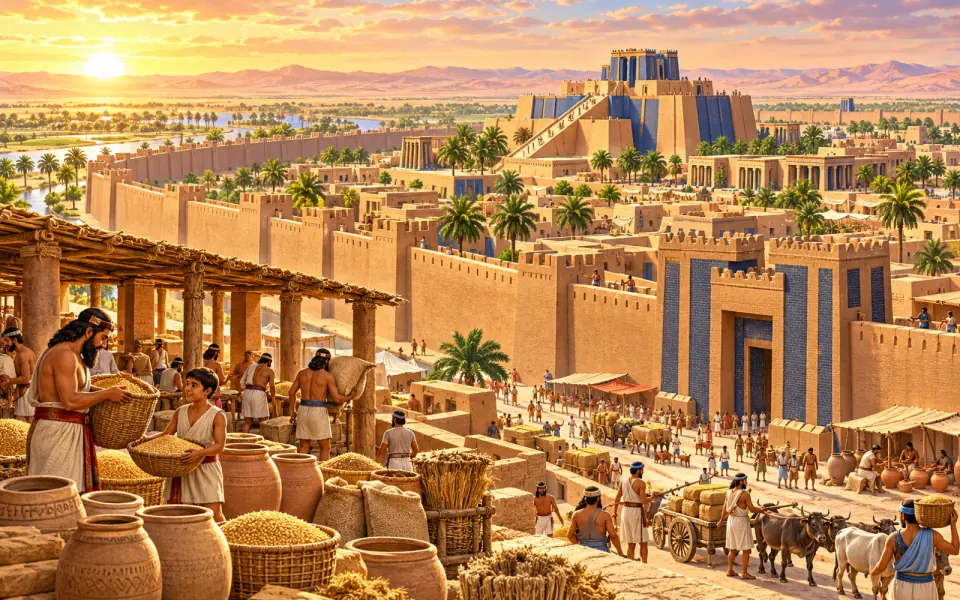 AfterUruk, the great cityabout 3000 BC
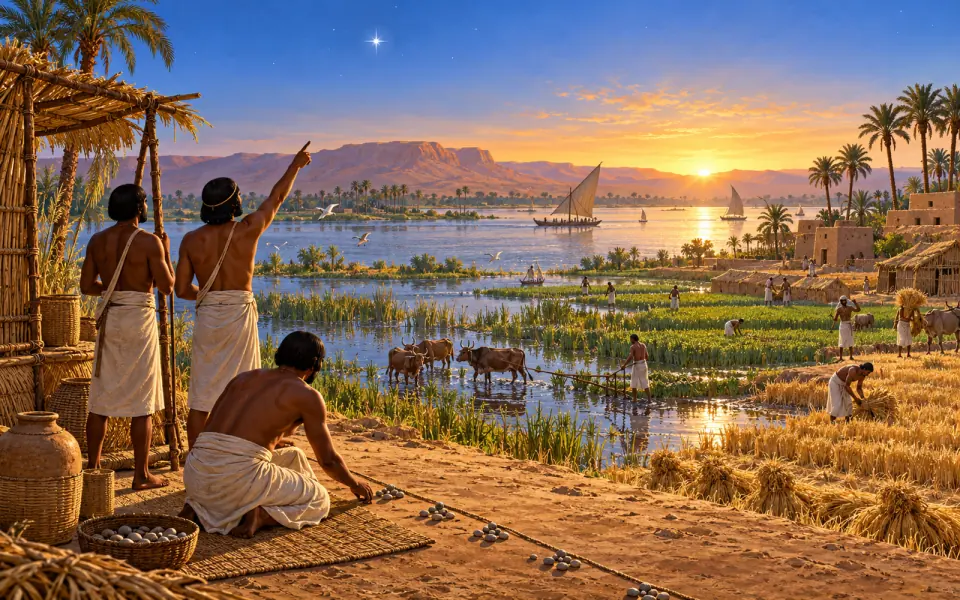 AfterThe Egyptian calendarabout 2800 BC
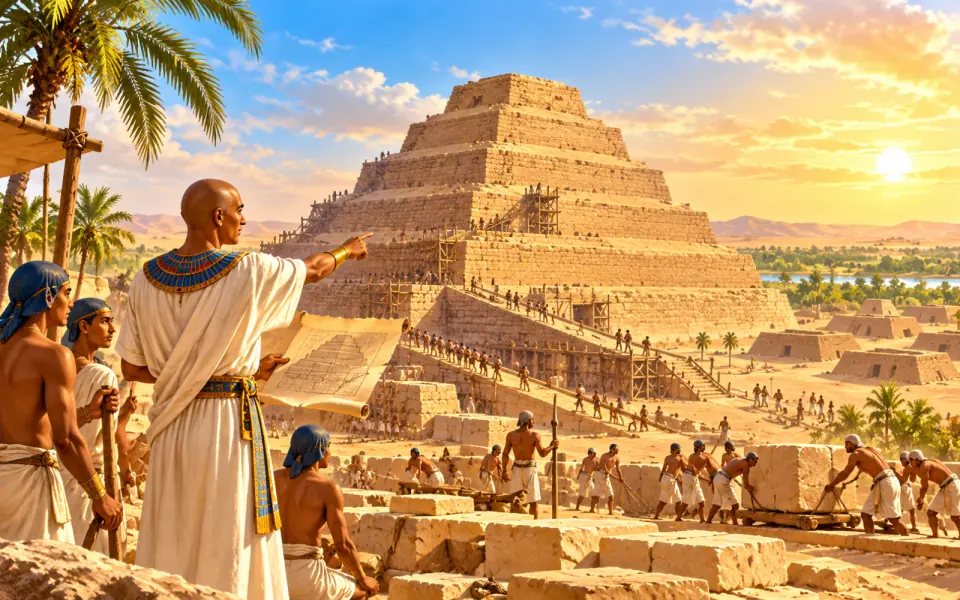 AfterThe Step Pyramid of Djoserabout 2650 BC
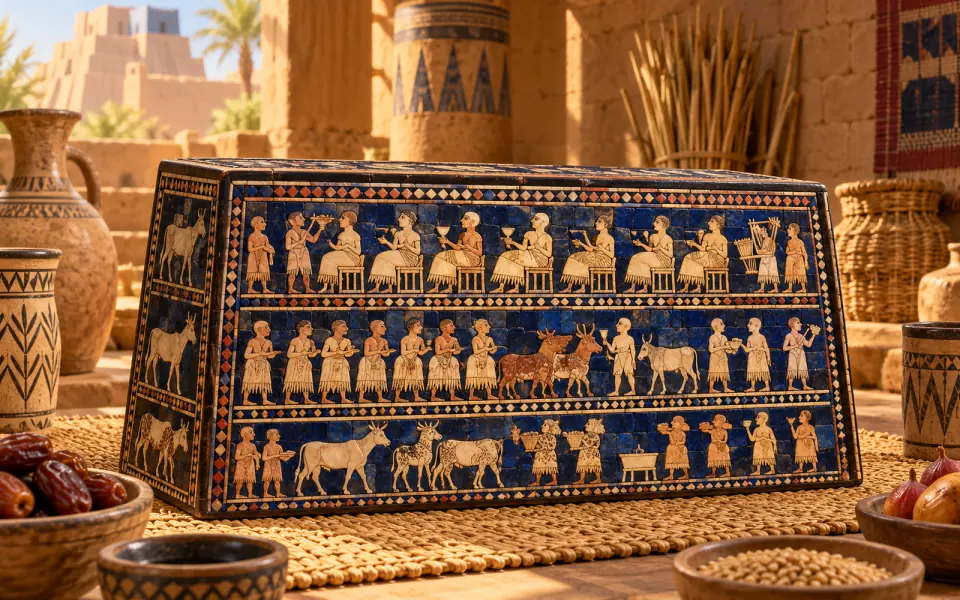 AfterThe Standard of Urabout 2600 BC
 AfterEgyptian mummificationabout 2600 BC
 AfterThe Great Pyramid of Gizaabout 2560 BC
 AfterThe cities of the Indus Valleyabout 2500 BC
 AfterThe drains and baths of Mohenjo-daroabout 2450 BC
 AfterSargon and the Akkadian Empireabout 2334 BC
 AfterTrade between the Indus and Mesopotamiaabout 2300 BC
 AfterThe Epic of Gilgameshabout 2100 BC
 AfterThe Ziggurat of Urabout 2100 BC
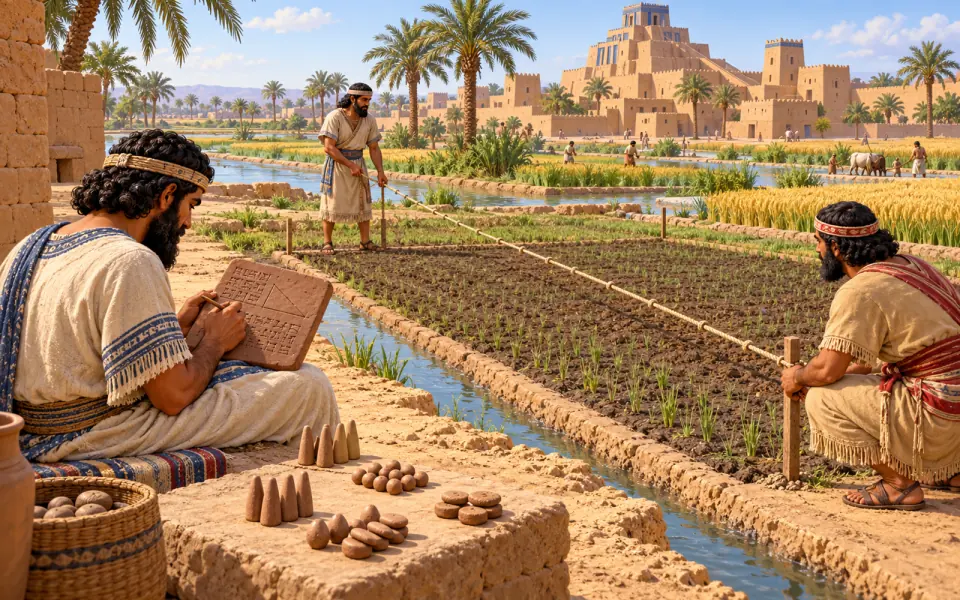 AfterBabylonian mathematicsabout 1800 BC
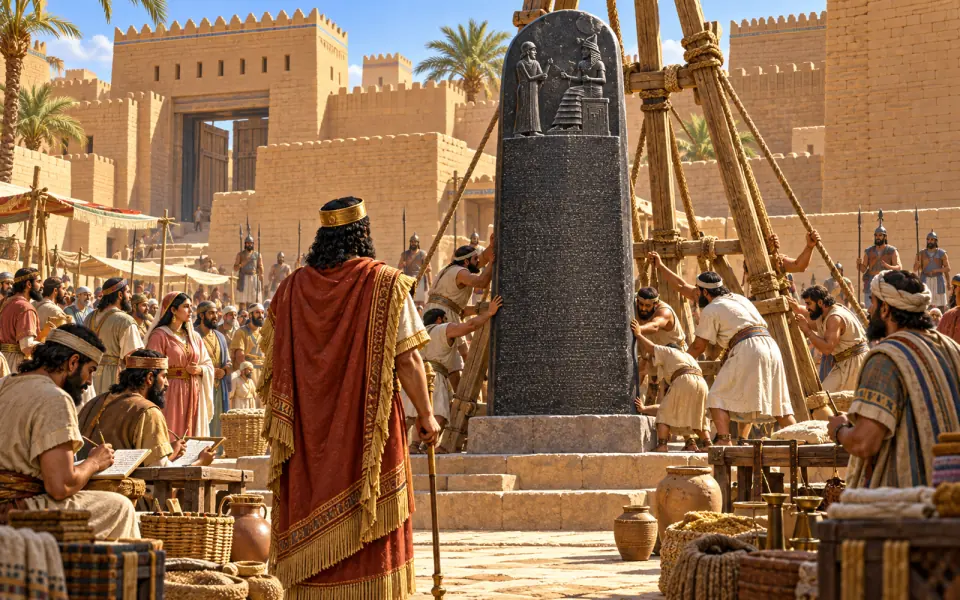 AfterThe Code of Hammurabiabout 1754 BC
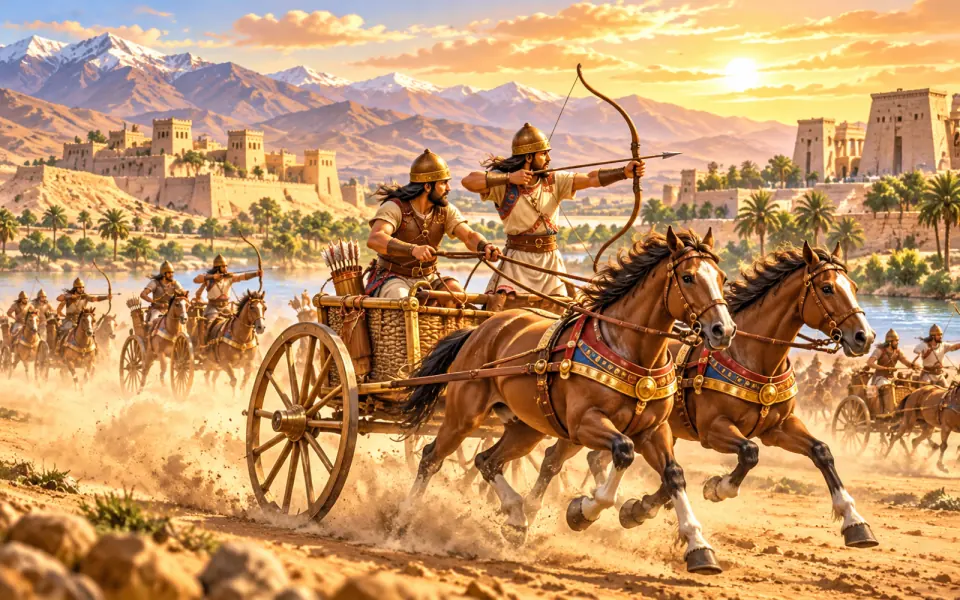 AfterWar chariotsabout 1700 BC
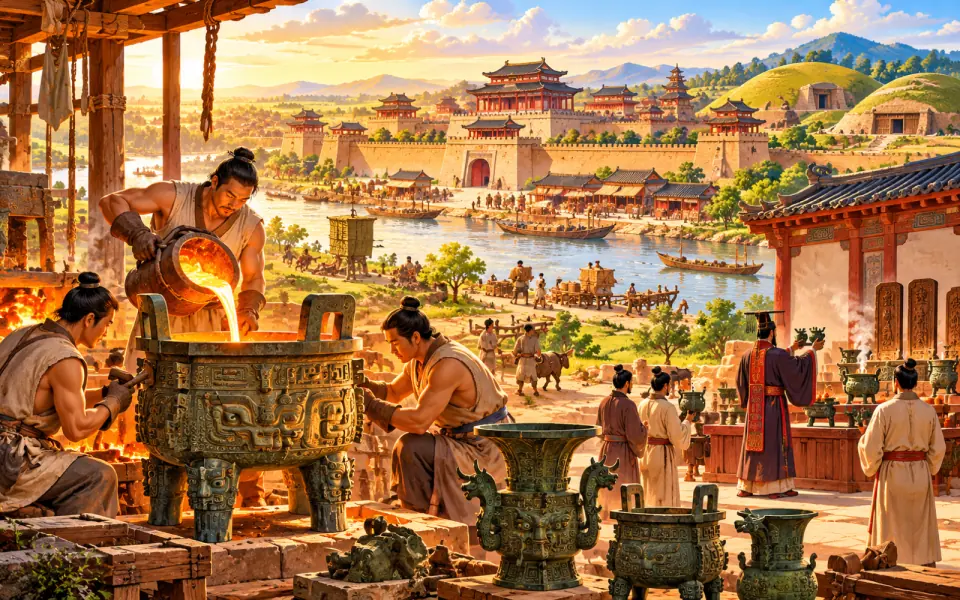 AfterThe Shang dynastyabout 1600–1046 BC
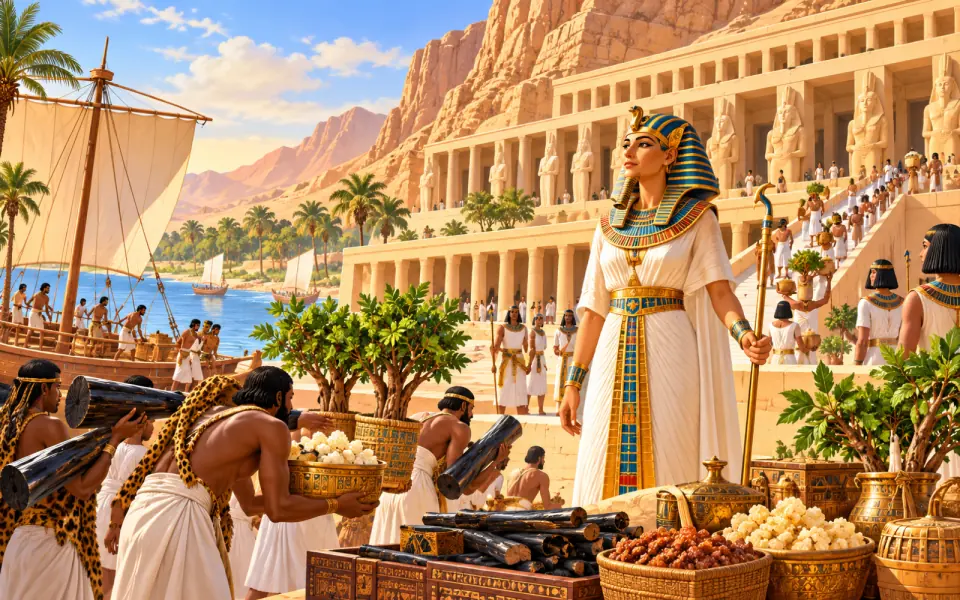 AfterHatshepsut, the woman pharaohabout 1479–1458 BC
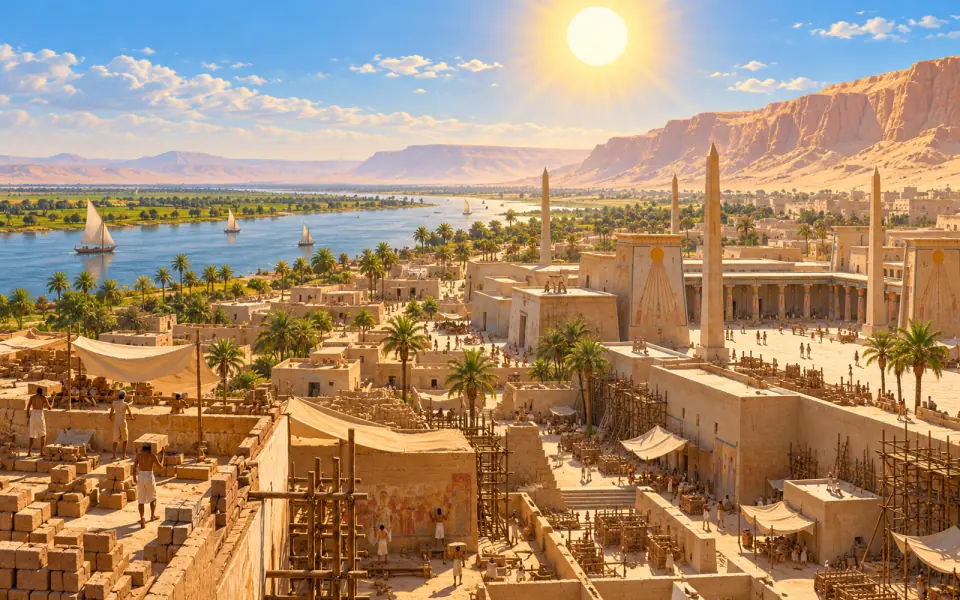 AfterThe reign of Akhenatenabout 1353–1336 BC
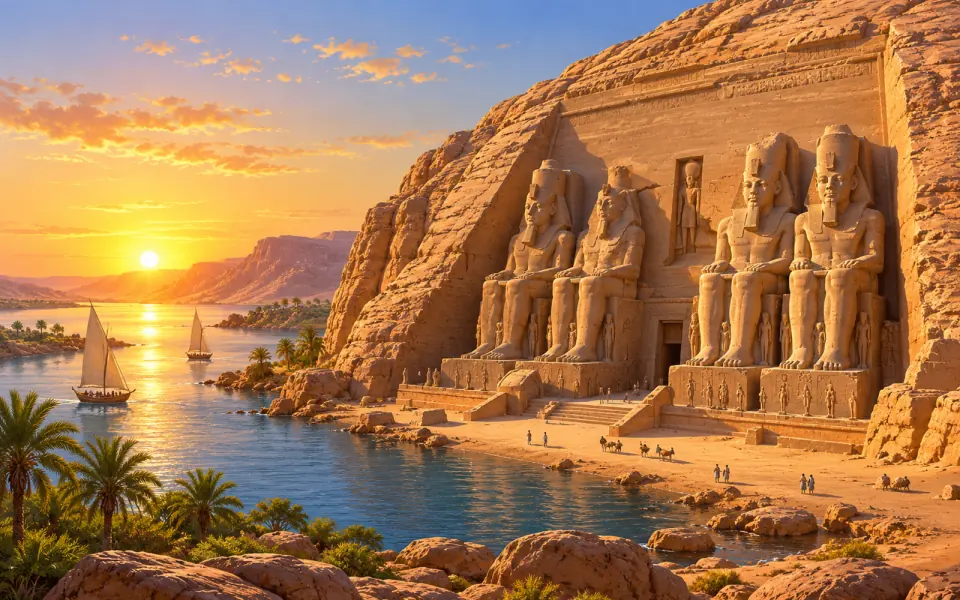 AfterThe reign of Ramesses IIabout 1279–1213 BC
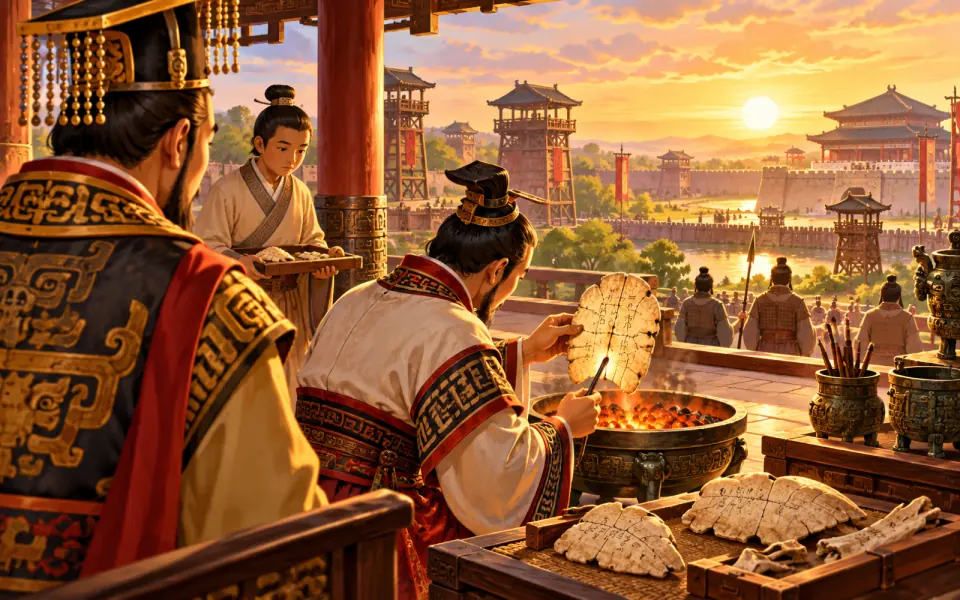 AfterWriting on oracle bonesabout 1250 BC
 AfterThe Bronze Age collapseabout 1200 BC
In legend
Listen / Read next
- Music to read by: Cinematic JourneyEpic film-style music, no lyrics, by Ciro Simone IrmiciSpotifyYouTube Music
Meanwhile, elsewhere in the world
Other events of the era “River civilisations”
- The first Sumerian cities
- Cuneiform writing
- The unification of Egypt
- Uruk, the great city
- The Egyptian calendar
- The Step Pyramid of Djoser
- The Standard of Ur
- Egyptian mummification
- The Great Pyramid of Giza
- The cities of the Indus Valley
- The drains and baths of Mohenjo-daro
- Sargon and the Akkadian Empire
- Trade between the Indus and Mesopotamia
- The Epic of Gilgamesh
- The Ziggurat of Ur
- Babylonian mathematics
- The Code of Hammurabi
- War chariots
- The Shang dynasty
- Hatshepsut, the woman pharaoh
- The reign of Akhenaten
- The reign of Ramesses II
- Writing on oracle bones
- The Bronze Age collapse
