Egyptian mummification
about 2600 BC Giza, Egypt
In short
The Egyptians believed the body was still needed after death, as a home for the dead person's spirit. To preserve it, embalmers removed the internal organs, dried the body with natron, a natural salt, and wrapped it in long linen bandages. The organs were kept separately, in jars called canopic jars. One of the oldest pieces of evidence for this technique is the chest holding the organs of Queen Hetepheres, mother of the pharaoh Khufu.
Why it matters Mummies tell us about the illnesses, food and beliefs of the Egyptians as no book ever could.
Source: Encyclopaedia Britannica, “Mummy”
Study card about 7 minutes of reading
The story
Seventy days in the “house of purification”
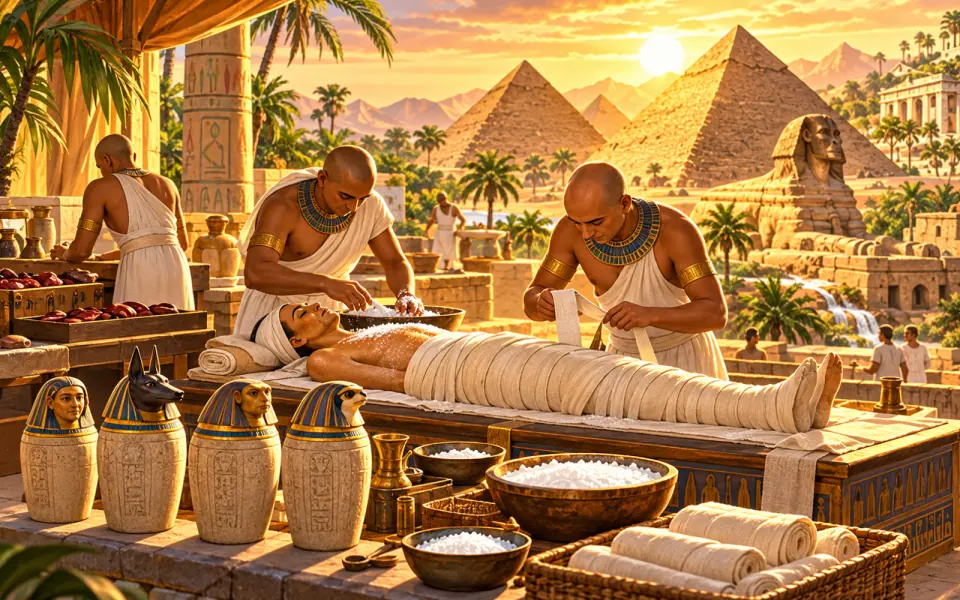
Imagine you are a wealthy citizen of Memphis, more than four thousand years ago, and someone in your family has just died. The body is not buried at once. It is taken to an embalmers' workshop, called the “place of purification” or the “house of beauty”, usually near the river. A team of specialists works there: there is the priest who directs, someone who cuts, someone who cleans, someone who prepares the oils. One of the priests, during the rite, wears a jackal mask on his face: it represents Anubis, the god who protects the dead and embalming.
The work lasted about seventy days in all. First the body was washed with Nile water and palm wine. Then the embalmer made a cut in the left side and removed the internal organs that decay fastest: lungs, liver, stomach and intestines. The brain was pulled out, in little pieces, with a hook pushed up the nose: the Egyptians did not understand its importance and thought it of little use. The heart, on the other hand, was left in place, because it was believed to be the seat of intelligence and feelings, and in the afterlife it would be weighed before the gods.
The salt that dries
At this point the body had to be dried. It was covered, inside and out, with natron, a natural salt gathered in the desert valleys, such as the Wadi Natrun. Natron absorbs water and makes tissues dry and hard, and so protects them from bacteria. After about forty days the body was dried out. It was washed again, filled with linen rags, sawdust and resins to give it shape again, rubbed with scented oils and coated with resin. Hair and nails were tended, and the face was sometimes painted or covered with a mask.
Then the wrapping began. The embalmers used hundreds of metres of linen bandages, often made from old sheets or clothes. Amulets were placed between the layers: the heart scarab, the Eye of Horus, the djed pillar. With each turn of bandage the priests recited spells. Last of all a mask was placed over the face. The mummy was laid in one or more coffins of wood or stone and taken to the tomb, where a rite called the “opening of the mouth” gave the dead person back the ability to eat, breathe and speak.
The organs in special jars
The removed organs were not thrown away. They were dried, wrapped and kept beside the mummy in jars called canopic jars (a name given by the Greeks). In the New Kingdom the lids were in the shape of the heads of the four sons of Horus: man, baboon, jackal and falcon. In the earliest period, that of Queen Hetepheres, mother of the pharaoh Khufu (4th dynasty, about 2600 BC), there were no jars yet: the organs were placed in an alabaster chest divided into four compartments, found in her tomb at Giza in 1925 by the American archaeologists of George Reisner. Inside were bundles of organs, in some compartments soaked in a natron solution: it is one of the oldest pieces of evidence for embalming with the removal of organs. The queen's body, however, was not there: the tomb had been violated or perhaps the real burial was elsewhere.
Why they did it
For the Egyptians death was not the end, but a passage. A person was made of several parts: the body, the ka (a kind of life force), the ba (the personality, shown as a bird with a human head) and the name. After death, ka and ba had to be able to return to the body to receive food and offerings. If the body decayed, the afterlife was in danger. That is why they worked so hard to preserve it, and for the same reason they built such strong tombs.
Not only for kings
At first mummification was reserved for kings and nobles. As the centuries passed it spread to many others, although the most careful methods remained for the rich. The Greek historian Herodotus, who visited Egypt around 450 BC, says that embalmers offered three prices, from the most expensive to the cheapest. The poor were buried in the hot desert sand, which luckily now and then preserved them naturally too.
The first mummies, in fact, were natural. In the oldest cemeteries, before 3500 BC, bodies buried in pits in dry sand dried out by themselves. Perhaps it was seeing them still recognisable after years that gave the Egyptians the idea of helping nature. Scraps of cloth soaked in resin, found in prehistoric tombs at Mostagedda, suggest that already thousands of years before the pyramids someone was trying to treat bodies with protective substances. The full technique, with the removal of organs, appears in the Old Kingdom.
Animal mummies
The Egyptians also mummified animals: cats, ibises, crocodiles, dogs, falcons, even bulls. Some were pets, others offerings to the gods. Ibises, linked to the god Thoth, have been found by the million in the catacombs of Saqqara. Scholars using X-rays have discovered that some bundles contain not whole animals but a few remains or even just mud and feathers: probably the demand was so high that someone cheated.
Why it happened
The most important cause was religion. The Egyptians believed that a person's identity depended on the body too. Preserving it was a way of securing life after death. In their thinking, the mummy was the home to which the spirit could return.
There was also a natural cause, namely the climate. Egypt's dry heat and the desert sand preserve bodies very well. The first Egyptians saw bodies that did not decay and drew a deep conviction from it: death does not wipe out everything.
Finally the wealth of the kingdom counted. After the unification, the pharaoh and his officials had the resources to keep teams of specialists, import resins and scented oils, and weave enormous quantities of linen. The richer the state became, the more mummification became a complicated and prestigious rite.
What changed
Mummification has left historians an extraordinary source. By studying mummies with X-rays, scans and DNA analysis, doctors have found that the Egyptians suffered from diseases we thought were modern, such as hardening of the arteries, toothache and parasite infections, and have been able to reconstruct the age, diet and sometimes the cause of death of pharaohs and ordinary people.
Interest in mummies has also had curious effects. For centuries, in Europe, mummy powder (called mumia) was sold in pharmacies as medicine; in the nineteenth century a brown colour called “mummy brown” was made from the remains of mummies and used by painters. Today all this seems macabre, but it shows how fascinated Europe was by Egypt.
Finally, mummification has influenced our culture, from museums to films. Mummies are among the best-loved objects in museums all over the world, and they have helped give rise to a new way of respecting human remains, treated not just as finds but as people with a story.
Key people and places
People
- Hetepheres I
- Queen of the 4th dynasty, mother of Khufu. Her alabaster chest with organs, found in 1925, is one of the oldest pieces of evidence for mummification with the removal of organs.
- George Reisner
- American archaeologist (1867–1942) who directed the excavations at Giza for Harvard University and the Museum of Fine Arts in Boston and discovered the tomb of Hetepheres.
- Herodotus
- Greek historian of the 5th century BC who visited Egypt and described three kinds of embalming at different prices.
- Anubis
- Egyptian god with a jackal's head, protector of embalmers and guide of the dead in the afterlife.
Places
- Giza (Egypt)
- A plain near Cairo with the three great pyramids, where the tomb of Queen Hetepheres was found.
- Wadi Natrun (Egypt)
- A desert valley where natron, the salt used to dry bodies, was gathered.
- Saqqara (Egypt)
- A great necropolis near Memphis, where catacombs with millions of mummified animals have been found.
Good to know
- Embalmers pulled the brain out through the nose with a metal hook, but left the heart inside the body, because they thought it was the seat of intelligence.
- It took about 70 days in all to complete the embalming, of which about 40 were in the natron.
- In Europe, for centuries, mummy powder was sold as medicine; in the nineteenth century “mummy brown” was a colour used by painters.
- In the catacombs of Saqqara millions of mummified ibises have been found, offerings to the god Thoth.
- The word “mummy” comes from the Arabic and Persian mumiya, which meant bitumen: the ancients thought the black colour of mummies was due to this substance.
Find out more
- World History Encyclopedia, “Anubis” worldhistory.org
- Wikipedia, “Mummy” en.wikipedia.org
- Wikipedia, “Hetepheres I” en.wikipedia.org
- Museo Egizio, Turin (in English) museoegizio.it
Related events
- The Step Pyramid of Djoserabout 2650 BC · River civilisationsThe king buried in Djoser's pyramid needed to be mummified for the afterlife.
- The Great Pyramid of Gizaabout 2560 BC · River civilisationsThe Great Pyramid was built for the tomb of King Khufu, son of Hetepheres.
- Egyptian hieroglyphsabout 3200 BC · River civilisationsHieroglyphs, written on the walls of tombs, explain the meaning of the rites to us.
- Hatshepsut, the woman pharaohabout 1479–1458 BC · River civilisationsHatshepsut too was mummified, and her body was searched for over the centuries.
- The reign of Ramesses IIabout 1279–1213 BC · River civilisationsThe mummy of Ramesses II is kept in Cairo and is still studied.
Before and after, in the era “River civilisations”
Event 9 of 25
 BeforeThe first Sumerian citiesabout 4000 BC
 BeforeCuneiform writingabout 3200 BC
 BeforeEgyptian hieroglyphsabout 3200 BC
 BeforeThe unification of Egyptabout 3100 BC
 BeforeUruk, the great cityabout 3000 BC
 BeforeThe Egyptian calendarabout 2800 BC
 BeforeThe Step Pyramid of Djoserabout 2650 BC
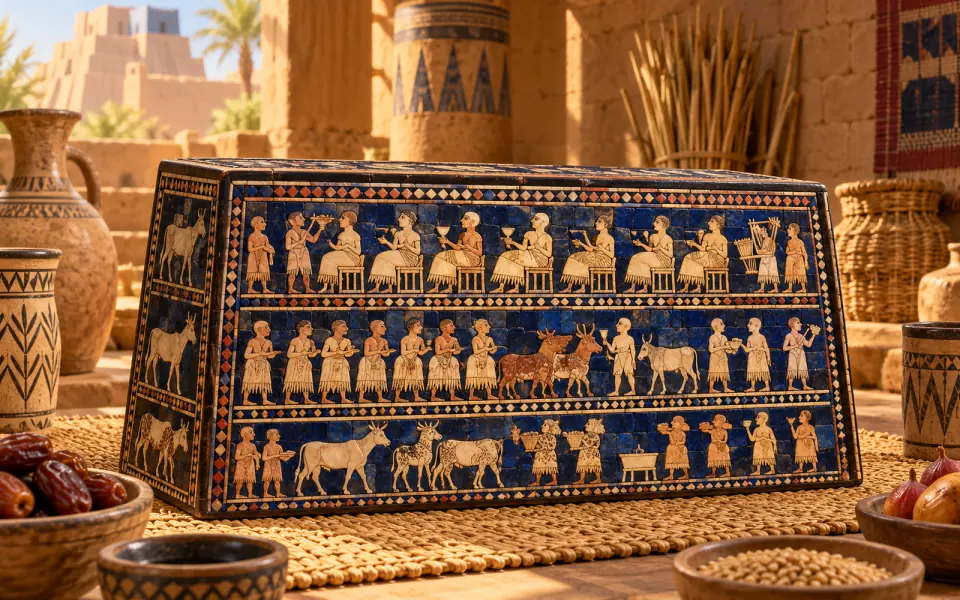 BeforeThe Standard of Urabout 2600 BC
- You are hereEgyptian mummificationabout 2600 BC
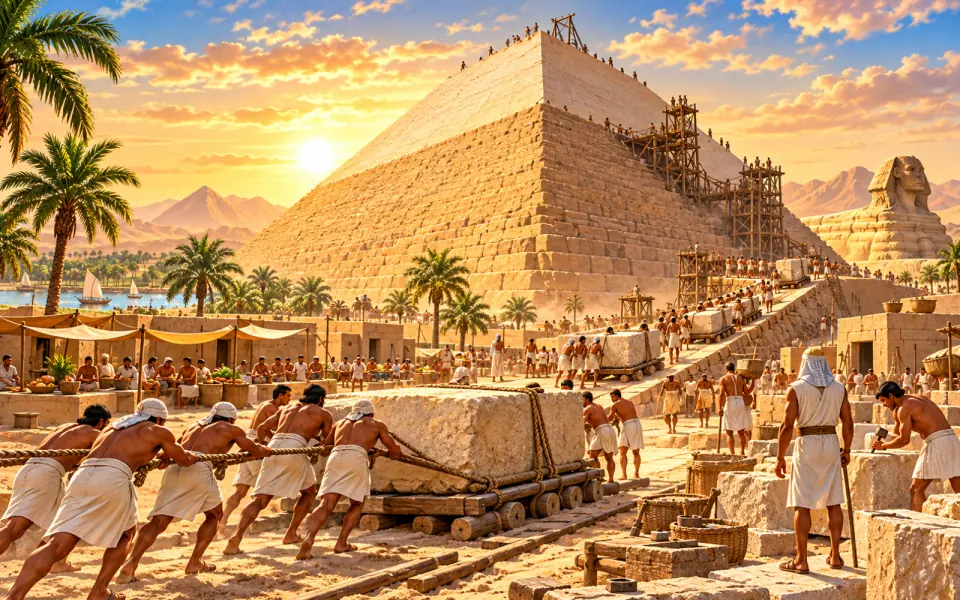 AfterThe Great Pyramid of Gizaabout 2560 BC
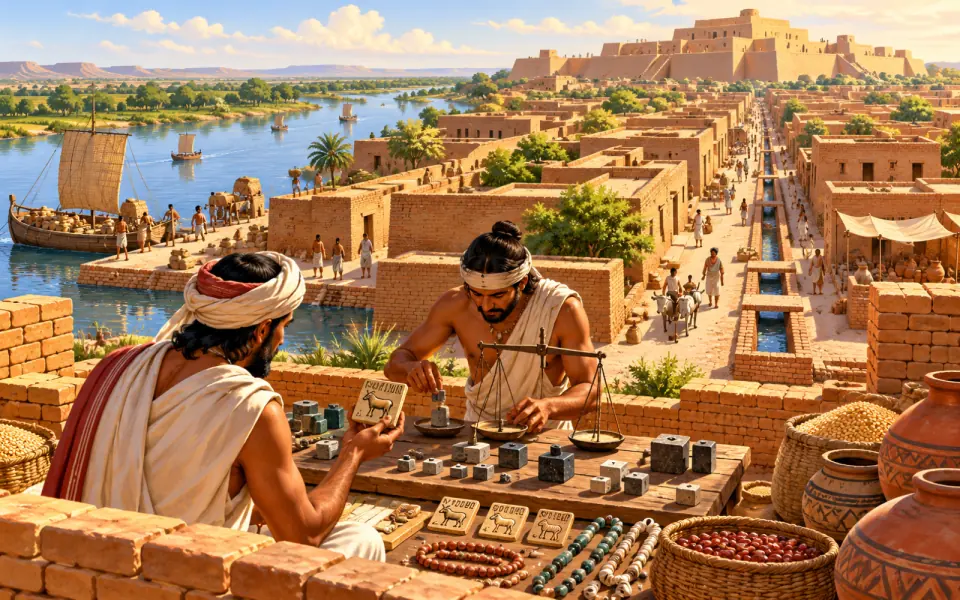 AfterThe cities of the Indus Valleyabout 2500 BC
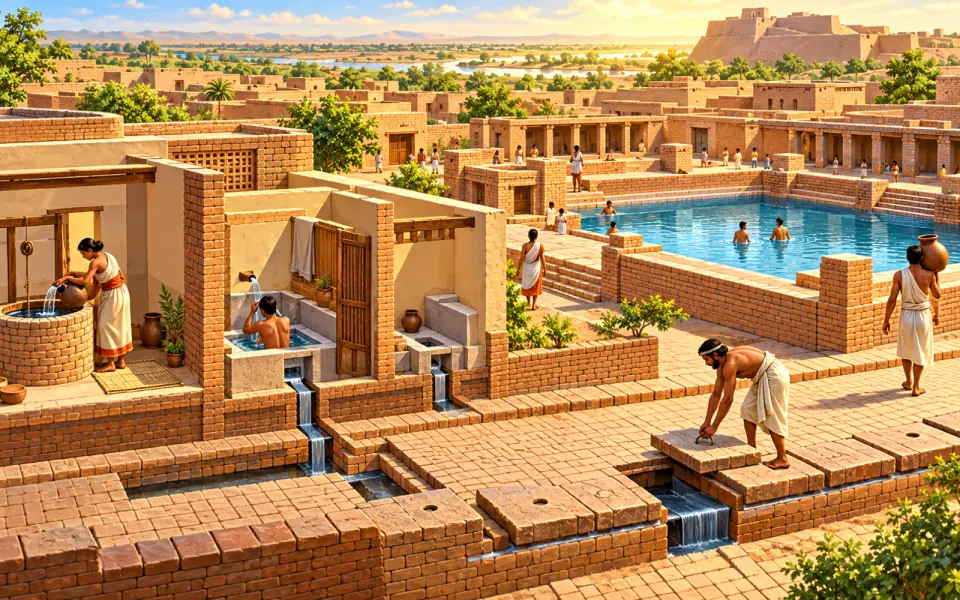 AfterThe drains and baths of Mohenjo-daroabout 2450 BC
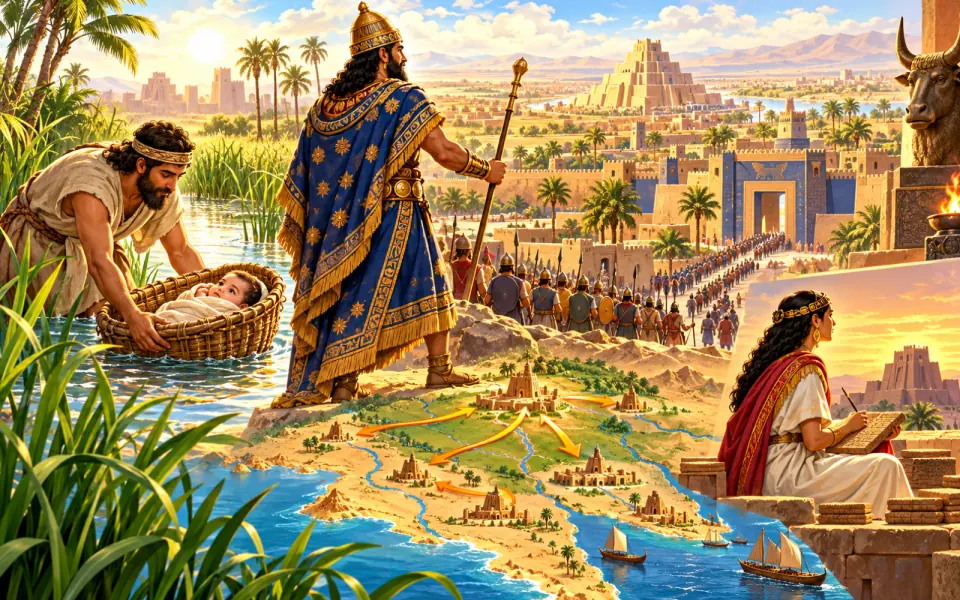 AfterSargon and the Akkadian Empireabout 2334 BC
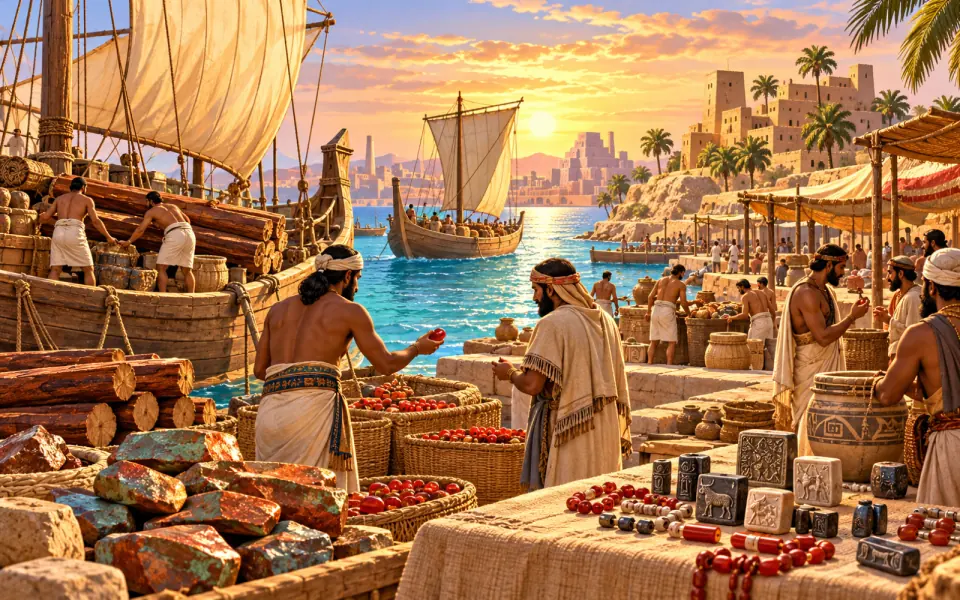 AfterTrade between the Indus and Mesopotamiaabout 2300 BC
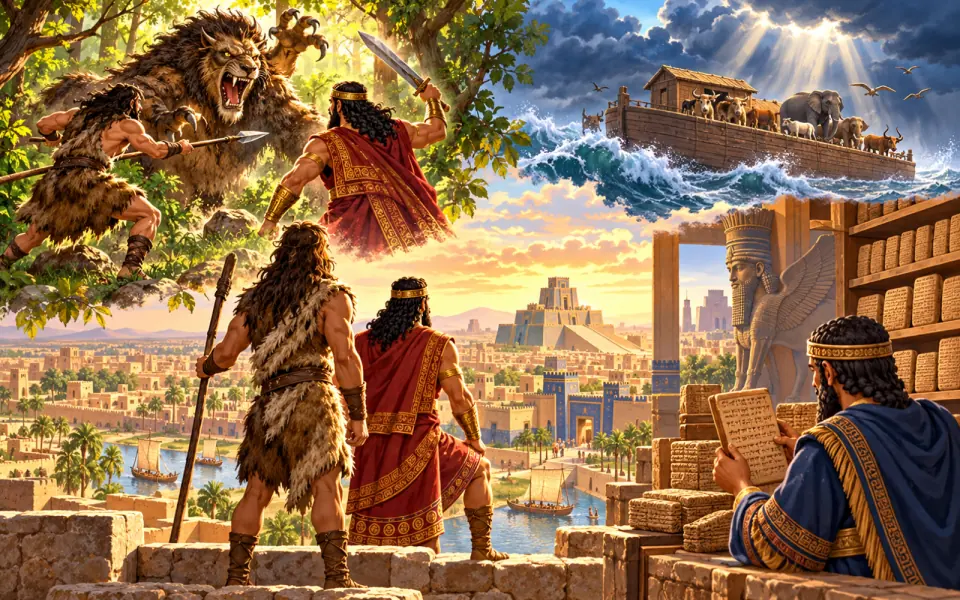 AfterThe Epic of Gilgameshabout 2100 BC
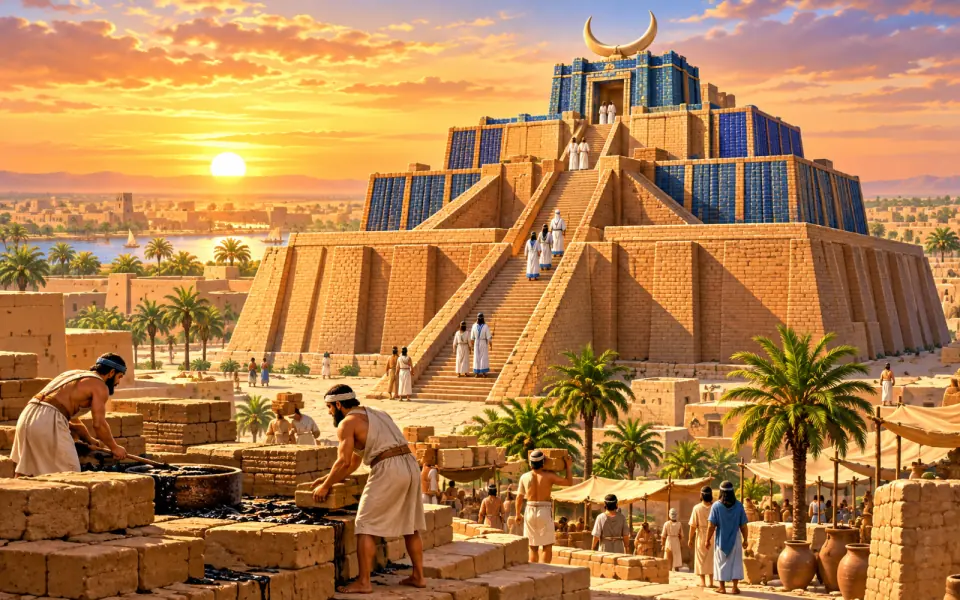 AfterThe Ziggurat of Urabout 2100 BC
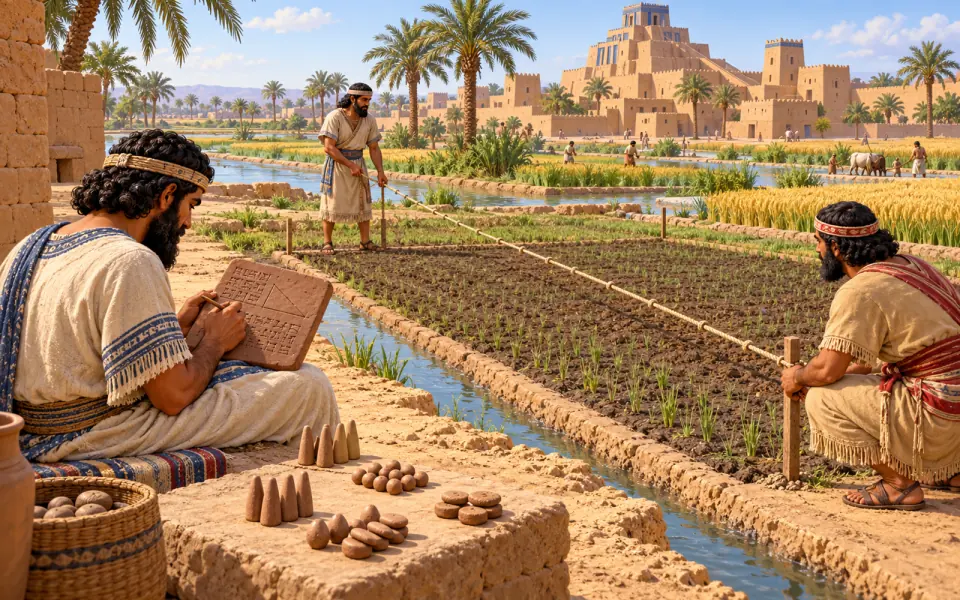 AfterBabylonian mathematicsabout 1800 BC
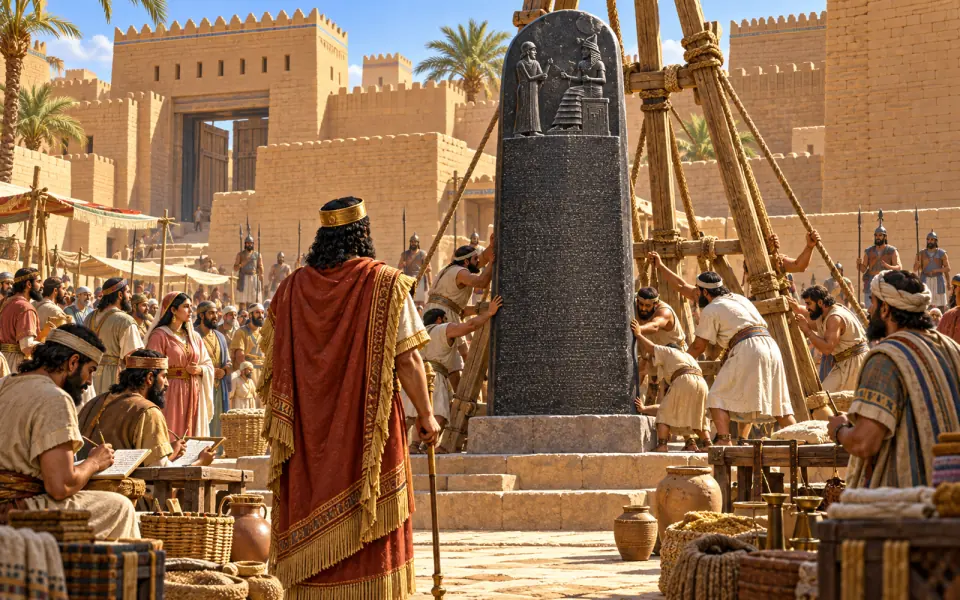 AfterThe Code of Hammurabiabout 1754 BC
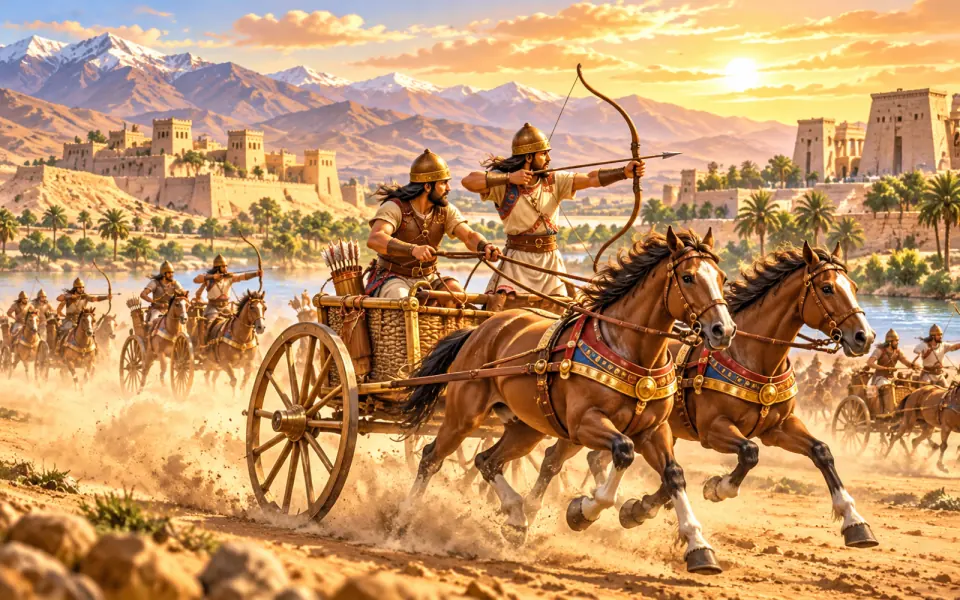 AfterWar chariotsabout 1700 BC
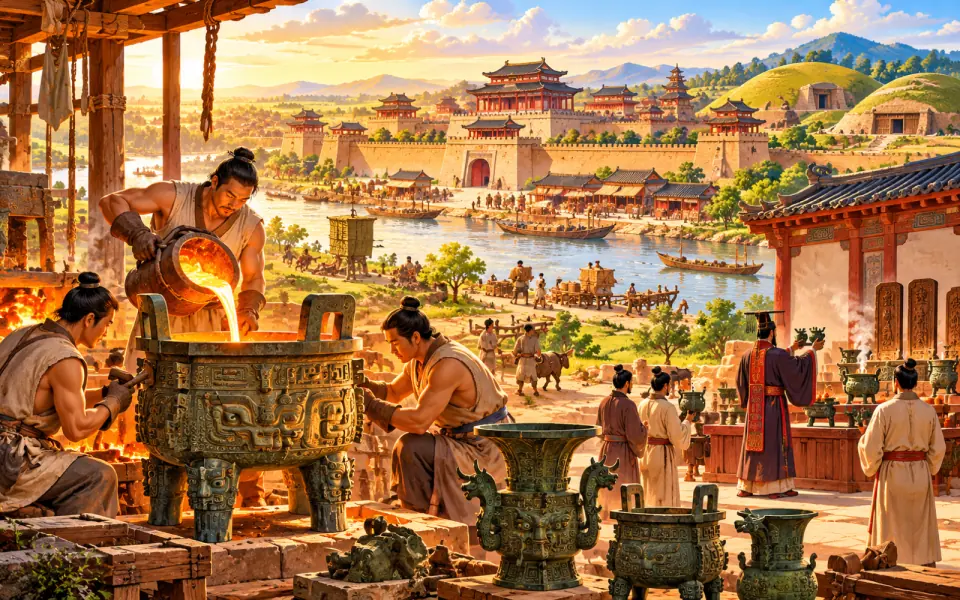 AfterThe Shang dynastyabout 1600–1046 BC
 AfterHatshepsut, the woman pharaohabout 1479–1458 BC
 AfterThe reign of Akhenatenabout 1353–1336 BC
 AfterThe reign of Ramesses IIabout 1279–1213 BC
 AfterWriting on oracle bonesabout 1250 BC
 AfterThe Bronze Age collapseabout 1200 BC
In legend
Listen / Read next
- Music to read by: Cinematic JourneyEpic film-style music, no lyrics, by Ciro Simone IrmiciSpotifyYouTube Music
Meanwhile, elsewhere in the world
Other events of the era “River civilisations”
- The first Sumerian cities
- Cuneiform writing
- Egyptian hieroglyphs
- The unification of Egypt
- Uruk, the great city
- The Egyptian calendar
- The Step Pyramid of Djoser
- The Standard of Ur
- The Great Pyramid of Giza
- The cities of the Indus Valley
- The drains and baths of Mohenjo-daro
- Sargon and the Akkadian Empire
- Trade between the Indus and Mesopotamia
- The Epic of Gilgamesh
- The Ziggurat of Ur
- Babylonian mathematics
- The Code of Hammurabi
- War chariots
- The Shang dynasty
- Hatshepsut, the woman pharaoh
- The reign of Akhenaten
- The reign of Ramesses II
- Writing on oracle bones
- The Bronze Age collapse
