The walls of Jericho
about 10,300 years ago Jericho, Jordan Valley
In short
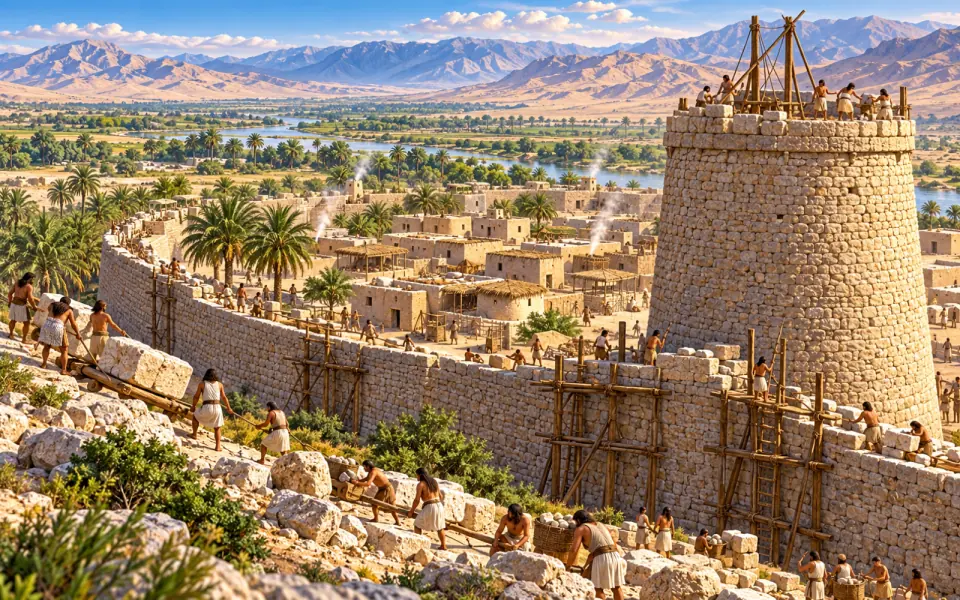
Jericho, near the River Jordan, is one of the oldest inhabited settlements in the world. More than 10,000 years ago its people built a stone wall and a tower over 8 metres high. We do not know for sure whether they were meant to keep out enemies or floods.
Why it matters It shows that a village could already organise big building works done together.
Source: Treccani, entry “Gerico”
Study card about 5 minutes of reading
The story
A hill at the lowest point on Earth
Jericho lies in the valley of the River Jordan, about 250 metres below sea level: it is one of the lowest cities in the world. The climate is hot and dry, almost unbearable in summer, but there is a precious gift: a spring that still gushes today, called Ain es-Sultan, the “Sultan's Spring”, which makes an oasis of palms and orchards grow in the desert. That is why, for more than ten thousand years, people have stopped here. The ancient site is an artificial hill, about twenty metres high and made of layers of houses on top of one another, called Tell es-Sultan.
A hill like this is called a “tell” in Arabic and forms when a village of mud bricks is abandoned, collapses, and other inhabitants rebuild on top. Over the millennia, layer after layer, the level rises. By digging into such a hill, archaeologists read history from top to bottom: the recent ages on top, the oldest at the bottom.
A century of excavations
The first person to dig at Jericho, in the nineteenth century, was the Englishman Charles Warren. At the start of the twentieth century two Germans arrived, Ernst Sellin and Carl Watzinger; then, in the 1930s, the Englishman John Garstang. Garstang believed he had found the collapsed walls of the city conquered by Joshua, of which the Bible speaks. But the decisive answer came from the British archaeologist Kathleen Kenyon, who dug at Jericho between 1952 and 1958 with much more precise methods, layer by layer. Kenyon showed that the walls Garstang had found were much older than Joshua, by about a thousand years; and that by the time of the Bible, around 1400 BC, the hill was largely eroded or destroyed. The debate about that story is still alive, but between the two events there are thousands of years.
Beneath the Bronze Age walls, however, Kenyon discovered something even older and unexpected: the remains of a Neolithic village.
The wall and the tower
Around 8000 BC, so about 10,000 years ago, the inhabitants of Jericho built a stone wall, about 1.8 metres thick and more than three metres high, with a ditch cut into the rock in front of it. Inside the wall, on the west side, a round stone tower was raised, about eight and a half metres high and nine metres wide, with an inner staircase of twenty-two steps cut into the blocks. Building all this took thousands of days of work, and there were still no metals, no wheels and no draught animals: only stone, baskets and arms.
The purpose is not clear. Kenyon thought of a defence system against enemies, with the tower as a lookout post. Other scholars, such as the Israeli archaeologist Ofer Bar-Yosef, think the wall served to protect the village from floods and mudslides that came down the slopes in heavy rain. Still others think it had a symbolic value, to show the prestige and strength of the community. Perhaps all three things were true at once.
Who lived at Jericho?
The inhabitants lived in round mud-brick houses, a few metres across, with roofs of branches. They were still largely hunter-gatherers, but they already grew a few plants, such as barley and wheat, and made use of the spring water. How many they were is uncertain: Kenyon estimated two to three thousand inhabitants, but today the most cautious estimates say a few hundred, perhaps a thousand. In any case it was a very large village for those times.
A little later, about 9,000 years ago, a strange custom appeared at Jericho: the dead were buried under the floors of the houses, but the skull was detached, covered with plaster modelled like a face and decorated with shells in place of the eyes. These are the famous “plastered skulls”, which perhaps served to remember the ancestors. Some of these skulls are on show today in the museums of Amman and London.
A site still alive
Since 1997 an Italian–Palestinian mission has worked at Jericho, led by archaeologists from the Sapienza University of Rome and the Palestinian Ministry of Tourism and Antiquities. The site, called Tell es-Sultan, was added in 2023 to the UNESCO World Heritage List. Visitors today can see the stone tower, protected by a cover, and the ditch that ran round it.
Why it happened
Water was the main cause. In a dry region like the Jordan valley, an abundant spring becomes a magnet. Around that water an oasis formed with fertile soil, plants and game: an ideal place to settle.
The nearness of the Natufians, who already lived in villages and gathered wild cereals, had prepared the ground. Knowledge about harvesting, grinding and storing seeds was already widespread in the region.
To build the wall, organisation was needed: someone had to decide, share out the work, provide food for the workers. A community so well coordinated suggests leaders, rules and a form of government, although we do not know what they were like.
What changed
Jericho shows that people, even before having cities, metals and writing, were able to carry out great collective works. The idea that you need a king and an army to build great things is disproved by a tower made by hunters and farmers.
The site also changed the way archaeology is done. Kathleen Kenyon's method of excavation, with sections of ground showing the layers one on top of another and precise records of every single level, became a model for the whole world.
Today Jericho is a living city, with tens of thousands of inhabitants. It is one of the longest-inhabited places in the world, and reminds us that modern cities rest on layers of history much deeper than they seem.
Key people and places
People
- Kathleen Kenyon
- British archaeologist (1906–1978). Between 1952 and 1958 she dug at Jericho with a rigorous method and discovered the Neolithic wall and tower.
- John Garstang
- British archaeologist (1876–1956). He dug at Jericho in the 1930s and believed he had found the walls of Joshua.
- Ofer Bar-Yosef
- Israeli archaeologist (1937–2020). He suggested that the wall of Jericho protected the village from floods.
- Lorenzo Nigro
- Italian archaeologist at the Sapienza University of Rome. He directs the Italian–Palestinian mission at Tell es-Sultan.
Places
- Tell es-Sultan, Jericho (West Bank)
- An artificial hill in the Jordan valley, with layers of villages on top of one another from over 10,000 years ago.
- Ain es-Sultan Spring
- A spring that has watered the oasis of Jericho for thousands of years.
- Jordan valley
- A long cleft in the Earth's crust, between the Sea of Galilee and the Dead Sea, one of the lowest points on the Earth's surface.
Good to know
- Jericho lies more than 250 metres below sea level and is often called “the lowest city in the world”.
- The tower of Jericho has an inner staircase of 22 steps cut out of the stone blocks: it is one of the oldest staircases known.
- The plastered skulls of Jericho have shell eyes and faces modelled in plaster; some keep traces of red paint.
- In the biblical story the walls of Jericho fall at the sound of trumpets: according to Kenyon and many archaeologists, however, in the period when Joshua is placed there are no traces of a fortified city.
- Jericho is still inhabited today, and its name appears in texts more than three thousand years old.
Find out more
- Wikipedia, “Pre-Pottery Neolithic A” en.wikipedia.org
- Wikipedia, “Jericho” en.wikipedia.org
- Wikipedia, “Tell es-Sultan” en.wikipedia.org
- Wikipedia, “Kathleen Kenyon” en.wikipedia.org
Related events
- The first permanent villagesabout 14,000 years ago · PrehistoryThe Natufians, who lived earlier in the same region, prepared the way for the settled village.
- The Neolithic Revolutionabout 12,000 years ago · PrehistoryThe cultivation of barley and wheat made such a large village possible.
- Çatalhöyükabout 9,000 years ago · PrehistoryÇatalhöyük, a few millennia later, was another big village without fortifications.
- The first Sumerian citiesabout 4000 BC · River civilisationsThe first Sumerian cities arose from villages that grew, like Jericho.
- The Kingdom of Israelabout 1000 BC · Sea civilisationsThe kingdom of Israel, in this same region, arose thousands of years later.
Before and after, in the era “Prehistory”
Event 20 of 25
 BeforeThe first homininsabout 7 million years ago
 BeforeLucy the australopithecineabout 3.2 million years ago
 BeforeThe first stone toolsabout 2.6 million years ago
 BeforeHomo habilisabout 2.4 million years ago
 BeforeHomo erectusabout 1.9 million years ago
 BeforeTaming fireabout 790,000 years ago
 BeforeHomo heidelbergensisabout 600,000 years ago
 BeforeNeanderthalsabout 400,000 years ago
 BeforeThe arrival of Homo sapiensabout 300,000 years ago
 BeforeThe first deliberate burialsabout 100,000 years ago
 BeforeHomo sapiens leaves Africaabout 60,000 years ago
 BeforeThe needle with an eyeabout 48,000 years ago
 BeforeThe first people in Australiaabout 48,000 years ago
 BeforeThe cave art of Sulawesiabout 44,000 years ago
 BeforeThe Venus of Willendorfabout 28,000 years ago
 BeforeThe Lascaux caveabout 19,000 years ago
 BeforeThe first permanent villagesabout 14,000 years ago
 BeforeThe Neolithic Revolutionabout 12,000 years ago
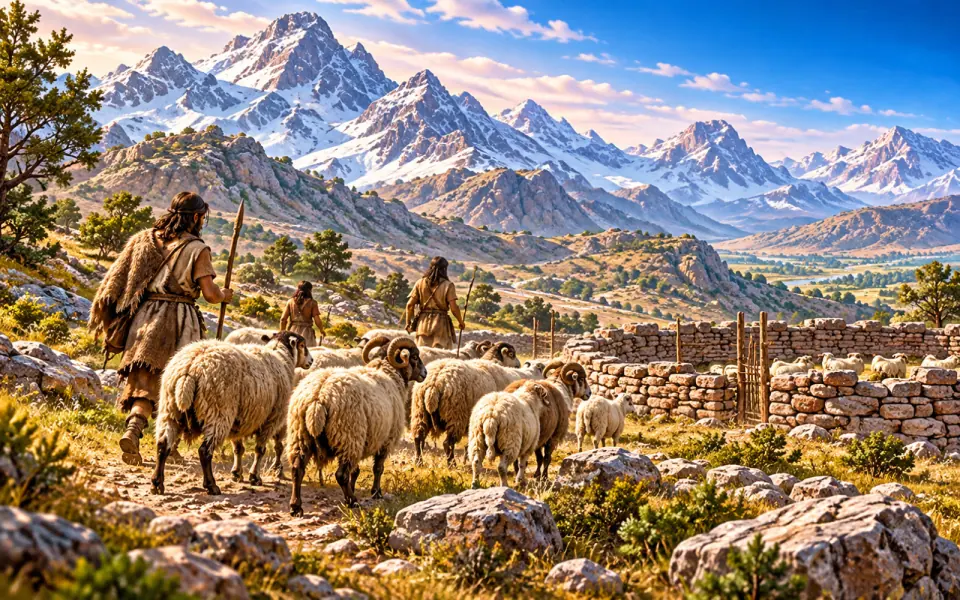 BeforeTaming the sheepabout 11,000 years ago
- You are hereThe walls of Jerichoabout 10,300 years ago
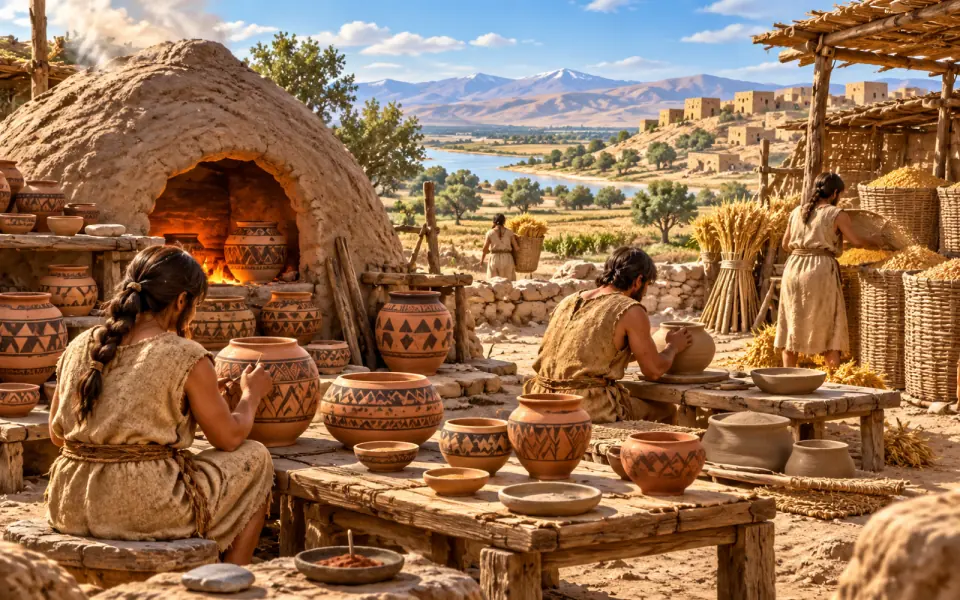 AfterPottery spreadsabout 9,000 years ago
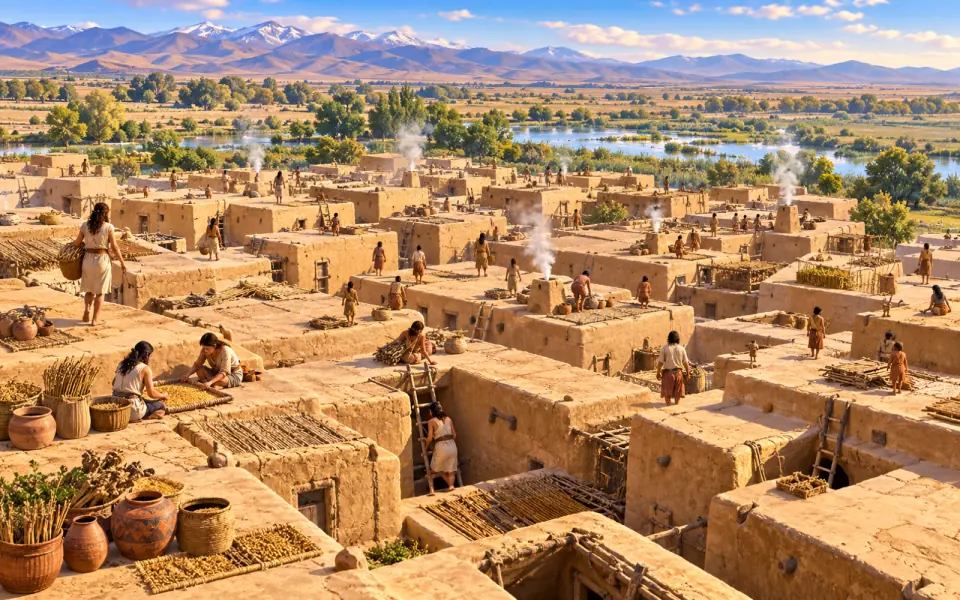 AfterÇatalhöyükabout 9,000 years ago
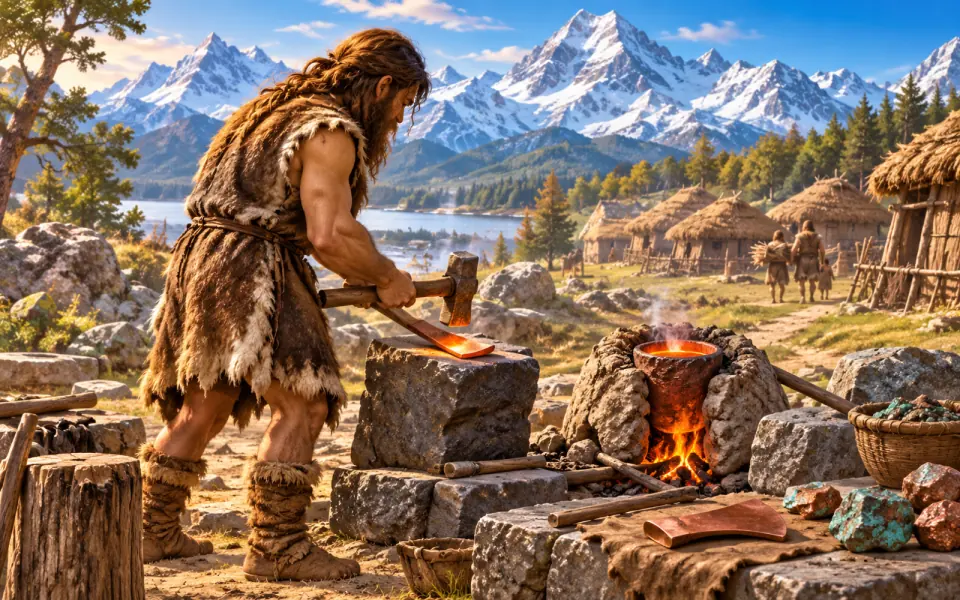 AfterWorking with copperabout 7,000 years ago
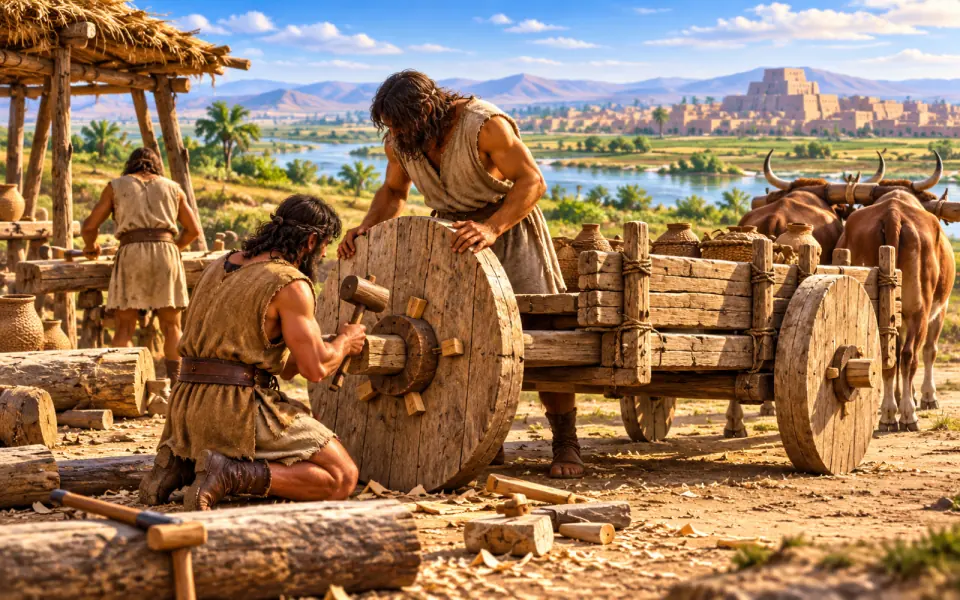 AfterThe invention of the wheelabout 5,500 years ago
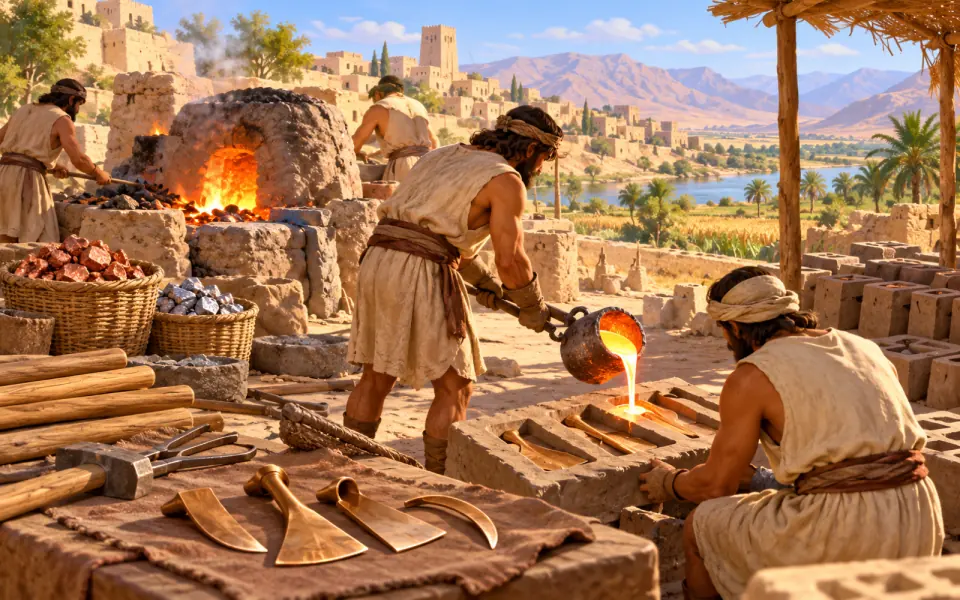 AfterThe Bronze Ageabout 5,300 years ago
Listen / Read next
- Music to read by: Cinematic JourneyEpic film-style music, no lyrics, by Ciro Simone IrmiciSpotifyYouTube Music
Other events of the era “Prehistory”
- The first hominins
- Lucy the australopithecine
- The first stone tools
- Homo habilis
- Homo erectus
- Taming fire
- Homo heidelbergensis
- Neanderthals
- The arrival of Homo sapiens
- The first deliberate burials
- Homo sapiens leaves Africa
- The needle with an eye
- The first people in Australia
- The cave art of Sulawesi
- The Venus of Willendorf
- The Lascaux cave
- The first permanent villages
- The Neolithic Revolution
- Taming the sheep
- Pottery spreads
- Çatalhöyük
- Working with copper
- The invention of the wheel
- The Bronze Age
