Neanderthals
about 400,000 years ago Europe and western Asia (in Italy: Altamura, Apulia)
In short
Neanderthals lived in Europe and western Asia from about 400,000 to 40,000 years ago. They were sturdy, suited to the cold of the ice ages, buried their dead and made ornaments. Many traces of them remain in Italy too, such as Altamura Man, in Apulia.
Why it matters They were humans like us, with a culture of their own: not the ‘brutes’ of old illustrations.
Source: Smithsonian, Human Origins Program, “Homo neanderthalensis”
Study card about 6 minutes of reading
The story
Strange bones in a German valley
In August 1856, in a limestone quarry in the valley of the River Düssel, near Düsseldorf in Germany, some workers found in a cave bones with an unusual look: a very low, elongated skullcap with enormous brow ridges, and thick, curved arm and leg bones. They thought they were the remains of a bear and almost threw them away. A local science teacher, Johann Carl Fuhlrott, realised they were different and had them studied with an anatomist, Hermann Schaaffhausen. The valley was called Neander, after a seventeenth-century poet: in German “Thal” or “tal” means valley. Hence “Neanderthal”, the “valley of Neander”. In 1864 the scientific name was fixed: Homo neanderthalensis.
Other similar skulls had already been found, at Gibraltar in 1848 and in Belgium in 1829, but nobody had recognised them. For this reason the discovery in the Neander valley is considered the beginning of the scientific study of an extinct human species, three years before Darwin's book on the origin of species.
What they were like
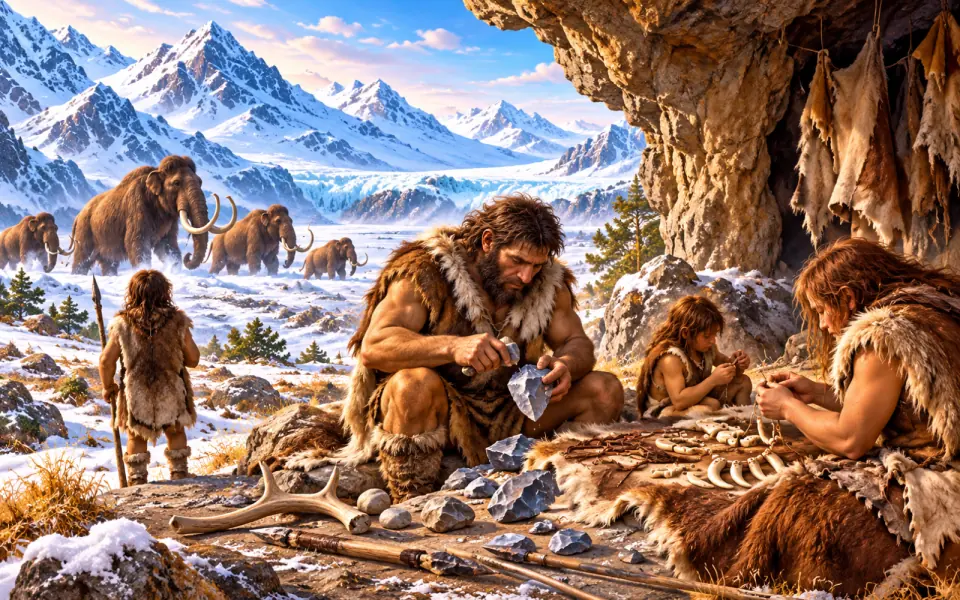
The Neanderthals lived in Europe and western Asia from about 400,000 until about 40,000 years ago. They were shorter than us, but very sturdy, with a broad chest, short legs and thick bones: a body suited to keeping in heat in the cold climates of the ice ages. The face had big brow ridges above the eyes, a wide nose and almost no chin. The brain was as big as ours, on average even a little bigger, about 1,400–1,500 cubic centimetres; but the shape of the head was different, longer and lower. The first reconstructions, a hundred years ago, showed them as stooping and brutish, but this was a mistake: the skeleton studied then, found in France, belonged to an old man with arthritis.
A culture of their own
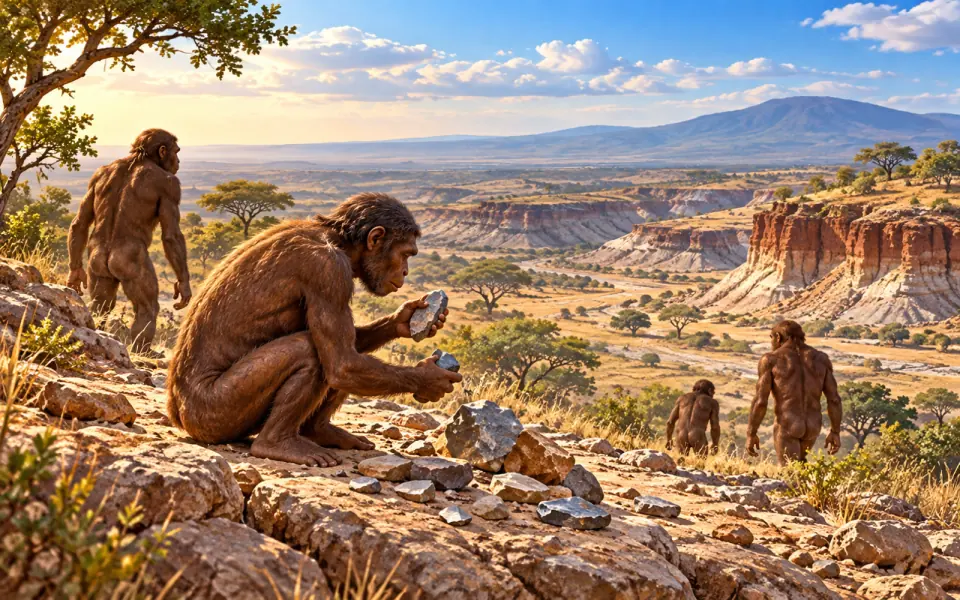
They made very refined stone tools with a technique called Levallois, in which the flint core was prepared before a flake of the wanted shape was struck off. They made wooden spears and hunted horses, deer and big wild cattle. They also cooked plants, as the residues in the tartar on their teeth show. They produced pitch, a kind of glue made from birch bark, to fix points to handles: in Tuscany, at Campitello, traces of it about 200,000 years old have been found. They looked after one another: the skeleton of a man found in Shanidar Cave in Iraq shows very serious injuries and a long recovery, impossible without the help of the group.
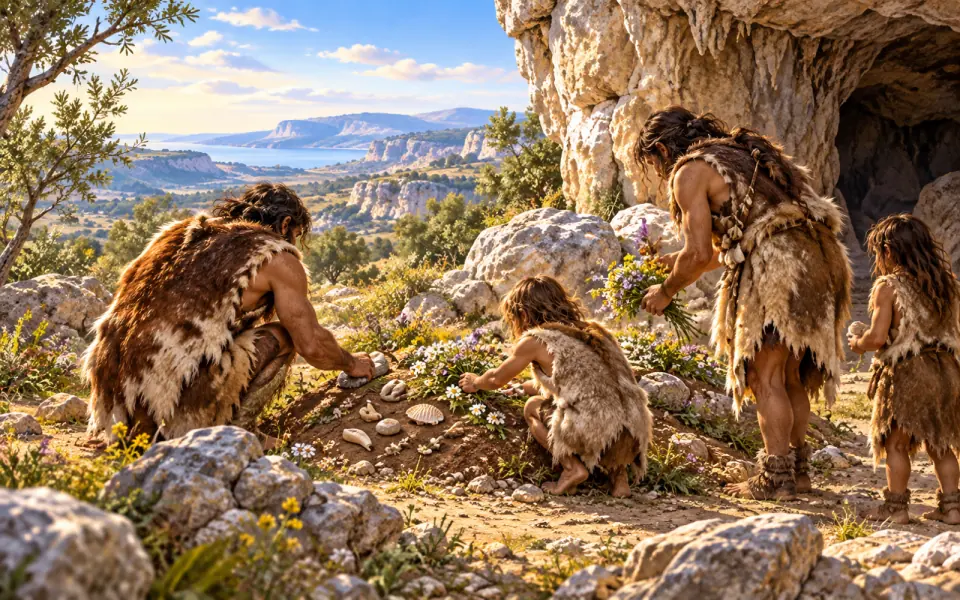
They buried their dead, at least in some cases, as at La Chapelle-aux-Saints in France, where in 1908 a skeleton was found in a pit dug on purpose. Some groups used ornaments: perforated eagle talons at Krapina in Croatia, about 130,000 years old, coloured shells in Spain, and bird feathers, probably worn as decoration, in Fumane Cave in Veneto. Some studies say that in Spain they may even have painted cave walls more than 64,000 years ago, but the dating is much disputed.
In Italy
Italy is rich in traces. At Altamura in Apulia, in Lamalunga Cave, in 1993 some cavers discovered an almost complete skeleton, covered by a crust of calcite that has preserved it and also made it impossible to remove without damage. This is the Altamura Man, who lived perhaps between 130,000 and 170,000 years ago. In 2015 a small fragment of bone was taken and made it possible to analyse the DNA and confirm that it was a Neanderthal. Another famous cave is Guattari Cave, at San Felice Circeo in Lazio: in 1939 a skull was found there, and in 2021 more remains of nine individuals, eight of whom lived between 50,000 and 68,000 years ago and the ninth earlier still, in a place also visited by hyenas.
Their disappearance and what is left of them
Around 40,000 years ago the Neanderthals disappeared. The causes are debated: perhaps the climate, which was swinging, played a part; perhaps competition with Homo sapiens, who had arrived in Europe; perhaps the fact that they were few and isolated. Most likely there was not just one reason. But they did not vanish entirely. In 2010 a team led by the Swedish geneticist Svante Pääbo managed to read DNA from their fossils: he discovered that people today who descend from populations outside Africa carry in them about 1 to 2 per cent of Neanderthal DNA. So there were encounters and children between the two populations. Some genes inherited from them have to do with the immune system and the skin.
Why it happened
The Neanderthals formed in Europe and western Asia from populations isolated by the ice ages. When the ice covered much of the continent, human groups withdrew to warmer areas such as Spain and Italy and stayed separate for thousands of years. In this isolation, over many generations, they developed their features.
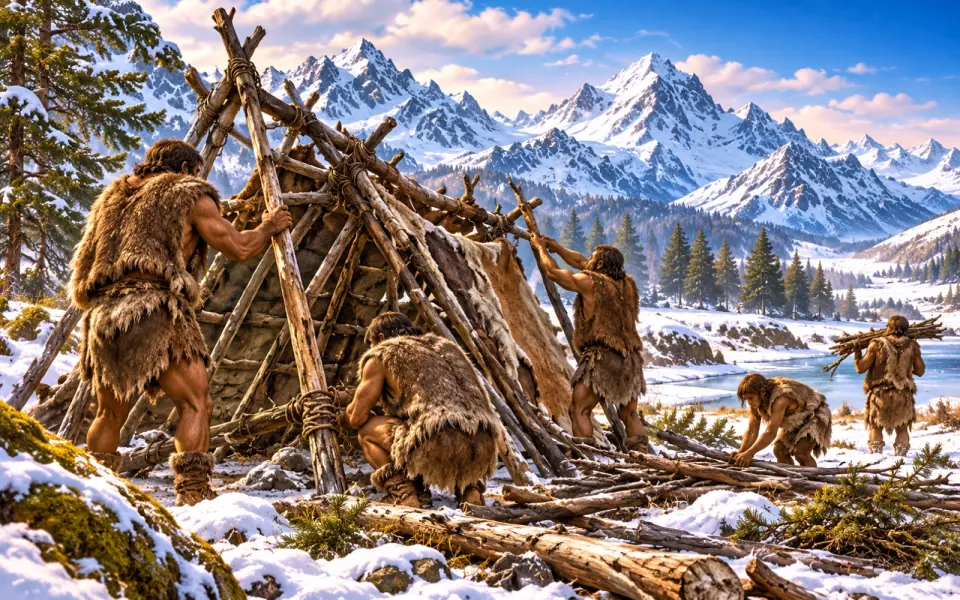
That sturdy body was an adaptation to the cold: a broad chest and short limbs lose less heat. The big muscles were also useful for close-range hunting of big animals with spears.
Their way of life was so effective that it lasted more than 300,000 years, a time almost equal to the one our own species has existed so far.
What changed
The discovery of the Neanderthals forced humanity to think that it had not always been alone. For the first time it became clear that in the past there were other human forms, different from us, but able to think, to care for the sick and to make beautiful objects.
The idea of a “great difference” between us and them has been scaled back. Today researchers know that between the two species there was an exchange of genes and perhaps of ideas. Neanderthal DNA has left us some drawbacks, such as a greater tendency to certain illnesses, and some advantages, such as better defence against certain viruses.
The study of their DNA, for which Pääbo received the Nobel Prize in Physiology or Medicine in 2022, created a new field of research, palaeogenetics. Today it allows us to reconstruct the relationships between vanished populations starting from a splinter of bone or a tooth.
Key people and places
People
- Johann Carl Fuhlrott
- German science teacher (1803–1877). In 1856 he realised that the bones from the Neander valley were not those of an animal or of an ordinary human.
- William King
- Irish geologist (1809–1886). In 1864 he gave the new species the name Homo neanderthalensis.
- Svante Pääbo
- Swedish geneticist (born 1955). He read the DNA of the Neanderthals and in 2022 won the Nobel Prize in Physiology or Medicine.
- Alberto Carlo Blanc
- Italian palaeontologist (1906–1960). In 1939 he discovered the Neanderthal skull in Guattari Cave on Monte Circeo.
Places
- Neander Valley, near Düsseldorf (Germany)
- The valley where in 1856 the first remains recognised as Neanderthal were found. Today there is a museum.
- Lamalunga Cave, Altamura (Apulia)
- A limestone cave containing the skeleton of the Altamura Man, covered in calcite.
- Guattari Cave, San Felice Circeo (Lazio)
- A cave by the sea where Neanderthal remains were found in 1939 and in 2021.
- Shanidar Cave (Iraq)
- A cave in Iraqi Kurdistan with Neanderthal skeletons that show care for one another.
Good to know
- The name Neanderthal can also be written Neandertal, because in German the letter h in “Thal” is not pronounced and since 1901 it has been spelled “Tal”.
- A Neanderthal often had a very wide nose, perhaps useful for warming and humidifying cold air before it reached the lungs.
- The Altamura Man is one of the most complete Neanderthals in the world, but his bones have stayed where they were by choice, so as not to damage the cave.
- In a cave in France, at Bruniquel, circular structures built from pieces of stalagmites by Neanderthals about 176,000 years ago have been discovered.
- Some people today have a Neanderthal gene that makes them more sensitive to pain: it is one of the curious discoveries of palaeogenetics.
Find out more
- Smithsonian, Homo neanderthalensis page (in English) humanorigins.si.edu
- Wikipedia, “Neanderthal” en.wikipedia.org
- Wikipedia, “Altamura Man” en.wikipedia.org
- Wikipedia, “Guattari Cave” en.wikipedia.org
Related events
- Homo heidelbergensisabout 600,000 years ago · PrehistoryHomo heidelbergensis was the probable ancestor of the Neanderthals.
- The first deliberate burialsabout 100,000 years ago · PrehistoryThe Neanderthals also buried their dead, perhaps before sapiens did.
- Homo sapiens leaves Africaabout 60,000 years ago · PrehistoryWhen sapiens left Africa they met the Neanderthals and had children with them.
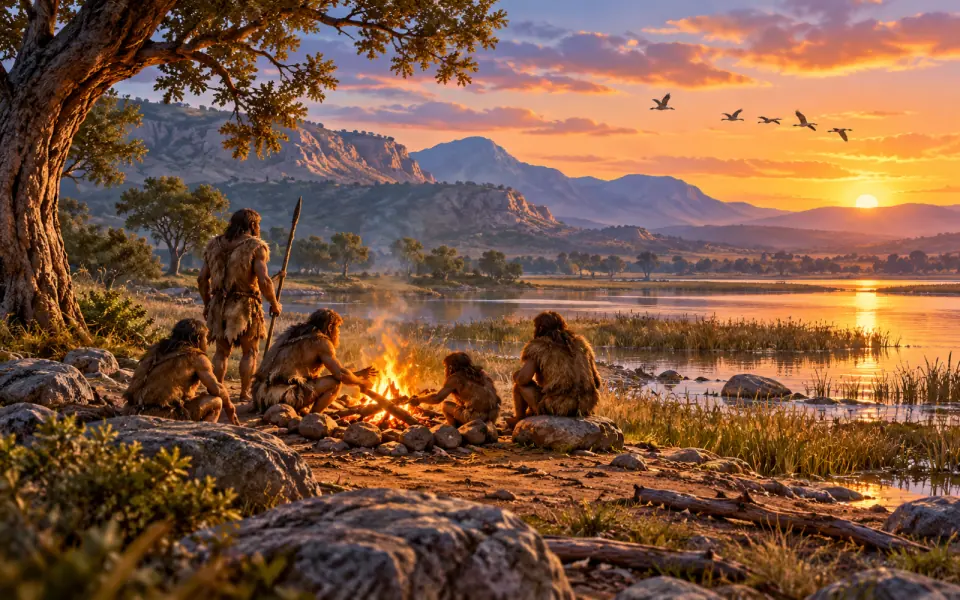
- Taming fireabout 790,000 years ago · PrehistoryFire was essential for surviving the cold climates of Europe.
- Darwin publishes On the Origin of Species1859 · Age of revolutionsDarwin published his book on the origin of species in 1859, three years after the discovery in the Neander valley.
Before and after, in the era “Prehistory”
Event 8 of 25
 BeforeThe first homininsabout 7 million years ago
 BeforeLucy the australopithecineabout 3.2 million years ago
 BeforeThe first stone toolsabout 2.6 million years ago
 BeforeHomo habilisabout 2.4 million years ago
 BeforeHomo erectusabout 1.9 million years ago
 BeforeTaming fireabout 790,000 years ago
 BeforeHomo heidelbergensisabout 600,000 years ago
- You are hereNeanderthalsabout 400,000 years ago
 AfterThe arrival of Homo sapiensabout 300,000 years ago
 AfterThe first deliberate burialsabout 100,000 years ago
 AfterHomo sapiens leaves Africaabout 60,000 years ago
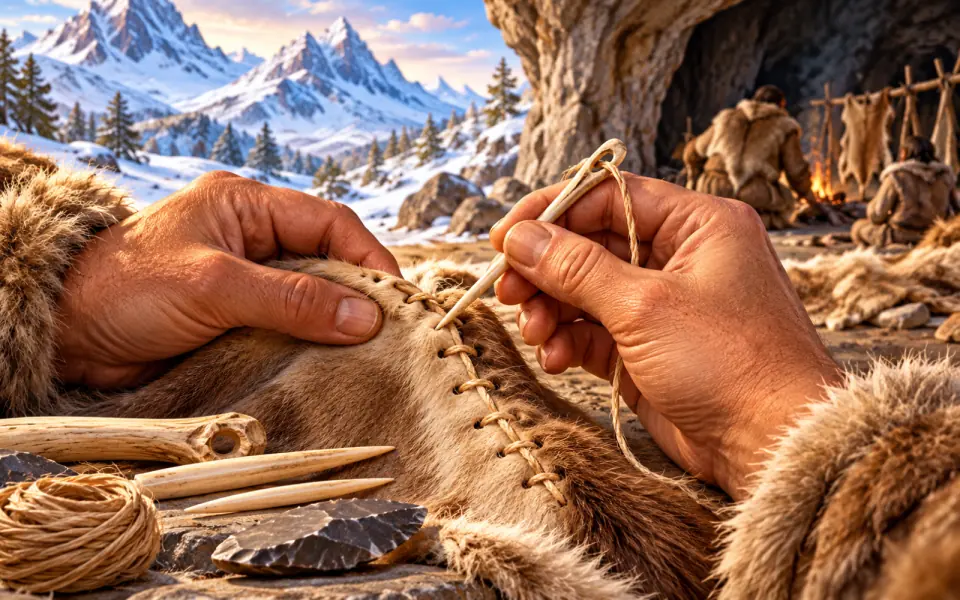 AfterThe needle with an eyeabout 48,000 years ago
 AfterThe first people in Australiaabout 48,000 years ago
 AfterThe cave art of Sulawesiabout 44,000 years ago
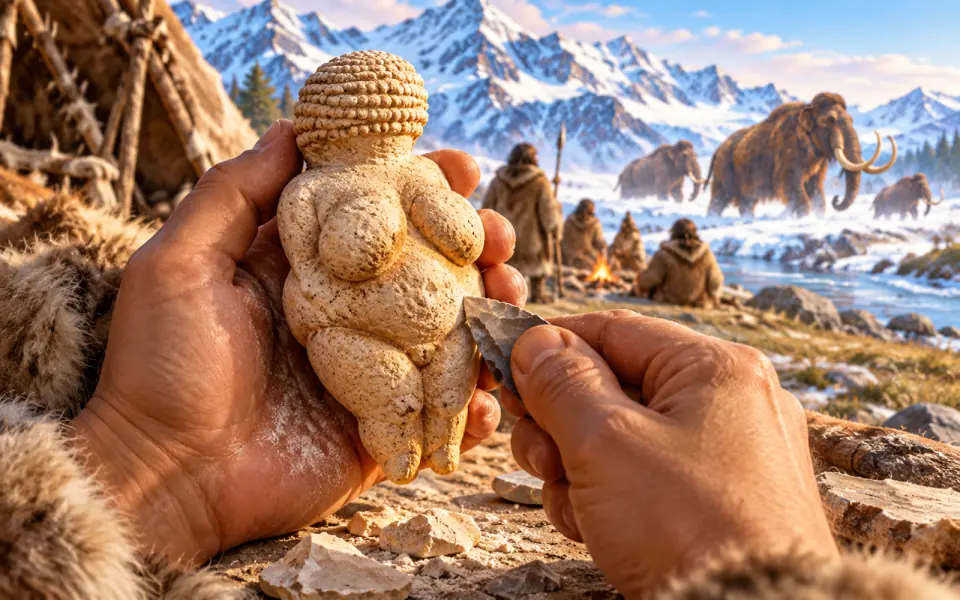 AfterThe Venus of Willendorfabout 28,000 years ago
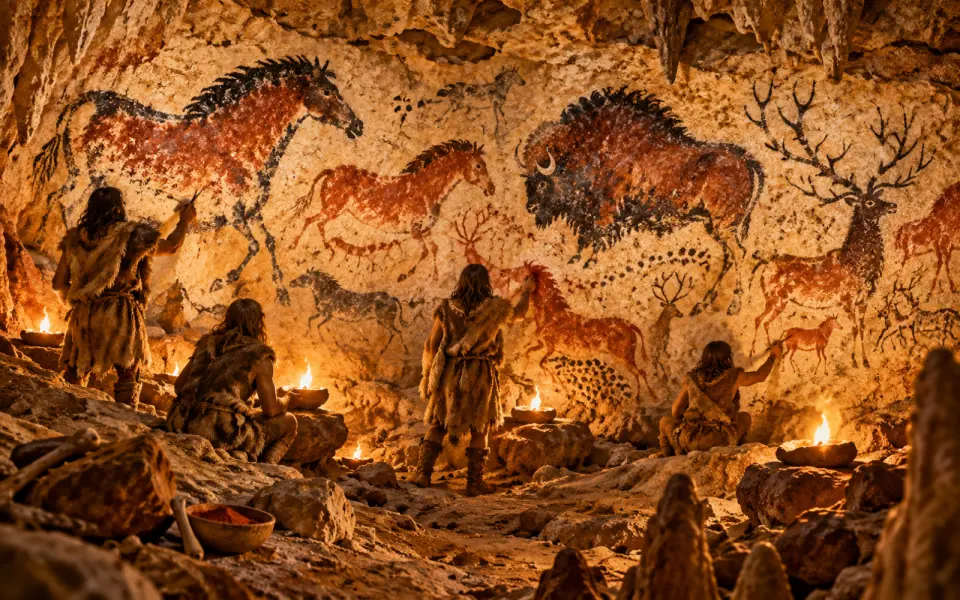 AfterThe Lascaux caveabout 19,000 years ago
 AfterThe first permanent villagesabout 14,000 years ago
 AfterThe Neolithic Revolutionabout 12,000 years ago
 AfterTaming the sheepabout 11,000 years ago
 AfterThe walls of Jerichoabout 10,300 years ago
 AfterPottery spreadsabout 9,000 years ago
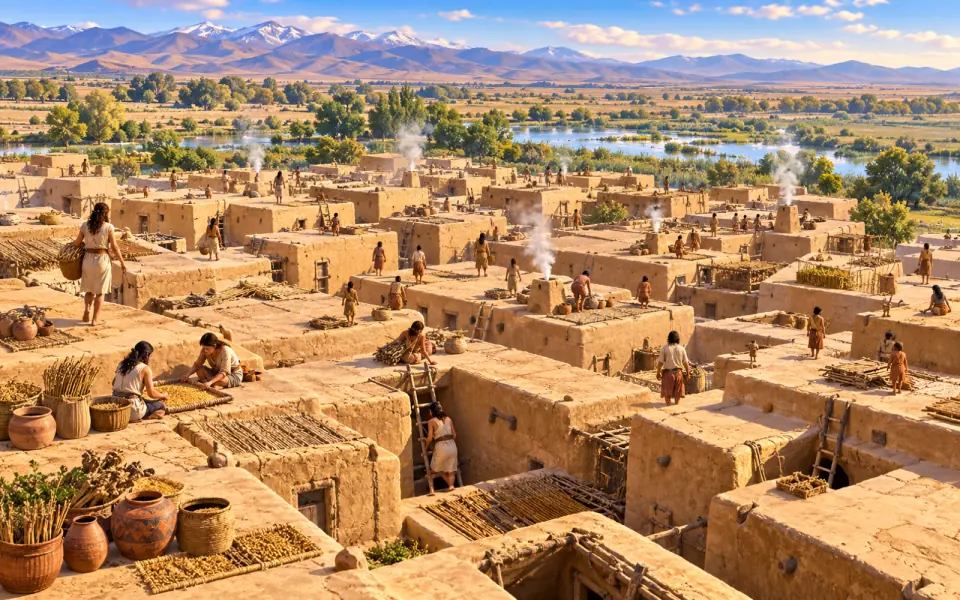 AfterÇatalhöyükabout 9,000 years ago
 AfterWorking with copperabout 7,000 years ago
 AfterThe invention of the wheelabout 5,500 years ago
 AfterThe Bronze Ageabout 5,300 years ago
Listen / Read next
- Music to read by: Cinematic JourneyEpic film-style music, no lyrics, by Ciro Simone IrmiciSpotifyYouTube Music
Meanwhile, elsewhere in the world
Other events of the era “Prehistory”
- The first hominins
- Lucy the australopithecine
- The first stone tools
- Homo habilis
- Homo erectus
- Taming fire
- Homo heidelbergensis
- The arrival of Homo sapiens
- The first deliberate burials
- Homo sapiens leaves Africa
- The needle with an eye
- The first people in Australia
- The cave art of Sulawesi
- The Venus of Willendorf
- The Lascaux cave
- The first permanent villages
- The Neolithic Revolution
- Taming the sheep
- The walls of Jericho
- Pottery spreads
- Çatalhöyük
- Working with copper
- The invention of the wheel
- The Bronze Age
