The Neolithic Revolution
about 12,000 years ago Fertile Crescent
In short
About 12,000 years ago, in the Fertile Crescent (across today's Iraq, Syria, Turkey and Israel), people began to grow wheat and barley and to keep animals. In other parts of the world farming began on its own: rice in China, maize in the Americas. With more food, villages grew and life changed for ever.
Why it matters It is one of the biggest changes in history: without farming there would have been no cities.
Source: Treccani, entry “Neolitico”
Study card about 6 minutes of reading
The story
From gathering to sowing
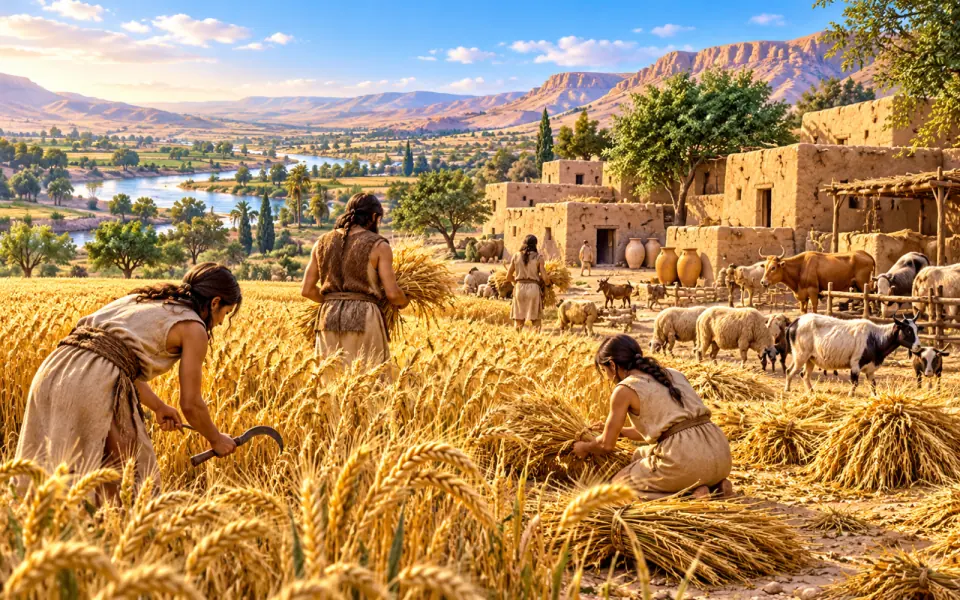
Imagine a field of wild wheat, 12,000 years ago. The ears are small and it takes only a gust of wind for the ripe grains to fall to the ground and scatter: it is the way the plant reproduces. Anyone who wants to harvest has to arrive at just the right moment, with a basket, and carry away only what has not already fallen. Now imagine someone who, every year, takes the seeds from the most useful plants, the ones with ears that stay attached, and sows them near home. In a short time, over many generations, that wheat is no longer the same: it has bigger ears and grains that do not fall by themselves. It has become a domesticated plant.
This process, repeated for thousands of years by different people in different places, is what we call the Neolithic Revolution. The name, which means “of the new stone”, was made famous by the Australian archaeologist Vere Gordon Childe, who in 1936 wrote a very successful book called “Man Makes Himself”. Childe used the word “revolution” to stress the greatness of the change. Today scholars point out that it was not a quick revolution: it lasted thousands of years and went forward in small steps.
The Fertile Crescent
The first place where it happened was a belt of land shaped like a crescent moon, running from the Jordan valley, through Syria and southern Turkey, to Mesopotamia and the mountains of Iran: the Fertile Crescent, a name given in 1916 by the American Egyptologist James Henry Breasted. Here many plants suited to cultivation grew wild: two kinds of wheat (the small one, called einkorn, and emmer), barley, lentils, peas, chickpeas and flax. Archaeologists call them “founder crops”. The animals were there too: the wild ancestors of sheep, goats, pigs and cattle.
The first crops are dated to about 11,500 to 10,000 years ago. A little later came the animals: goats and sheep in the mountains, pigs and cattle in the lower areas. Domestication, that is, the process by which a species changes until it depends on humans, took centuries.
Before the village or after?
It is not clear which came first. At the site of Göbekli Tepe, in south-eastern Turkey, recognised in 1994 by the German archaeologist Klaus Schmidt, there are enormous T-shaped stone pillars, up to five and a half metres tall, decorated with carved animals, built about 11,500 years ago. According to many scholars they were raised by hunter-gatherers, before agriculture was widespread. This suggests that perhaps gathering for shared ceremonies pushed people to farm in order to feed so many, and not the other way round. Other scholars propose different explanations. There are also hints of much older “proto-cultivation”: at Ohalo II, on the shores of the Sea of Galilee, about 23,000 years ago, the seeds of weeds that grow in fields show that someone may already have been tending plants.
More places, more beginnings
It was not a single invention. Agriculture arose independently in several parts of the world. In China, along the Yangtze, rice was grown, and along the Yellow River millet, about 9,000 to 10,000 years ago. In Mexico maize was domesticated from a wild plant, teosinte, which looks like a grass with a few grains: it happened about 9,000 years ago. In the Andes the potato arose, in New Guinea the banana and taro, in the African Sahel sorghum, in North America the sunflower. The idea of the Russian botanist Nikolai Vavilov, who in the 1920s travelled all over the world collecting seeds, was that there are some “centres of origin” of cultivated plants.
From the Near East, then, farmers moved outwards. About 9,000 years ago they reached Greece, about 8,000 years ago Italy and about 6,000 years ago northern Europe. Studies of ancient DNA show that it was not just the idea that spread, but the people too: the descendants of the first Anatolian farmers mixed with the local hunters.
A huge change, but not only a good one
With agriculture the amount of food for each hectare of land grew enormously. A community could feed more people, and populations grew. But the skeletons of the first farmers often show more tooth decay, shorter stature and signs of dietary deficiencies compared with hunters: they ate less variety of foods, depended on the harvest and lived in close contact with animals, from which new diseases came. Some scholars, such as the writer Jared Diamond, have even called agriculture “the worst mistake in the history of the human race”. It is an extreme opinion, but it reminds us that every great turning point has a price.
Why it happened
The causes are not entirely clear and were probably various. The end of the last ice age brought a warmer and more stable climate, suited to annual plants such as cereals, which produce many seeds. According to some scholars, the increase of carbon dioxide in the air also helped these plants grow.
Groups of people who were already settled, like the Natufians, had the knowledge and the equipment, such as sickles and grinding stones, to exploit wild cereals. When a dry cold, the Younger Dryas, made it harder to find food, for some the answer was to sow.
Some scholars add social reasons: feeding a bigger community, preparing feasts, having a surplus of food to trade. There is no single explanation that holds everywhere, because every region had its own story.
What changed
Agriculture made a surplus possible, that is, more food than was needed. Those who no longer had to look for food every day could do other jobs: build, carve, trade, command, pray. From this came the first cities, writing, armies, kings and priests, as the rest of the timeline tells.
The relationship with the land changed too. Whoever farms needs a field, so property, boundaries and inheritance arose, and also the first injustices: differences in wealth grew. Calendars also arose, to know when to sow, and rites linked to the harvests.
Today almost everything we eat comes from plants and animals domesticated in that period. Our bread, pasta, rice, milk and cheese are heirs of that revolution. Our body has changed too: in many populations the ability to digest milk as an adult has appeared.
Key people and places
People
- Vere Gordon Childe
- Australian archaeologist (1892–1957). In 1936 he gave the name “Neolithic Revolution” to the move to agriculture.
- Nikolai Vavilov
- Russian botanist and geneticist (1887–1943). He travelled all over the world looking for the places of origin of cultivated plants.
- Klaus Schmidt
- German archaeologist (1953–2014). He discovered and excavated Göbekli Tepe in Turkey.
- James Henry Breasted
- American Egyptologist (1865–1935). In 1916 he gave the name “Fertile Crescent” to the region where agriculture began.
Places
- Fertile Crescent
- A belt of fertile land running from the Jordan to Mesopotamia, passing through Syria and southern Turkey.
- Göbekli Tepe (Turkey)
- A hill with enormous stone pillars about 11,500 years old, built by peoples who perhaps did not yet farm.
- Yangtze valley (China)
- The region where the cultivation of rice began.
- Balsas valley (Mexico)
- The area where maize was domesticated from teosinte.
Good to know
- Teosinte, the ancestor of maize, has ears a few centimetres long with about a dozen hard grains, very different from the cob we know.
- Bread wheat arose about 8,000 to 10,000 years ago from the natural crossing of two different plants. It is a hybrid, made with the chromosomes of three species.
- Sheep and goats were kept before cows, and dogs before that: the animals joined village life one after another.
- Today about half of the planet's habitable land is used for farming or herding.
- In Italy the first farmers arrived from the sea, in boats, about 8,000 years ago, bringing pots decorated with the impressions of shells.
Find out more
- Wikipedia, “Neolithic” en.wikipedia.org
- Wikipedia, “Neolithic Revolution” en.wikipedia.org
- Wikipedia, “Fertile Crescent” en.wikipedia.org
- Wikipedia, “Göbekli Tepe” en.wikipedia.org
Related events
- The first permanent villagesabout 14,000 years ago · PrehistoryWith the Natufians the first villages arose, the basis of the Neolithic Revolution.
- Taming the sheepabout 11,000 years ago · PrehistoryHerding went alongside cultivation.
- Çatalhöyükabout 9,000 years ago · PrehistoryÇatalhöyük was one of the great farming villages.
- The first Sumerian citiesabout 4000 BC · River civilisationsPlentiful food made it possible for the first Sumerian cities to arise.
- Tomatoes, maize and potatoes reach Europeabout 1550 · Early modern ageWith the discovery of America, maize and potatoes, born of American agriculture, reached Europe.
Before and after, in the era “Prehistory”
Event 18 of 25
 BeforeThe first homininsabout 7 million years ago
 BeforeLucy the australopithecineabout 3.2 million years ago
 BeforeThe first stone toolsabout 2.6 million years ago
 BeforeHomo habilisabout 2.4 million years ago
 BeforeHomo erectusabout 1.9 million years ago
 BeforeTaming fireabout 790,000 years ago
 BeforeHomo heidelbergensisabout 600,000 years ago
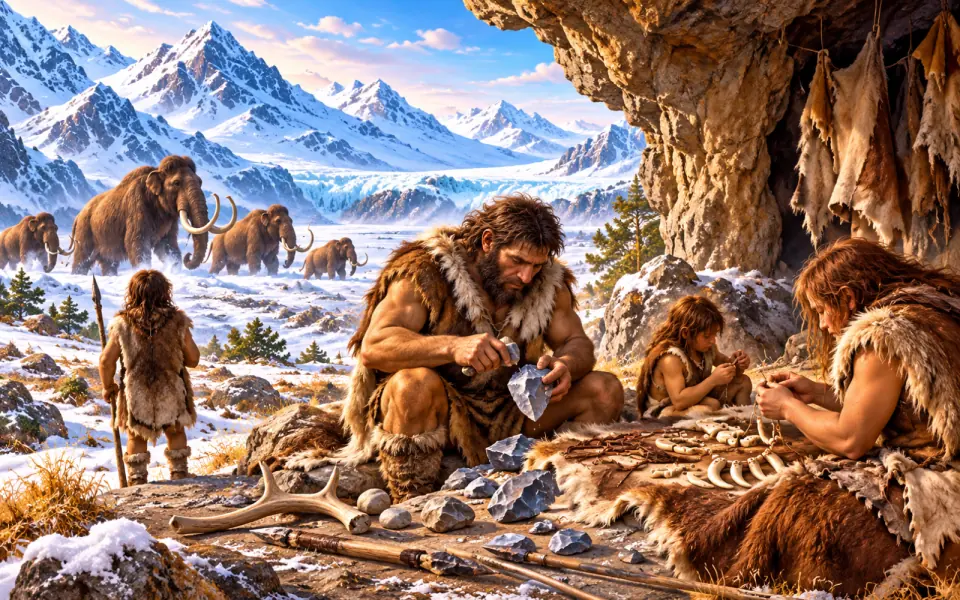 BeforeNeanderthalsabout 400,000 years ago
 BeforeThe arrival of Homo sapiensabout 300,000 years ago
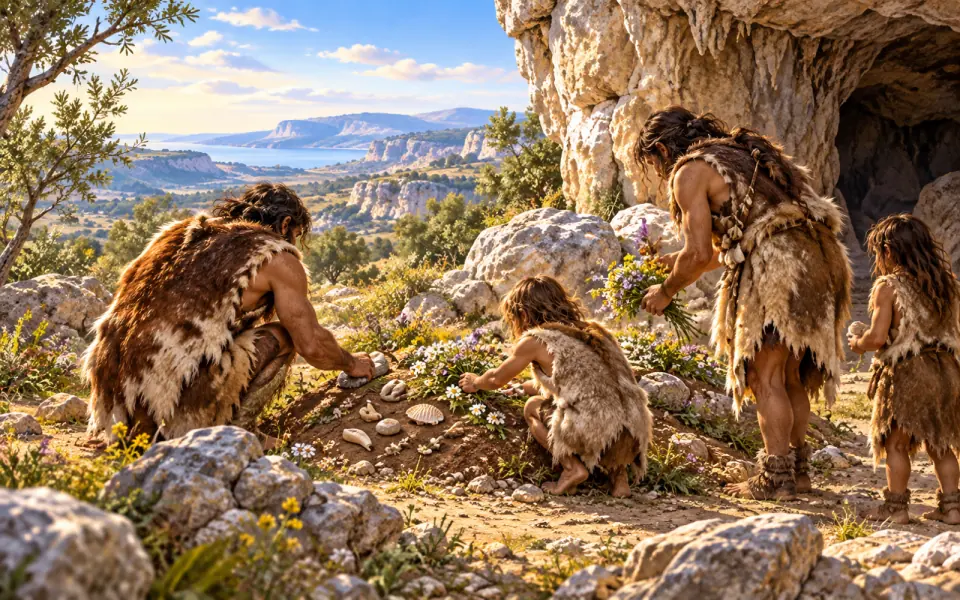 BeforeThe first deliberate burialsabout 100,000 years ago
 BeforeHomo sapiens leaves Africaabout 60,000 years ago
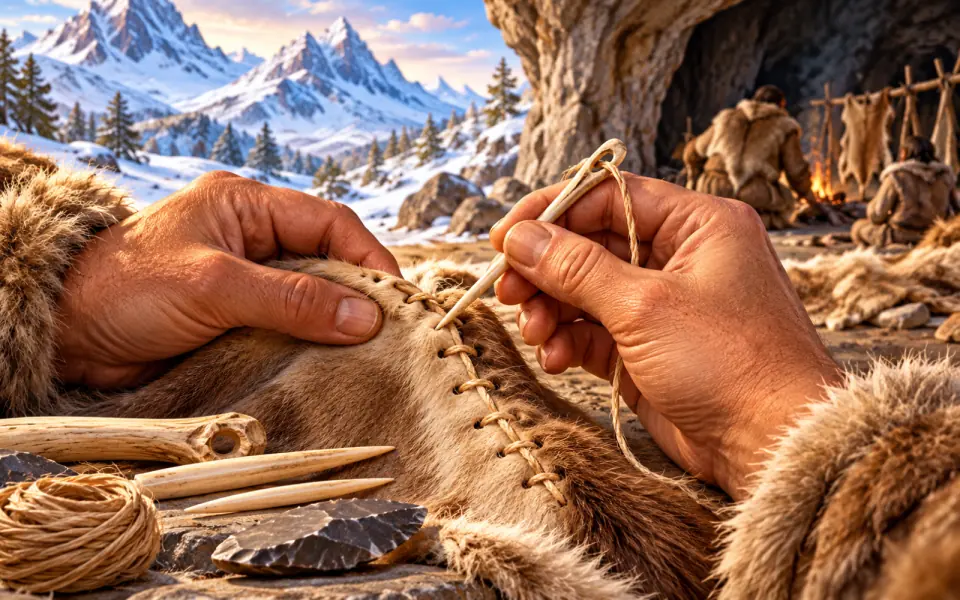 BeforeThe needle with an eyeabout 48,000 years ago
 BeforeThe first people in Australiaabout 48,000 years ago
 BeforeThe cave art of Sulawesiabout 44,000 years ago
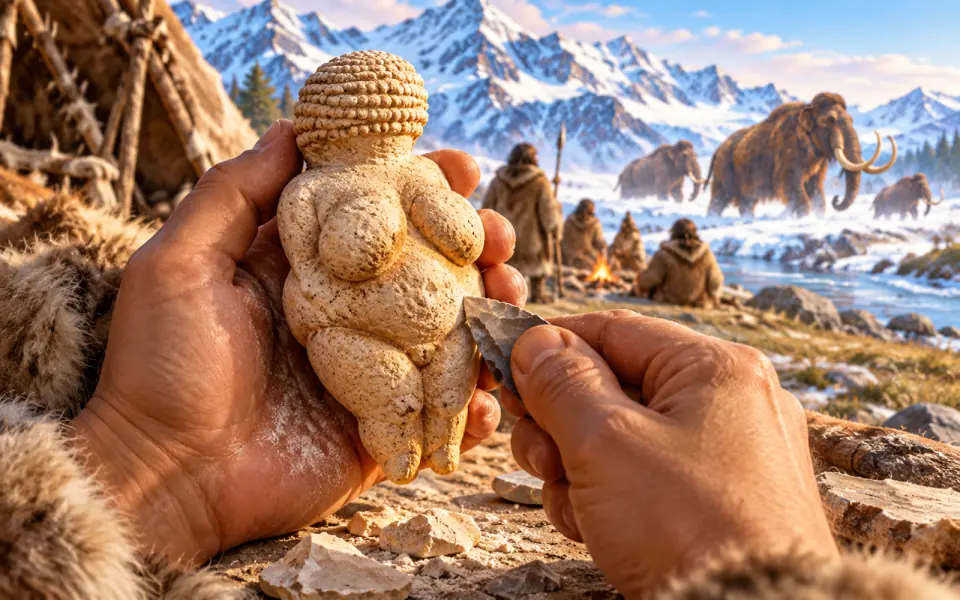 BeforeThe Venus of Willendorfabout 28,000 years ago
 BeforeThe Lascaux caveabout 19,000 years ago
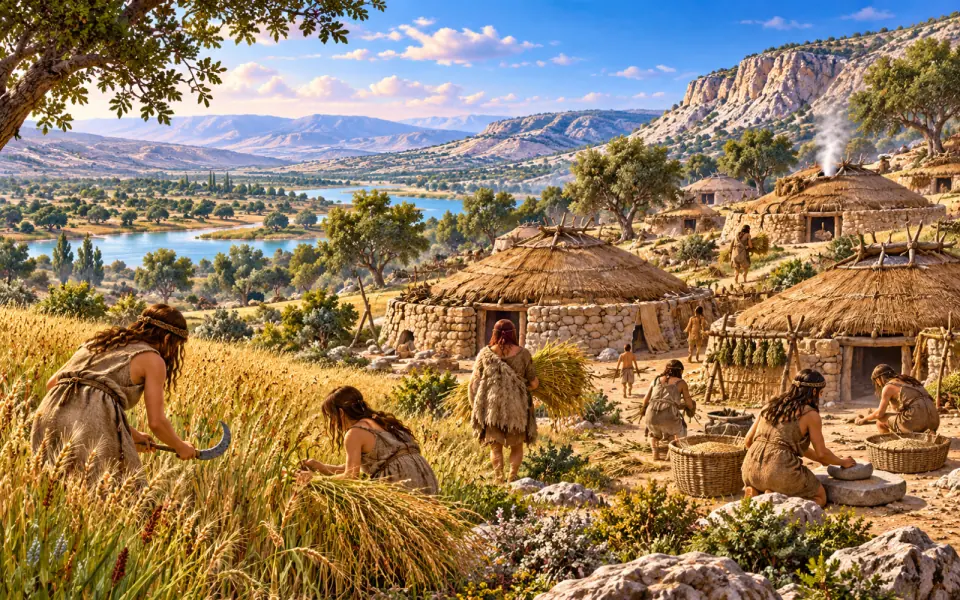 BeforeThe first permanent villagesabout 14,000 years ago
- You are hereThe Neolithic Revolutionabout 12,000 years ago
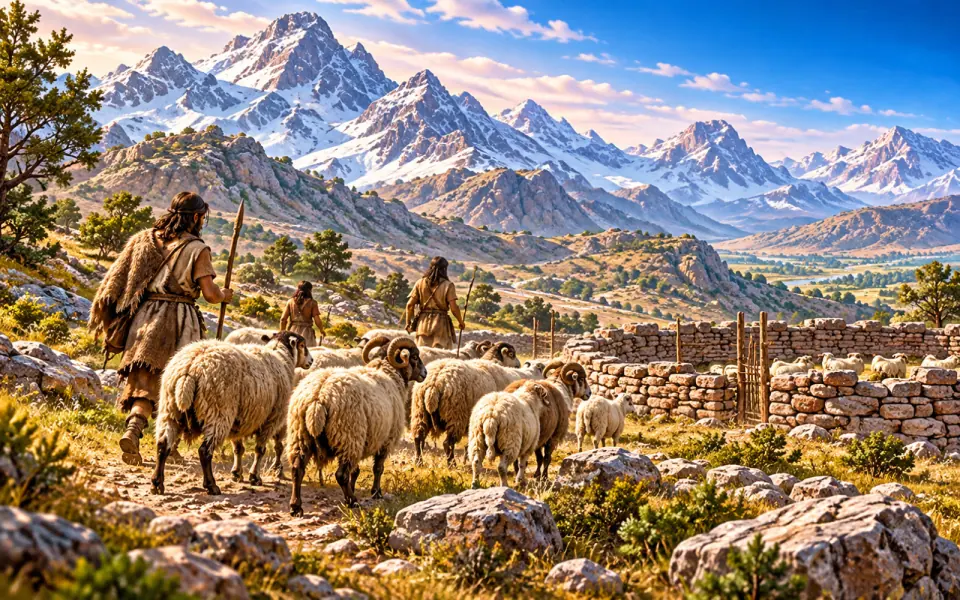 AfterTaming the sheepabout 11,000 years ago
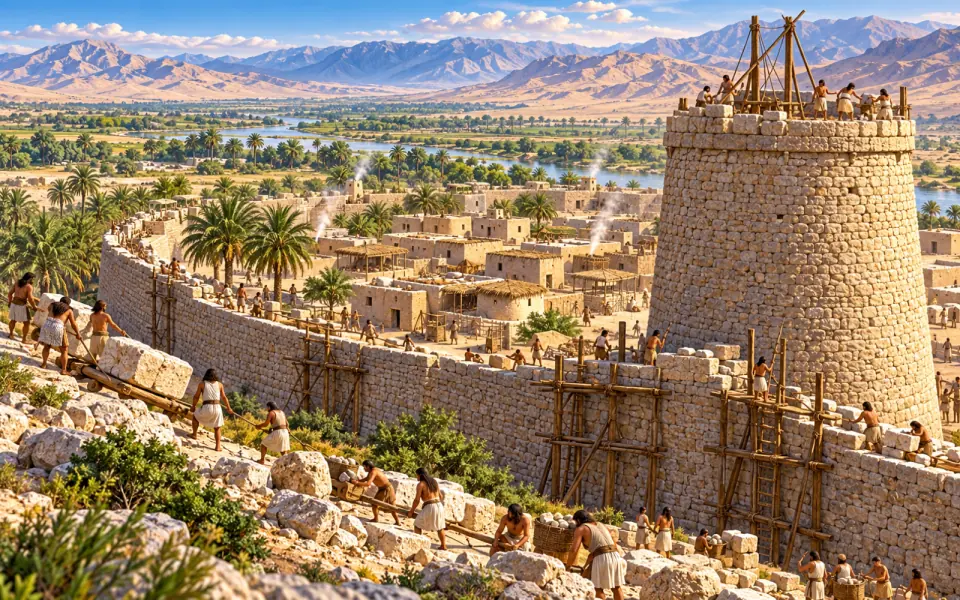 AfterThe walls of Jerichoabout 10,300 years ago
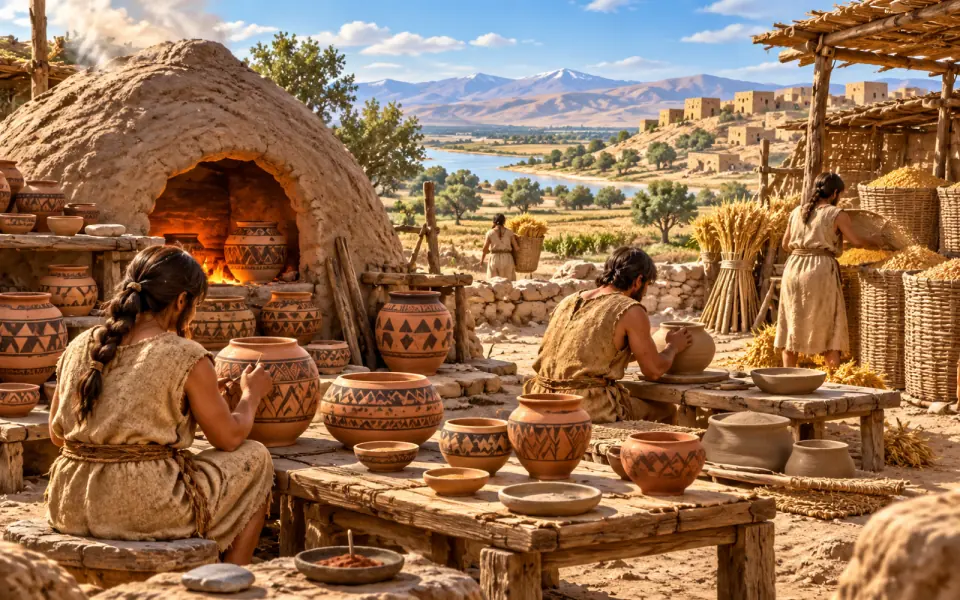 AfterPottery spreadsabout 9,000 years ago
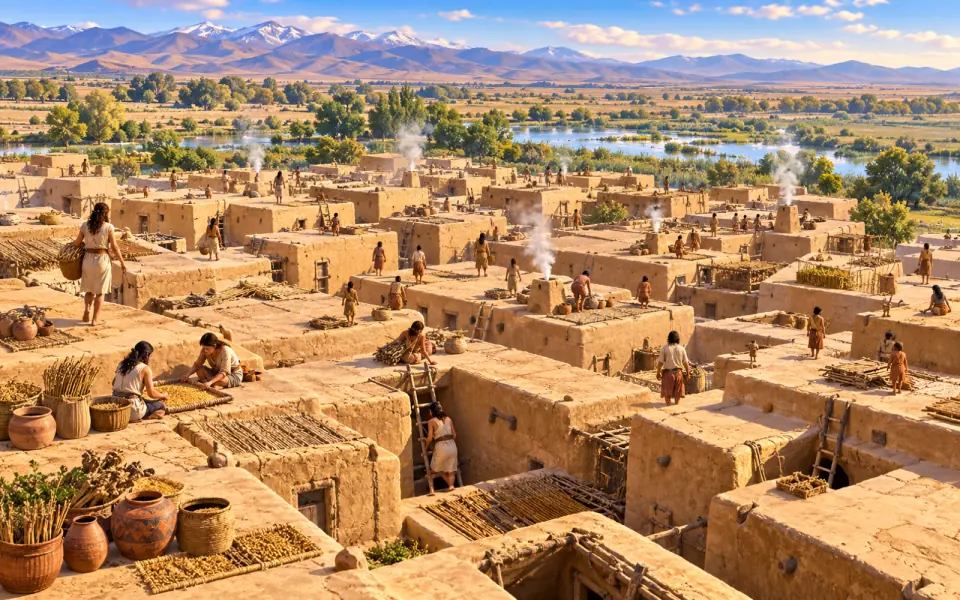 AfterÇatalhöyükabout 9,000 years ago
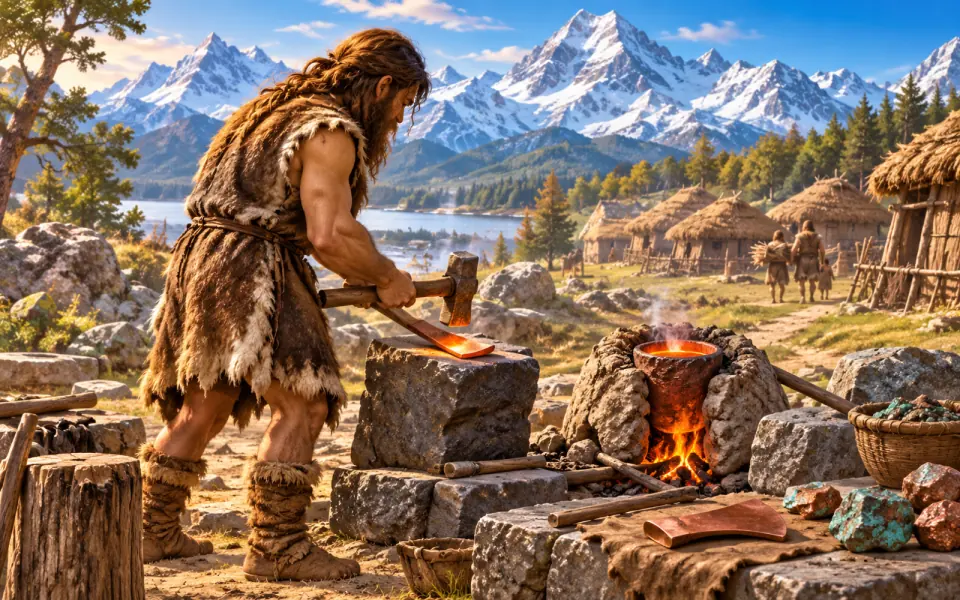 AfterWorking with copperabout 7,000 years ago
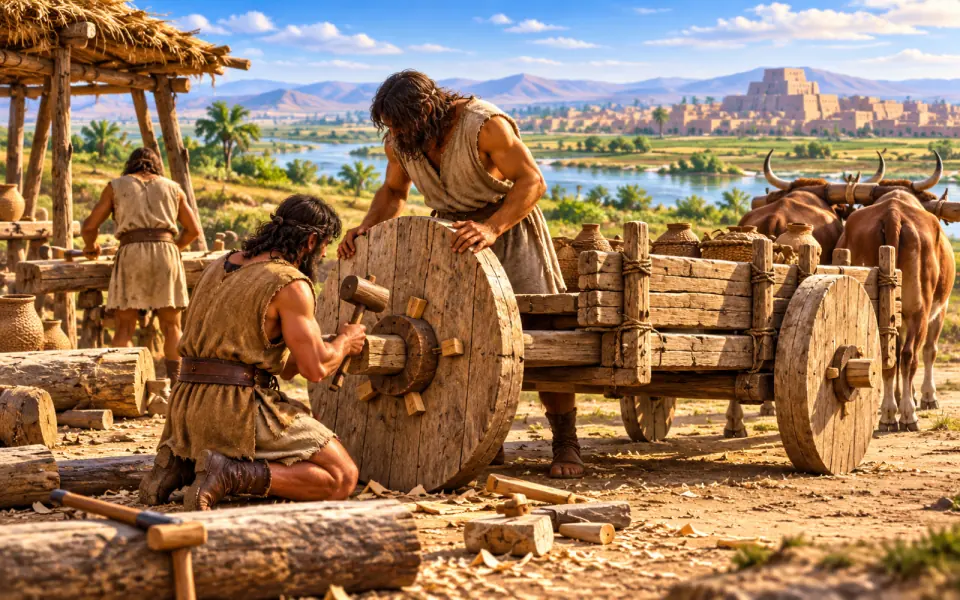 AfterThe invention of the wheelabout 5,500 years ago
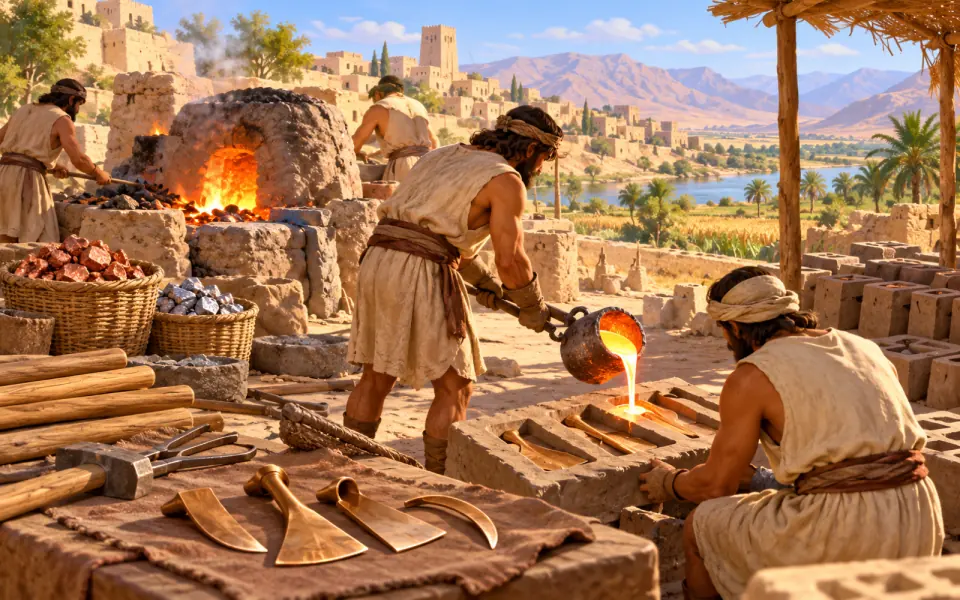 AfterThe Bronze Ageabout 5,300 years ago
Listen / Read next
- Music to read by: Cinematic JourneyEpic film-style music, no lyrics, by Ciro Simone IrmiciSpotifyYouTube Music
Meanwhile, elsewhere in the world
Other events of the era “Prehistory”
- The first hominins
- Lucy the australopithecine
- The first stone tools
- Homo habilis
- Homo erectus
- Taming fire
- Homo heidelbergensis
- Neanderthals
- The arrival of Homo sapiens
- The first deliberate burials
- Homo sapiens leaves Africa
- The needle with an eye
- The first people in Australia
- The cave art of Sulawesi
- The Venus of Willendorf
- The Lascaux cave
- The first permanent villages
- Taming the sheep
- The walls of Jericho
- Pottery spreads
- Çatalhöyük
- Working with copper
- The invention of the wheel
- The Bronze Age
