Homo sapiens leaves Africa
about 60,000 years ago From East Africa towards Asia, Europe and Australia
In short
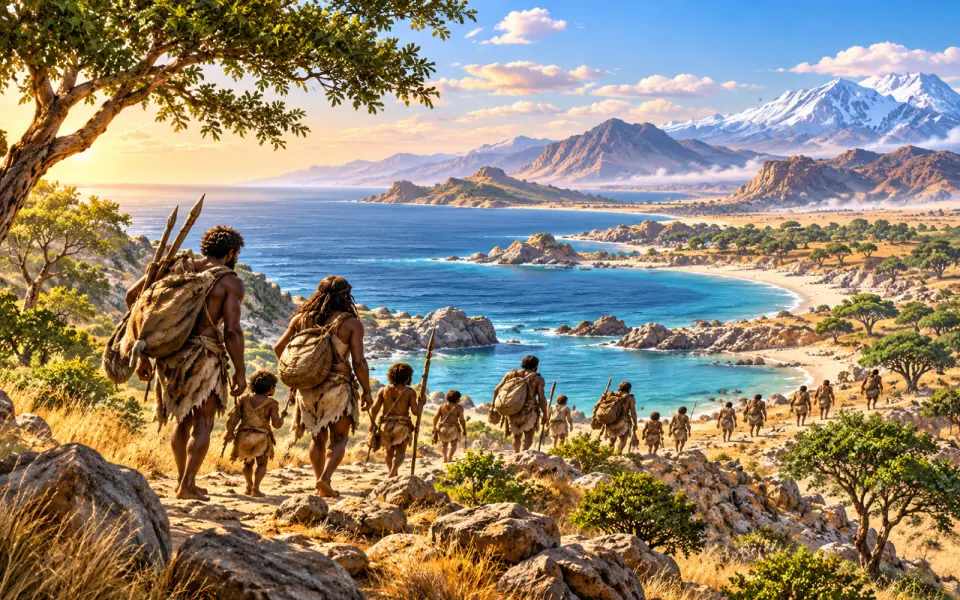
About 60,000 years ago groups of Homo sapiens set out from Africa and spread into Asia, then Europe and Australia. Before them other small groups had already left, but they had no descendants. On the way they met other human species, such as the Neanderthals and the Denisovans, and a small trace of them remains in the DNA of many people today.
Why it matters It explains why humans live on every continent today.
Study card about 6 minutes of reading
The story
A question about origins
If you look at a world map, you find people living almost everywhere: in tropical forests, in deserts, on islands, near the poles. How did they get there? To find out, scientists have used two roads that seem far apart. One goes through the ground: bones, tools, traces of fires. The other goes through DNA, which every living person carries and which is a sort of archive of the human family. The two roads meet at the same conclusion: all people living outside Africa descend from small groups of Homo sapiens who left Africa about 60,000 years ago (between 70,000 and 50,000).
DNA gives us a very clear clue. Genetic diversity, that is, how different people are from one another in their DNA, is greatest in Africa and gets smaller the further you go. It happens because each group that set out took with it only part of the variety of the group it came from. The great Italian scholar Luigi Luca Cavalli-Sforza, who spent his life studying human populations and tracing the geography of their genes, showed this very clearly.
Not just one departure
The picture of the great migration is simplified. Sapiens left Africa more than once. At Misliya in Israel, a jaw with sapiens teeth is about 180,000 years old. In the caves of Skhul and Qafzeh, in Israel, there are sapiens from about 100,000 years ago. At Apidima in Greece, a skull 210,000 years old might be sapiens, although not all experts are convinced. These older groups, as far as we know, left no descendants among the people of today: they disappeared or were absorbed. It was not a one-way journey, but a series of attempts, some successful and others not.
The exit that gave rise to today's peoples, the one of about 60,000 years ago, perhaps began with a small group, a few thousand people. It most probably passed through Egypt and the Sinai, or along the Bab-el-Mandeb strait, a channel of sea just a few tens of kilometres wide between Africa and the Arabian peninsula, which during the ice ages, with the sea level lower, was even narrower. From there the descendants spread along the coasts of southern Asia and into the interior of the continent.
People walking slowly
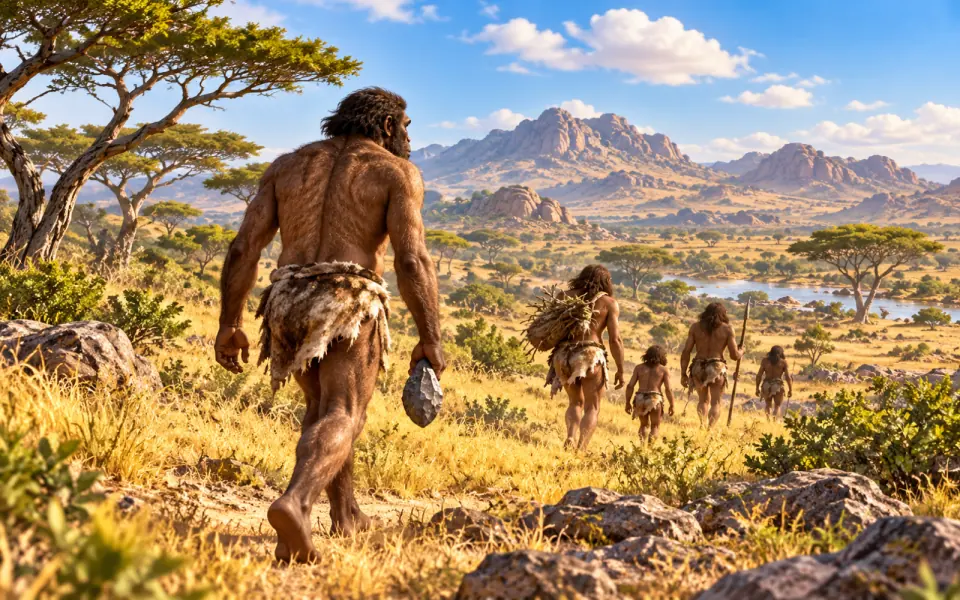
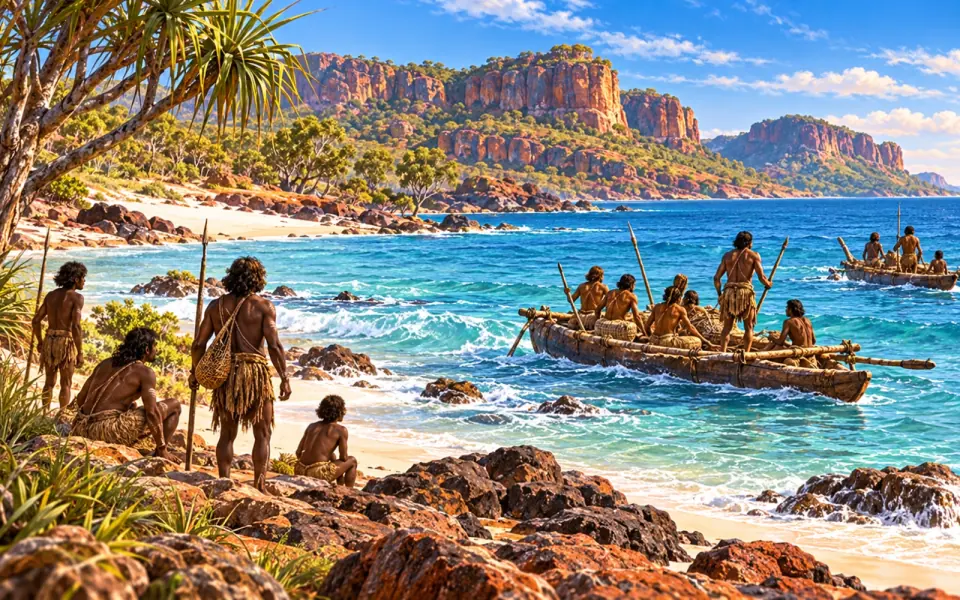
The journey was not a march. It was a very slow movement, of a few kilometres per generation, in which each group stopped where it found food and water, and its children moved their camps a little further on. In a few tens of thousands of years, however, the distance was enormous. Sapiens reached Australia about 50,000 years ago, as another card tells. They arrived in Europe about 45,000 years ago: this is shown by remains found in Bacho Kiro Cave in Bulgaria and two milk teeth in Grotta del Cavallo in Apulia. Later they pushed into the Americas: the date is much debated, and some footprints in New Mexico, more than 20,000 years old, might point to an arrival even earlier than was thought.
Meetings with other human species
On leaving Africa, sapiens did not find an empty world. In Europe and western Asia lived the Neanderthals; in central and eastern Asia lived the Denisovans, of whom we know very little, because their fossils are extremely rare: they were discovered in 2010 thanks to DNA extracted from a small finger bone found in a cave in Siberia. In some cases these populations met and had children. The DNA of all the people who descend from non-African populations contains about 1 to 2 per cent of Neanderthal DNA. In the populations of New Guinea and the nearby islands there is also a share of Denisovan DNA, up to about 4 to 5 per cent. Studies indicate that the most important meetings with the Neanderthals took place between 50,000 and 45,000 years ago.
A story for everyone
The central fact is that our species is very young and very uniform. Compared with what we might expect for a species spread over the whole world, people today are genetically very similar. Skin colour, the shape of the eyes or hair depend on very few genes; some of these adaptations to the sun and climate of the different places, such as paler skin at high latitudes, are recent. We are one family, born in Africa and scattered in a relatively short time.
Why it happened
Why did sapiens leave Africa? Probably because of the climate. Wet and dry phases alternated and opened and closed corridors of land suited to travel: when the Sahara or the Arabian peninsula became greener, groups could move; when drought returned, they were stuck.
There were also population reasons pushing them. Groups grew and had to look for new territories for hunting and gathering. New hunting techniques, a good ability to communicate and cooperate, and more refined tools made it easier to adapt to new environments.
There is no single cause. Scholars speak of small successive waves, of groups that moved only a little. Some have proposed that the great eruption of the Toba volcano in Indonesia, about 74,000 years ago, played a part, but today many think its effect was limited.
What changed
With this migration our species occupied almost all the habitable lands of the Earth, from desert to mountains to the islands of the Pacific. It is a unique record: no other large mammal has spread so widely.
For the Neanderthals the presence of sapiens was perhaps one of the causes of their end: they disappeared around 40,000 years ago. Of the Denisovans we do not know when they vanished. A trace of them remains in our DNA, and some of the genes received still have an effect, for example on the immune system.
Today genetics has changed the way we think about differences between people. Since human genetic variation is small and most of it lies within each group, and since all non-Africans descend from a few groups that set out not long ago, there is no “race” in the biological sense for our species: the visible differences, such as skin colour, are largely recent adaptations and do not divide humanity into sharp groups. It is a message that science repeats strongly.
Key people and places
People
- Luigi Luca Cavalli-Sforza
- Italian geneticist (1922–2018). He studied how genes are distributed in human populations and reconstructed the great migrations of humanity.
- Svante Pääbo
- Swedish geneticist (born 1955). He reconstructed the DNA of the Neanderthals and Denisovans and won the Nobel Prize in Physiology or Medicine in 2022.
- Rebecca Cann
- American geneticist. In 1987, with Mark Stoneking and Allan Wilson, she showed that the mitochondrial DNA of all human beings goes back to a woman who lived in Africa, the so-called “mitochondrial Eve”.
Places
- Bab-el-Mandeb
- A strait of sea between Africa and the Arabian peninsula, about thirty kilometres wide, whose name in Arabic means “gate of tears”.
- Misliya, Mount Carmel (Israel)
- A cave where a sapiens jaw about 180,000 years old was found, the oldest outside Africa accepted by almost everyone.
- Grotta del Cavallo (Apulia)
- A cave by the sea in Salento where milk teeth of sapiens about 45,000 years old were found, among the oldest in Europe.
- Denisova Cave (Siberia)
- A cave in the Altai Mountains where in 2010, from the DNA of a finger bone, a previously unknown human species was recognised.
Good to know
- Mitochondrial DNA, which is inherited from the mother, lets us trace back to an African woman who lived about 150,000 to 200,000 years ago, nicknamed “mitochondrial Eve”; she was not the only woman of her time, just the only one whose female line has reached today.
- Some of the Neanderthal genes that many of us carry are linked to features of hair and skin, and to some traits of the immune system.
- The Bab-el-Mandeb strait has an Arabic name that translates as “gate of tears”, perhaps because of the dangers of sailing there.
- The genome of a man who lived in Siberia about 45,000 years ago, found in 2008 on the Irtysh river, showed that Neanderthals had interbred with sapiens only a short time before.
- The Denisovans were discovered through DNA before there was even a fossil big enough to give them an appearance: even today we do not really know what their face looked like.
Find out more
- Natural History Museum, London: when and how modern humans spread out of Africa (in English) nhm.ac.uk
- Wikipedia, “Out of Africa (disambiguation)” en.wikipedia.org
- Wikipedia, “Denisovan” en.wikipedia.org
- Wikipedia, “Homo sapiens” en.wikipedia.org
Related events
- The arrival of Homo sapiensabout 300,000 years ago · PrehistoryThe story begins with the birth of sapiens in Africa.
- Neanderthalsabout 400,000 years ago · PrehistorySapiens met the Neanderthals and had children with them.
- The first people in Australiaabout 48,000 years ago · PrehistoryA part of the group reached Australia by crossing the sea.
- Homo erectusabout 1.9 million years ago · PrehistoryBefore them, Homo erectus had already made the same journey.
- The double helix of DNA1953 · TodayThe structure of DNA, discovered in 1953, made it possible to read these stories.
Before and after, in the era “Prehistory”
Event 11 of 25
 BeforeThe first homininsabout 7 million years ago
 BeforeLucy the australopithecineabout 3.2 million years ago
 BeforeThe first stone toolsabout 2.6 million years ago
 BeforeHomo habilisabout 2.4 million years ago
 BeforeHomo erectusabout 1.9 million years ago
 BeforeTaming fireabout 790,000 years ago
 BeforeHomo heidelbergensisabout 600,000 years ago
 BeforeNeanderthalsabout 400,000 years ago
 BeforeThe arrival of Homo sapiensabout 300,000 years ago
 BeforeThe first deliberate burialsabout 100,000 years ago
- You are hereHomo sapiens leaves Africaabout 60,000 years ago
 AfterThe needle with an eyeabout 48,000 years ago
 AfterThe first people in Australiaabout 48,000 years ago
 AfterThe cave art of Sulawesiabout 44,000 years ago
 AfterThe Venus of Willendorfabout 28,000 years ago
 AfterThe Lascaux caveabout 19,000 years ago
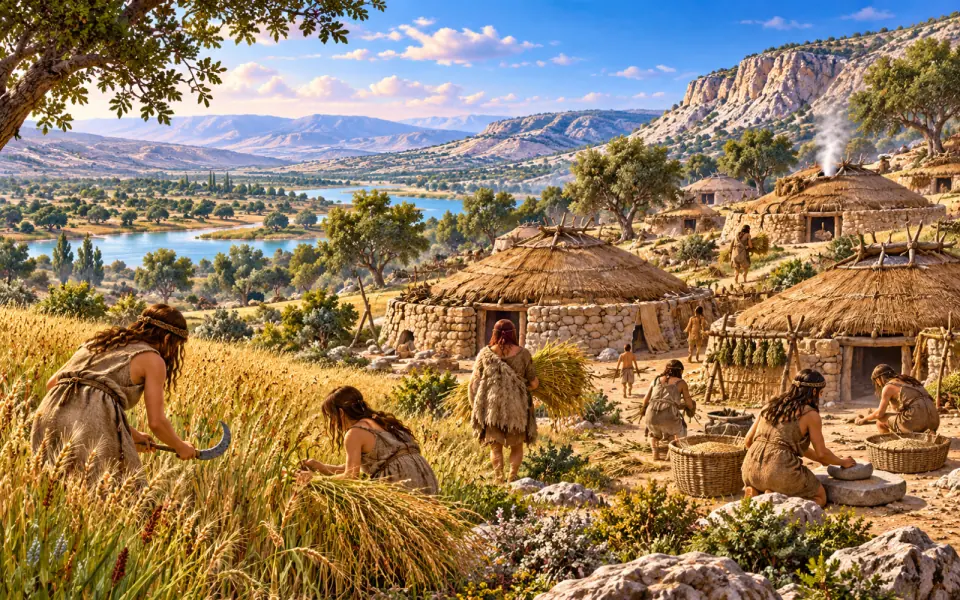 AfterThe first permanent villagesabout 14,000 years ago
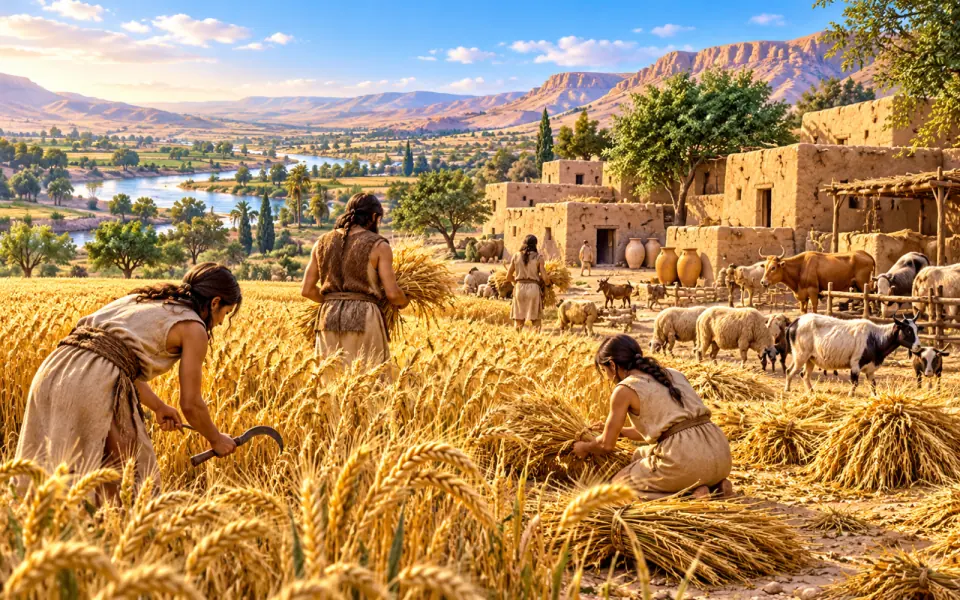 AfterThe Neolithic Revolutionabout 12,000 years ago
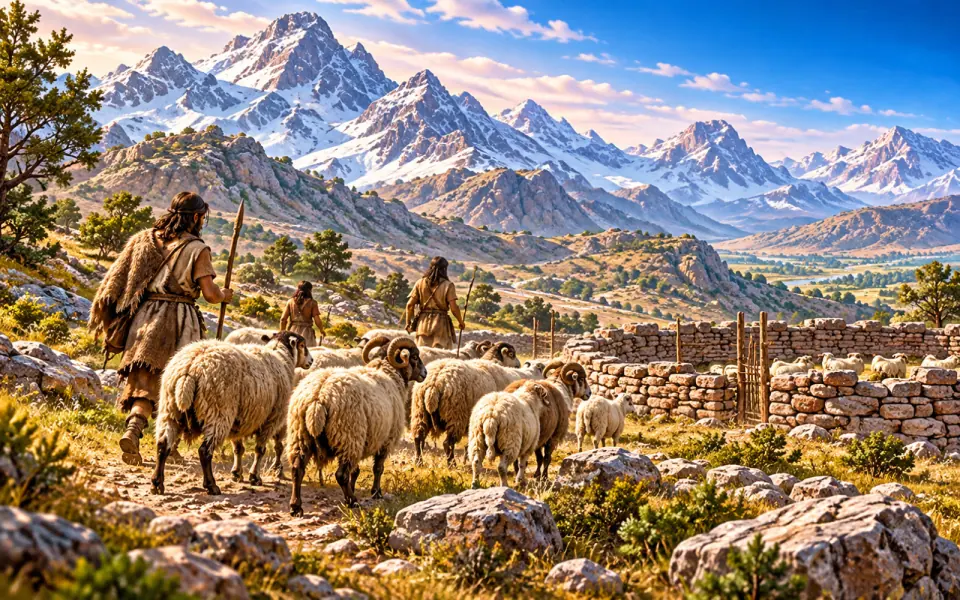 AfterTaming the sheepabout 11,000 years ago
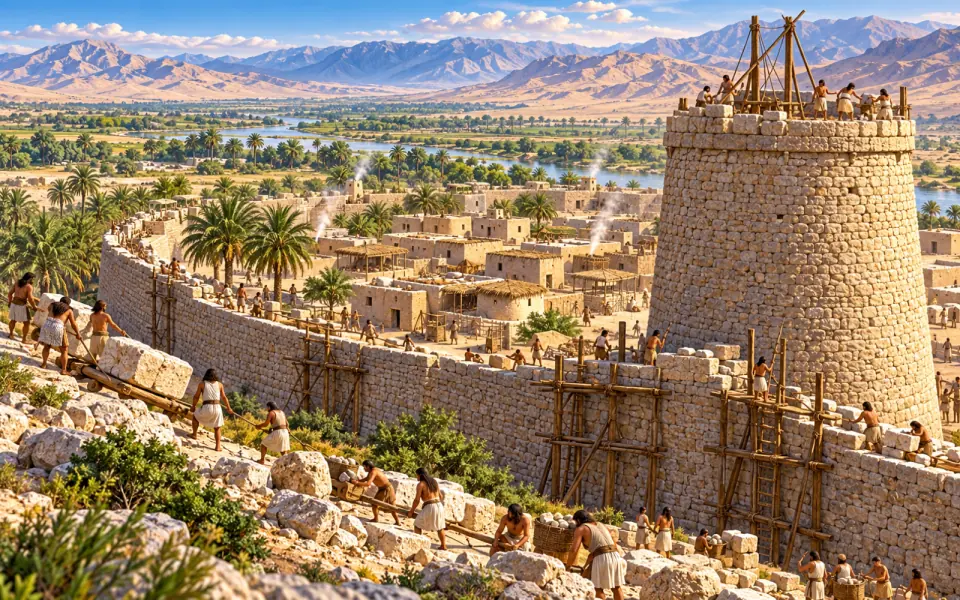 AfterThe walls of Jerichoabout 10,300 years ago
 AfterPottery spreadsabout 9,000 years ago
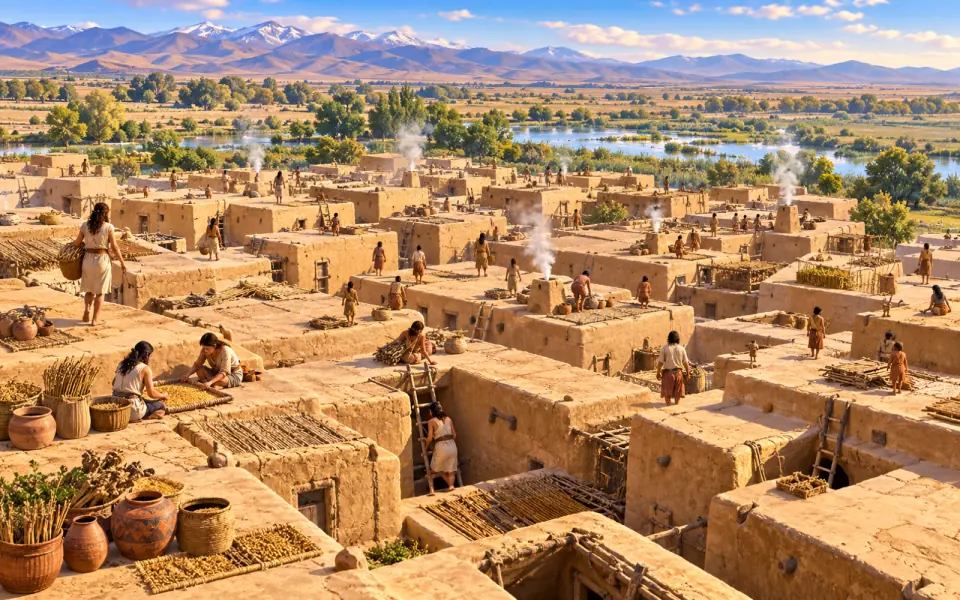 AfterÇatalhöyükabout 9,000 years ago
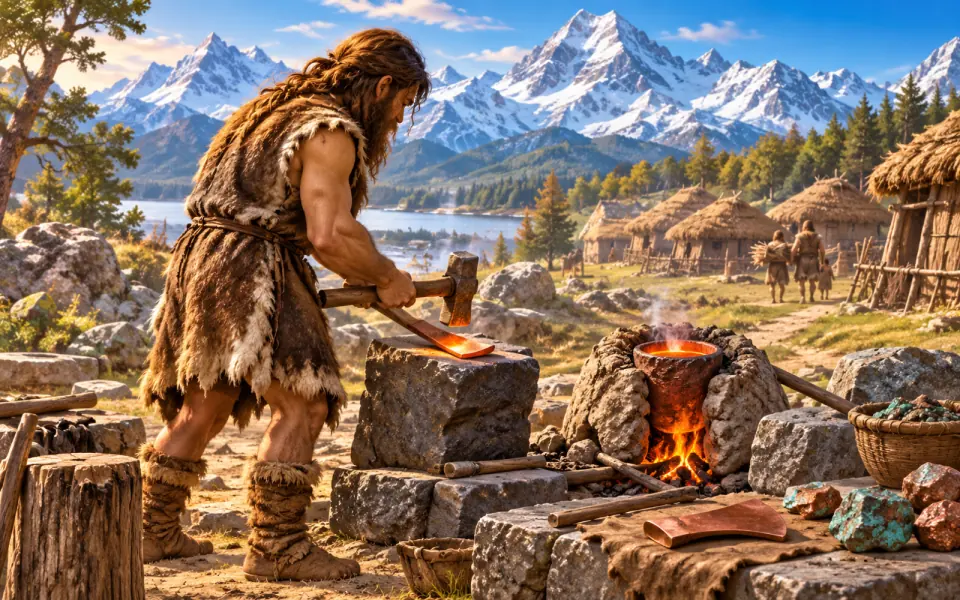 AfterWorking with copperabout 7,000 years ago
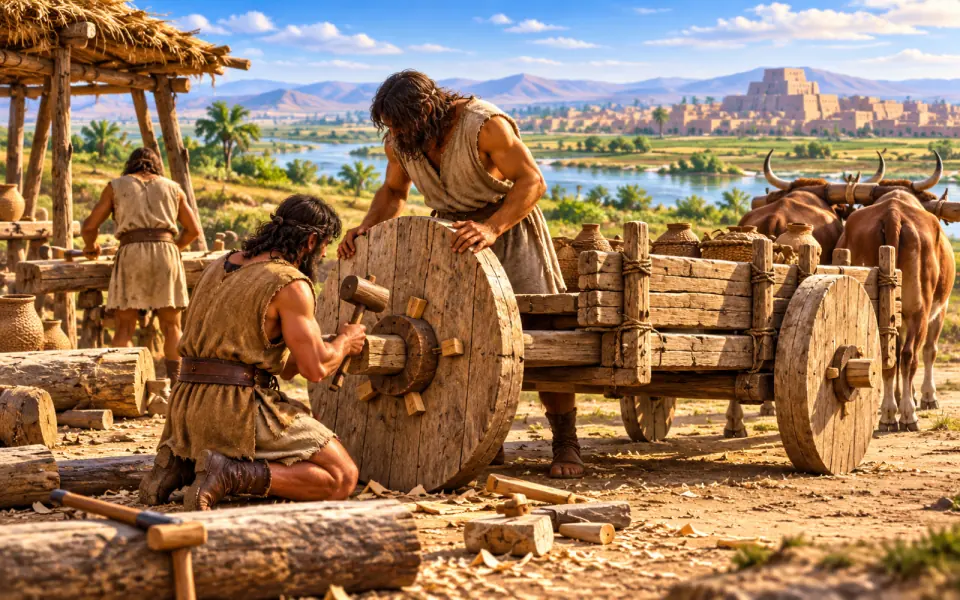 AfterThe invention of the wheelabout 5,500 years ago
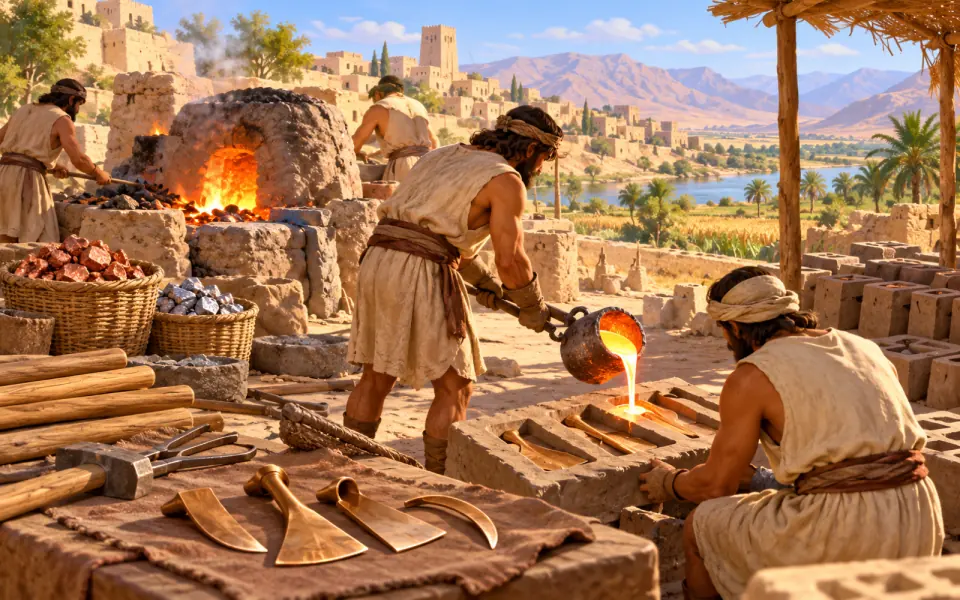 AfterThe Bronze Ageabout 5,300 years ago
Listen / Read next
- Music to read by: Cinematic JourneyEpic film-style music, no lyrics, by Ciro Simone IrmiciSpotifyYouTube Music
Meanwhile, elsewhere in the world
Other events of the era “Prehistory”
- The first hominins
- Lucy the australopithecine
- The first stone tools
- Homo habilis
- Homo erectus
- Taming fire
- Homo heidelbergensis
- Neanderthals
- The arrival of Homo sapiens
- The first deliberate burials
- The needle with an eye
- The first people in Australia
- The cave art of Sulawesi
- The Venus of Willendorf
- The Lascaux cave
- The first permanent villages
- The Neolithic Revolution
- Taming the sheep
- The walls of Jericho
- Pottery spreads
- Çatalhöyük
- Working with copper
- The invention of the wheel
- The Bronze Age
