The needle with an eye
about 48,000 years ago Denisova Cave, Siberia (Russia)
In short
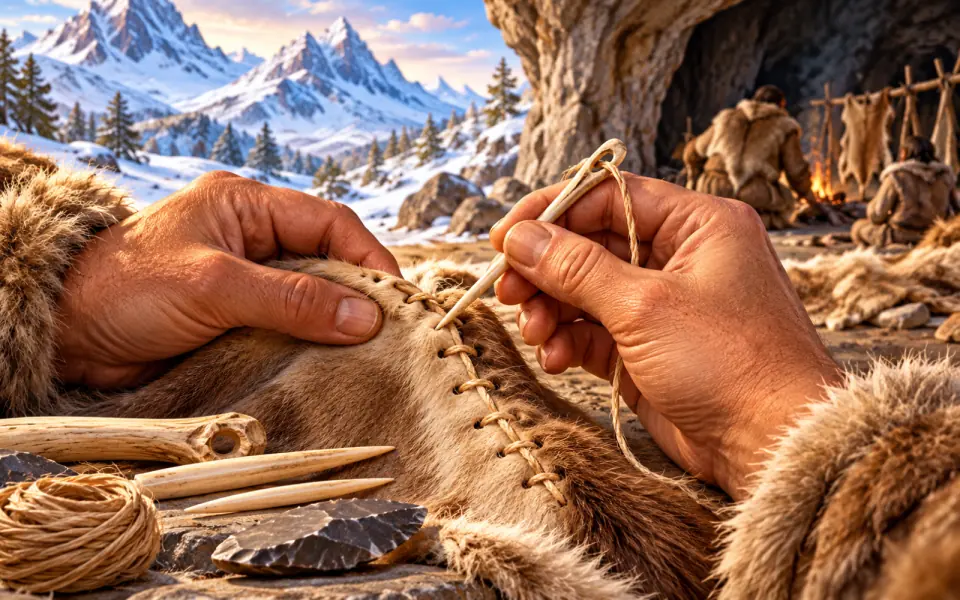
Bone needles with an eye, the hole for the thread, are among the most useful inventions of prehistory. One of the oldest, about 7 centimetres long and made from the bone of a large bird, was found in Denisova Cave, in Siberia, in a layer from about 50,000 years ago. They were used to sew skins and close-fitting clothes, which were precious in cold climates.
Why it matters Well-sewn clothes allowed people to live in very cold places.
Source: Archaeology Magazine, “Denisova Cave Yields a 50,000-Year-Old Needle”
Study card about 5 minutes of reading
The story
A tiny object in an enormous cave
In the Altai Mountains in southern Siberia there is a long, cool cave called Denisova, named after a Russian hermit of the eighteenth century who found shelter in it. For over forty years archaeologists from the Institute of Archaeology and Ethnography in Novosibirsk have been digging it layer by layer, and each layer is like a page of a book: the further down you go, the further back in time. In one of the ancient layers, the team led by the archaeologist Anatoly Derevianko pulled out a small, thin thing, about seven centimetres long, made from a bird bone. It had a sharp point and, at the other end, a little hole: an eye. It was a needle, and it was about 50,000 years old; the discovery was announced in 2016.
It may seem a small thing. But think what a needle is for: to join two pieces of skin with a thread, and to do it neatly and precisely. Without a needle, you can wrap skins around the body and tie them, like someone using a blanket. With a needle, you can cut and sew made-to-measure clothes that cling to the body without leaving gaps for the draught. For living in an icy climate, the difference is great.
How a needle was made
To make a bone needle you first had to choose the right bone: long, thin, strong, like that of a large bird. Then it was cleaned and smoothed with a rough stone, rubbing for a long time to get a tapered shape. The most delicate part was the eye: a hole was made with a flint point, turning it gently from both sides until the two holes met. One blow too many and the bone would break. It was the work of an expert craftsman.
The thread was made from animal tendons, or from twisted plant fibres. The skins, already scraped with stone tools and softened, were pierced with a small bone awl, then sewn. Of all this almost nothing remains, because clothes rot away. What survives are the needles, the awls, the scrapers with traces of use, and sometimes the beads that decorated the clothes.
Who used them?
The Denisova needle is among the oldest known, but it is not easy to say who made it. It was found in a layer where remains of the Denisovans have also been discovered, relatives of the Neanderthals and of sapiens, and for this reason some researchers think it was their work. But the layer is ancient, its precise dating is disputed and the link with a particular species is not proved. In the same cave a bracelet of polished, perforated stone, about 40,000 years old, was also found, and it attracts a great deal of attention.
Eyed needles become much more common after 40,000 years ago, in Europe, Siberia and Asia, among sapiens. With their help human beings pushed into icy territories. In north-eastern Siberia, at a site called Yana, beyond the Arctic Circle, mammoth hunters lived about 32,000 years ago, in a place where the winter is very long and the temperature falls far below zero. Without warm clothes it would have been impossible.
Clothes fit for princes?
We also know that clothes were not only for keeping warm. At Sungir, near Vladimir in Russia, graves about 34,000 years old were found with a man and two children buried with thousands of mammoth-ivory beads. The beads were arranged in rows, as if they had been sewn onto clothes. Making them took thousands of hours of work. Clothes, therefore, also said who you were, what group you belonged to, how important you were.
Clothing is another of the inventions that made it possible for our species to live where nature had not prepared us. We have no fur and no fat under the skin against the cold: we have a technology, and a bone needle is its simplest symbol.
Why it happened
Needles arose from the need to protect oneself from the cold. During the last ice age, which reached its coldest point about 20,000 years ago, but with harsh phases earlier, much of Europe and northern Asia was an icy steppe. Anyone who wanted to stay there had to dress well.
There was also a skill factor. Making a thin needle takes precision, patience and the idea of building one tool to make another: a needle is for sewing clothes, and to pierce it you need another tool. It is a chain of technologies.
Society probably mattered too. Knowing how to sew, and teaching it, needed groups in which knowledge passed from one generation to the next and in which tasks were shared.
What changed
Sewn clothes widened the human territory. With good clothing you could live in the icy steppes of Europe and northern Asia, and then reach the Americas through Arctic regions, as the first inhabitants of the continent probably did.
Thread and needle became a daily job that has run through the whole of history: tailors, embroiderers, weavers. Until the invention of sewing machines, in the nineteenth century, every garment was sewn by hand.
Today needles are made of steel, but the shape has stayed that of the bone needle: a point and an eye. An idea so simple and so functional that for tens of thousands of years it has not needed to change.
Key people and places
People
- Anatoly Derevianko
- Russian archaeologist (born 1943), director of the Institute of Archaeology and Ethnography in Novosibirsk. He has led the excavations at Denisova Cave for decades.
- Svante Pääbo
- Swedish geneticist. In 2010 he recognised, from the DNA of a finger bone found at Denisova, a previously unknown human species.
Places
- Denisova Cave (Siberia)
- A cave in the Altai Mountains, in Russia, near the border with Kazakhstan and Mongolia. It was inhabited by Denisovans, Neanderthals and sapiens.
- Sungir (Russia)
- A site near the city of Vladimir, with graves about 34,000 years old full of ivory beads on the clothes.
- Yana (north-eastern Siberia)
- A site beyond the Arctic Circle, where about 32,000 years ago mammoth hunters lived.
Good to know
- The name of the cave comes from Dionisy, a Russian hermit (Denis in Russian) who lived there in the eighteenth century: Denisova means “of Denis”.
- In the graves at Sungir about ten thousand beads were counted on the clothes of the two children: according to some calculations they would have taken thousands of hours of work.
- Clothing lice are a different species from head lice: according to some DNA studies they appeared between about 170,000 and 80,000 years ago, which suggests that someone was wearing clothes even then.
- Bone needles are still made today by some Arctic peoples, such as the Inuit, who use hand-sewn furs to live at very low temperatures.
- Animal sinew thread, when wet, stretches and softens, but when dry it tightens: a carefully made seam closes up by itself.
Find out more
- Archaeology Magazine, “Denisova Cave Yields a 50,000-Year-Old Needle” (in English) archaeology.org
- Wikipedia, “Denisova Cave” en.wikipedia.org
- Wikipedia, “Sewing needle” en.wikipedia.org
- Wikipedia, “Denisovan” en.wikipedia.org
Related events
- Homo sapiens leaves Africaabout 60,000 years ago · PrehistorySapiens, leaving Africa, met the Denisovans and children were born.
- Taming fireabout 790,000 years ago · PrehistoryFire and clothes were the two great defences against the cold.
- Neanderthalsabout 400,000 years ago · PrehistoryThe Neanderthals scraped skins, but we do not know their needles.
- The first people in Australiaabout 48,000 years ago · PrehistoryIn Australia, in the warm climate, clothes were less necessary.
- Pottery spreadsabout 9,000 years ago · PrehistoryAfter bone needles, a new technology: clay pots.
Before and after, in the era “Prehistory”
Event 12 of 25
 BeforeThe first homininsabout 7 million years ago
 BeforeLucy the australopithecineabout 3.2 million years ago
 BeforeThe first stone toolsabout 2.6 million years ago
 BeforeHomo habilisabout 2.4 million years ago
 BeforeHomo erectusabout 1.9 million years ago
 BeforeTaming fireabout 790,000 years ago
 BeforeHomo heidelbergensisabout 600,000 years ago
 BeforeNeanderthalsabout 400,000 years ago
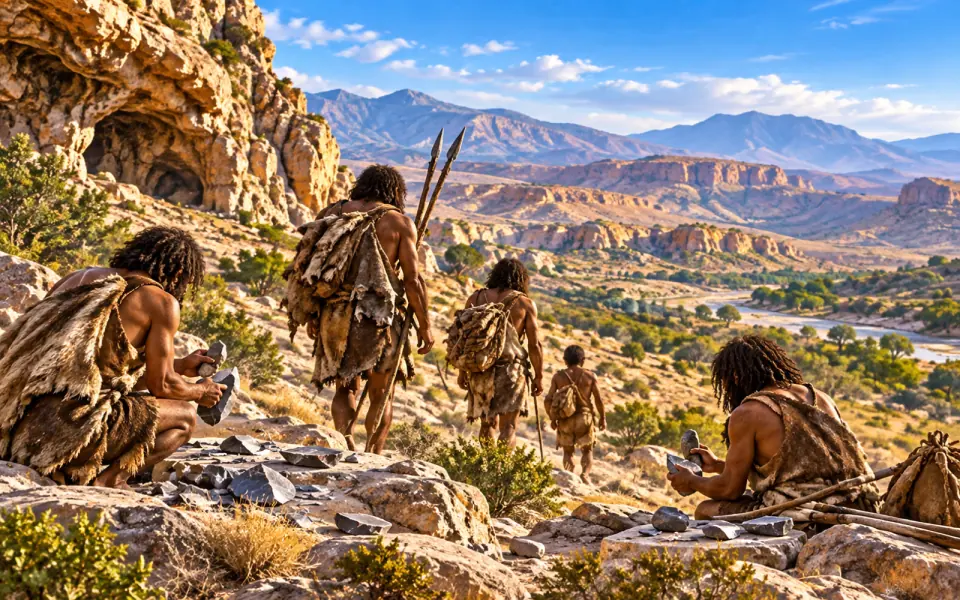 BeforeThe arrival of Homo sapiensabout 300,000 years ago
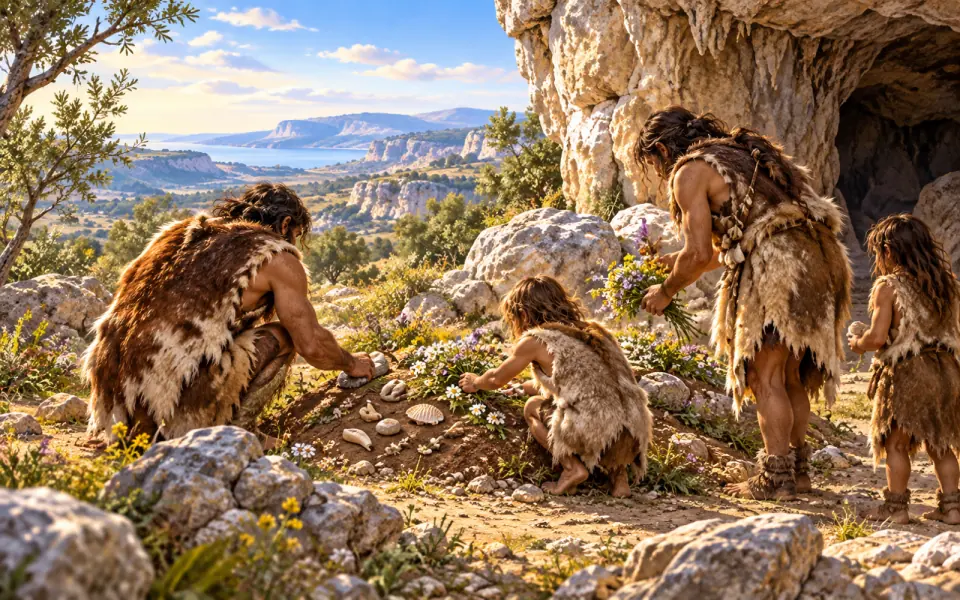 BeforeThe first deliberate burialsabout 100,000 years ago
 BeforeHomo sapiens leaves Africaabout 60,000 years ago
- You are hereThe needle with an eyeabout 48,000 years ago
 AfterThe first people in Australiaabout 48,000 years ago
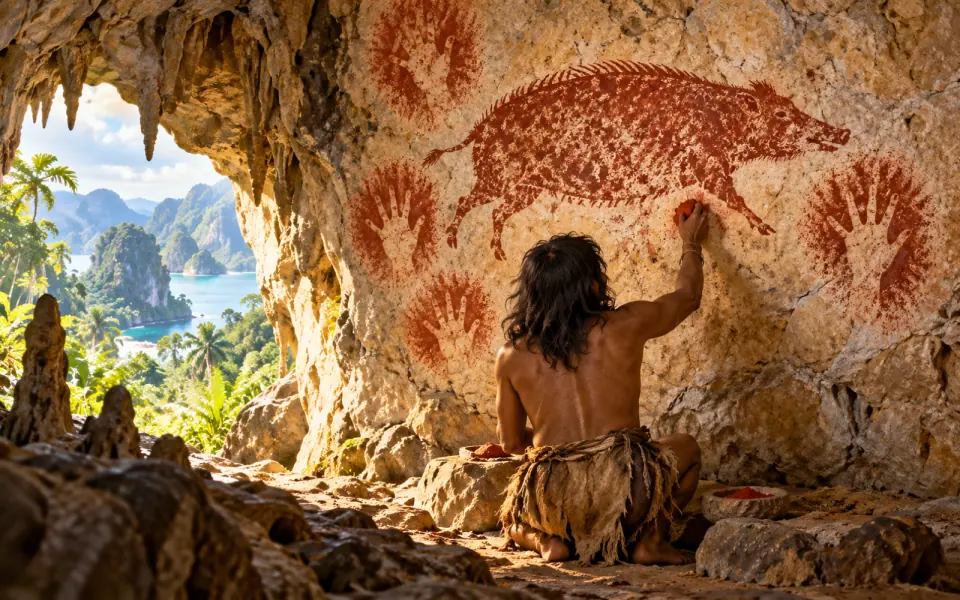 AfterThe cave art of Sulawesiabout 44,000 years ago
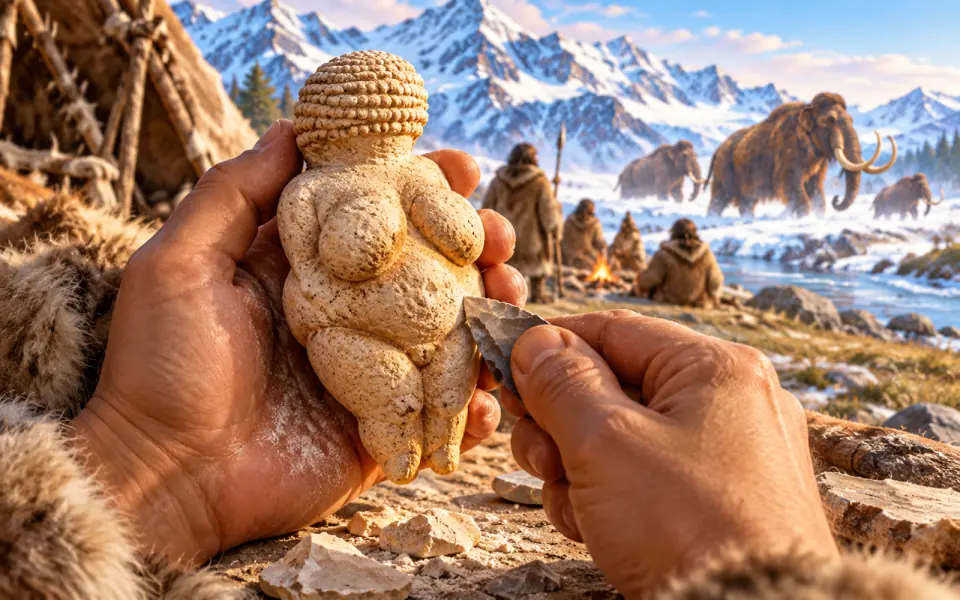 AfterThe Venus of Willendorfabout 28,000 years ago
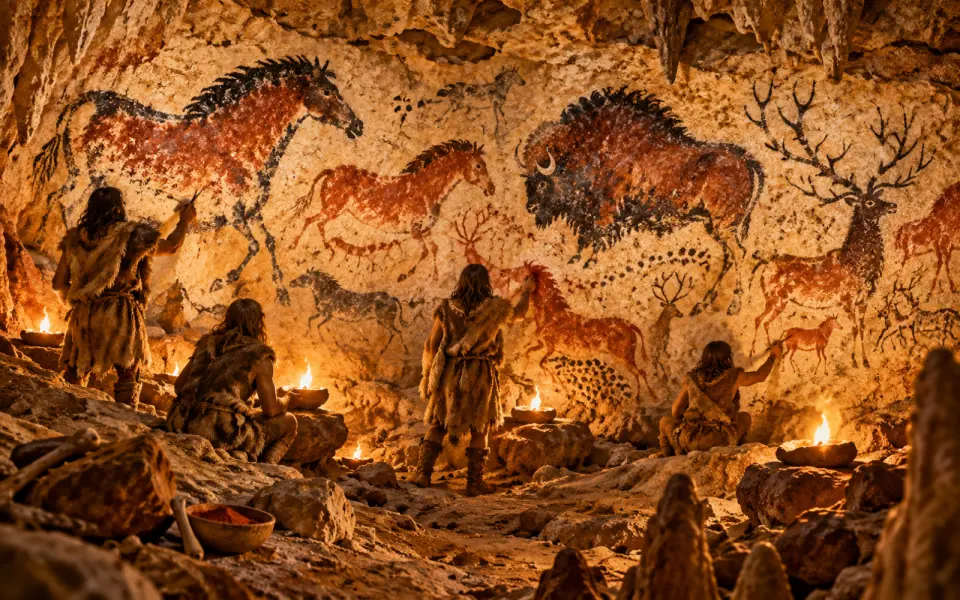 AfterThe Lascaux caveabout 19,000 years ago
 AfterThe first permanent villagesabout 14,000 years ago
 AfterThe Neolithic Revolutionabout 12,000 years ago
 AfterTaming the sheepabout 11,000 years ago
 AfterThe walls of Jerichoabout 10,300 years ago
 AfterPottery spreadsabout 9,000 years ago
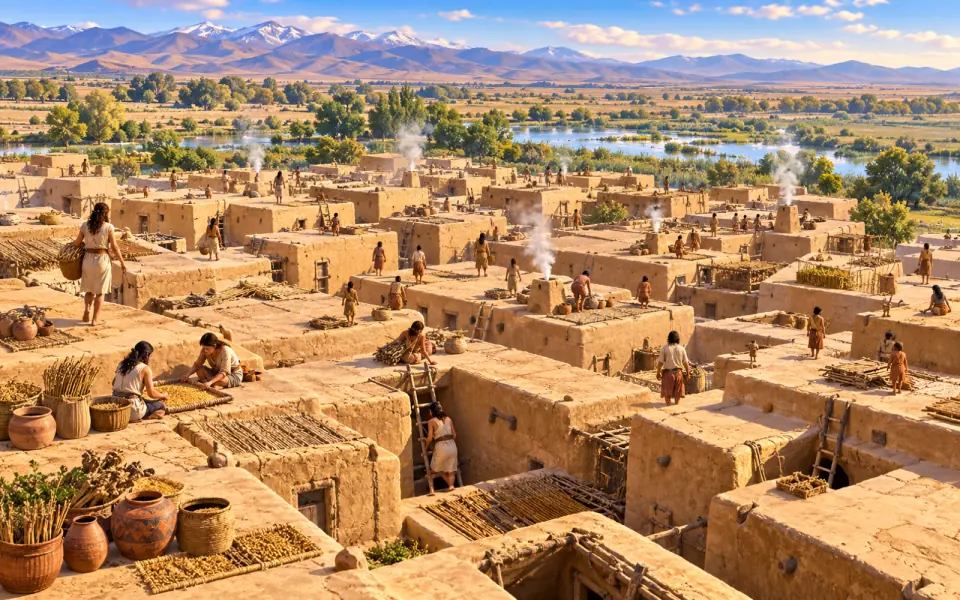 AfterÇatalhöyükabout 9,000 years ago
 AfterWorking with copperabout 7,000 years ago
 AfterThe invention of the wheelabout 5,500 years ago
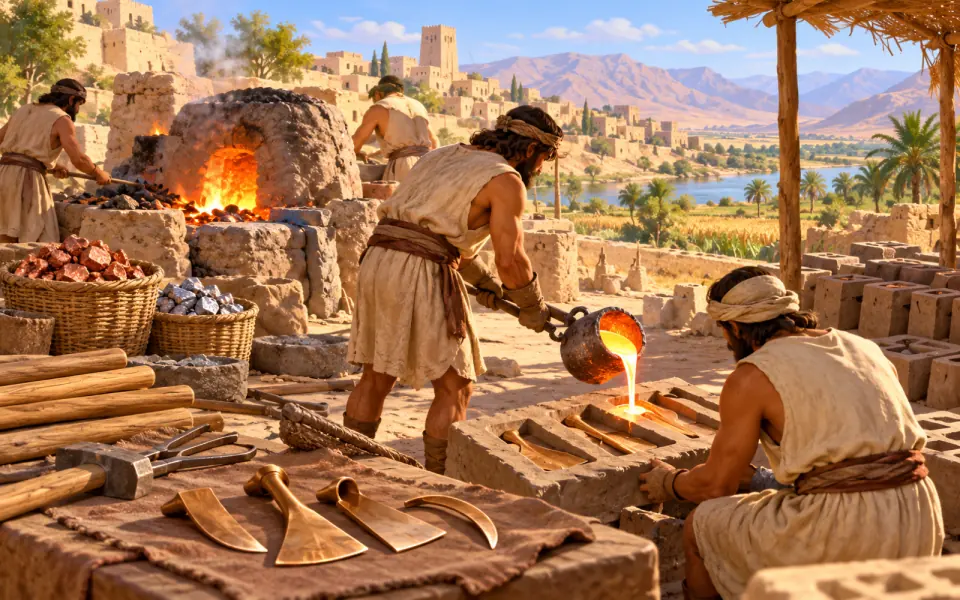 AfterThe Bronze Ageabout 5,300 years ago
Listen / Read next
- Music to read by: Cinematic JourneyEpic film-style music, no lyrics, by Ciro Simone IrmiciSpotifyYouTube Music
Meanwhile, elsewhere in the world
Other events of the era “Prehistory”
- The first hominins
- Lucy the australopithecine
- The first stone tools
- Homo habilis
- Homo erectus
- Taming fire
- Homo heidelbergensis
- Neanderthals
- The arrival of Homo sapiens
- The first deliberate burials
- Homo sapiens leaves Africa
- The first people in Australia
- The cave art of Sulawesi
- The Venus of Willendorf
- The Lascaux cave
- The first permanent villages
- The Neolithic Revolution
- Taming the sheep
- The walls of Jericho
- Pottery spreads
- Çatalhöyük
- Working with copper
- The invention of the wheel
- The Bronze Age
