The first hominins
about 7 million years ago Toros-Menalla, Chad
In short
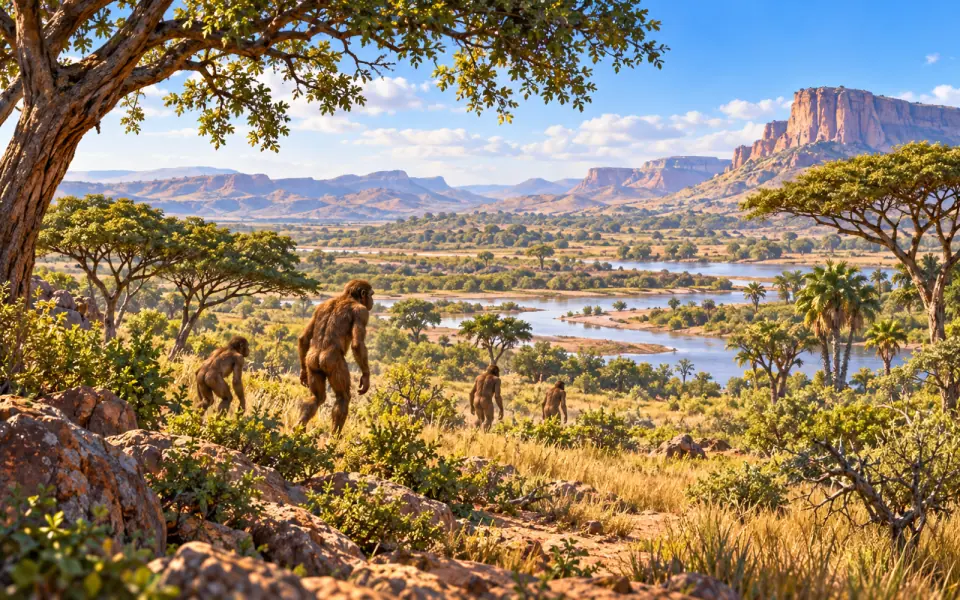
In Africa, about 7 million years ago, lived the first hominins: primates that were beginning to walk on two legs, at least for short stretches. The oldest known fossil, called Sahelanthropus, was found in Chad in 2001. They still had a small brain, similar to a chimpanzee's.
Why it matters Walking on two legs freed the hands: it is the first step in the long human story.
Source: Smithsonian, Human Origins Program, “Sahelanthropus tchadensis”
Study card about 6 minutes of reading
The story
A family with many species
When scientists talk about “humans”, they usually mean a whole group of species, not just one. The group is called the hominins (or hominids, in older language), and in common usage it includes our own species and all our extinct relatives that appeared after the split from the chimpanzee line. Chimpanzees are our closest living cousins: their DNA is almost the same as ours. According to genetic calculations, the two paths separated between about 9 and 6 million years ago. The exact moment is hard to pin down, because very few fossils survive from that time.
That is why every new find from that period makes the news. The bones are rare, often crushed or broken, and found in places where the landscape has completely changed since. For the human line, before four million years ago, there are very few remains, and almost all of them are fragments.
The skull in the desert
On 19 July 2001, in the Djurab Desert in Chad, a student on the team of the French palaeontologist Michel Brunet saw something dark sticking out of the sand. It was an almost complete skull, squashed by the weight of the ground but still recognisable. The place is called Toros-Menalla, and today it is sand and wind; seven million years ago it was a landscape of lakes, grasslands and little woods along the shores. The skull was named Sahelanthropus tchadensis, “Sahel man of Chad”, and it also got a nickname in a local language: Toumaï, which means “hope of life”.
Toumaï has a mixture of features. The brain was small, about the same as a chimpanzee's, roughly a third of ours. The face, however, was short and the canine teeth were small, features that look more like hominins than like apes. The most debated part is the hole at the base of the skull where the spinal cord comes out: to many scholars, its position suggests that the head sat on top of the spine, as in someone who stands upright. Others are not convinced, and the debate is still open. A thigh bone found in the same place has also been studied recently, and a partly upright walk has been worked out from it; but some experts think the data are not enough.
Other candidates
Sahelanthropus is not the only very ancient hominin. In 2000, in the Tugen Hills in Kenya, Brigitte Senut and Martin Pickford described Orrorin tugenensis, about 6 million years old, known above all for a thigh bone whose shape suggests that it walked on two legs. In Ethiopia, in the Awash valley, Ardipithecus was found a little later: first a species of 5.8–5.2 million years ago, then Ardipithecus ramidus, of 4.4 million years ago, of which a very incomplete but precious skeleton was found, nicknamed Ardi. Its feet could still grasp branches, and its pelvis was suited to both walking and climbing.
Scholars do not all agree about which of these were really our ancestors and which were branches with no descendants. The most realistic picture is a bush, not a ladder: many species living at the same time, some of which died out without leaving a trace in our family tree.
Why stand up?
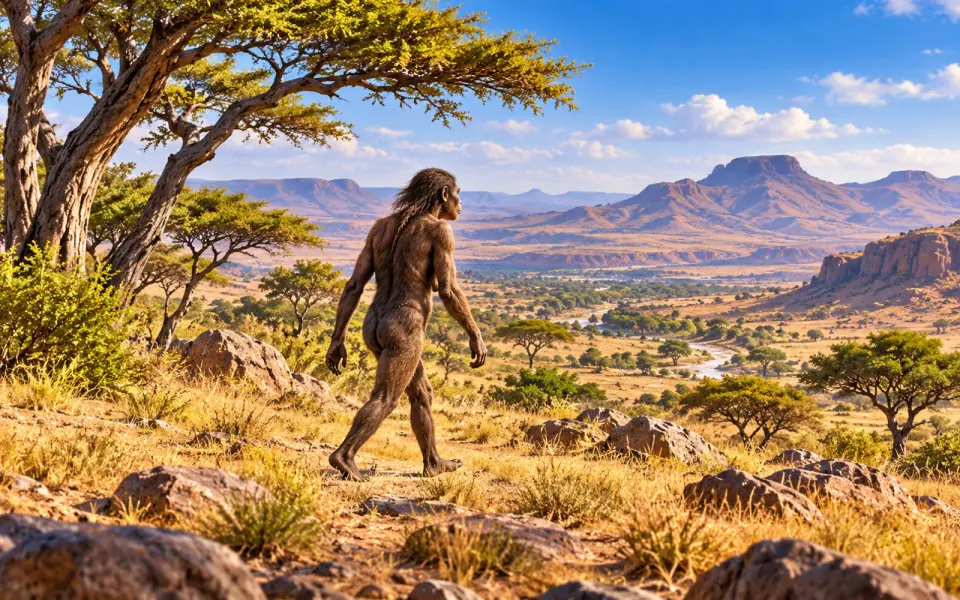
Why walk on two legs? There are many ideas and none is certain. Perhaps it helped to carry food or babies over a distance, or to see over tall grass, or to use less energy on the long walks between one tree and the next when forests were getting thinner. Probably it was several things together. What we do know is that these first hominins did not leave the trees: they walked upright for a stretch and then climbed back up. Walking upright freed the hands from a job. For millions of years the hands did not do much that was new, but they became free to carry, throw and chip stone: it is the starting point of everything we will tell in the next cards.
With Sahelanthropus this story begins in our books. Whether it is the true beginning, or a close cousin, future fossils will be able to tell.
Why it happened
About seven million years ago Africa was changing. In many regions the climate was becoming drier and the thick forests were giving way to thinner woodland, with grasslands and lakes. Apes living at the edges of the woods found themselves having to cross open spaces to get from one clump of trees to another.
In that environment, standing a little more upright could bring advantages, for example seeing predators from far away, carrying food in the arms or moving around with less effort. The descendants of those who managed it best survived more often, and the trait grew stronger, little by little, over hundreds of thousands of generations.
So it was not a choice, but a slow adaptation. Nobody decided to stand up: evolution rewarded those who, in certain environments, managed it better.
What changed
All the species of the group, including our own, descend from the first hominins. Walking upright changed the body: the pelvis became shorter and wider, the spine took on an S shape, and the feet lost their grip and became solid arches. Some of these changes are still with us today: they are one of the reasons why back pain is so common among human beings.
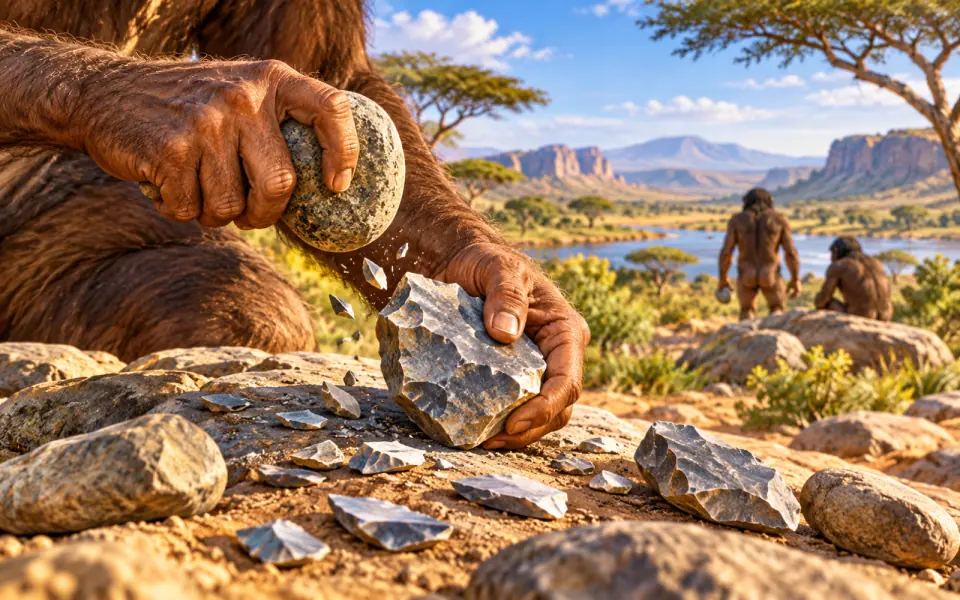
Free hands had enormous consequences over the following millions of years. They could hold stones, sticks, children and food; later they could build. Stone tools, fire, weapons, writing and the smartphone you are holding are all distant steps along that road, even though there are millions of years between one and the next.
The first hominins also teach us something about scientific method. The story of our origin is not written once and for all: it changes with every new fossil, every new dating, every new DNA test. That is why scientists speak of “the most likely hypotheses” and not of final truths when it comes to times so far away.
Key people and places
People
- Michel Brunet
- French palaeontologist (born 1940). He led the French–Chadian team that found Toumaï in 2001 and other ancient fossils in Chad.
- Ahounta Djimdoumalbaye
- A young Chadian student on Brunet's team: on 19 July 2001 he was the first to see the skull of Toumaï in the sand.
- Brigitte Senut and Martin Pickford
- Palaeontologists who in 2000 described Orrorin tugenensis, another of the oldest hominin candidates, found in Kenya.
- Tim White
- American palaeoanthropologist. He led the study of Ardipithecus ramidus, nicknamed Ardi, found in Ethiopia and presented to the world in 2009.
Places
- Toros-Menalla, Djurab Desert (Chad)
- An area that is desert today, in northern Chad. Seven million years ago it was an environment of lakes and woods, and it gave us the skull of Sahelanthropus.
- Tugen Hills (Kenya)
- A hilly area in the Rift Valley where the remains of Orrorin tugenensis, about 6 million years old, were found.
- Awash valley (Ethiopia)
- A region of Ethiopia extremely rich in fossils, from the first hominins up to Homo sapiens: Ardi was found here.
Good to know
- Toumaï, in a local language of Chad, is a name that, according to some sources, is given to children born at the turn of the seasons: it means “hope of life”.
- The skull of Toumaï was found squashed and distorted by the weight of the sand: to study it, scientists rebuilt it on a computer using X-ray scans.
- Chimpanzees and human beings have almost the same DNA, with a difference of about 1 per cent in the parts that are easiest to compare.
- Ardi, the fossil of Ardipithecus ramidus, was found in 1994 but was studied for fifteen years before being presented to the public in 2009.
- The word hominin comes from the Latin homo, “man”; the ending -ini marks, in biology, a group of species, a “tribe”, smaller than a family.
Find out more
- Smithsonian, Sahelanthropus tchadensis page (in English) humanorigins.si.edu
- Wikipedia, “Sahelanthropus tchadensis” en.wikipedia.org
- Wikipedia, “Ardipithecus ramidus” en.wikipedia.org
- Wikipedia, “Orrorin tugenensis” en.wikipedia.org
- Wikipedia, “Human evolution” en.wikipedia.org
Related events
- Lucy the australopithecineabout 3.2 million years ago · PrehistoryLucy, millions of years later, is the most famous of the descendants of those first hominins.
- The first stone toolsabout 2.6 million years ago · PrehistoryHands freed by walking made it possible to chip the first stones.
- The first mammalsabout 225 million years ago · The Earth before usPrimates are mammals: their story begins with the first small mammals.
- Extinction of the non-avian dinosaursabout 66 million years ago · The Earth before usAfter the dinosaurs died out, mammals, and then primates, had room to develop.
- Darwin publishes On the Origin of Species1859 · Age of revolutionsDarwin was the first to suggest that humans descended from ape-like ancestors.
Before and after, in the era “Prehistory”
Event 1 of 25
- You are hereThe first homininsabout 7 million years ago
 AfterLucy the australopithecineabout 3.2 million years ago
 AfterThe first stone toolsabout 2.6 million years ago
 AfterHomo habilisabout 2.4 million years ago
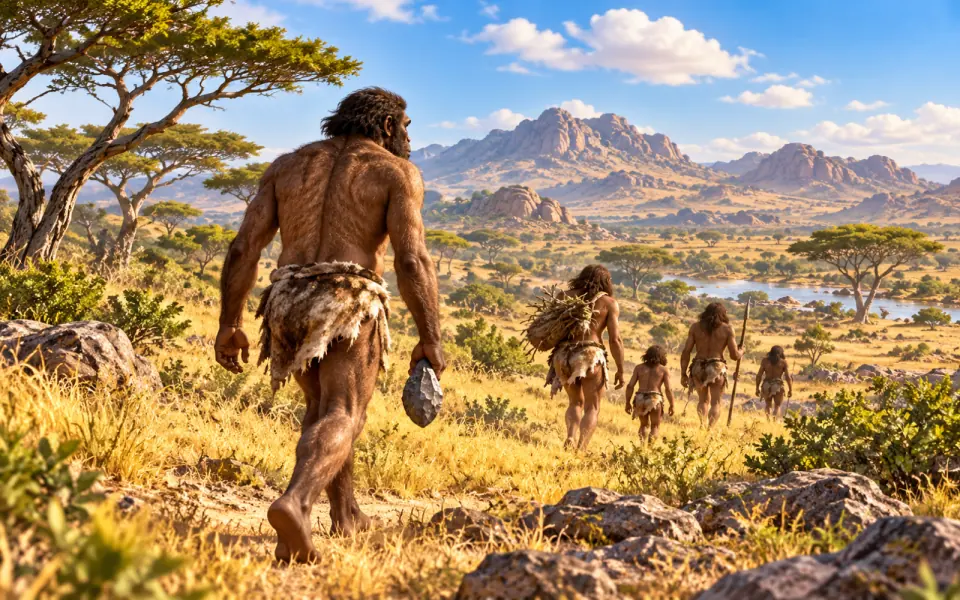 AfterHomo erectusabout 1.9 million years ago
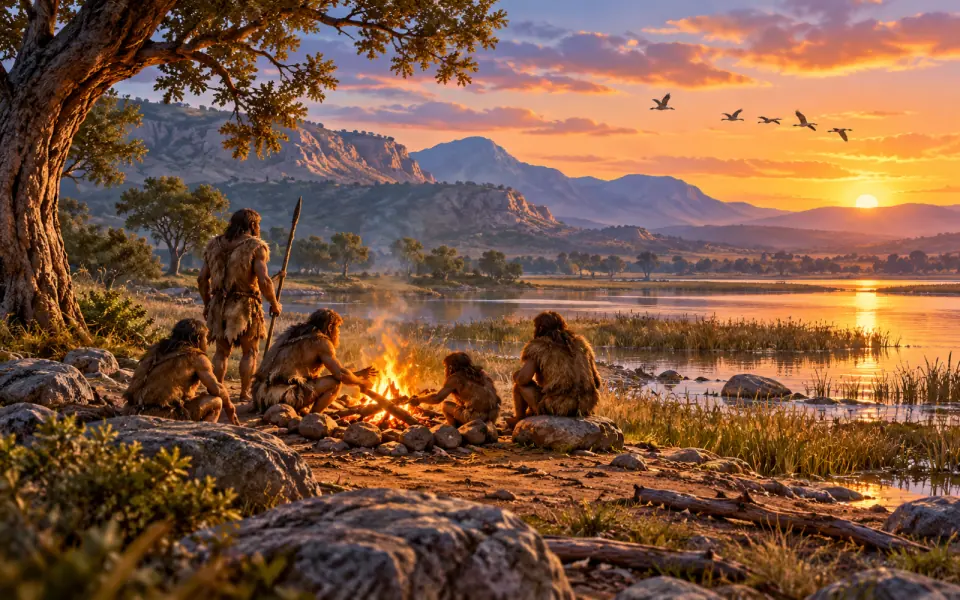 AfterTaming fireabout 790,000 years ago
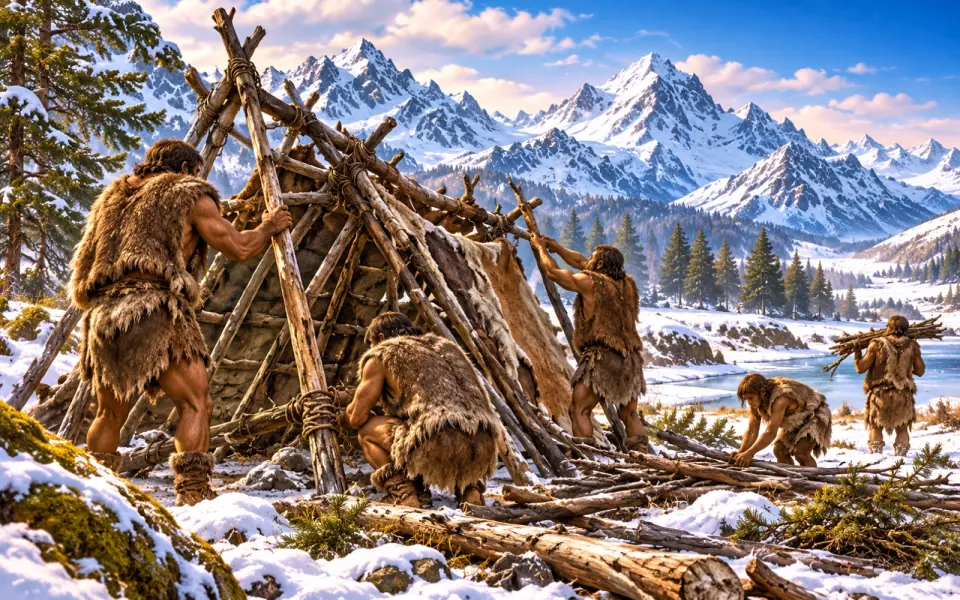 AfterHomo heidelbergensisabout 600,000 years ago
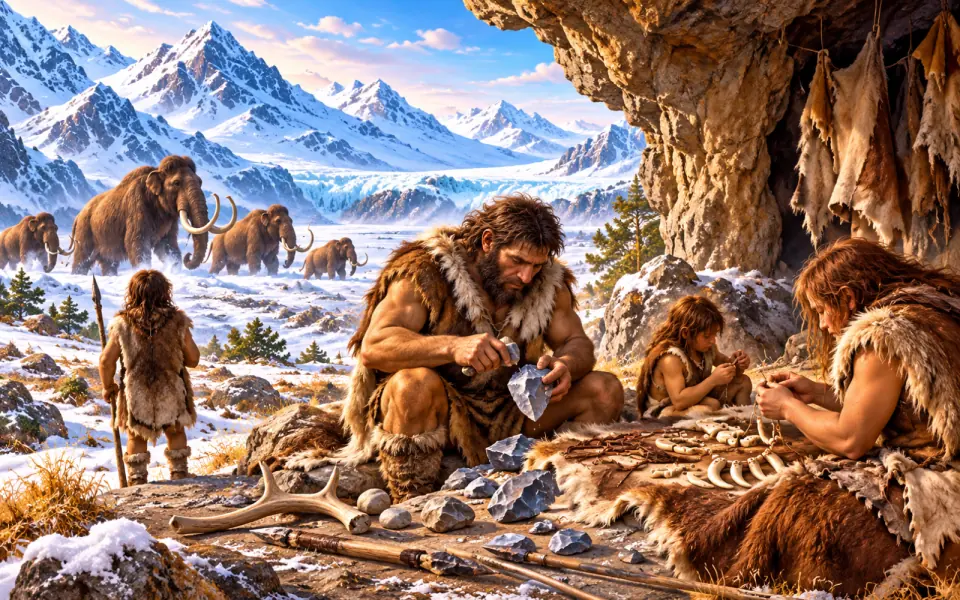 AfterNeanderthalsabout 400,000 years ago
 AfterThe arrival of Homo sapiensabout 300,000 years ago
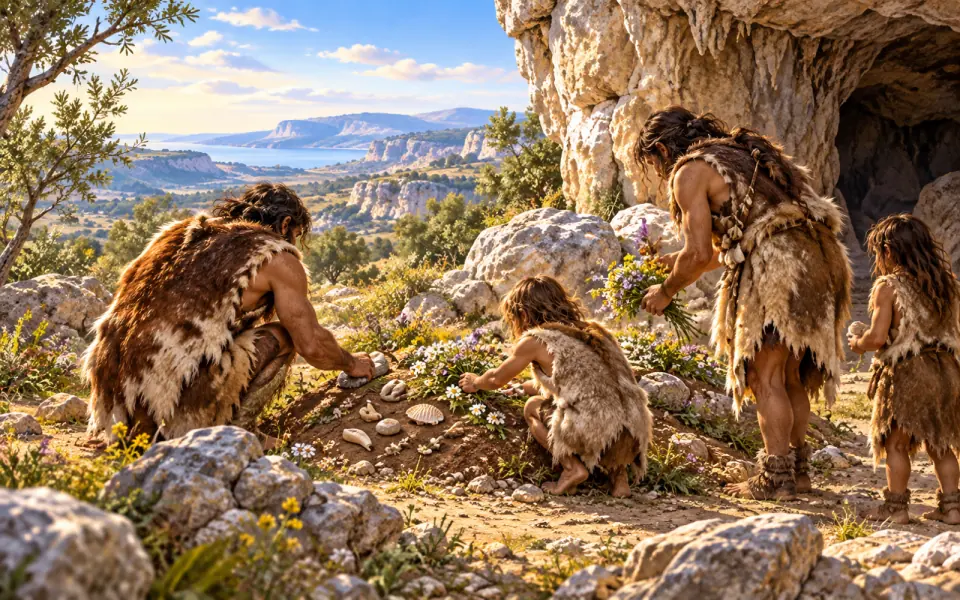 AfterThe first deliberate burialsabout 100,000 years ago
 AfterHomo sapiens leaves Africaabout 60,000 years ago
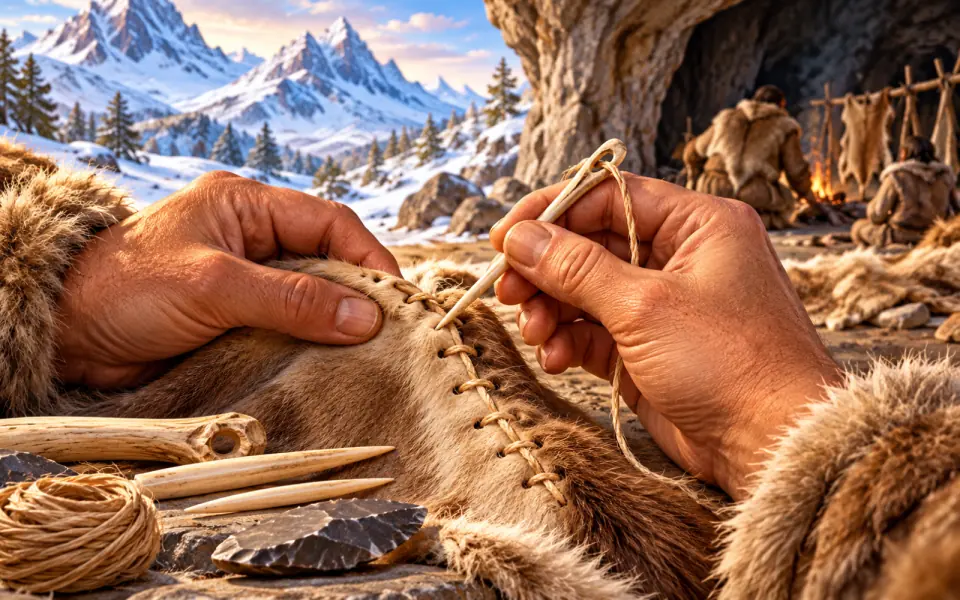 AfterThe needle with an eyeabout 48,000 years ago
 AfterThe first people in Australiaabout 48,000 years ago
 AfterThe cave art of Sulawesiabout 44,000 years ago
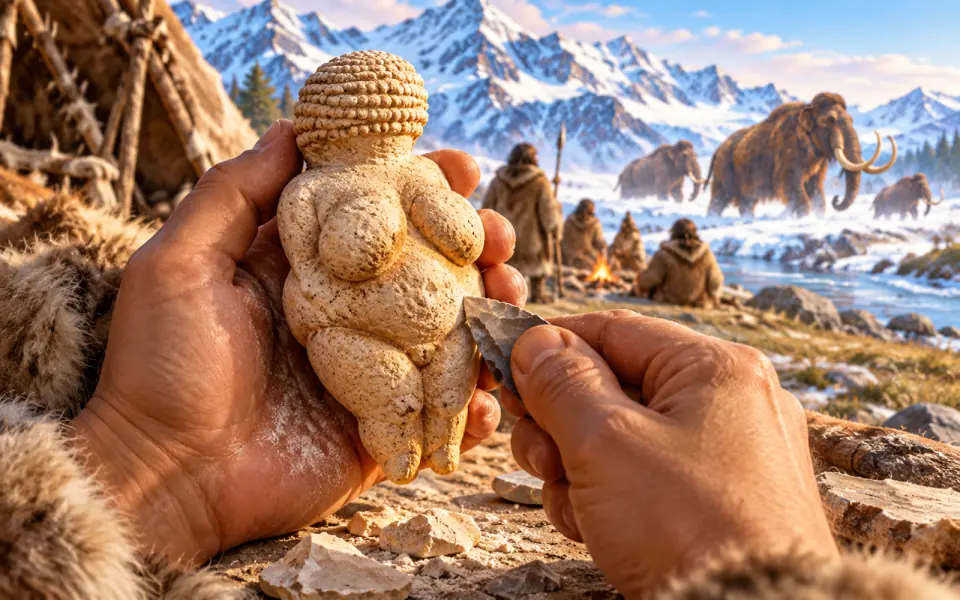 AfterThe Venus of Willendorfabout 28,000 years ago
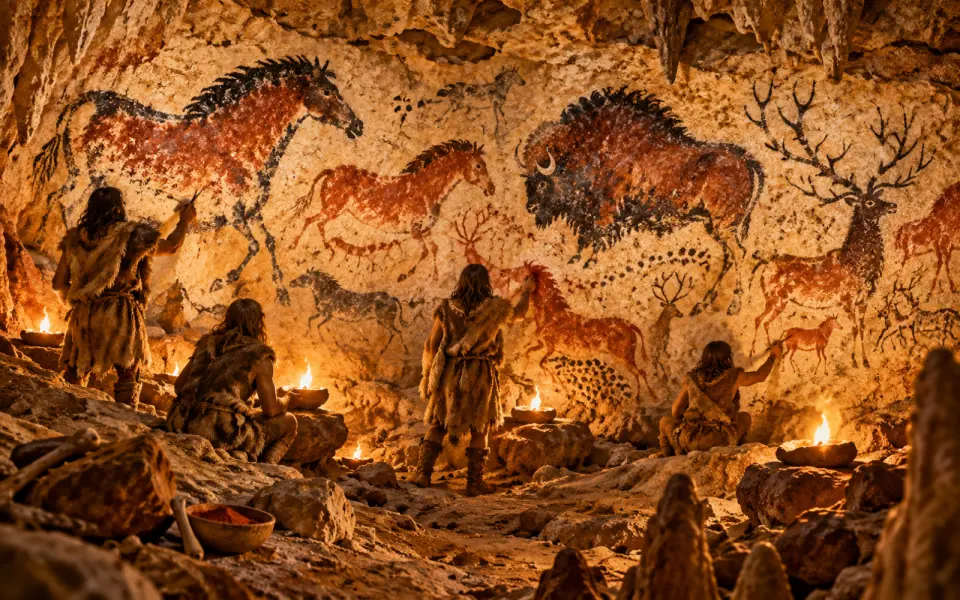 AfterThe Lascaux caveabout 19,000 years ago
 AfterThe first permanent villagesabout 14,000 years ago
 AfterThe Neolithic Revolutionabout 12,000 years ago
 AfterTaming the sheepabout 11,000 years ago
 AfterThe walls of Jerichoabout 10,300 years ago
 AfterPottery spreadsabout 9,000 years ago
 AfterÇatalhöyükabout 9,000 years ago
 AfterWorking with copperabout 7,000 years ago
 AfterThe invention of the wheelabout 5,500 years ago
 AfterThe Bronze Ageabout 5,300 years ago
Listen / Read next
- Music to read by: Cinematic JourneyEpic film-style music, no lyrics, by Ciro Simone IrmiciSpotifyYouTube Music
Other events of the era “Prehistory”
- Lucy the australopithecine
- The first stone tools
- Homo habilis
- Homo erectus
- Taming fire
- Homo heidelbergensis
- Neanderthals
- The arrival of Homo sapiens
- The first deliberate burials
- Homo sapiens leaves Africa
- The needle with an eye
- The first people in Australia
- The cave art of Sulawesi
- The Venus of Willendorf
- The Lascaux cave
- The first permanent villages
- The Neolithic Revolution
- Taming the sheep
- The walls of Jericho
- Pottery spreads
- Çatalhöyük
- Working with copper
- The invention of the wheel
- The Bronze Age
