The first amphibians
about 375 million years ago Shallow waters and shores of the continents
In short
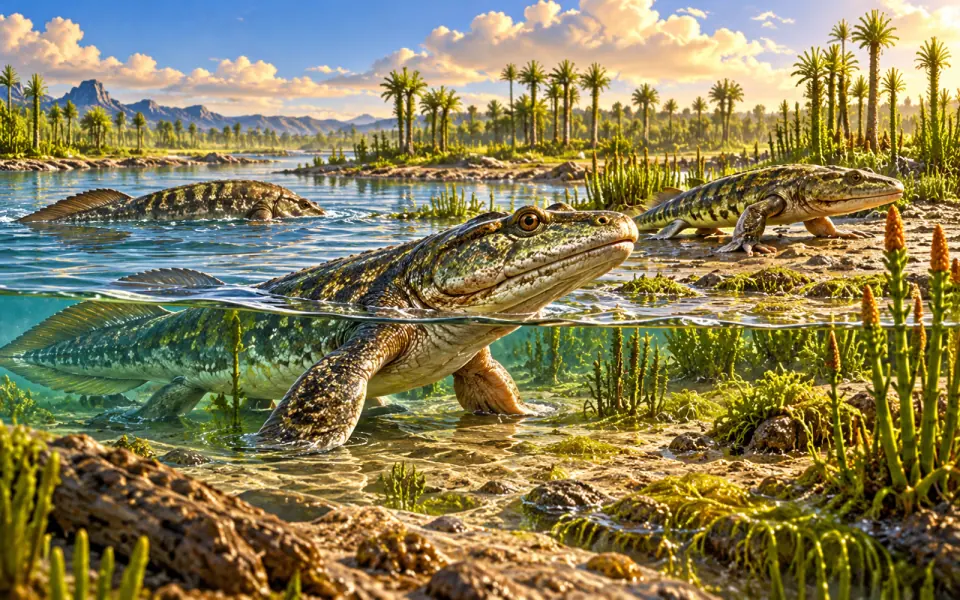
Some fish with sturdy fins lived in shallow water that was low in oxygen. Over many generations, their fins and skeleton adapted to hold the body up even out of the water. Tiktaalik, which lived about 375 million years ago, had gills and scales but also a neck that could move and fins with a bendy wrist. The first four-legged animals still kept many features of water creatures.
Why it matters The move from water to land started the family line of amphibians, reptiles, birds and mammals.
Study card about 5 minutes of reading
The story
A scientist who knew where to dig
In 2004 the American palaeontologist Neil Shubin and his colleagues Ted Daeschler and Farish Jenkins were looking for something nobody had ever found: an animal halfway between a fish and a four-legged animal. They did not search at random. They knew that in the Devonian, about 375 million years ago, there had been a move from water to land. They also knew they needed a rock of the right age, formed in ancient rivers and swamps. They found it on Ellesmere Island, in the Canadian Arctic, where it is extremely cold today but where the climate was then warm.
After years of expeditions, in the summer of 2004 one of the researchers saw a flat snout sticking out of a rock. It was the fossil of a big fish up to about two and a half metres long. They named it Tiktaalik roseae. “Tiktaalik” is a word from Inuktitut, the language of the Inuit of Canada, and means “large freshwater fish”: the elders of the local community were consulted to choose the name. The discovery was announced in 2006 in the journal Nature.
A fish that looks like a crocodile
Tiktaalik had fish features: scales, gills, fins with rays. But it also had features of a four-legged animal. Its head was flat, with the eyes on top, like a crocodile's, and the nostrils opening on the snout; it had a neck, which fish do not have: it could turn its head without moving its whole body. It had strong ribs, which supported the body, and probably primitive lungs as well as gills.
The most important part was the front fins. Inside they had bones that match the upper arm, forearm and wrist of our limbs: one upper bone, two lower down and small wrist bones. The fins could bend, like an elbow, and let the animal push its body up from the bottom. They were not yet legs with toes, but they could let the animal prop itself up in shallow water, or drag itself for a moment out onto the mud. Scientists have called animals of this halfway kind “transitional forms” or, with a slightly jokey name, “fishapods”.
From water to land, by degrees
Tiktaalik is not the direct ancestor of all four-legged animals, but a species close to that group and an example of what it may have been like. Other fossils tell of the later steps. Acanthostega, found in Greenland and studied in depth from the 1980s by the British palaeontologist Jenny Clack, already had true legs with eight toes, but lived mostly in water and still had gills. Ichthyostega, also from Greenland, had sturdier legs and perhaps dragged itself on land. These animals are called early tetrapods, which means “four-footed”.
A recent discovery has complicated the picture a little. In 2010 a team of palaeontologists, including some Polish ones, described, in Poland, footprints of about 390 to 395 million years ago: they would be older than Tiktaalik. If they really are tetrapod footprints, the first four-legged animals already existed before the fish Tiktaalik, which would then be a surviving “cousin” of older forms. Scientists are still debating it.
Why leave the water?
To us it looks like an enormous step, but perhaps it was not. The shallow waters of the Devonian were warm, short of oxygen and full of predators. A fish with lungs and sturdy fins could breathe air at the surface and move between pools. Over time, little by little, those that could stay out of the water longer found food without competitors: insects, worms and other small animals that lived among the plants. It was not a choice, but a slow advantage that built up over millions of years.
The descendants of those first four-legged animals are the amphibians, reptiles, birds and mammals, including us. When you move your hand and wrist, you are using a pattern of bones that arose in fins like those of Tiktaalik.
Why it happened
The move from water to land happened because, in the Devonian, dry land offered many opportunities. Plants had formed forests and swamps, and with the plants there were insects and other invertebrates to eat. The shallow waters were short of oxygen, so fish that could breathe air had an advantage.
For such a big change, changes to genes were also needed. Recent research shows that the same genes that form the fins of fish also form hands and feet, but that in tetrapods they were switched on differently, in a region that gives rise to the digits. In the laboratory, by changing some of these genes in zebrafish, researchers have obtained fins with parts like small fingers.
Evolution has no plan: each small step was useful at the time. Sturdy fins were useful in shallow water; only much later did they become legs.
What changed
The arrival of vertebrates on dry land opened a new chapter in the history of life. In the following millions of years came the amphibians, then the reptiles, which broke the link with water by laying eggs with a shell, and from these, along different roads of history, dinosaurs, birds and mammals.
The discovery of Tiktaalik also had a special scientific value. Because the prediction made by Shubin and his colleagues, that in rocks of a certain age and a certain kind a transitional form would be found, came true. It is an example of how science works: you make a hypothesis, you go and test it, and you see whether it is true. The fossil has become famous in school books all over the world.
Today we know that many features of our bodies come from that time: the forearm with two bones, the fingers, the neck, the way of breathing with lungs. Neil Shubin told this story in the book Your Inner Fish, in which he explains how human anatomy carries the traces of our water-living ancestors.
Key people and places
People
- Neil Shubin
- American palaeontologist at the University of Chicago. He led the expedition that found Tiktaalik and wrote the book Your Inner Fish.
- Ted Daeschler
- Palaeontologist at the Academy of Natural Sciences in Philadelphia. Co-discoverer of Tiktaalik.
- Jenny Clack
- British palaeontologist (1947–2020). She studied Acanthostega and Ichthyostega and showed that the first tetrapods had more than five digits.
Places
- Ellesmere Island, Nunavut (Canada)
- An Arctic island where Tiktaalik was found in 2004, in rocks that 375 million years ago were rivers in a warm region.
- East Greenland
- The place where Acanthostega and Ichthyostega were found, tetrapods of about 365 million years ago.
- Zachełmie, Poland
- A quarry where footprints of about 390 to 395 million years ago, perhaps of tetrapods, have been discovered.
Good to know
- Tiktaalik is an Inuktitut name: to choose the name, the elders of the Inuit community of Nunavut, the Canadian region where the rocks are found, were consulted.
- Before the discovery, Shubin and his colleagues had picked the place using a geological map: they were looking for rocks from rivers of 375 million years ago that came to the surface.
- The neck of Tiktaalik is a novelty: in fish the head is attached to the shoulders, while in it the head could move on its own.
- Acanthostega had eight toes on each foot: the rule of five toes came later.
- Our wrist and elbow have a structure that can be found in the fins of Tiktaalik: the upper arm bone, two forearm bones, then the little wrist bones.
Find out more
- Wikipedia, “Tiktaalik roseae” en.wikipedia.org
- Wikipedia, “Tetrapod” en.wikipedia.org
- University of California Museum of Paleontology (Berkeley), “Introduction to the Tetrapoda” ucmp.berkeley.edu
- Wikipedia, “Acanthostega gunnari” en.wikipedia.org
Related events
- The first fish with jawsabout 440 million years ago · The Earth before usBefore the fish with strong fins came the first fish with jaws.
- The first plants on landabout 475 million years ago · The Earth before usThe plants on dry land had created an environment full of food.
- Carboniferous forestsabout 320 million years ago · The Earth before usIn the forests of the Carboniferous lived the amphibians that descended from these animals.
- Darwin publishes On the Origin of Species1859 · Age of revolutionsDarwin imagined transitional forms between one group of animals and another.
Before and after, in the era “The Earth before us”
Event 19 of 25
 BeforeThe Big Bangabout 13.8 billion years ago
 BeforeThe first starsabout 13.5 billion years ago
 BeforeBirth of the Milky Wayabout 13 billion years ago
 BeforeFormation of the Solar Systemabout 4.6 billion years ago
 BeforeBirth of the Earthabout 4.5 billion years ago
 BeforeFormation of the Moonabout 4.5 billion years ago
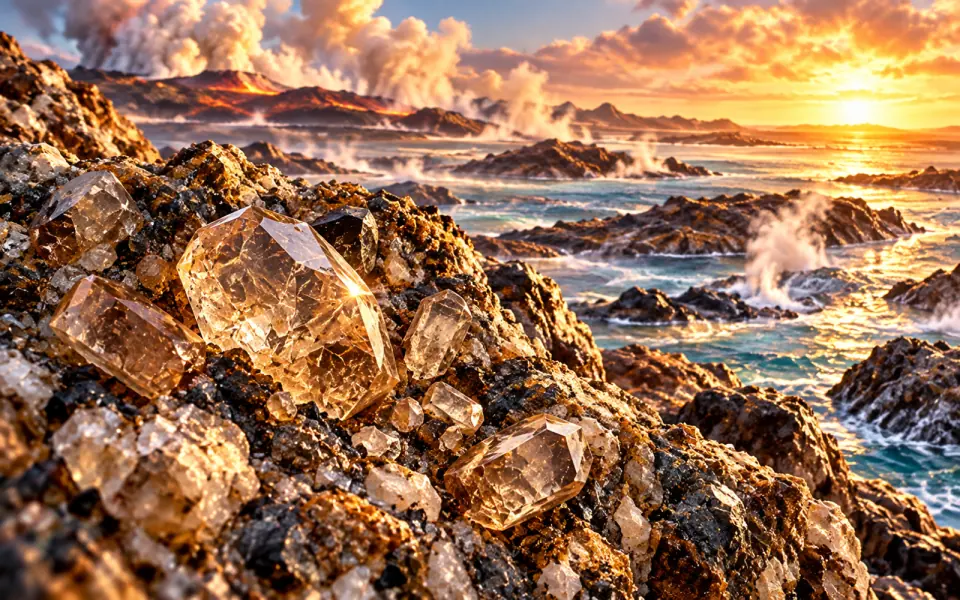 BeforeThe oldest pieces of Earthabout 4.4 billion years ago
 BeforeThe first oceansabout 4.3 billion years ago
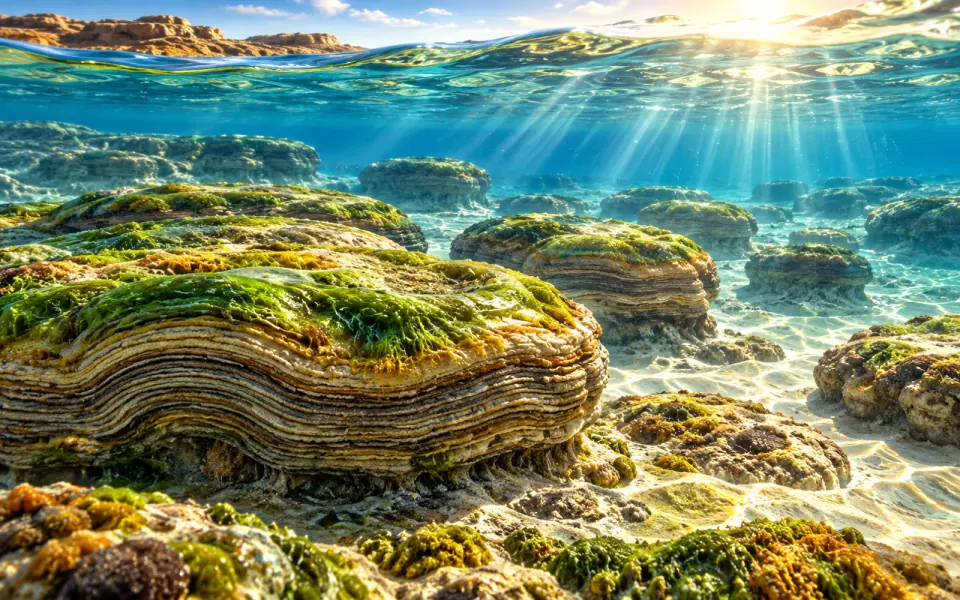 BeforeThe first life on Earthabout 3.5 billion years ago
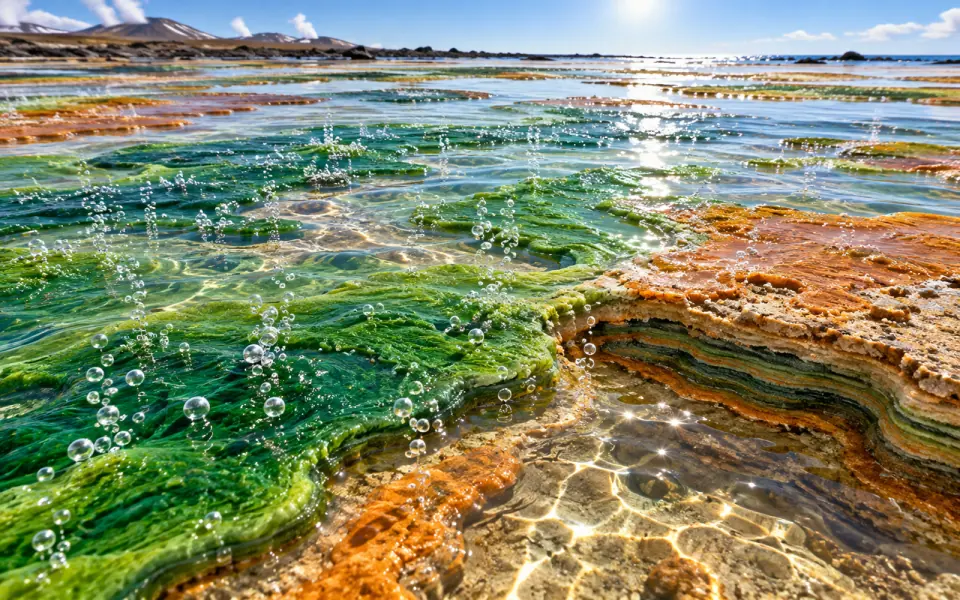 BeforeCyanobacteria and photosynthesisabout 2.7 billion years ago
 BeforeThe Great Oxidation Eventabout 2.4 billion years ago
 BeforeThe first complex cellsabout 1.8 billion years ago
 BeforeThe first many-celled living thingsabout 1 billion years ago
 BeforeThe Ediacaran creaturesabout 555 million years ago
 BeforeThe Cambrian explosionabout 539 million years ago
 BeforeThe first plants on landabout 475 million years ago
 BeforeThe first fish with jawsabout 440 million years ago
 BeforeThe first insectsabout 400 million years ago
- You are hereThe first amphibiansabout 375 million years ago
 AfterCarboniferous forestsabout 320 million years ago
 AfterThe great Permian extinctionabout 252 million years ago
 AfterThe first dinosaursabout 230 million years ago
 AfterThe first mammalsabout 225 million years ago
 AfterThe first birdsabout 150 million years ago
 AfterExtinction of the non-avian dinosaursabout 66 million years ago
Listen / Read next
- Music to read by: Cinematic JourneyEpic film-style music, no lyrics, by Ciro Simone IrmiciSpotifyYouTube Music
Meanwhile, elsewhere in the world
Other events of the era “The Earth before us”
- The Big Bang
- The first stars
- Birth of the Milky Way
- Formation of the Solar System
- Birth of the Earth
- Formation of the Moon
- The oldest pieces of Earth
- The first oceans
- The first life on Earth
- Cyanobacteria and photosynthesis
- The Great Oxidation Event
- The first complex cells
- The first many-celled living things
- The Ediacaran creatures
- The Cambrian explosion
- The first plants on land
- The first fish with jaws
- The first insects
- Carboniferous forests
- The great Permian extinction
- The first dinosaurs
- The first mammals
- The first birds
- Extinction of the non-avian dinosaurs
