The Ediacaran creatures
about 555 million years ago Ediacara Hills, South Australia
In short
In the rocks of Ediacara, in Australia, imprints have been found of living things from before the Cambrian. Many were shaped like discs, leaves or mattresses and do not clearly look like the animals of today. Scientists are still debating who their relatives were.
Why it matters These fossils show one of the first experiments in life big enough to be seen with the naked eye.
Study card about 5 minutes of reading
The story
A geologist and an abandoned mine
In 1946 a young Australian geologist, Reg Sprigg, was working in the Flinders Ranges in South Australia. He had to check some old abandoned mines, to see whether it was worth reopening them. On a hill called Ediacara, walking among the rocks, he noticed some strange marks on slabs of sandstone: shapes like discs, leaves and jellyfish. He realised they were fossils. But they were older than any that were known at the time.
In those days it was thought that before the Cambrian, that is, before 539 million years ago, there was no visible animal life. Sprigg thought he had found Cambrian jellyfish. Later, studying the rocks more closely, geologists understood that they were even older. That hill was proof that complex life had begun earlier than people had believed. Today, in memory of the place, all this life is called the Ediacaran fauna (or biota), and the last period before the Cambrian is called the Ediacaran.
A strange world
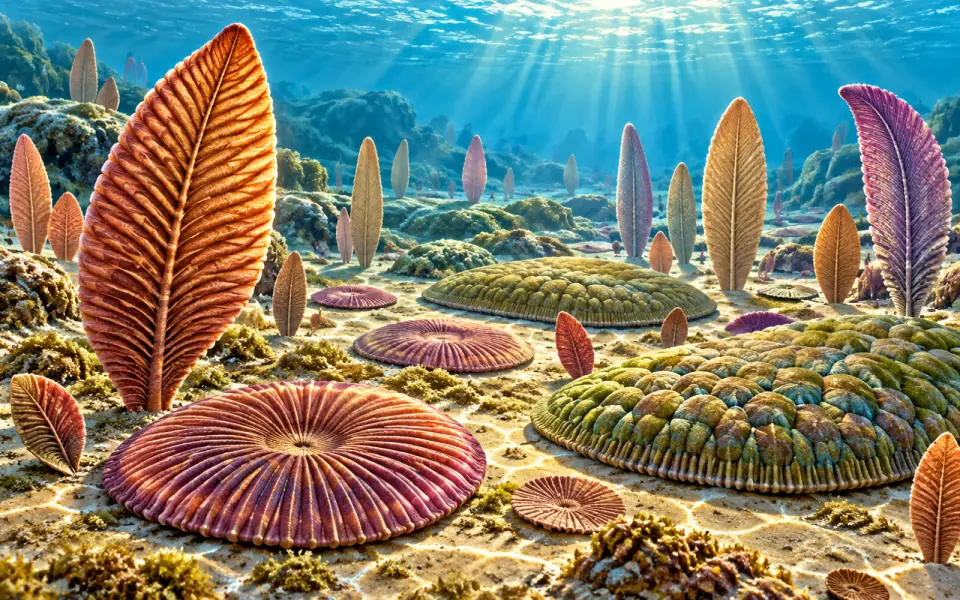
The Ediacaran fauna looks like nothing we know. The creatures that lived in those seas, roughly between 575 and 539 million years ago, were soft: no shells, no bones, no legs. Some were disc-shaped, like Tribrachidium, with three spiralling arms. Others looked like fern fronds, like Charnia, which stood fixed to the seabed. Dickinsonia, one of the most famous, was a flat, segmented oval that could grow to more than a metre long, like a rippled doormat.
For a long time scientists wondered what they were. Some considered them early animals, others lichens, fungi or even a type of life in its own right, with no descendants. Today many scholars think they are a mixture of different groups. In 2018 a team of researchers analysed the fat molecules preserved in Dickinsonia fossils and found a type of cholesterol, which is characteristic of animals. It is a strong clue that Dickinsonia was an animal, but the debate is not closed.
Another example is Kimberella, an animal like a slug, which had a kind of hood and left parallel scratch marks on the seabed, as if it were scraping algae and microbes off the bottom. These are the first traces of animals that feed as they move.
The first animal with symmetry
In 2020 a discovery came that concerns the date of this very stage. Scholars at the University of California, Riverside described, in rocks at Nilpena, near Ediacara, a small worm called Ikaria wariootia, about 555 million years old. It was only a few millimetres long, the size of a grain of rice, and had an elongated body with a front and a back end, and a digestive tube running through the body. According to the researchers it is the oldest known animal with bilateral symmetry, that is, with a right side and a left side that match, like ours. Animals with this shape, which include insects, fish, reptiles and us, are among its distant descendants.
Where did they go?
At the end of the Ediacaran, about 539 million years ago, most of these forms disappeared. We do not know for certain why. Perhaps the amount of oxygen in the water changed. Perhaps the first more active animals arrived, which ate the mats of microbes on which many Ediacaran creatures lived, and which disturbed them by digging in the bottom. Perhaps all of these things together. In any case, this story is told with doubts: the fossils are few and fragile, and researchers go on arguing.
A curious fact is how they were preserved. Because they were soft, these creatures became fossils only in special conditions: they were buried quickly by sand, and a crust of minerals formed on the sand, like a mask, preserving the imprint. This is why the Ediacaran fossils look like casts, and not like real remains.
Why it happened
The creatures of Ediacara are the result of a long story: complex cells, the first many-celled organisms and a changed environment. After the long periods of glaciation that geologists call “Snowball Earth”, when ice perhaps covered much of the planet, the climate warmed and the oceans became richer in oxygen and nutrients. Scholars think these conditions favoured the appearance of larger organisms.
How much oxygen there was and when it increased is still debated. But the Ediacaran fossils show that big soft bodies had an advantage in waters that were by now richer in oxygen.
The fact that many of these creatures were found by chance, by a geologist who was looking for something else, is a reminder that in palaeontology discoveries often depend on luck and curiosity.
What changed
The discovery of Ediacara changed an important idea: throughout the 19th century and the early 20th, people had thought that animal life appeared suddenly with the Cambrian. Charles Darwin himself, in his book on the origin of species, had worried about this: where are the older fossils? Ediacara and other sites discovered later, such as Charnwood in England and the White Sea in Russia, showed that complex life had a prehistory.
In 2004 the community of geologists decided to give the Ediacaran period an official name. It was the first new geological period introduced in over a century. It is a way of remembering that the geological time scale is not a closed list, but is updated as discoveries are made.
Today the Ediacaran fossils are studied to understand how animals began. The Flinders Ranges are a place of great scientific interest, and every year researchers return to look for new fossils there.
Key people and places
People
- Reg Sprigg
- Australian geologist (1919–1994). In 1946 he found the first Ediacara fossils. Later he also devoted himself to protecting the environment.
- Mary Droser
- American palaeontologist at the University of California, Riverside. She has studied the fossils of Nilpena, in Australia, for decades.
- Roger Mason
- A fifteen-year-old student who, in 1957, discovered Charnia in England, the first fossil of this kind recognised in rocks older than the Cambrian.
Places
- Ediacara Hills, Flinders Ranges (South Australia)
- The place where Reg Sprigg discovered the first fossils in 1946, which give their name to the period.
- Nilpena, South Australia
- A site with thousands of Ediacaran imprints discovered on the ancient seabed; Ikaria was found here.
- Charnwood Forest, England
- Where Charnia was found in 1957, the first Ediacaran fossil to be recognised as such.
- White Sea, Russia
- On its coasts there are rich fossils of Kimberella and other Ediacaran creatures.
Good to know
- Sprigg had gone to Ediacara to check old abandoned mines, not to look for fossils: the most important discovery of his life came by chance.
- Charnia was found in 1957 by a fifteen-year-old student, Roger Mason, while rock climbing in Charnwood Forest, in England (a student, Tina Negus, had already seen it a year earlier, but nobody had believed her): the discovery surprised the experts, who thought it impossible to find fossils so old.
- The name of the worm Ikaria wariootia comes from a local Aboriginal language, Adnyamathanha, and from the name of a creek in the area, Warrioota Creek.
- Dickinsonia could be more than a metre long, but it was very thin and shows no obvious mouth or internal organs.
- At Nilpena the fossils are spread over large slabs of sandstone: researchers uncover them by carefully removing the sand, as in an enormous jigsaw puzzle of the floor of an ancient sea.
Find out more
- Wikipedia, “Ediacaran biota” en.wikipedia.org
- Wikipedia, “Cambrian explosion” en.wikipedia.org
- Wikipedia, “Ediacaran” en.wikipedia.org
- Wikipedia, “Bangiomorpha pubescens” en.wikipedia.org
Related events
- The first many-celled living thingsabout 1 billion years ago · The Earth before usThe creatures of Ediacara descend from the first many-celled organisms.
- The Cambrian explosionabout 539 million years ago · The Earth before usShortly afterwards, in the Cambrian, animals were filled with shells and armour.
- The first life on Earthabout 3.5 billion years ago · The Earth before usBefore Ediacara, life was made mostly of microbes.
- Darwin publishes On the Origin of Species1859 · Age of revolutionsDarwin wondered where the fossils from before the Cambrian were.
Before and after, in the era “The Earth before us”
Event 14 of 25
 BeforeThe Big Bangabout 13.8 billion years ago
 BeforeThe first starsabout 13.5 billion years ago
 BeforeBirth of the Milky Wayabout 13 billion years ago
 BeforeFormation of the Solar Systemabout 4.6 billion years ago
 BeforeBirth of the Earthabout 4.5 billion years ago
 BeforeFormation of the Moonabout 4.5 billion years ago
 BeforeThe oldest pieces of Earthabout 4.4 billion years ago
 BeforeThe first oceansabout 4.3 billion years ago
 BeforeThe first life on Earthabout 3.5 billion years ago
 BeforeCyanobacteria and photosynthesisabout 2.7 billion years ago
 BeforeThe Great Oxidation Eventabout 2.4 billion years ago
 BeforeThe first complex cellsabout 1.8 billion years ago
 BeforeThe first many-celled living thingsabout 1 billion years ago
- You are hereThe Ediacaran creaturesabout 555 million years ago
 AfterThe Cambrian explosionabout 539 million years ago
 AfterThe first plants on landabout 475 million years ago
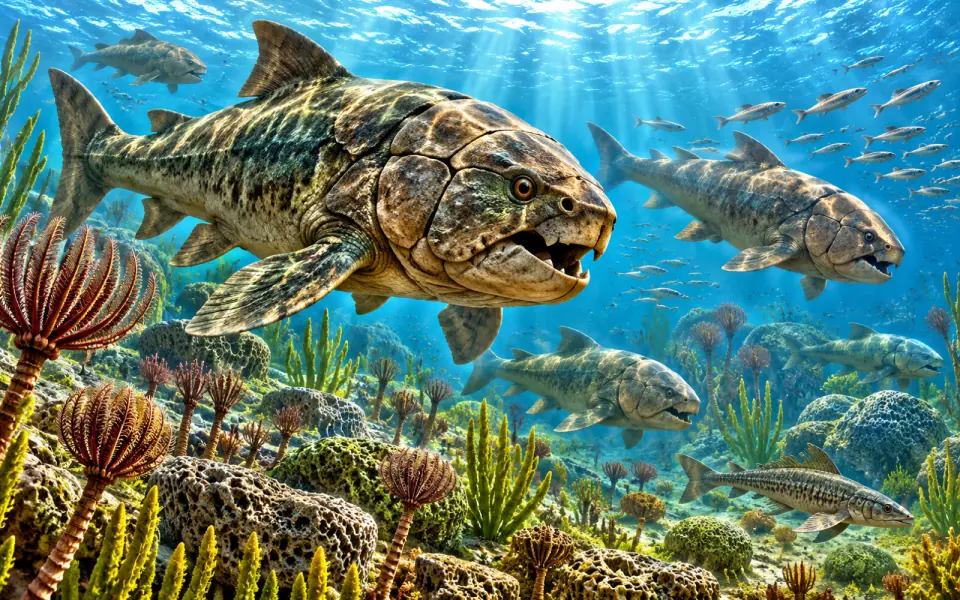 AfterThe first fish with jawsabout 440 million years ago
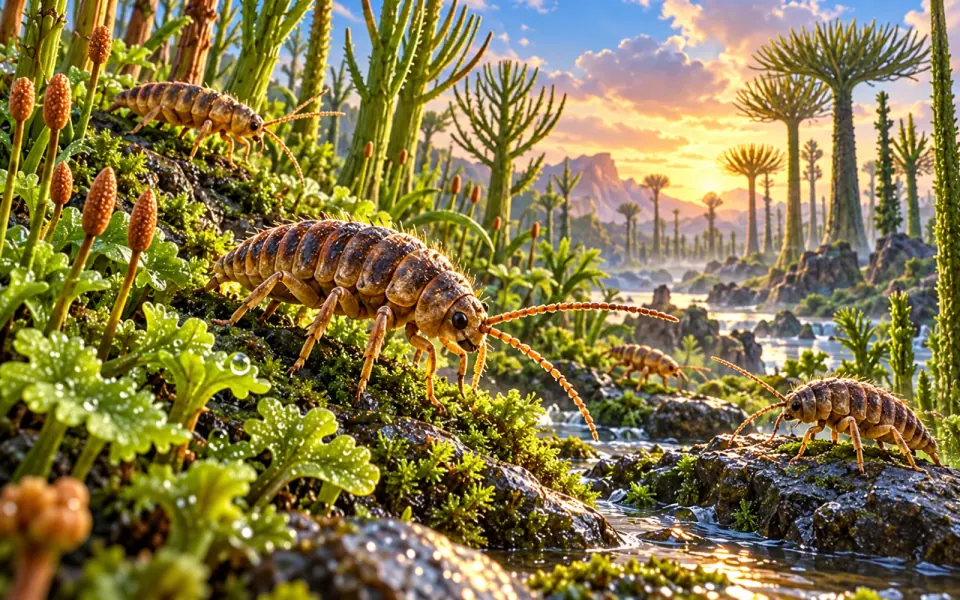 AfterThe first insectsabout 400 million years ago
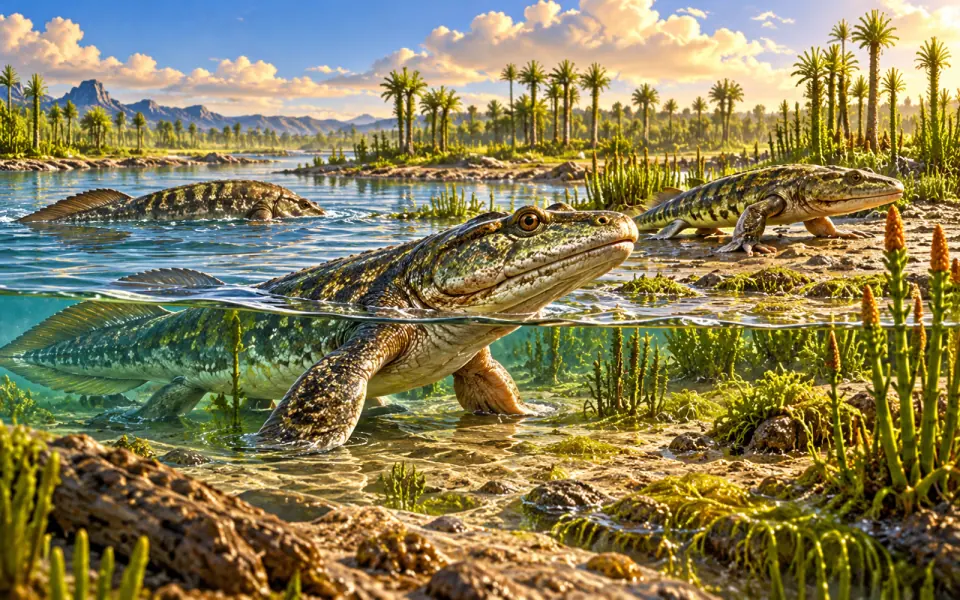 AfterThe first amphibiansabout 375 million years ago
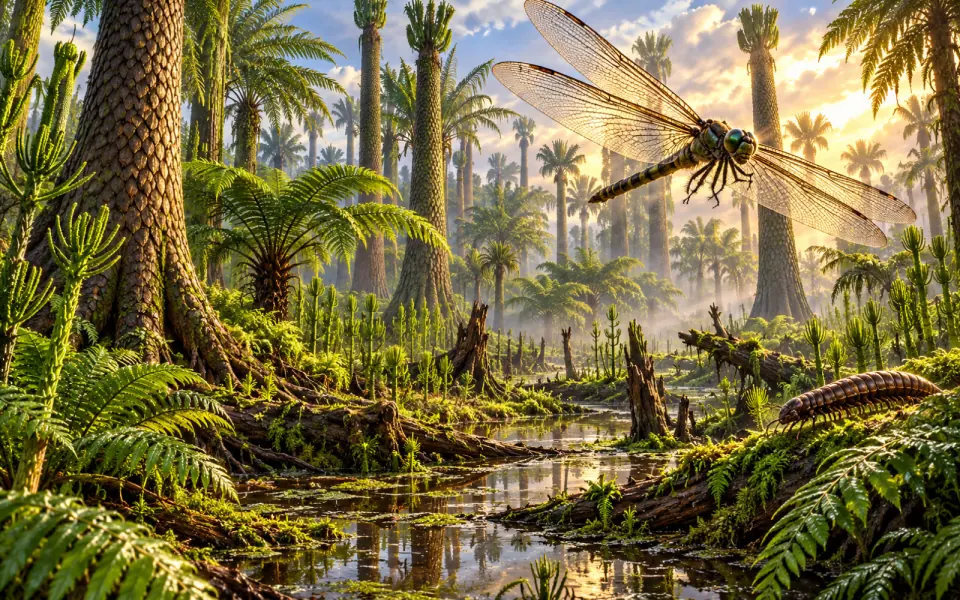 AfterCarboniferous forestsabout 320 million years ago
 AfterThe great Permian extinctionabout 252 million years ago
 AfterThe first dinosaursabout 230 million years ago
 AfterThe first mammalsabout 225 million years ago
 AfterThe first birdsabout 150 million years ago
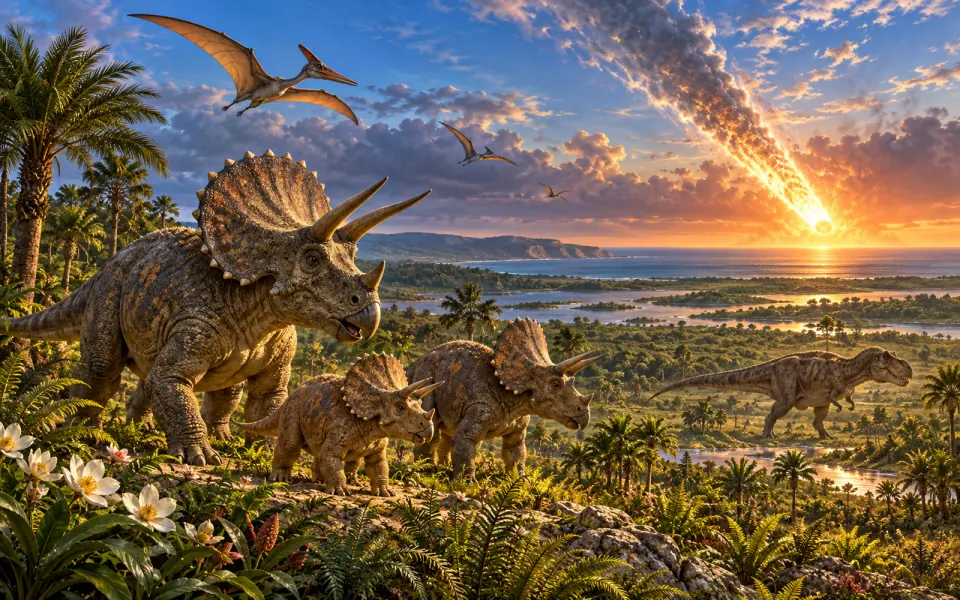 AfterExtinction of the non-avian dinosaursabout 66 million years ago
Listen / Read next
- Music to read by: Cinematic JourneyEpic film-style music, no lyrics, by Ciro Simone IrmiciSpotifyYouTube Music
Meanwhile, elsewhere in the world
Other events of the era “The Earth before us”
- The Big Bang
- The first stars
- Birth of the Milky Way
- Formation of the Solar System
- Birth of the Earth
- Formation of the Moon
- The oldest pieces of Earth
- The first oceans
- The first life on Earth
- Cyanobacteria and photosynthesis
- The Great Oxidation Event
- The first complex cells
- The first many-celled living things
- The Cambrian explosion
- The first plants on land
- The first fish with jaws
- The first insects
- The first amphibians
- Carboniferous forests
- The great Permian extinction
- The first dinosaurs
- The first mammals
- The first birds
- Extinction of the non-avian dinosaurs
