Formation of the Solar System
about 4.6 billion years ago The Solar System
In short
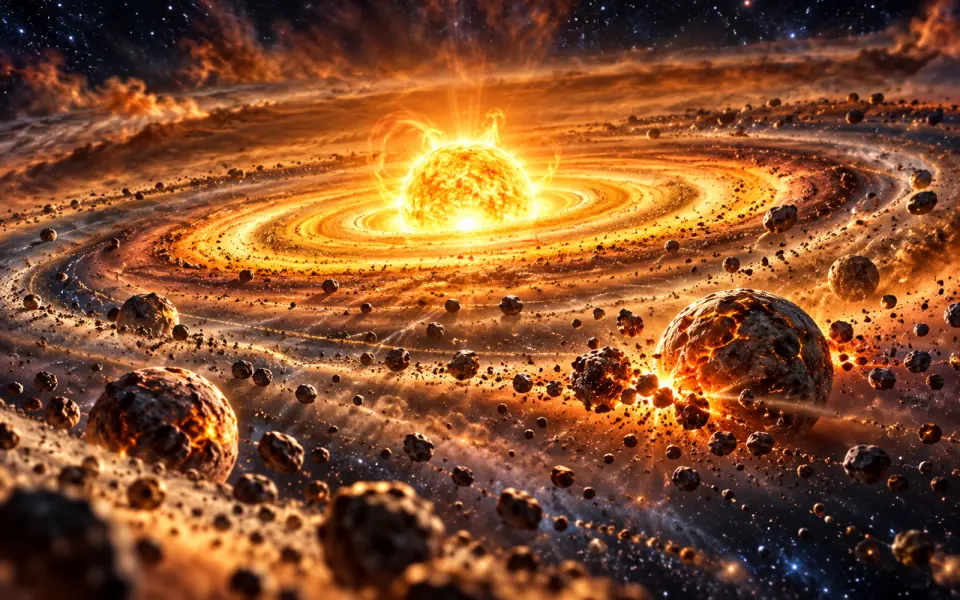
About 4.6 billion years ago a cloud of gas and dust began to spin and flatten into a disc. In the centre the young Sun lit up; in the disc, grains and rocks collided and clumped together. From these materials came planets, moons, asteroids and comets.
Why it matters It explains why the planets orbit in the same system and share a common origin.
Source: NASA, “Solar System: Facts”
Study card about 5 minutes of reading
The story
A cloud that began to spin
About 4.6 billion years ago, somewhere in the disc of the Milky Way, there was a big, cold cloud of gas and dust. It was made mostly of hydrogen and helium, but it also held traces of the heavy elements made by stars that had died earlier. For some reason, perhaps because a nearby star had exploded and given it a push, or perhaps because the cloud had simply become denser, part of it began to fall in on itself. Once again, gravity was the star of the show.
As the cloud shrank, it spun faster and faster, like a skater pulling in her arms. A spinning cloud does not gather into a ball: it flattens into a disc, with a bulge in the middle. Scientists call it the “solar nebula”. The idea that the Solar System was born like this is an old one: the philosopher Immanuel Kant suggested it in 1755 and the French mathematician Pierre-Simon Laplace took it up in 1796.
The Sun at the centre
Almost all the mass of the cloud, more than 99 per cent, slid towards the middle and formed the Sun. With the weight, the centre grew hotter and hotter, until the temperature was so high that the fusion of hydrogen began. From that moment the Sun was a real star. Today it is already halfway through its life: in about five billion years it will use up the hydrogen in its core and become a red giant.
A disc of gas and dust was left around the Sun. In the disc the grains bumped into one another and stuck together, becoming pebbles, then rocks, then bodies as big as mountains, called planetesimals. The biggest planetesimals pulled in the others with their gravity and kept growing. The giant planets formed in a few million years, which is very little for astronomy; the rocky ones took a few tens of millions of years.
Rocky planets and giant planets
Close to the Sun it was too hot for ice to stay solid. So small, rocky planets formed there: Mercury, Venus, the Earth and Mars. Further out, beyond a distance called the “frost line”, water was frozen and there was far more solid material. There the planets grew big enough to capture huge amounts of hydrogen and helium: Jupiter and Saturn were born, gas giants, and further out Uranus and Neptune, ice giants.
Not all the material became a planet. Between Mars and Jupiter a great many fragments were left, forming the asteroid belt: Jupiter, with its gravity, stopped them from joining into a planet. Beyond Neptune lies the Kuiper belt, with Pluto and many icy bodies, and much further out there is thought to be a cloud of comets, the Oort cloud. Comets are the frozen leftovers of that material.
How do we know?
Nobody was there, of course, but there is plenty of evidence. The oldest meteorites, pieces of rock that have fallen to Earth from the asteroid belt, have an age that can be measured with radioactive atoms: the oldest grains in some of them go back 4.567 billion years and are thought to be the first solids in the Solar System. Also, all the planets go around the Sun in the same direction and almost in the same plane, as if they had been born from a single disc.
Today telescopes, such as ALMA in Chile, can see discs of dust around young stars that look like solar systems under construction. The ring shapes in some discs show that planets are already forming inside them. Meanwhile satellites have discovered thousands of planets around other stars, the exoplanets, and many of those systems are very different from ours. This has shown that the story of the Solar System is not the only one possible, and has forced scientists to revise the details of the model.
Why it happened
A cloud of gas and dust stays in balance as long as the pressure of the gas matches gravity. To form a solar system, something has to break that balance. Scientists think the cloud was squeezed by an outside event, perhaps the shock wave of a nearby supernova, or else that a denser region began to collapse on its own. One clue for the first idea is the presence in ancient meteorites of traces of a short-lived radioactive element, aluminium-26, which is made in exploding stars. Not all scholars agree.
Once the collapse had begun, gravity and rotation did the rest. Rotation explains the disc shape; gravity made big bodies grow at the expense of small ones. This process is called accretion, and it still works today in the discs around young stars.
What changed
The solar nebula gave birth to the bodies we see in the sky every day and to the ones that made our existence possible. The Sun gives the Earth the light and heat on which the climate and almost all life depend. Jupiter, with its enormous gravity, has deflected or captured many comets and asteroids, and according to some scholars it has helped make the Earth a little calmer.
The Solar System is also the laboratory in which we learn to understand others. Space probes have visited every planet: the Voyagers, launched in 1977, explored the giants and are now outside the Sun's area of influence, in the space between the stars. The Japanese probe Hayabusa2 and the American OSIRIS-REx have brought back to Earth samples of the asteroids Ryugu and Bennu: these are materials that have stayed almost unchanged since the birth of the Solar System and tell us what the cloud was like.
Understanding how our system formed helps in the search for other worlds. Astronomers know that rocky planets in a zone where water can stay liquid, like the Earth, form often, and they look in other systems for signs of worlds like ours.
Key people and places
People
- Immanuel Kant
- German philosopher (1724–1804). In 1755 he suggested that the Solar System was born from a rotating cloud of gas.
- Pierre-Simon Laplace
- French mathematician and astronomer (1749–1827). In 1796 he took up and developed the nebula hypothesis.
- Clair Patterson
- American geochemist (1922–1995). In 1953 he measured the age of the Earth and of meteorites (result published in 1956), about 4.55 billion years.
Places
- The solar nebula
- The cloud of gas and dust, flattened into a disc, from which the Sun and the planets were born.
- The asteroid belt
- A region between Mars and Jupiter with millions of rocky fragments, leftovers of the material that did not join into a planet.
- Atacama Desert, Chile
- Home of the ALMA observatory, which has imaged discs of dust around young stars where planets are being born.
Good to know
- The Sun holds 99.86 per cent of the mass of the whole Solar System: all the planets together make up less than one part in a thousand.
- The oldest grains in the Solar System, found in meteorites, are small white inclusions rich in calcium and aluminium, and they are 4.567 billion years old.
- Sunlight takes about 8 minutes 20 seconds to reach the Earth and more than 4 hours to reach Neptune.
- In 2014 the ALMA radio telescope photographed the disc of the young star HL Tauri, with dark rings that look like the tracks of planets in the making.
- The Voyager 1 probe is now the human-made object furthest from the Earth: it has passed 25 billion kilometres.
Find out more
- NASA, “Planets” science.nasa.gov
- Wikipedia, “Solar System” en.wikipedia.org
- NASA, the Solar System (in English) science.nasa.gov
- Wikipedia, “Origin of the Moon” en.wikipedia.org
Related events
- Birth of the Milky Wayabout 13 billion years ago · The Earth before usThe Solar System was born in the disc of the Milky Way.
- Birth of the Earthabout 4.5 billion years ago · The Earth before usThe Earth is one of the rocky planets born in the disc around the young Sun.
- Copernicus puts the Sun at the centre1543 · Early modern ageCopernicus put the Sun at the centre: the first step towards understanding how the Solar System is built.
- Kepler describes the orbits1609 · Early modern ageKepler discovered that the planets go around the Sun in elliptical orbits.
- Newton publishes the Principia1687 · Early modern ageWith Newton people understood that gravity governs the motion of the planets.
Before and after, in the era “The Earth before us”
Event 4 of 25
 BeforeThe Big Bangabout 13.8 billion years ago
 BeforeThe first starsabout 13.5 billion years ago
 BeforeBirth of the Milky Wayabout 13 billion years ago
- You are hereFormation of the Solar Systemabout 4.6 billion years ago
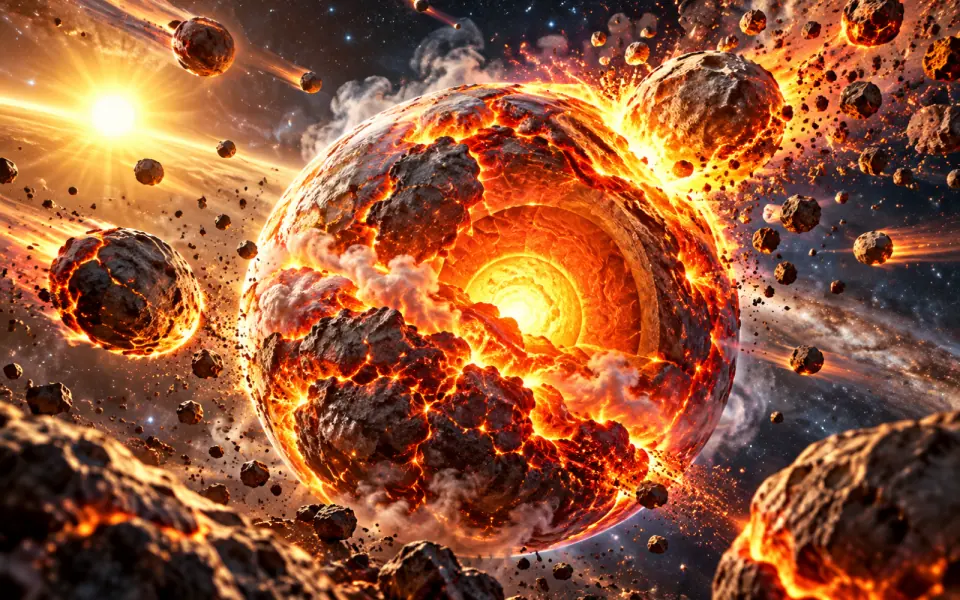 AfterBirth of the Earthabout 4.5 billion years ago
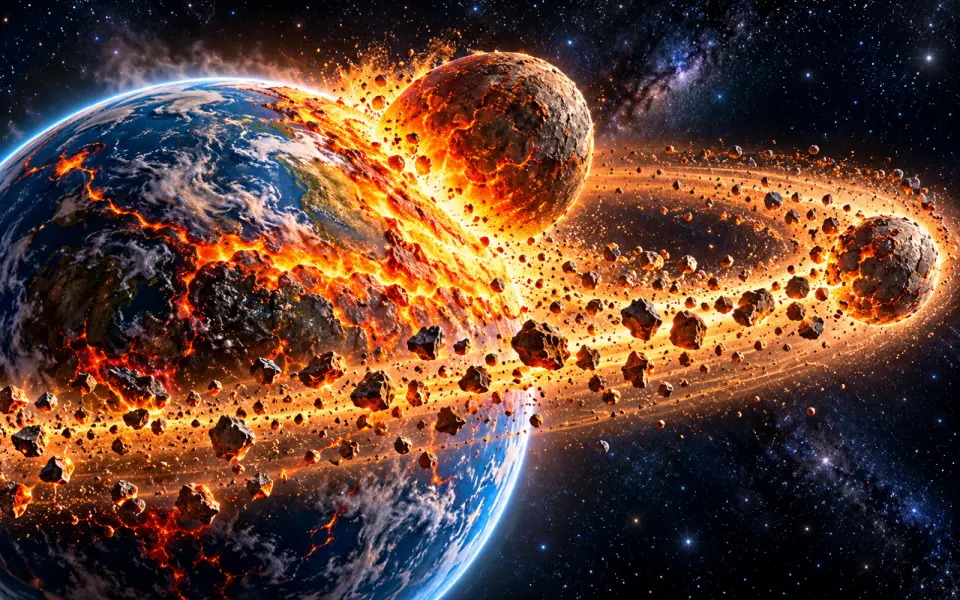 AfterFormation of the Moonabout 4.5 billion years ago
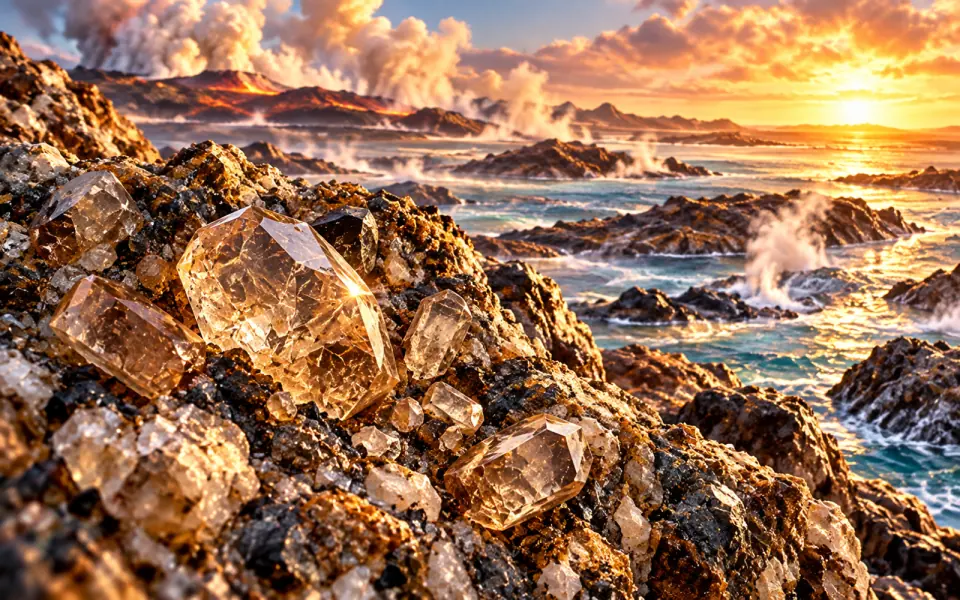 AfterThe oldest pieces of Earthabout 4.4 billion years ago
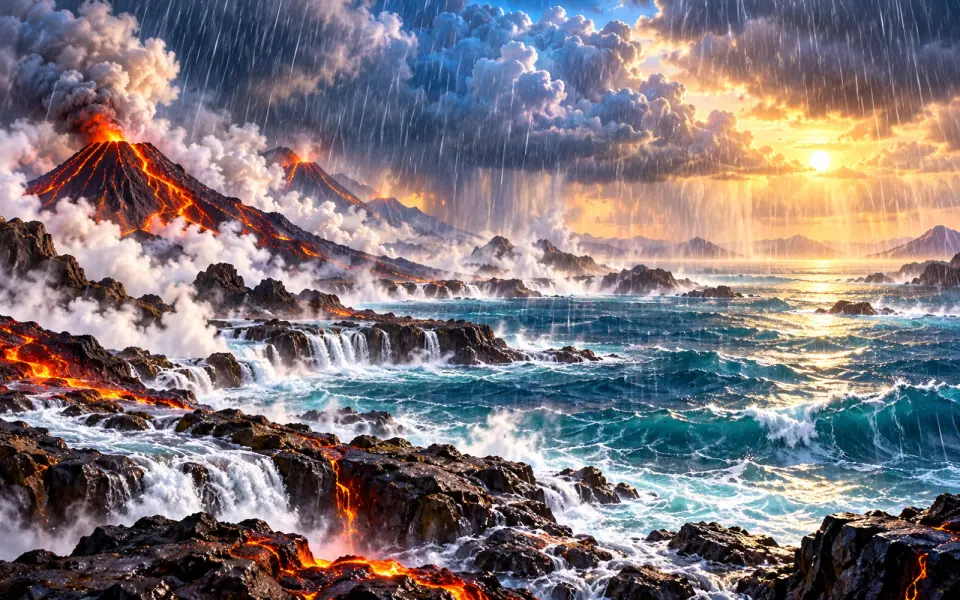 AfterThe first oceansabout 4.3 billion years ago
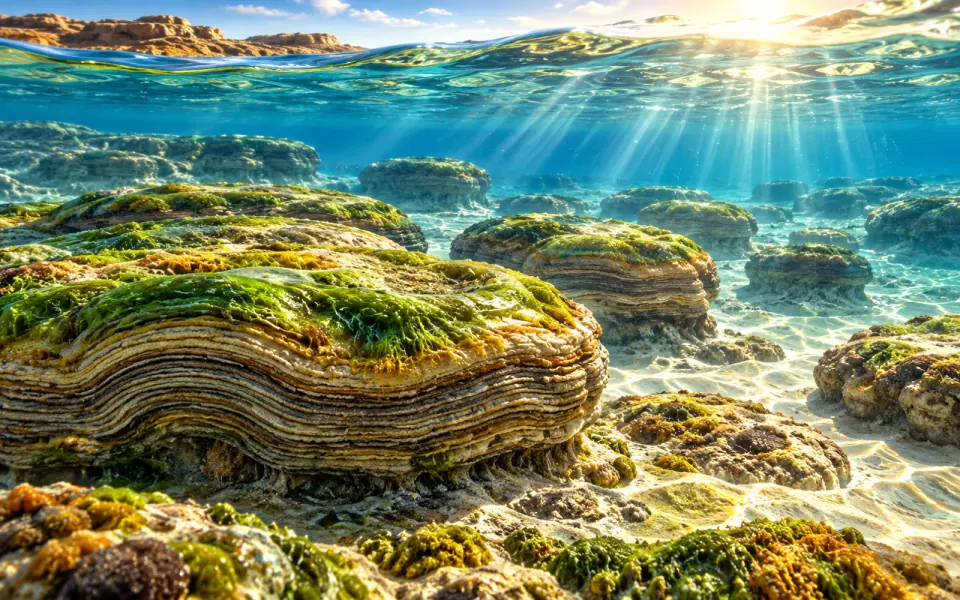 AfterThe first life on Earthabout 3.5 billion years ago
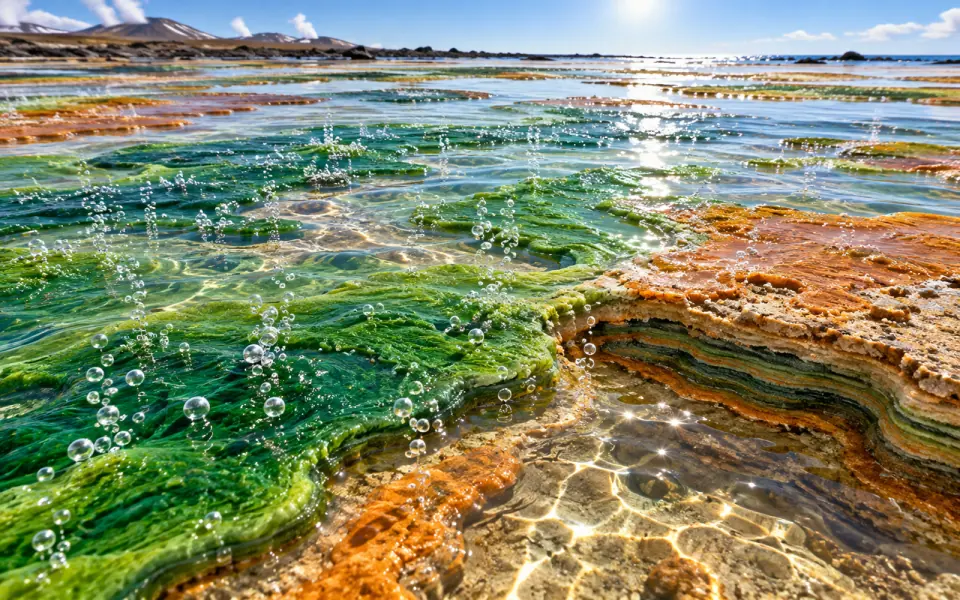 AfterCyanobacteria and photosynthesisabout 2.7 billion years ago
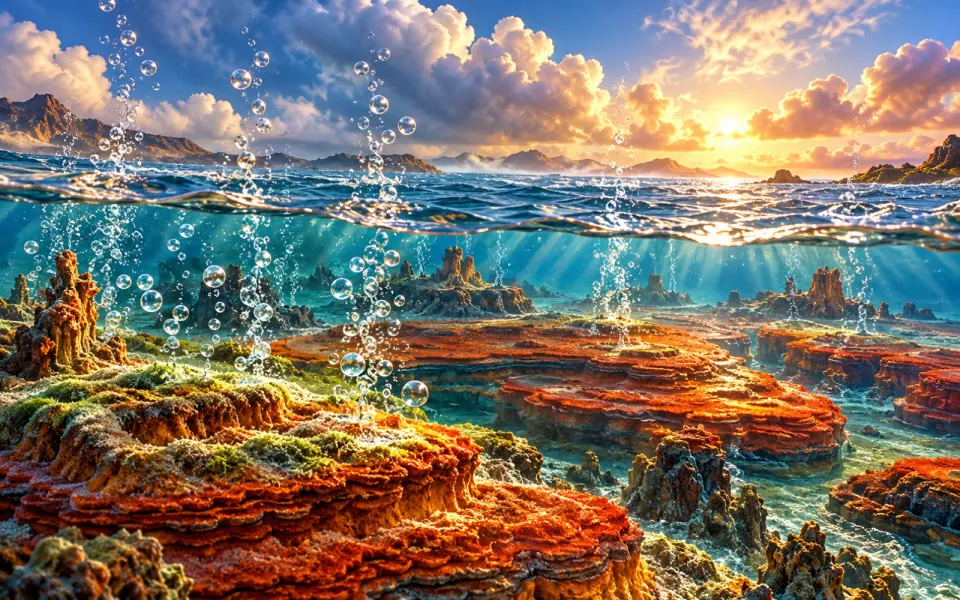 AfterThe Great Oxidation Eventabout 2.4 billion years ago
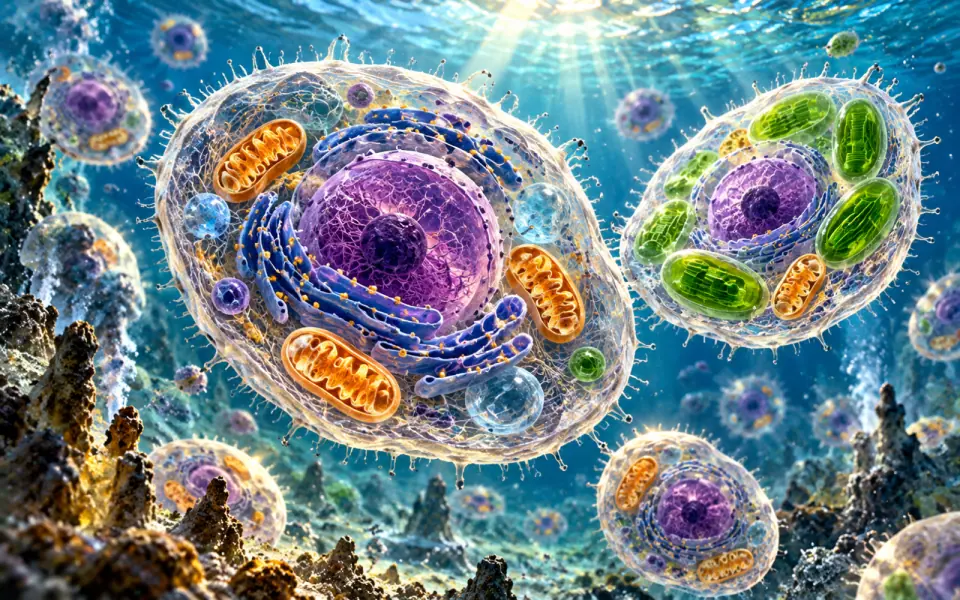 AfterThe first complex cellsabout 1.8 billion years ago
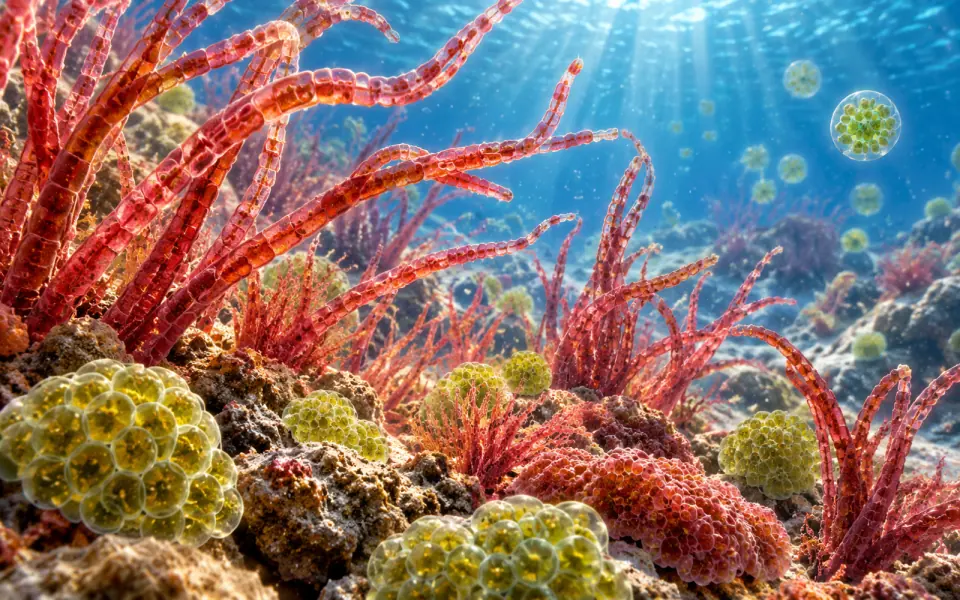 AfterThe first many-celled living thingsabout 1 billion years ago
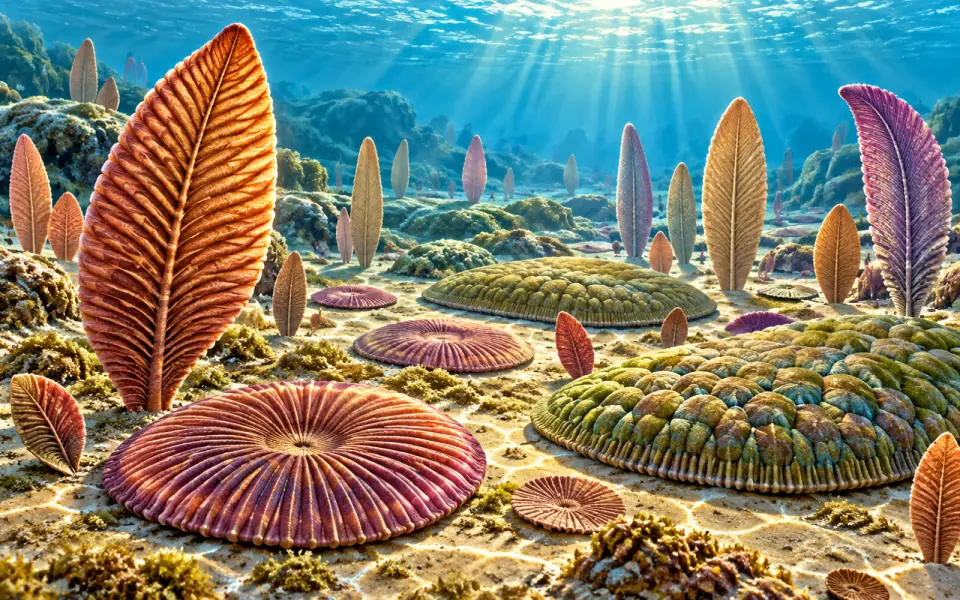 AfterThe Ediacaran creaturesabout 555 million years ago
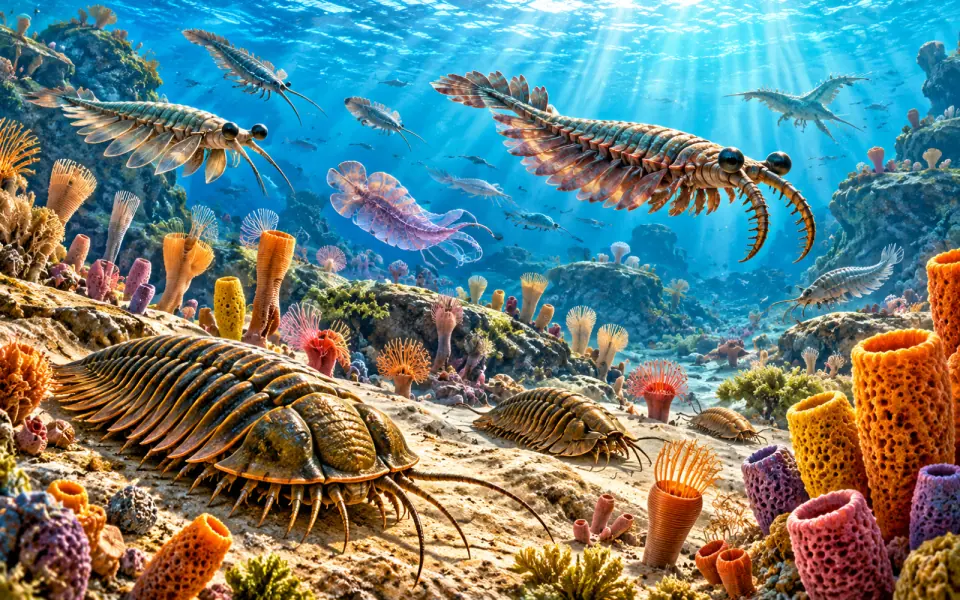 AfterThe Cambrian explosionabout 539 million years ago
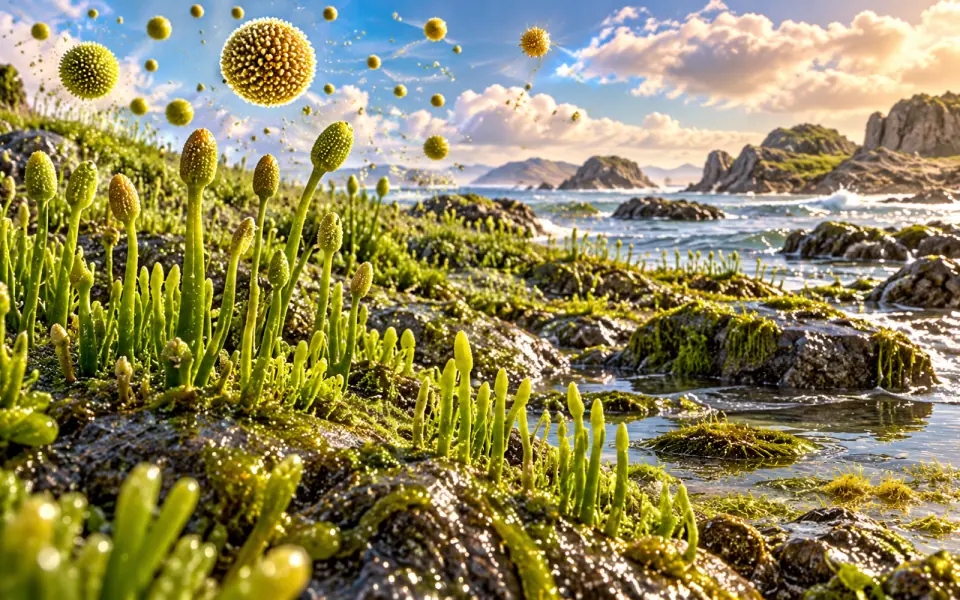 AfterThe first plants on landabout 475 million years ago
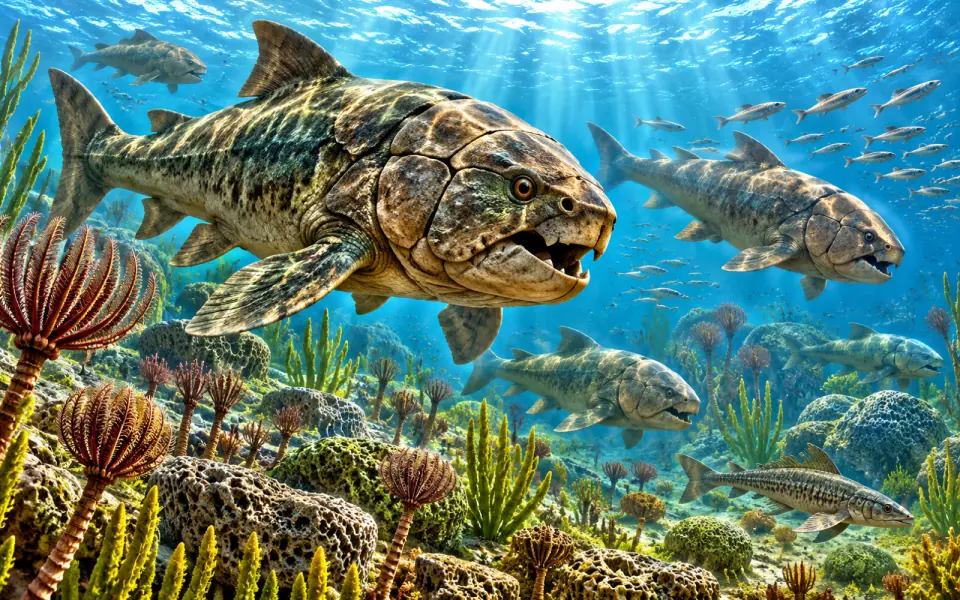 AfterThe first fish with jawsabout 440 million years ago
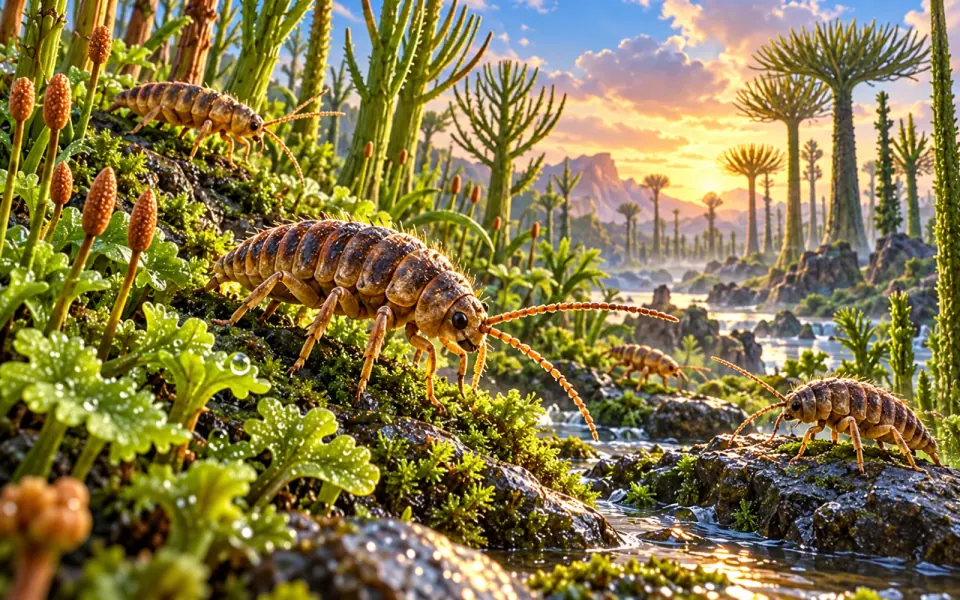 AfterThe first insectsabout 400 million years ago
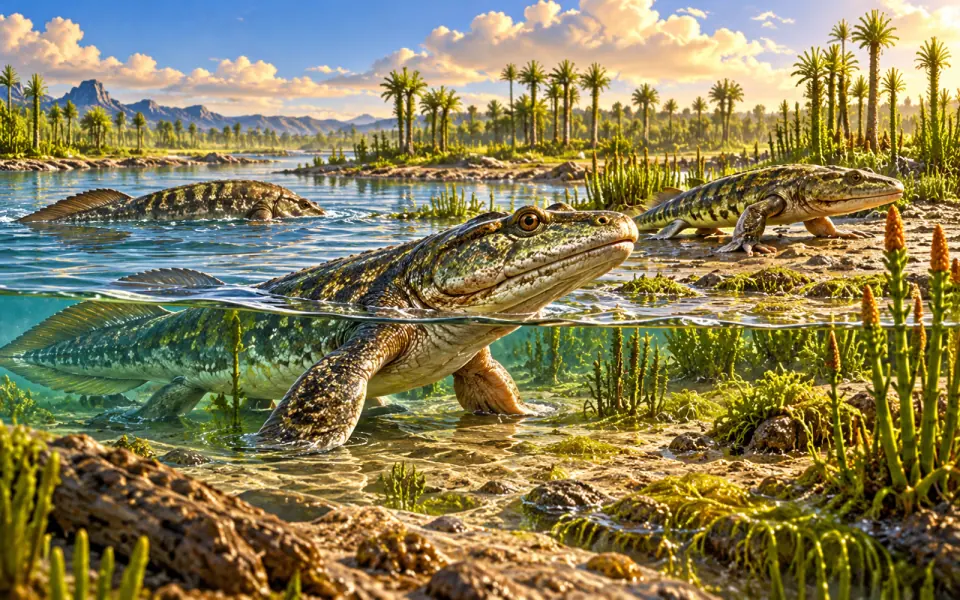 AfterThe first amphibiansabout 375 million years ago
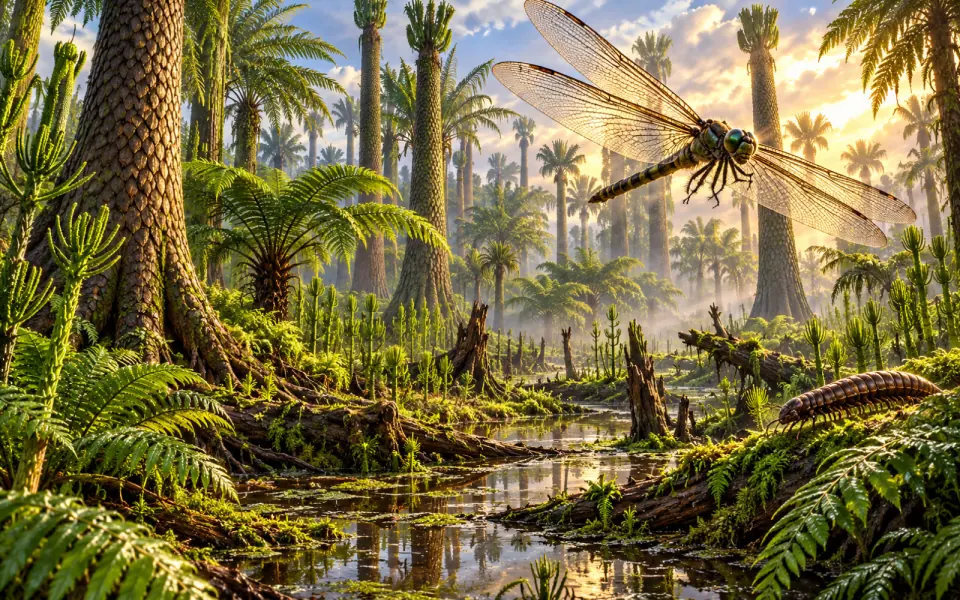 AfterCarboniferous forestsabout 320 million years ago
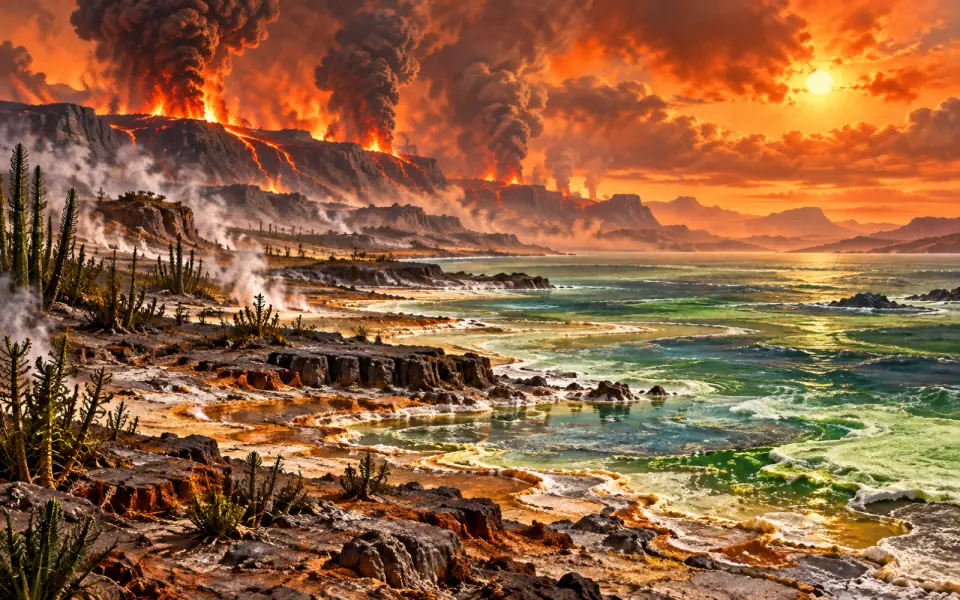 AfterThe great Permian extinctionabout 252 million years ago
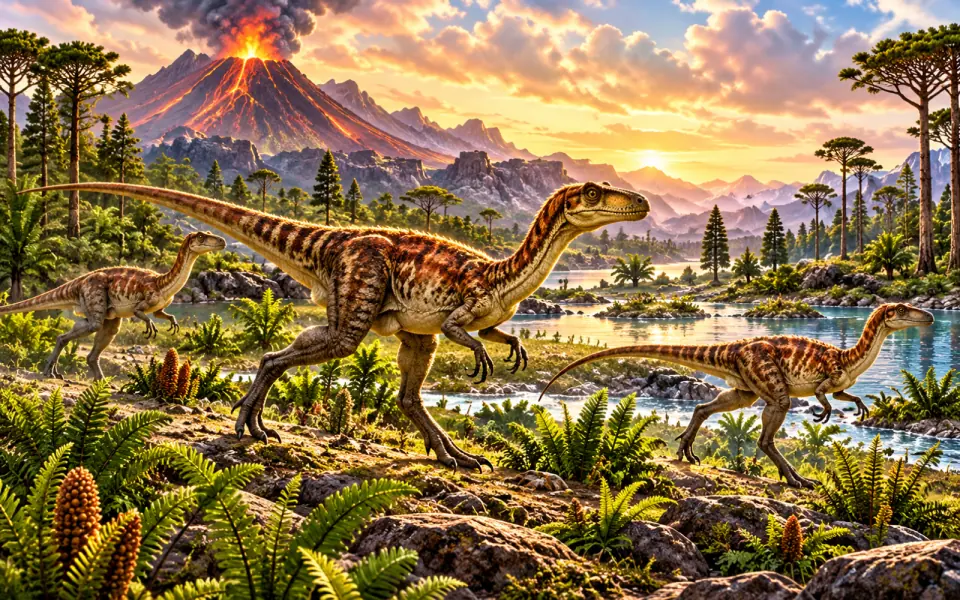 AfterThe first dinosaursabout 230 million years ago
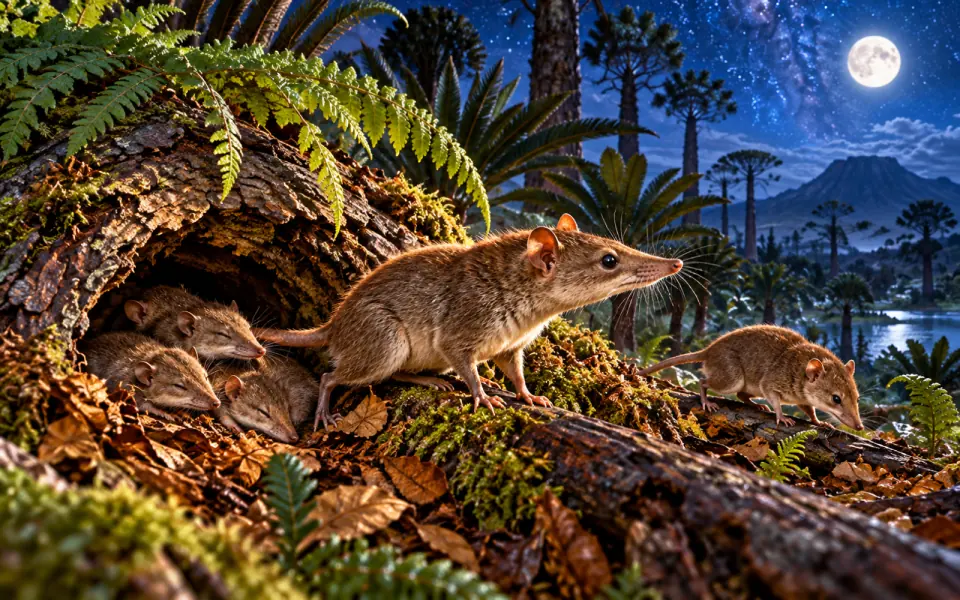 AfterThe first mammalsabout 225 million years ago
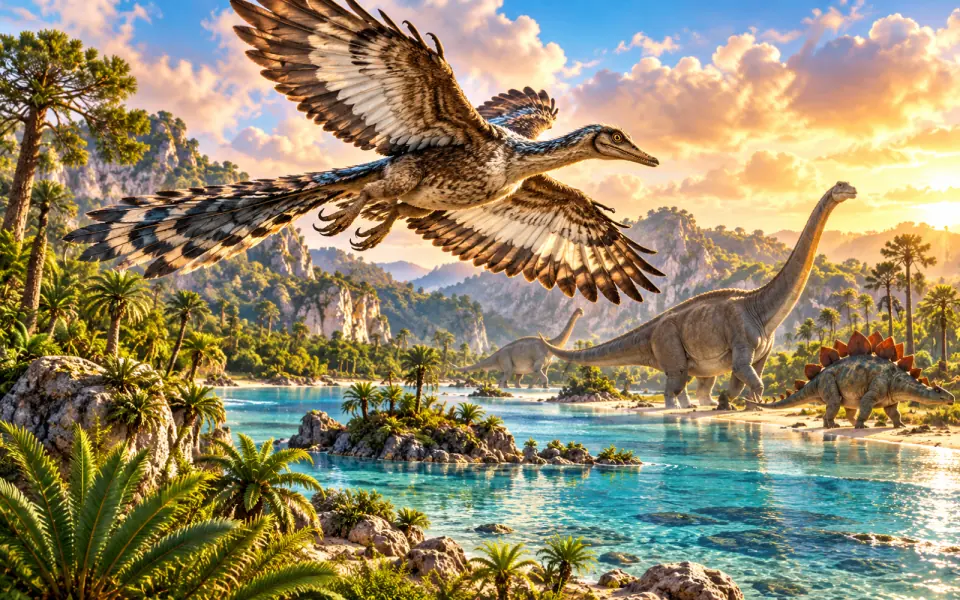 AfterThe first birdsabout 150 million years ago
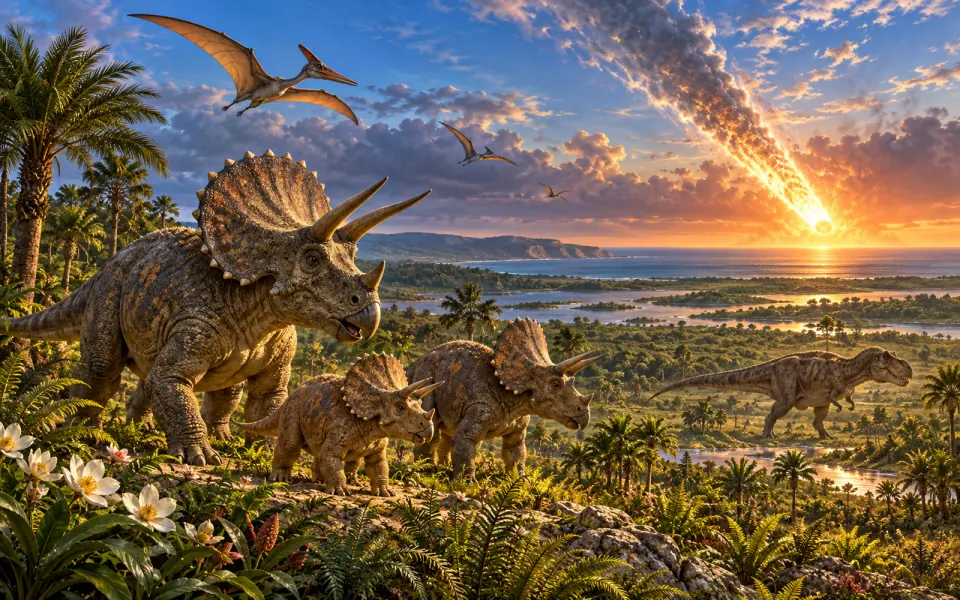 AfterExtinction of the non-avian dinosaursabout 66 million years ago
Listen / Read next
- Music to read by: Cinematic JourneyEpic film-style music, no lyrics, by Ciro Simone IrmiciSpotifyYouTube Music
Meanwhile, elsewhere in the world
Other events of the era “The Earth before us”
- The Big Bang
- The first stars
- Birth of the Milky Way
- Birth of the Earth
- Formation of the Moon
- The oldest pieces of Earth
- The first oceans
- The first life on Earth
- Cyanobacteria and photosynthesis
- The Great Oxidation Event
- The first complex cells
- The first many-celled living things
- The Ediacaran creatures
- The Cambrian explosion
- The first plants on land
- The first fish with jaws
- The first insects
- The first amphibians
- Carboniferous forests
- The great Permian extinction
- The first dinosaurs
- The first mammals
- The first birds
- Extinction of the non-avian dinosaurs
