The first birds
about 150 million years ago Solnhofen, Germany
In short
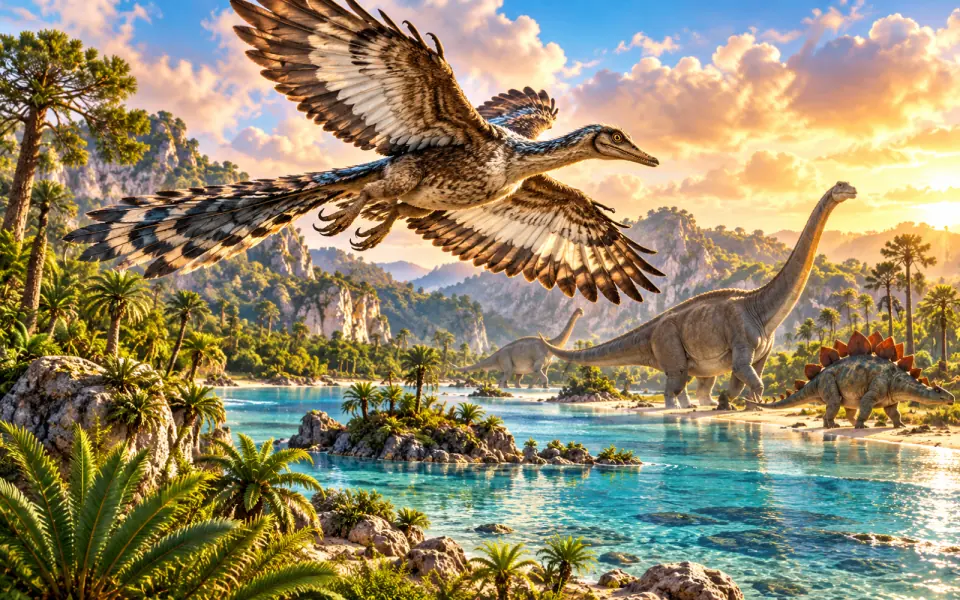
Archaeopteryx, which lived about 150 million years ago in what is now Germany, had feathers and wings but also teeth, a long bony tail and clawed fingers. Fossils found later showed that many bird features first appeared in theropods, the meat-eating dinosaurs that walked on two legs. Feathers existed even before flight as we know it today.
Why it matters Birds are the only branch of the dinosaurs that has survived to the present day.
Source: Natural History Museum (London), Dino Directory, “Archaeopteryx”
Study card about 6 minutes of reading
The story
A feather in the stone
In 1861, in a limestone quarry near Solnhofen, a small village in Bavaria, Germany, workers split a slab and found inside the fossil of an animal never seen before. It had a long bony tail, legs with claws, a mouth full of teeth, and all around the body and arms, pressed into the stone, feathers. It was something halfway between a reptile and a bird. The animal was named Archaeopteryx, from the Greek for “ancient wing” or “ancient feather”.
The timing was perfect. Only two years earlier, in 1859, Charles Darwin had published On the Origin of Species, arguing that living things descend from one another through long transformations. To his critics Darwin could not yet show the intermediate forms his theory predicted. Archaeopteryx looked just like one of those. The Bavarian doctor who had received the fossil, Karl Häberlein, sold it to the British Museum in London, where it was studied by the anatomist Richard Owen. Its most famous defender was another Englishman, Thomas Huxley, a great supporter of Darwin.
The limestone of wonders
The Solnhofen limestone is made of very fine mud, laid down 150 million years ago in calm lagoons short of oxygen, where bodies were neither eaten nor disturbed. That is why it has preserved fossils in an extraordinary way: jellyfish, insects, fish, pterosaurs, even the shading of feathers. This limestone has also been used for centuries in printing: lithography, a printing technique invented at the end of the 18th century, was done on slabs of this very material.
Today about fourteen skeletons of Archaeopteryx are known, all from the Solnhofen area. The finest is the Berlin specimen, found in 1874–1875 and bought by the Berlin museum in 1881, with feathers clearly visible. The animal was about the size of a crow or a magpie, around half a metre, and lived in an archipelago of tropical islands, with a vegetation of shrubs.
Bird or dinosaur?
For a long time Archaeopteryx was called “the first bird”. But the more fossils were discovered, the more it looked like a small feathered dinosaur. In the 1960s the American John Ostrom studied Deinonychus, a predatory dinosaur, and saw that its limbs were remarkably like those of Archaeopteryx. From there the idea was reborn that birds are dinosaurs. Then, from 1996, in China, in Liaoning province, fossils of dinosaurs with feathers or with fuzz-like filaments were found: Sinosauropteryx, four-winged Microraptor, and even Yutyrannus, a relative of Tyrannosaurus about 8 to 9 metres long, covered in feathers.
Today most palaeontologists think that birds are a branch of the theropod dinosaurs, those meat-eaters that walked on two legs. Archaeopteryx is an example of what was going on in that change. For this reason the title of “first bird” is debated: it depends on how a bird is defined, and on where a line is drawn in a gradual transformation. Some studies, such as one in 2011 on a Chinese fossil, Anchiornis, have even suggested that Archaeopteryx was a relative of Velociraptor and not the founder of the birds. The debate is still open.
Could it fly?
The wing feathers of Archaeopteryx are asymmetrical, with one side narrower than the other, like those of birds that fly today: it is a sign that the animal could make use of the air. It did not have, however, the big keel on the chest that in modern birds supports the flight muscles. A 2018 study of a fossil, done with X-rays, suggested that it could fly with short flaps of its wings, perhaps to escape predators or to get up into trees. Other researchers think it was more of a glider. Here too science has not settled the question.
One thing the fossils show is that feathers did not arise for flying: they were already present in dinosaurs that did not fly, probably for keeping warm or for showing off to their mates. Only later were they used for flight. It is an example of how evolution reuses features that already exist.
Why it happened
How did a dinosaur turn into a bird? There was no leap, but a long sequence of small steps. Among the theropods, some small meat-eating dinosaurs developed feathers that grew more and more complex, lighter bones, longer arms. Feathers, hollow bones, the beak and the shrinking of the tail appeared at different times in different forms.
How flight began is a subject of research. Some think small dinosaurs climbed trees and jumped from branch to branch, gliding; others think they flapped their arms as they ran to get up slopes and onto branches. The fossils of Microraptor, with feathers on its arms and legs, favour the idea of gliding.
What we know is that feathered theropod dinosaurs were abundant already in the Jurassic, and that their diversity explains how flight could have arisen more than once.
What changed
Birds survived the extinction of 66 million years ago, which swept away the non-avian dinosaurs, and diversified enormously. Today there are about 11,000 species: from the hummingbird, which weighs a few grams, to the ostrich, almost three metres tall, from the penguin that swims to the albatross that flies for weeks over the sea. They are, in a way, the dinosaurs that still live among us.
The discovery of Archaeopteryx was hugely important for science. It showed for the first time, in a concrete way, that there are intermediate forms between different groups, as Darwin predicted. Since then palaeontologists have found many more, including those between fish and four-legged animals and between land mammals and whales.
For the public, the idea that the sparrow on the balcony is a relative of Tyrannosaurus has changed the way dinosaurs are imagined: no longer slow, scaly lizards, but animals that were often feathered, active and colourful. Today in museums and drawings dinosaurs often have feathers. Studying their feathers has also made it possible, with powerful microscopes, to find traces of pigments and rebuild the colour of some of them.
Key people and places
People
- Karl Häberlein
- Bavarian doctor. He received the 1861 Archaeopteryx fossil as payment and sold it to the British Museum.
- Thomas Huxley
- English biologist (1825–1895), friend and defender of Darwin. He supported the link between birds and dinosaurs.
- John Ostrom
- American palaeontologist (1928–2005). With Deinonychus he reopened, in the 1960s, the idea that birds descend from dinosaurs.
- Xu Xing
- Chinese palaeontologist. He has described many feathered dinosaurs, including Microraptor and Yutyrannus.
Places
- Solnhofen, Bavaria (Germany)
- Quarries of very fine Jurassic limestone, where the skeletons of Archaeopteryx have been found.
- Liaoning, north-eastern China
- A region with Cretaceous deposits in which the feathers of dinosaurs and early birds have been preserved.
- Natural History Museum, Berlin
- Here is kept the beautiful Archaeopteryx specimen found in 1874–1875.
Good to know
- Archaeopteryx was about 150 million years old and its feathers were perhaps black: in 2011–2012 a study of one feather concluded that it was dark in colour.
- The Solnhofen limestone was used for lithography, a technique invented by Alois Senefelder in 1796: you drew with greasy ink on the stone and printed from it.
- Your roast chicken is a descendant of dinosaurs: birds are a branch of the theropod dinosaurs.
- Microraptor had wings on its legs as well, and so four “wings” in all.
- Not all dinosaurs were green: for some, such as Anchiornis, scholars have rebuilt the colour of the feathers, with black, white and grey feathers and a reddish crest on the head.
Find out more
- Natural History Museum, London, Archaeopteryx (in English) nhm.ac.uk
- University of California Museum of Paleontology (Berkeley), “Archaeopteryx lithographica” ucmp.berkeley.edu
- Wikipedia, “Archaeopteryx” en.wikipedia.org
- Wikipedia, “Dinosaur” en.wikipedia.org
Related events
- The first dinosaursabout 230 million years ago · The Earth before usBirds descend from the theropod dinosaurs, which appeared in the Triassic.
- Extinction of the non-avian dinosaursabout 66 million years ago · The Earth before usBirds were the only dinosaurs to survive the asteroid.
- Darwin publishes On the Origin of Species1859 · Age of revolutionsArchaeopteryx was discovered two years after Darwin's On the Origin of Species.
- The first insectsabout 400 million years ago · The Earth before usBefore the birds, insects were the first animals to fly.
Before and after, in the era “The Earth before us”
Event 24 of 25
 BeforeThe Big Bangabout 13.8 billion years ago
 BeforeThe first starsabout 13.5 billion years ago
 BeforeBirth of the Milky Wayabout 13 billion years ago
 BeforeFormation of the Solar Systemabout 4.6 billion years ago
 BeforeBirth of the Earthabout 4.5 billion years ago
 BeforeFormation of the Moonabout 4.5 billion years ago
 BeforeThe oldest pieces of Earthabout 4.4 billion years ago
 BeforeThe first oceansabout 4.3 billion years ago
 BeforeThe first life on Earthabout 3.5 billion years ago
 BeforeCyanobacteria and photosynthesisabout 2.7 billion years ago
 BeforeThe Great Oxidation Eventabout 2.4 billion years ago
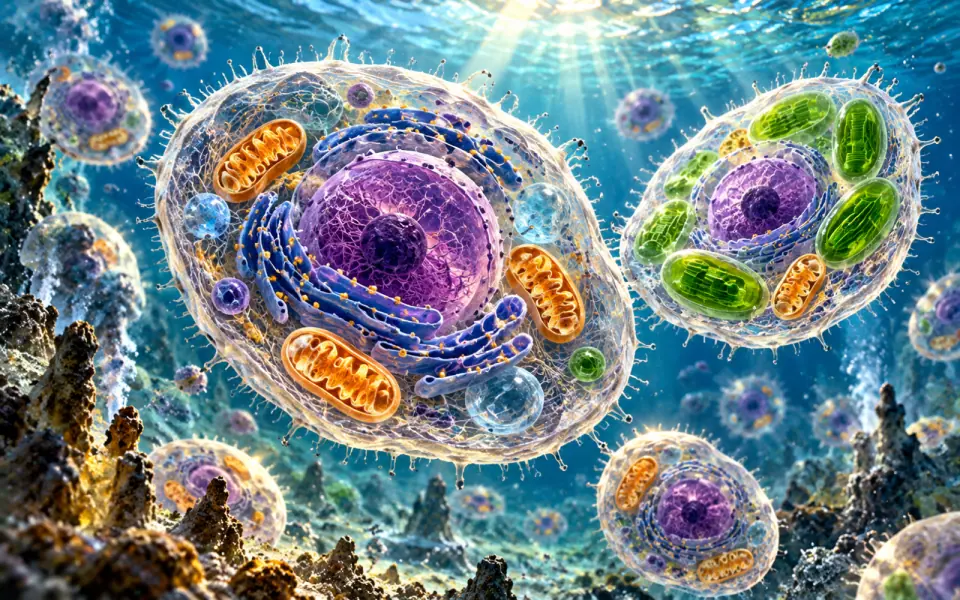 BeforeThe first complex cellsabout 1.8 billion years ago
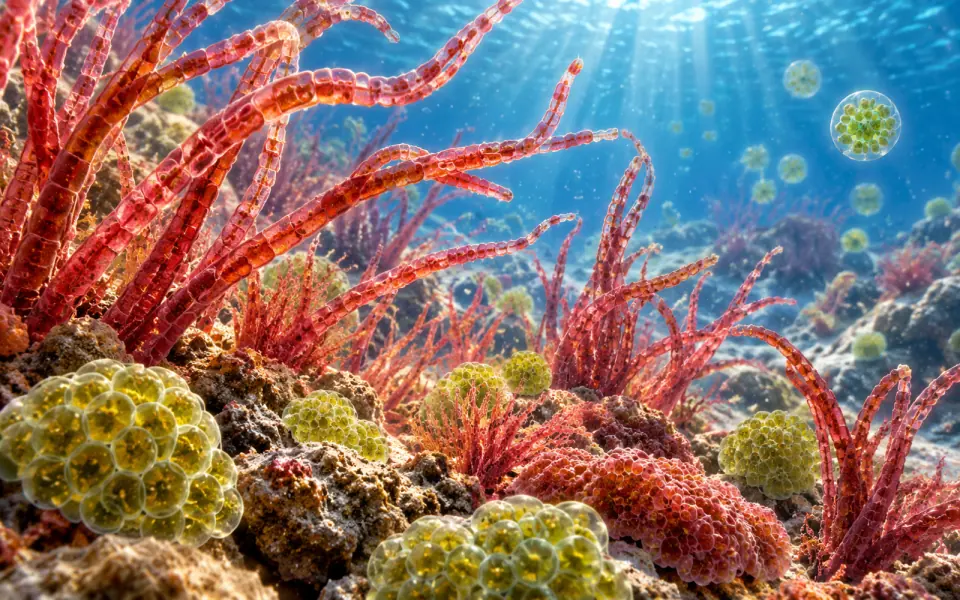 BeforeThe first many-celled living thingsabout 1 billion years ago
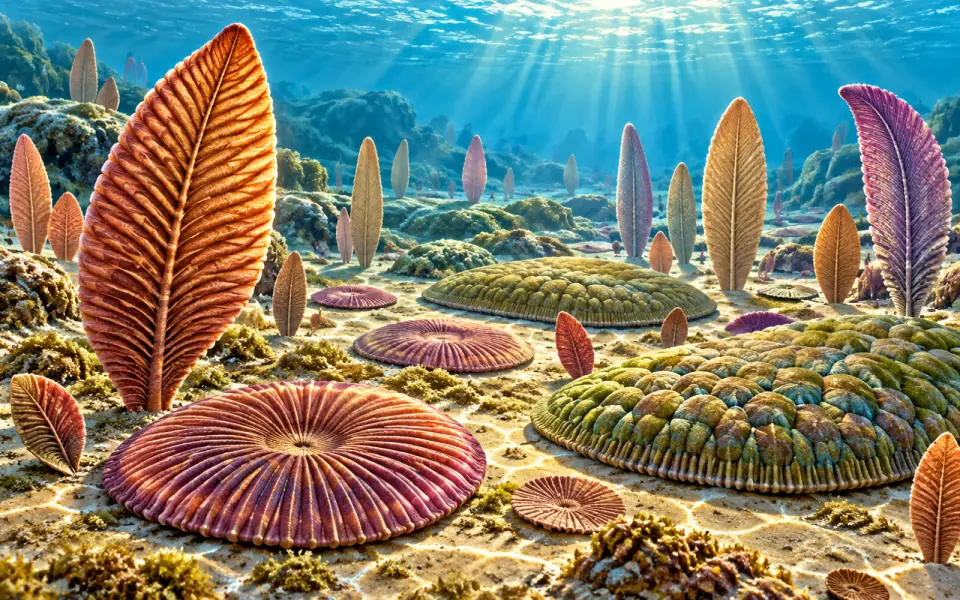 BeforeThe Ediacaran creaturesabout 555 million years ago
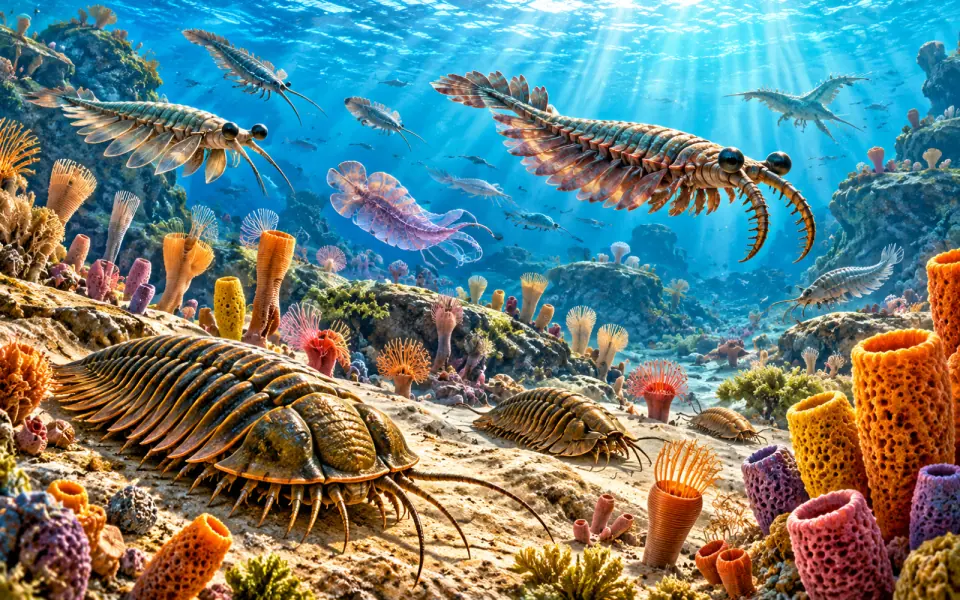 BeforeThe Cambrian explosionabout 539 million years ago
 BeforeThe first plants on landabout 475 million years ago
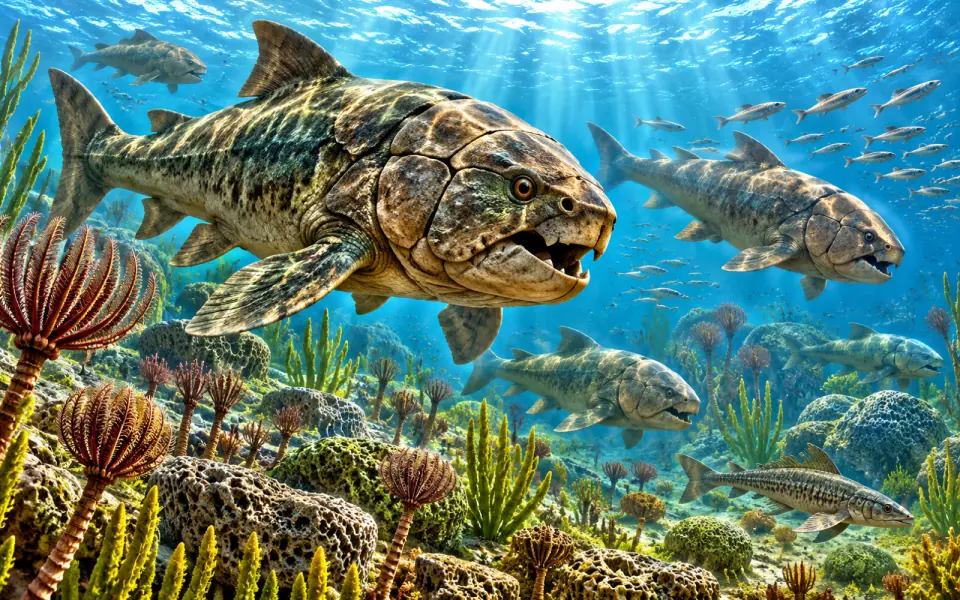 BeforeThe first fish with jawsabout 440 million years ago
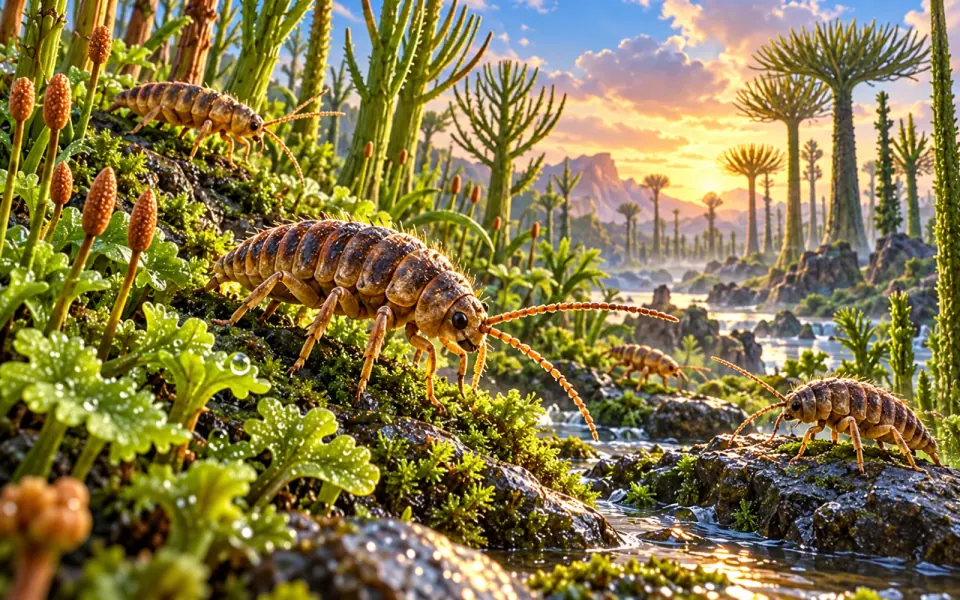 BeforeThe first insectsabout 400 million years ago
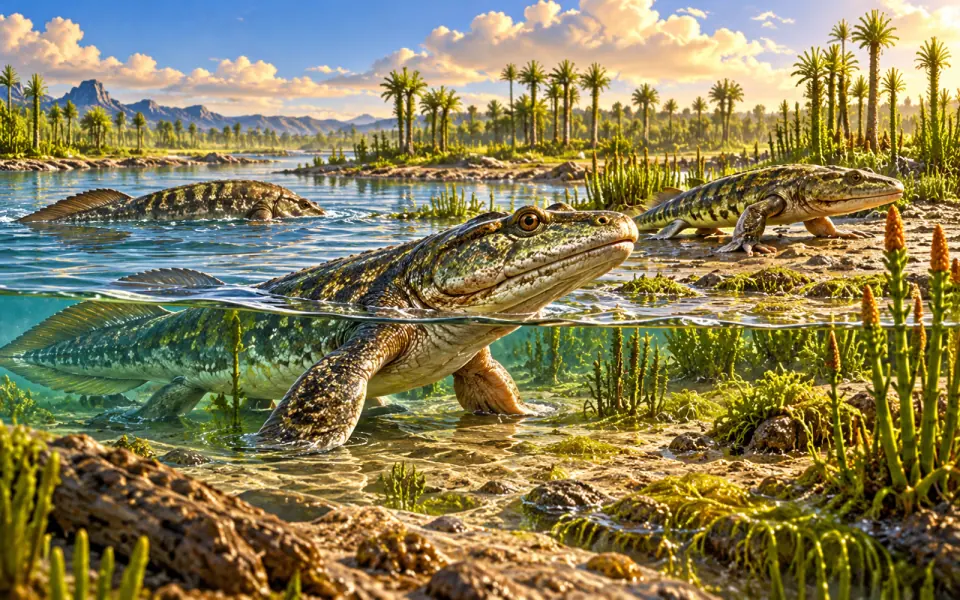 BeforeThe first amphibiansabout 375 million years ago
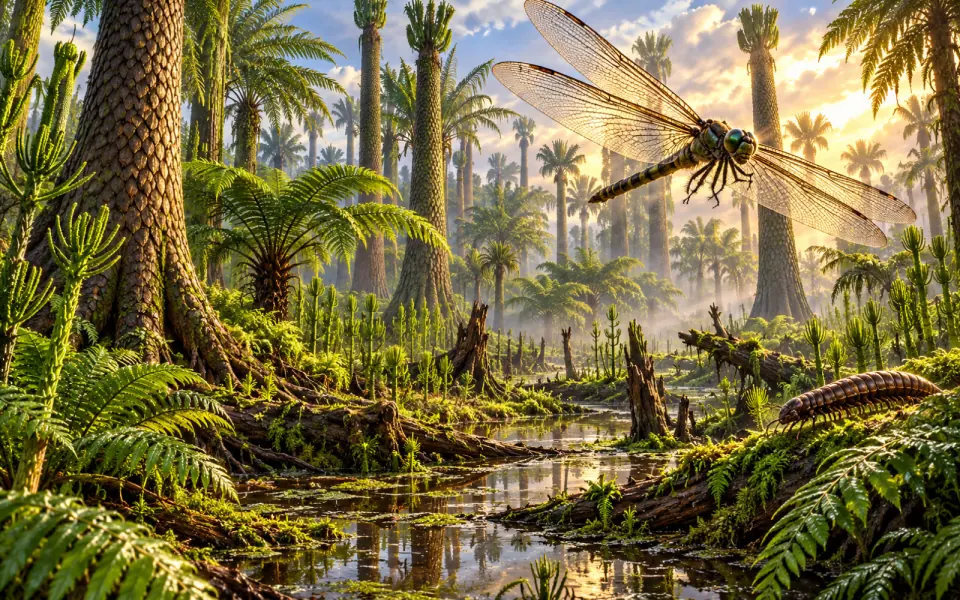 BeforeCarboniferous forestsabout 320 million years ago
 BeforeThe great Permian extinctionabout 252 million years ago
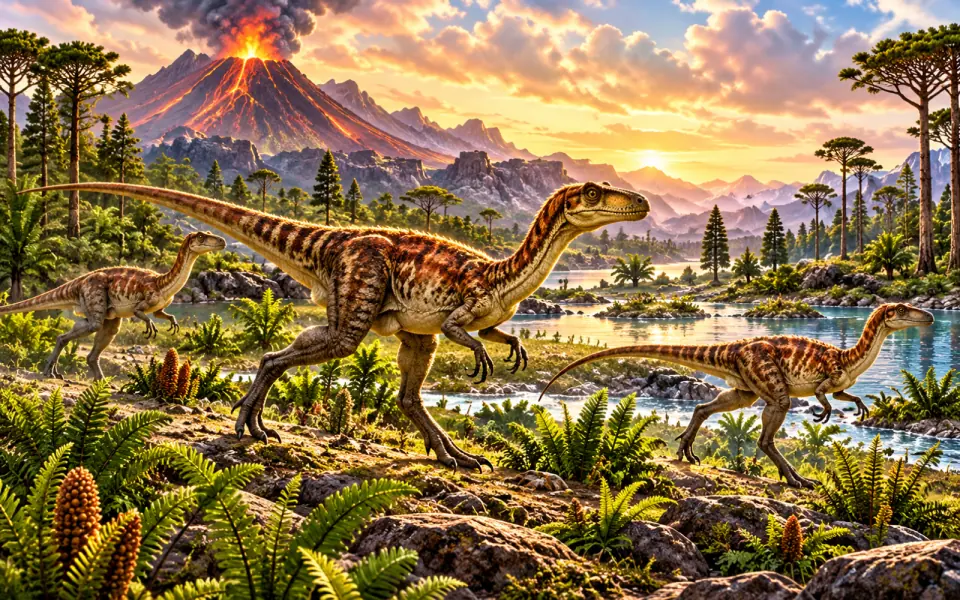 BeforeThe first dinosaursabout 230 million years ago
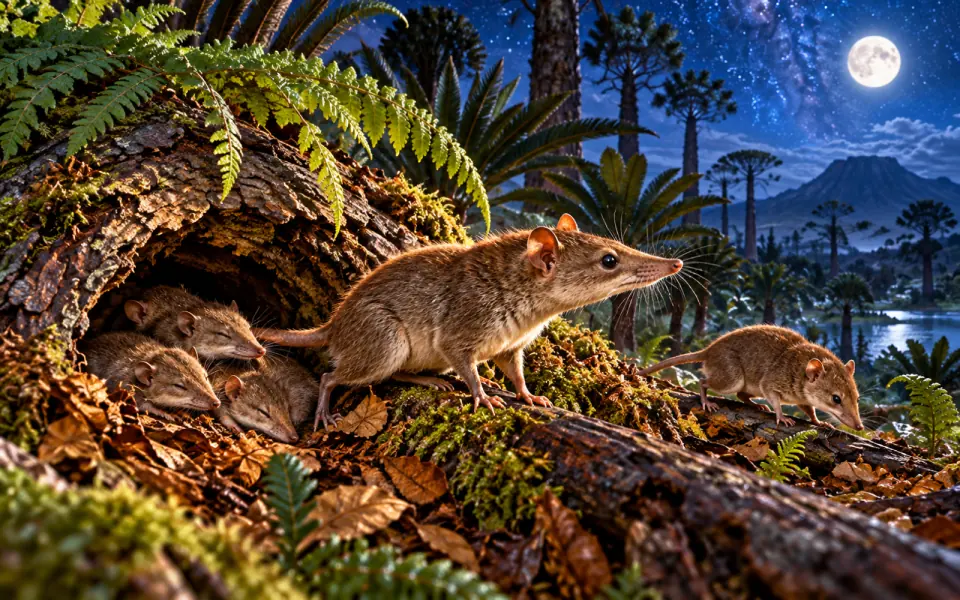 BeforeThe first mammalsabout 225 million years ago
- You are hereThe first birdsabout 150 million years ago
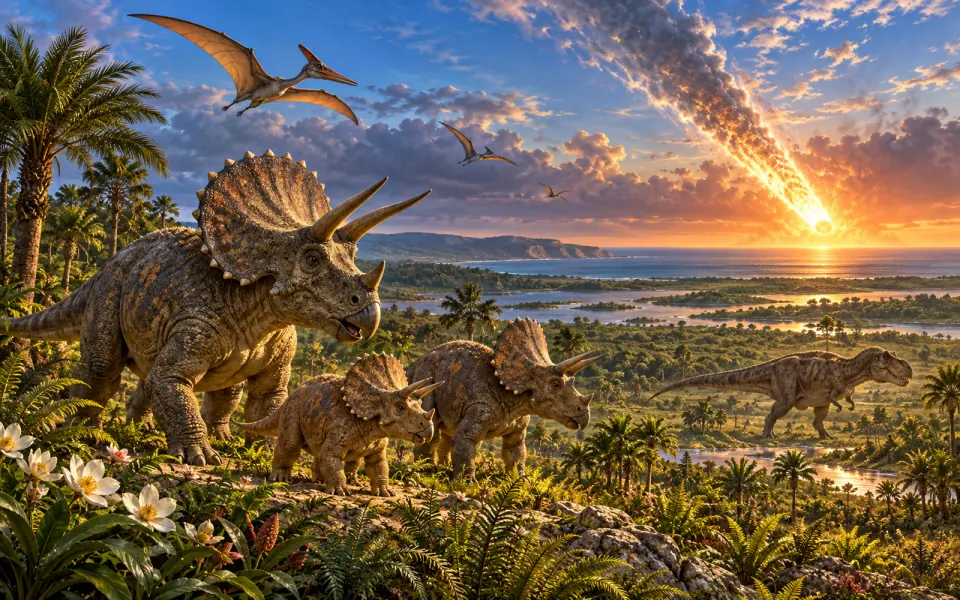 AfterExtinction of the non-avian dinosaursabout 66 million years ago
Listen / Read next
- Music to read by: Cinematic JourneyEpic film-style music, no lyrics, by Ciro Simone IrmiciSpotifyYouTube Music
Meanwhile, elsewhere in the world
Other events of the era “The Earth before us”
- The Big Bang
- The first stars
- Birth of the Milky Way
- Formation of the Solar System
- Birth of the Earth
- Formation of the Moon
- The oldest pieces of Earth
- The first oceans
- The first life on Earth
- Cyanobacteria and photosynthesis
- The Great Oxidation Event
- The first complex cells
- The first many-celled living things
- The Ediacaran creatures
- The Cambrian explosion
- The first plants on land
- The first fish with jaws
- The first insects
- The first amphibians
- Carboniferous forests
- The great Permian extinction
- The first dinosaurs
- The first mammals
- Extinction of the non-avian dinosaurs
