The Big Bang
about 13.8 billion years ago The whole Universe
In short
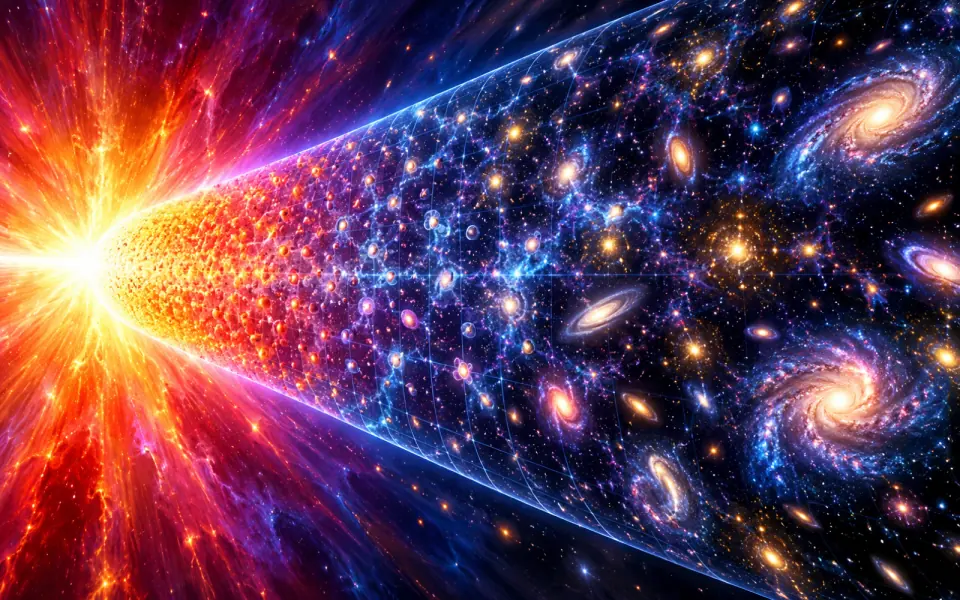
About 13.8 billion years ago the Universe began to expand from an extremely hot, dense state. It was not an explosion inside empty space: it was space itself that stretched out. The oldest light we can observe still carries a trace of those very first moments.
Why it matters It is the starting point for the story of the Universe, of matter and of everything that came afterwards.
Study card about 6 minutes of reading
The story
A story that begins with “everything”
When you look at the night sky you see stars, the Moon and a few planets. But everything that exists, from a grain of sand to your own body, has a story that starts much further back: with the Big Bang. Scientists estimate that it happened about 13.8 billion years ago. That is such a huge number that it is hard to imagine: if every year were one second, it would take more than 400 years to reach today.
Be careful with the name, though. “Big Bang” sounds like an explosion, but it was nothing like a firework going off, and it did not happen at one point in space. There was no empty space to explode into: space itself began to stretch, everywhere at the same moment. That is why you cannot point to the “place” of the Big Bang. The place is the whole Universe, which was then very, very much smaller.
Very hot and very dense
At the beginning the Universe was extremely hot and extremely dense, a soup of energy and tiny particles. As it expanded, it cooled down. In the first seconds quarks appeared and joined together to make protons and neutrons; in the first minutes protons and neutrons stuck together to form the nuclei of the first elements. What came out was mostly hydrogen, about three quarters of ordinary matter by mass, and helium, about a quarter, with a tiny bit of lithium. All the other elements, such as carbon and oxygen, would arrive much later, inside stars.
For hundreds of thousands of years the Universe was like a glowing fog: light could not travel, because it kept bumping into charged particles. About 380,000 years after the beginning the temperature dropped enough for nuclei to capture electrons and form atoms. At that point the fog cleared, and light could at last run free through space.
The oldest light
That light still exists and reaches us from every direction. It is called the cosmic microwave background. Over 13.8 billion years space has stretched so much that this light has been “pulled out” and can no longer be seen; it is now made of microwaves, with a temperature of about 2.7 degrees above absolute zero, that is, about -270 °C. It was discovered almost by accident in 1964 by two American radio astronomers, Arno Penzias and Robert Wilson, who were trying to find out where an annoying hiss in their big antenna was coming from. They received the Nobel Prize in Physics for it in 1978.
From the background radiation we can read the history of the Universe like an old photograph. The satellites COBE, WMAP and above all Planck, from the European Space Agency, have measured its tiny differences in temperature. From those little patches we can work out the age of the Universe: Planck found 13.8 billion years, with only a small margin of error. The patches are also the seeds from which galaxies later grew, pulled together by gravity.
How people arrived at this idea
The idea came from mathematics and from observations. In 1929 the American astronomer Edwin Hubble discovered that distant galaxies are moving away from us, and the further away they are, the faster they go. A few years earlier, in 1927, the Belgian priest and physicist Georges Lemaître, using the equations of Einstein's relativity, had calculated that the Universe was expanding; in 1931 he then suggested that it had started from a very small, dense state, his “primeval atom”. If everything is moving apart today, he reasoned, then in the past everything must have been closer together.
The name “Big Bang” came later, in 1949, in a BBC radio broadcast, from the English astronomer Fred Hoyle, who supported a different theory. He said it almost as a joke, but the name caught on and stayed.
What we do not know
Science has not yet answered every question. The Big Bang explains how the Universe developed from a very early moment, but it does not say what there was “before”, and it is not even certain that the word “before” makes sense, because time as we know it was born together with the Universe. Scientists are also studying dark matter and dark energy, which together seem to make up most of the Universe but which nobody has yet seen directly. Saying “we do not know yet” is part of a scientist's job.
The Big Bang is today the strongest picture we have, because many independent observations point in the same direction: the galaxies moving away, the background radiation, and the amounts of hydrogen and helium. It is the starting point of our timeline and of everything you will find in the next stops.
Why it happened
We cannot talk about “causes” in the way we do for a historical event, because the Big Bang is the very beginning of the Universe as we know it, and physics cannot say for certain what set it off. This is one of the big questions still open.
What we do know is how scientists got there. Hubble saw that galaxies are moving away; Lemaître and others showed that this is exactly what Einstein's general relativity allows for an expanding Universe; Penzias and Wilson found the leftover light that the theory had predicted. These are pieces of evidence that support one another.
To explain why the Universe is so smooth and so “flat”, in the 1980s the physicist Alan Guth suggested that in the first tiny fractions of a second there was a phase of extremely fast expansion, called inflation. Many scientists think it is a good hypothesis, but it is still being tested.
What changed
Everything else on our timeline follows from the Big Bang. The hydrogen and helium of the first minutes, pulled together by gravity, gathered into clouds. From those clouds came the first stars, then the galaxies and, billions of years later, the Sun and the Earth.
The idea of a Universe with a beginning and a history changed the way science is done. Before the 20th century many people thought the cosmos was eternal and unchanging; today we know that it changes, that it has an age, and that we can reconstruct its biography. This gave rise to a whole science, cosmology.
Today our instruments are more and more powerful. The James Webb Space Telescope, working since 2022, observes very distant galaxies whose light set off when the Universe was less than 500 million years old, and it is testing our ideas about the earliest times. Every time we look far out into space we are also looking back in time, and every discovery may make us correct a piece of the story.
Key people and places
People
- Georges Lemaître
- Belgian priest and physicist (1894–1966). He was among the first to suggest that the Universe was expanding from a small, dense starting state.
- Edwin Hubble
- American astronomer (1889–1953). In 1929 he showed that galaxies are moving away from us, faster the further away they are.
- Arno Penzias and Robert Wilson
- American radio astronomers who in 1964 discovered the cosmic microwave background by accident; Nobel Prize in Physics in 1978.
- Fred Hoyle
- English astronomer (1915–2001). He coined the name “Big Bang” in 1949, speaking on a BBC broadcast.
Places
- The whole Universe
- The Big Bang has no place: it happened everywhere, because space itself stretched.
- Holmdel, New Jersey (United States)
- Here, in the Bell laboratories, stood the horn antenna with which Penzias and Wilson found the hiss that turned out to be the oldest light in the Universe.
Good to know
- A small part of the white “noise” you used to see on the screen of old televisions with no aerial was the cosmic microwave background, that is, light from the Big Bang.
- Penzias and Wilson first thought the hiss was caused by pigeons nesting in the antenna. They moved the birds out and cleaned the antenna, but the signal stayed.
- The light of the Big Bang today has a temperature of about -270 °C, just under 3 degrees above absolute zero, the coldest anything can possibly be.
- The Planck satellite worked at a temperature of about -273 °C, colder than the space around it, so that it could sense tiny differences in temperature.
- The hydrogen atoms in the water of your body were born a few minutes after the Big Bang, almost 14 billion years ago.
Find out more
- NASA, “Overview” (Universe, history of the cosmos) science.nasa.gov
- Wikipedia, “Big Bang” en.wikipedia.org
- European Space Agency (ESA), the Planck mission esa.int
- Wikipedia, “Stellar population” en.wikipedia.org
Related events
- The first starsabout 13.5 billion years ago · The Earth before usThe first stars lit up after a few hundred million years, from the gas left by the Big Bang.
- The Webb telescope starts observing2022 · TodayThe Webb telescope observes the light of the oldest galaxies, born shortly after the Big Bang.
- Galileo turns his telescope to the sky1609 · Early modern ageWith Galileo's telescope the scientific exploration of the sky began.
- Special relativity1905 · Early 20th centuryEinstein's theories, born in these years, are the basis of modern cosmology.
Before and after, in the era “The Earth before us”
Event 1 of 25
- You are hereThe Big Bangabout 13.8 billion years ago
 AfterThe first starsabout 13.5 billion years ago
 AfterBirth of the Milky Wayabout 13 billion years ago
 AfterFormation of the Solar Systemabout 4.6 billion years ago
 AfterBirth of the Earthabout 4.5 billion years ago
 AfterFormation of the Moonabout 4.5 billion years ago
 AfterThe oldest pieces of Earthabout 4.4 billion years ago
 AfterThe first oceansabout 4.3 billion years ago
 AfterThe first life on Earthabout 3.5 billion years ago
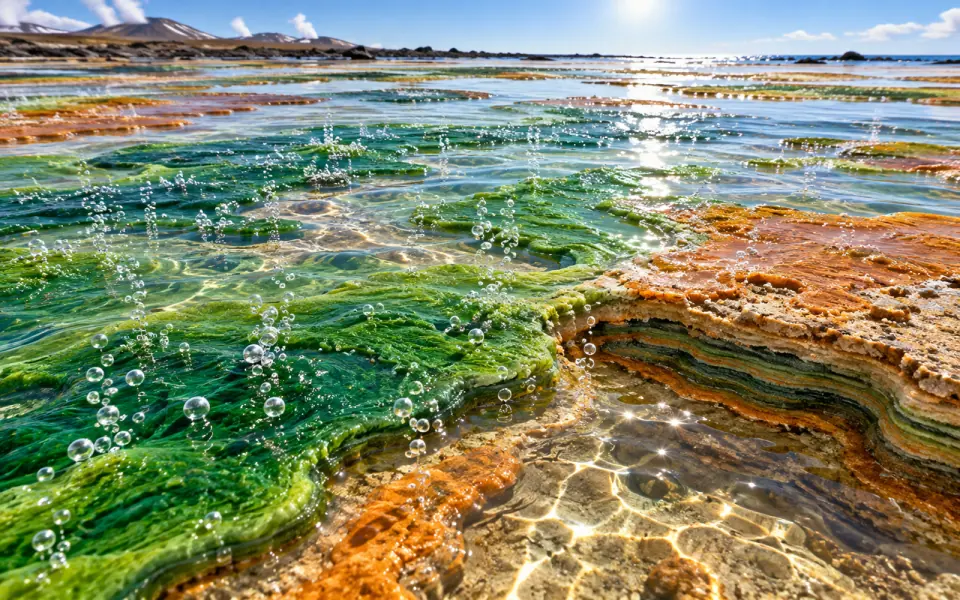 AfterCyanobacteria and photosynthesisabout 2.7 billion years ago
 AfterThe Great Oxidation Eventabout 2.4 billion years ago
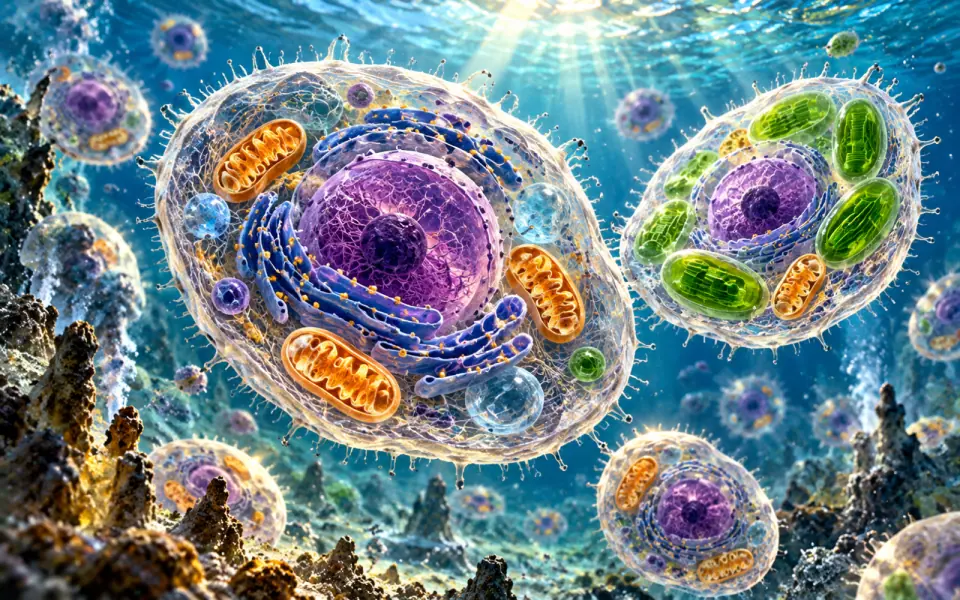 AfterThe first complex cellsabout 1.8 billion years ago
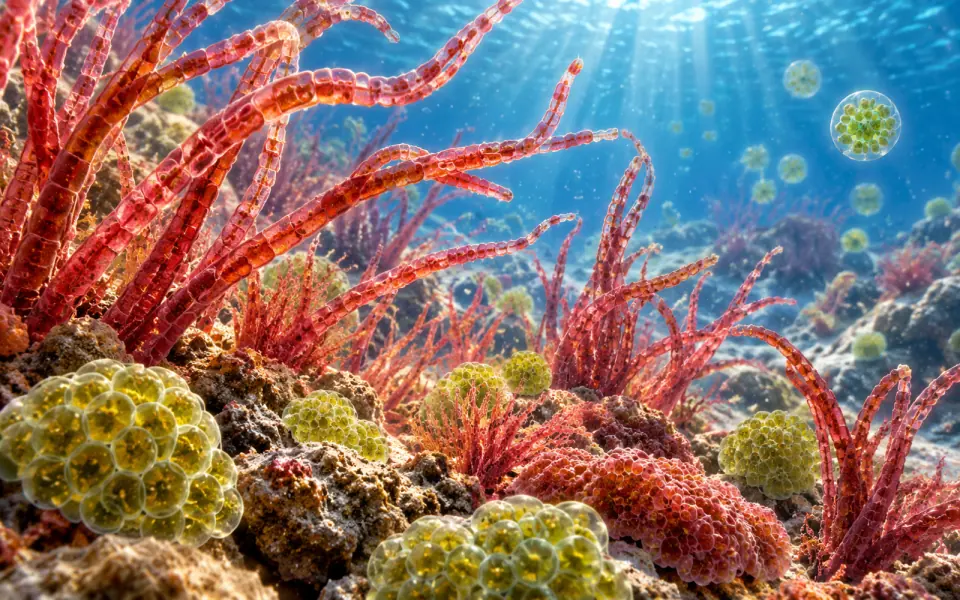 AfterThe first many-celled living thingsabout 1 billion years ago
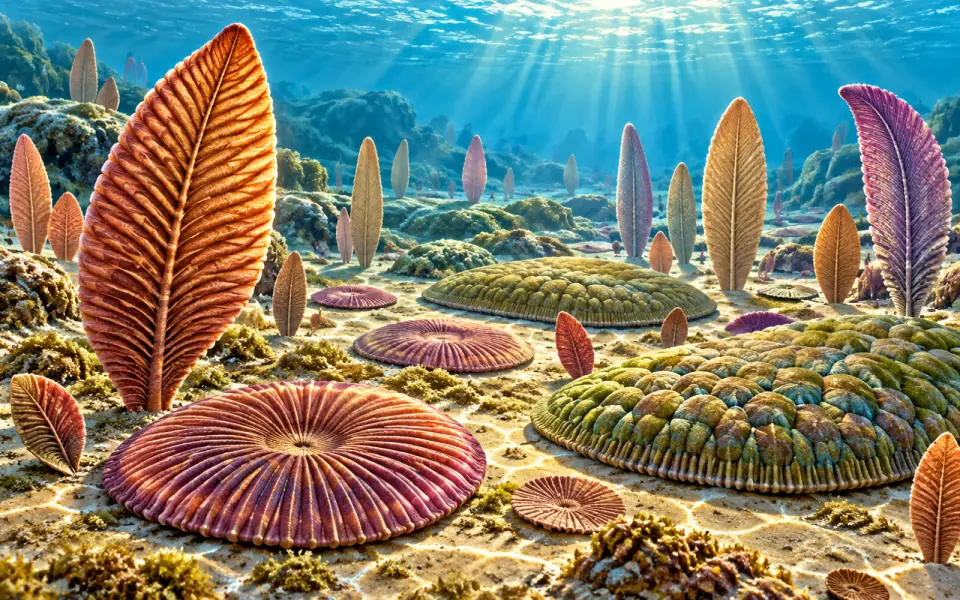 AfterThe Ediacaran creaturesabout 555 million years ago
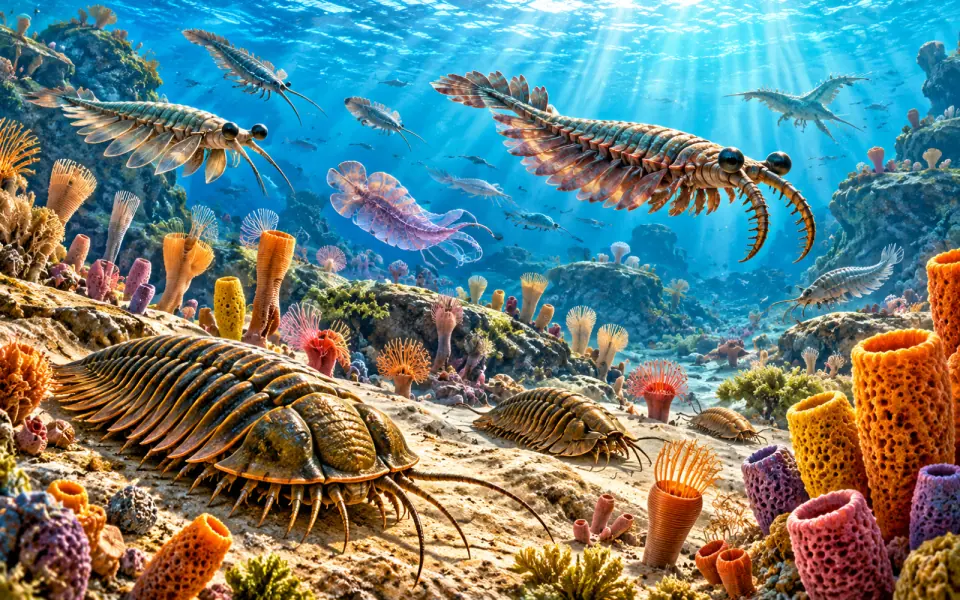 AfterThe Cambrian explosionabout 539 million years ago
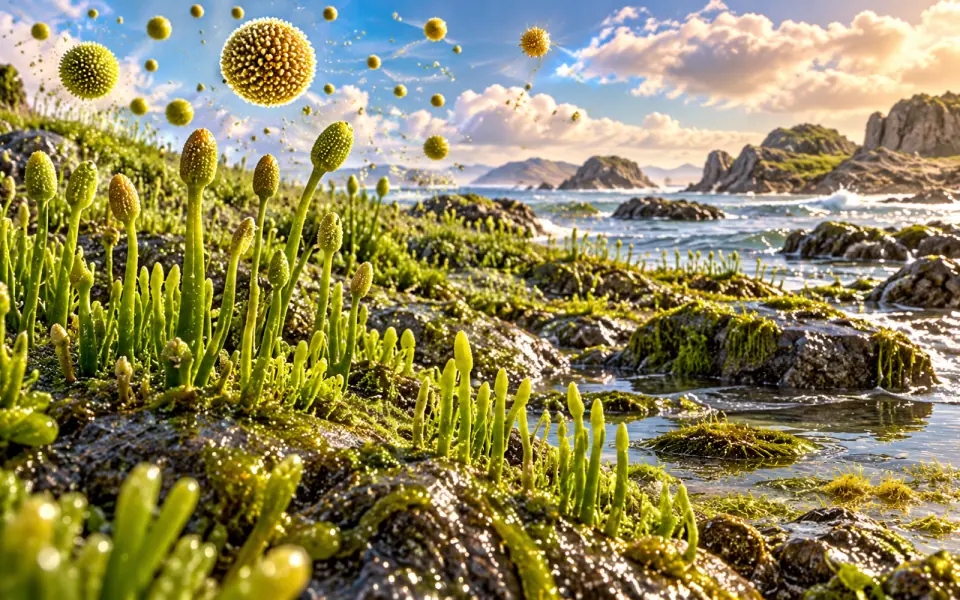 AfterThe first plants on landabout 475 million years ago
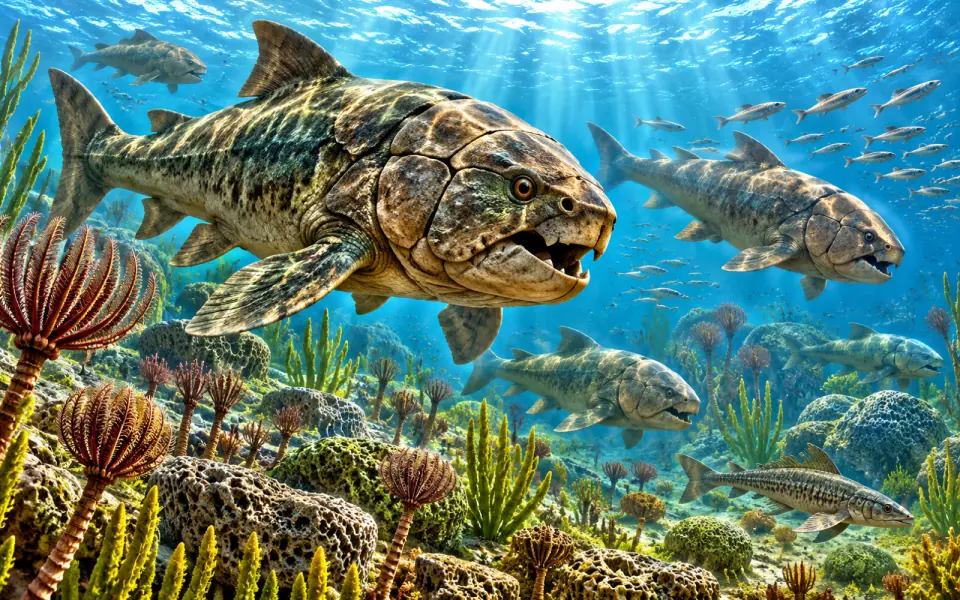 AfterThe first fish with jawsabout 440 million years ago
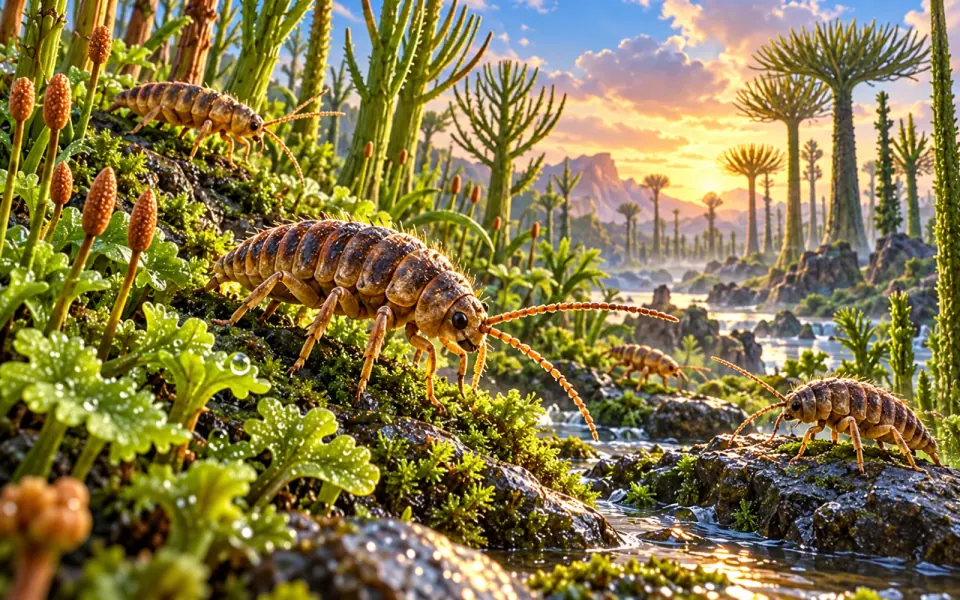 AfterThe first insectsabout 400 million years ago
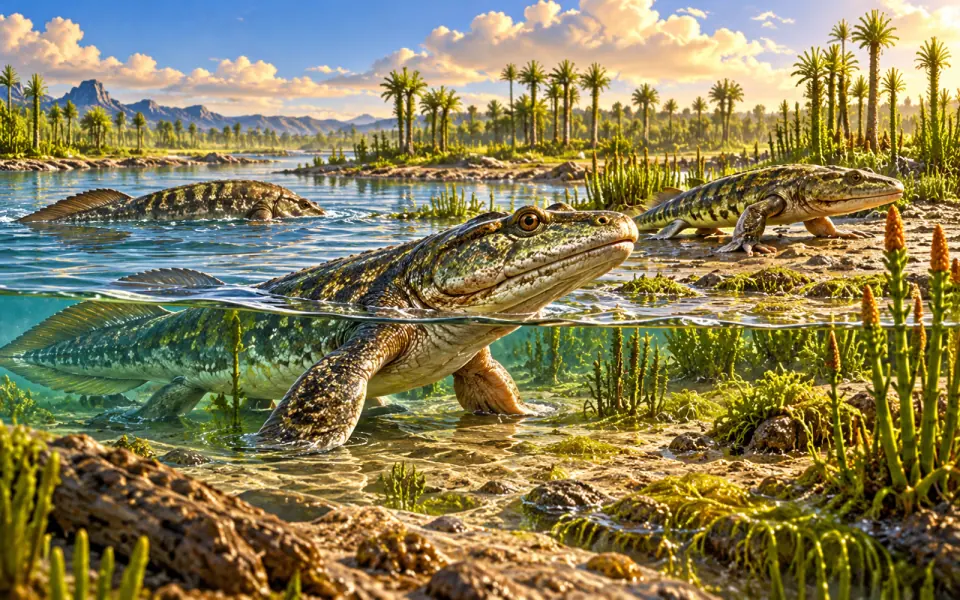 AfterThe first amphibiansabout 375 million years ago
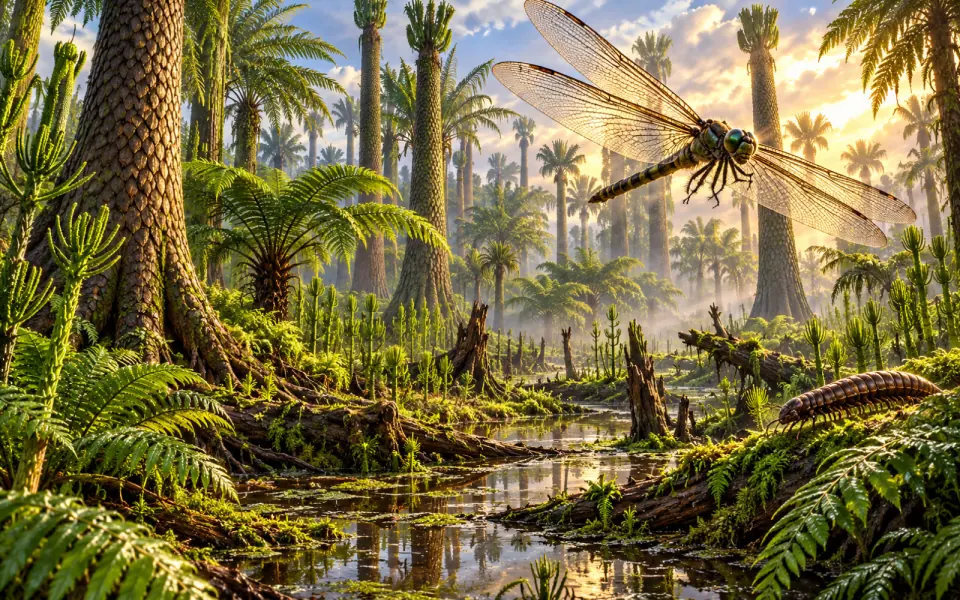 AfterCarboniferous forestsabout 320 million years ago
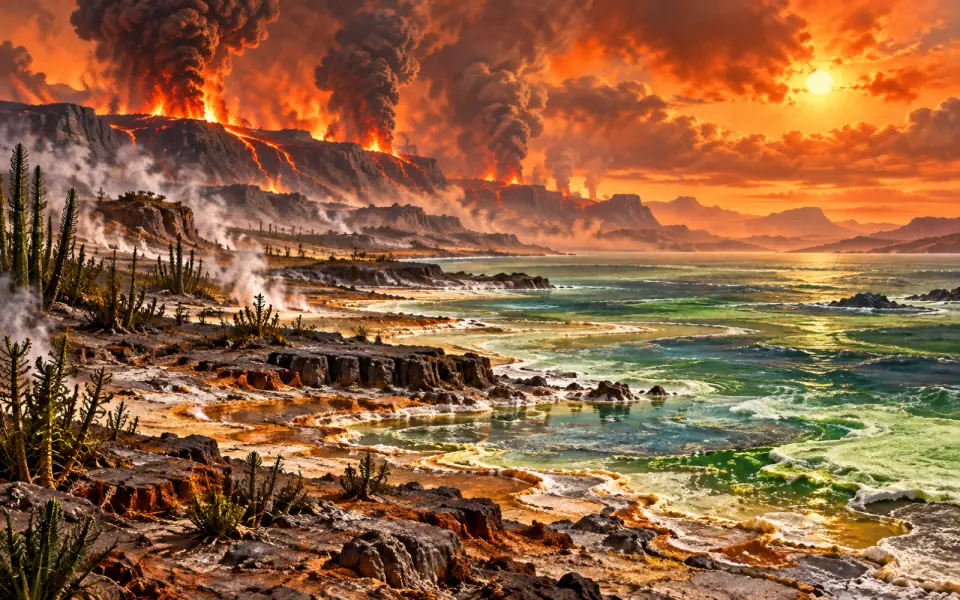 AfterThe great Permian extinctionabout 252 million years ago
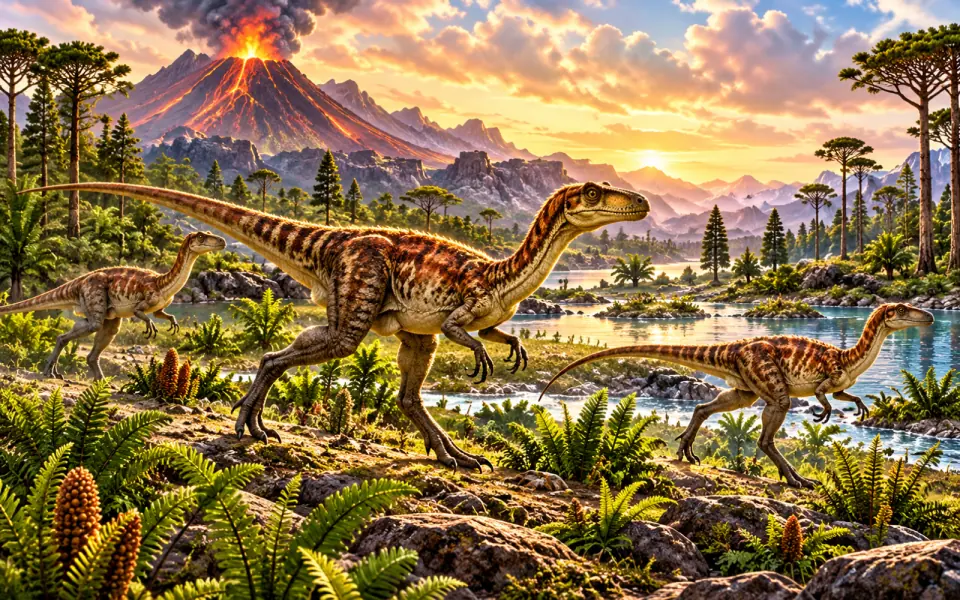 AfterThe first dinosaursabout 230 million years ago
 AfterThe first mammalsabout 225 million years ago
 AfterThe first birdsabout 150 million years ago
 AfterExtinction of the non-avian dinosaursabout 66 million years ago
Listen / Read next
- Music to read by: Cinematic JourneyEpic film-style music, no lyrics, by Ciro Simone IrmiciSpotifyYouTube Music
Other events of the era “The Earth before us”
- The first stars
- Birth of the Milky Way
- Formation of the Solar System
- Birth of the Earth
- Formation of the Moon
- The oldest pieces of Earth
- The first oceans
- The first life on Earth
- Cyanobacteria and photosynthesis
- The Great Oxidation Event
- The first complex cells
- The first many-celled living things
- The Ediacaran creatures
- The Cambrian explosion
- The first plants on land
- The first fish with jaws
- The first insects
- The first amphibians
- Carboniferous forests
- The great Permian extinction
- The first dinosaurs
- The first mammals
- The first birds
- Extinction of the non-avian dinosaurs
