Birth of the Milky Way
about 13 billion years ago The Milky Way
In short
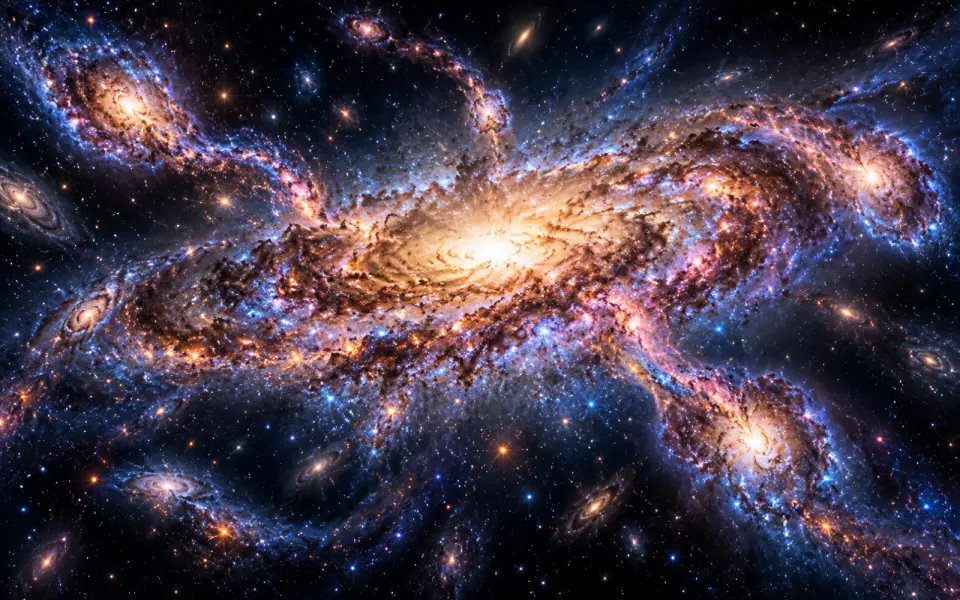
The Milky Way was not born with the spiral shape we see today. Small groups of stars and gas joined together bit by bit, while new stars kept forming. Its disc, its halo and its arms are the result of a story lasting billions of years.
Why it matters Our galaxy is the great ‘cosmic home’ where the Solar System is found.
Source: ESA, “Gaia finds parts of the Milky Way much older than expected”
Study card about 5 minutes of reading
The story
The stripe of milk in the sky
If you move away from city lights on a night with no Moon, you can see a wide pale stripe across the sky. The ancient Greeks called it the “milky circle”; in the myth it was milk spurting from the breast of the goddess Hera. The Greek word is also where the name of all galaxies comes from. In 1610 Galileo Galilei pointed his telescope at that stripe and realised that it was made of countless stars, too small and too close together to be told apart with the naked eye.
What we see is the Milky Way seen from the inside. We are in a disc of stars: when we look along the disc we see a huge number of them, one behind another, and together they make the stripe. Astronomers estimate that our galaxy contains between 100 and 400 billion stars and is about 100,000 light-years across, which means light takes about 100,000 years to cross it. The Sun is in a spiral arm, about 26,000 light-years from the centre, and goes once around the galaxy in about 230 million years.
A galaxy built from pieces
The Milky Way was not born with the shape it has today. For a long time astronomers knew little about how it began, but in recent years there has been a breakthrough, thanks to the European Space Agency's Gaia satellite, launched in 2013. Gaia has measured the position and movement of almost two billion stars, building the most detailed three-dimensional map ever made.
That data showed that the thick disc of the galaxy began to form about 13 billion years ago: the core of the galaxy was already forming less than a billion years after the Big Bang. After that the galaxy grew in a messy way, like a village that spreads by swallowing up the villages around it. Groups of stars and gas, that is, smaller galaxies, came close and were caught by the gravity of the Milky Way.
One of the most important meetings happened about 10 billion years ago, according to estimates: a dwarf galaxy called Gaia-Enceladus (or the Gaia-Sausage, from the shape its stars make on graphs) merged with the Milky Way. Some of its stars were scattered into the halo, the outer, almost spherical region of the galaxy, and their “backwards” motion is what allowed them to be recognised. Other dwarf galaxies are still falling in today: the Sagittarius Dwarf is slowly being torn apart.
The disc and the arms
With time the gas settled into a thin, spinning disc, and new stars kept being born in it. The spiral arms are waves of density that pass through the disc, like waves of traffic on a road: the gas is squeezed and new stars are born. At the centre there is a bar of stars and, at the very middle, an enormous black hole called Sagittarius A*, with a mass about 4 million times that of the Sun. In 2020 the Nobel Prize in Physics went to Reinhard Genzel and Andrea Ghez for following the orbits of stars around that black hole for years.
A 20th-century discovery
Until 1920 many astronomers thought the Milky Way was the whole Universe. In 1924 Edwin Hubble, using the big telescope at Mount Wilson in California, measured the distance to a bright smudge called Andromeda and realised that it was too far away to belong to our galaxy: it was another galaxy. In one go the Universe became enormous: the Milky Way was one galaxy among many. Today it is estimated that the observable Universe holds hundreds of billions of them, or more.
The Milky Way is not standing still. It is approaching Andromeda, the nearest big galaxy, at a speed of about 110 kilometres per second. In a few billion years the two galaxies might merge, although recent studies say this is not certain. There is no danger for the stars: they are so far apart from one another that almost none would collide with another.
Why it happened
Galaxies exist because gravity gathers matter together. After the Big Bang dark matter formed a network of clumps, and gas fell into those clumps, cooled down and gave rise to stars. These first groups, small and irregular, are the building blocks from which galaxies grow.
Big galaxies grow in two ways: by swallowing smaller galaxies (mergers) and by carrying on forming stars from the gas that falls onto the disc. The Milky Way has followed both paths, as the traces left by the captured galaxies show.
The thin, spiral disc forms when gas flattens as it spins: a bit like pizza dough when you spin it in the air. A merger that is too violent can ruin a disc; the Milky Way has had a fairly quiet history since its first few billion years.
What changed
The Milky Way is our home. In its disc, about 4.6 billion years ago, the Solar System was born. It was a good place: not too close to the centre, where exploding stars and radiation are less intense, and where the gas holds plenty of heavy elements because earlier generations of stars had made them.
Knowing the history of the galaxy also helps us understand our own. Studying the oldest stars means reading the elements that were in the gas when they formed, and understanding how carbon, oxygen and iron arrived.
Today Gaia's map is used by thousands of researchers. It helps to find stars with planets, hidden clusters and ancient remains of dwarf galaxies, and it lets us correct the history of the Milky Way whenever the data improve.
Key people and places
People
- Galileo Galilei
- Scientist from Pisa (1564–1642). In 1610 he saw through his telescope that the Milky Way is made of a huge number of stars.
- Edwin Hubble
- American astronomer (1889–1953). In 1924 he showed that Andromeda is a galaxy outside the Milky Way.
- Reinhard Genzel and Andrea Ghez
- Astronomers awarded the Nobel Prize in Physics in 2020 for studying the black hole at the centre of our galaxy.
Places
- Sagittarius A*
- The supermassive black hole at the centre of the Milky Way, about 26,000 light-years from the Earth.
- Andromeda
- The nearest big spiral galaxy, about 2.5 million light-years away: it can be seen with the naked eye as a small pale smudge.
- Mount Wilson, California (United States)
- The observatory where Hubble measured the distance to Andromeda with a 2.5-metre telescope.
Good to know
- The word “galaxy” comes from Greek and means “milky”, just like “Milky Way”.
- If the Milky Way were as big as Italy, the Solar System would be the size of a coin.
- Since it was born, the Sun has already gone around the centre of the galaxy about twenty times.
- With the naked eye, on a dark night, you can see about 2,000–3,000 stars: all of them belong to the Milky Way.
- The astronomers who discovered Gaia-Enceladus did real “archaeology” of space: they recognised the stars of a vanished galaxy just from the way they move.
Find out more
- NASA, “Galaxies” science.nasa.gov
- Wikipedia, “Milky Way” en.wikipedia.org
- European Space Agency (ESA), the Gaia mission (in English) esa.int
- NASA, “Stars” science.nasa.gov
Related events
- The first starsabout 13.5 billion years ago · The Earth before usThe first stars were the building blocks of the first galaxies.
- Formation of the Solar Systemabout 4.6 billion years ago · The Earth before usIn the disc of the Milky Way, 4.6 billion years ago, the Solar System was born.
- Galileo turns his telescope to the sky1609 · Early modern ageGalileo was the first to see through a telescope that the Milky Way is made of stars.
- The first image of a black hole2019 · TodayThe first image of a black hole was of one in another galaxy, but in 2022 the picture of our own galaxy's black hole arrived too.
Before and after, in the era “The Earth before us”
Event 3 of 25
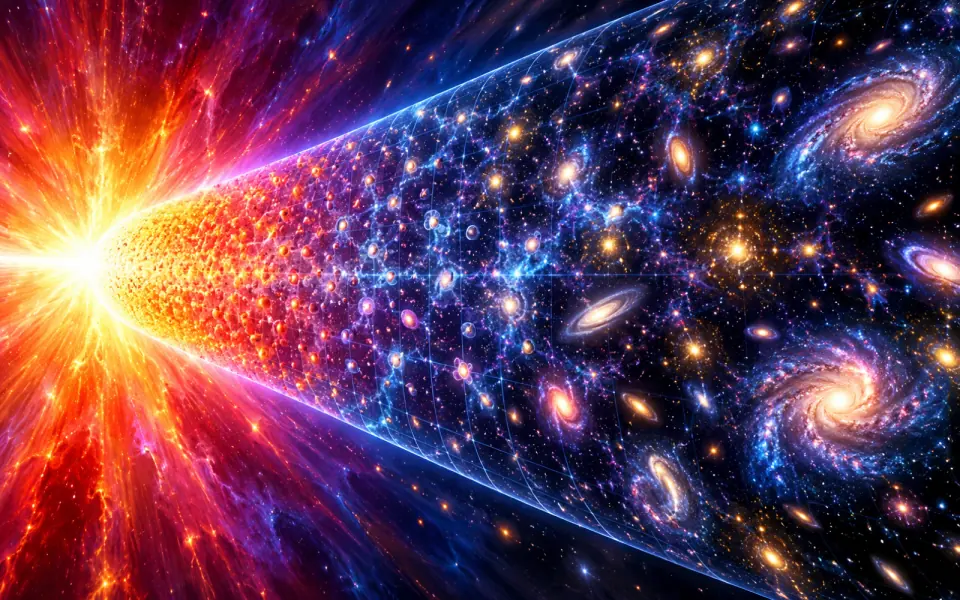 BeforeThe Big Bangabout 13.8 billion years ago
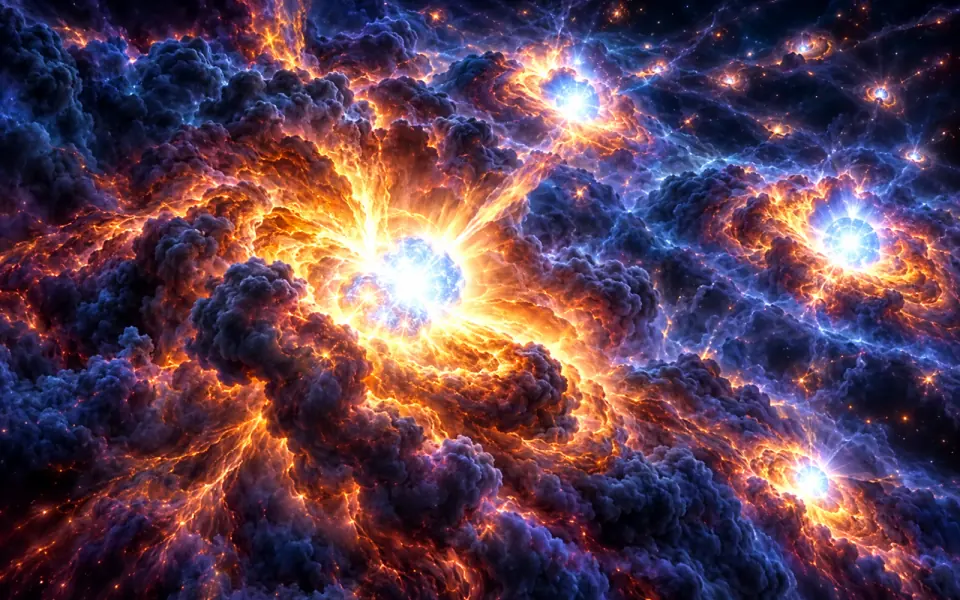 BeforeThe first starsabout 13.5 billion years ago
- You are hereBirth of the Milky Wayabout 13 billion years ago
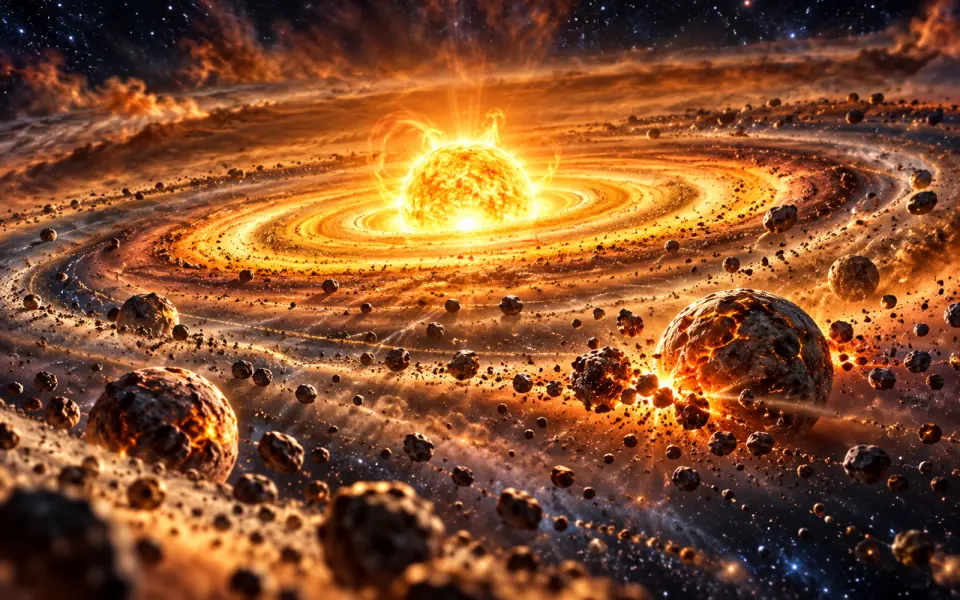 AfterFormation of the Solar Systemabout 4.6 billion years ago
 AfterBirth of the Earthabout 4.5 billion years ago
 AfterFormation of the Moonabout 4.5 billion years ago
 AfterThe oldest pieces of Earthabout 4.4 billion years ago
 AfterThe first oceansabout 4.3 billion years ago
 AfterThe first life on Earthabout 3.5 billion years ago
 AfterCyanobacteria and photosynthesisabout 2.7 billion years ago
 AfterThe Great Oxidation Eventabout 2.4 billion years ago
 AfterThe first complex cellsabout 1.8 billion years ago
 AfterThe first many-celled living thingsabout 1 billion years ago
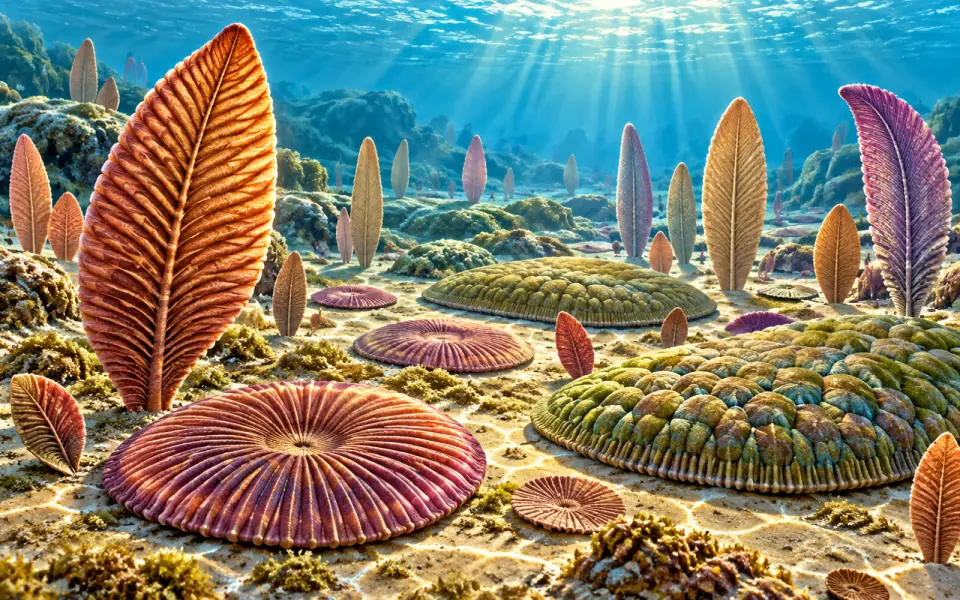 AfterThe Ediacaran creaturesabout 555 million years ago
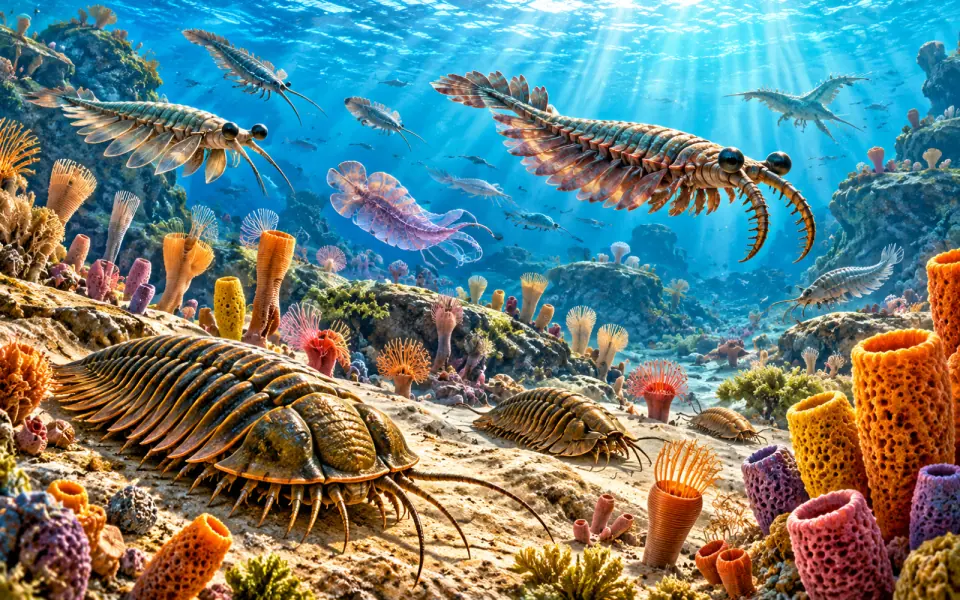 AfterThe Cambrian explosionabout 539 million years ago
 AfterThe first plants on landabout 475 million years ago
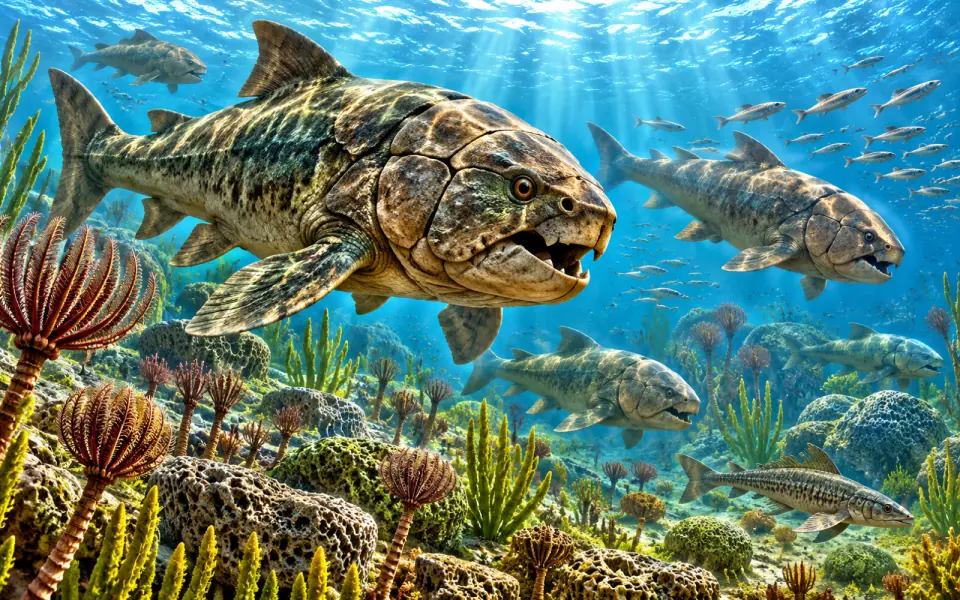 AfterThe first fish with jawsabout 440 million years ago
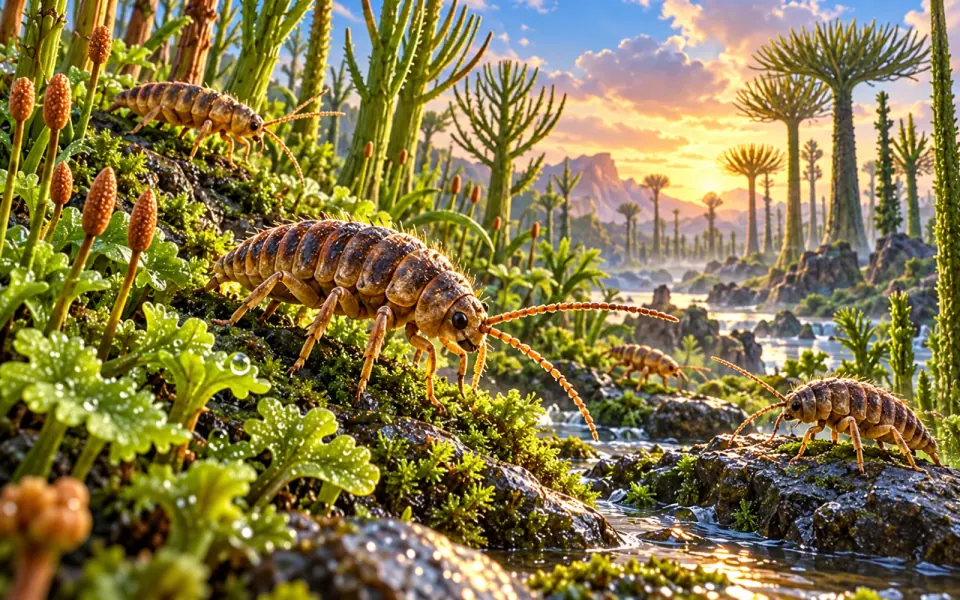 AfterThe first insectsabout 400 million years ago
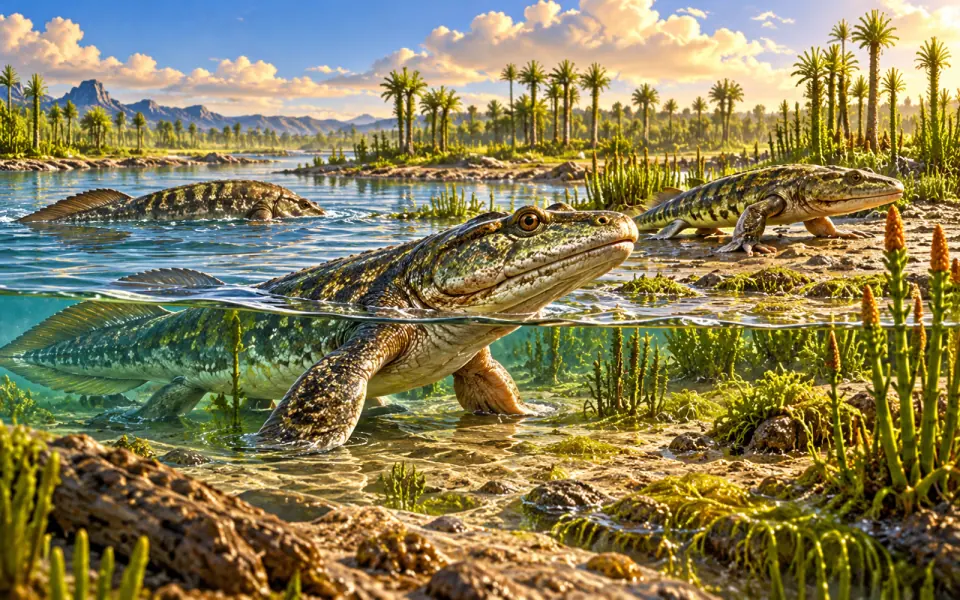 AfterThe first amphibiansabout 375 million years ago
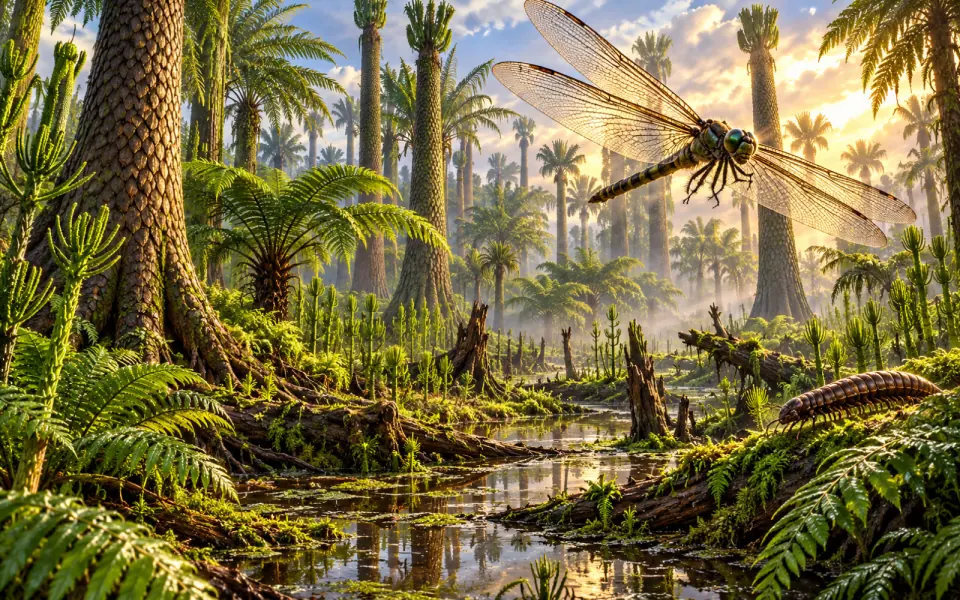 AfterCarboniferous forestsabout 320 million years ago
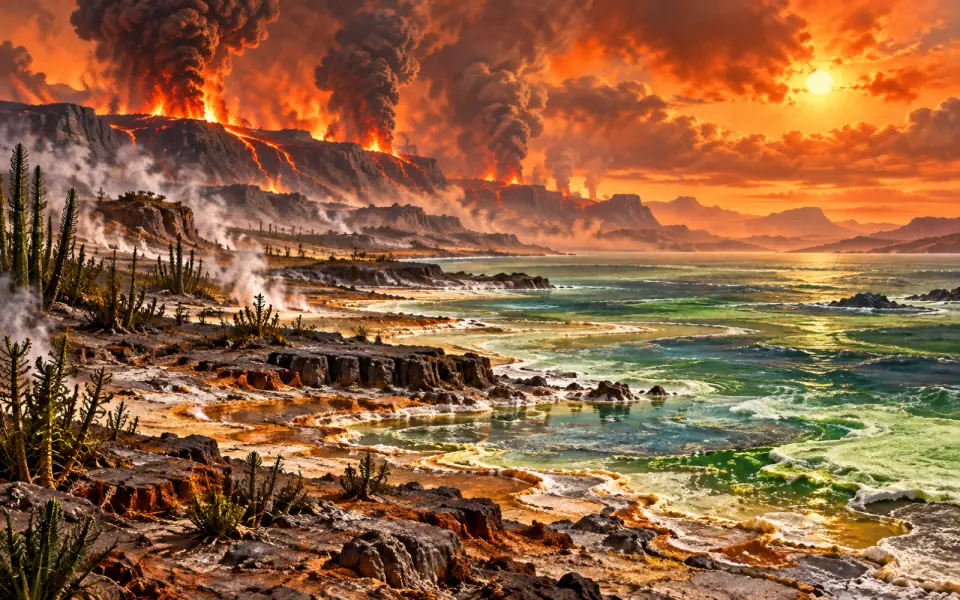 AfterThe great Permian extinctionabout 252 million years ago
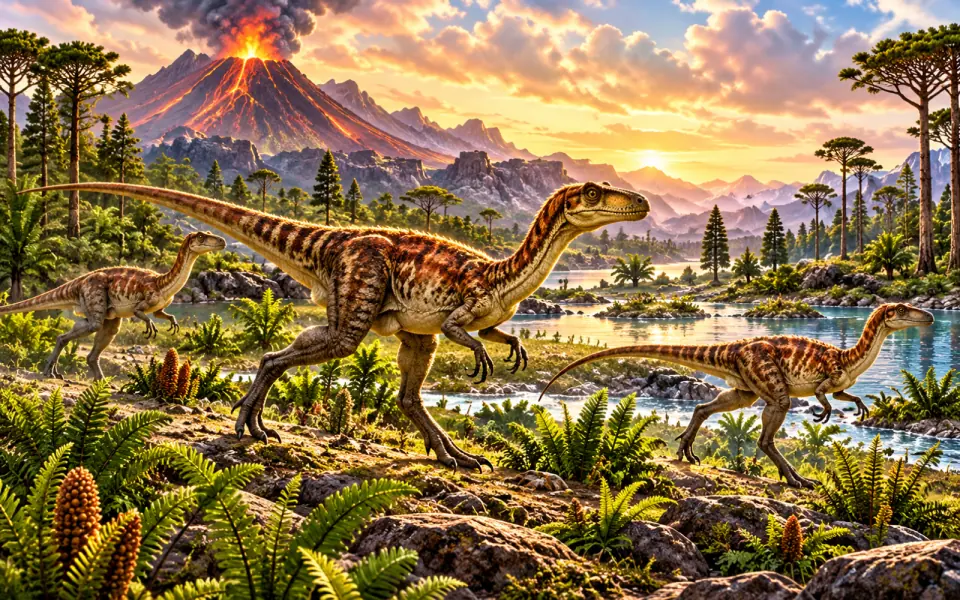 AfterThe first dinosaursabout 230 million years ago
 AfterThe first mammalsabout 225 million years ago
 AfterThe first birdsabout 150 million years ago
 AfterExtinction of the non-avian dinosaursabout 66 million years ago
Listen / Read next
- Music to read by: Cinematic JourneyEpic film-style music, no lyrics, by Ciro Simone IrmiciSpotifyYouTube Music
Other events of the era “The Earth before us”
- The Big Bang
- The first stars
- Formation of the Solar System
- Birth of the Earth
- Formation of the Moon
- The oldest pieces of Earth
- The first oceans
- The first life on Earth
- Cyanobacteria and photosynthesis
- The Great Oxidation Event
- The first complex cells
- The first many-celled living things
- The Ediacaran creatures
- The Cambrian explosion
- The first plants on land
- The first fish with jaws
- The first insects
- The first amphibians
- Carboniferous forests
- The great Permian extinction
- The first dinosaurs
- The first mammals
- The first birds
- Extinction of the non-avian dinosaurs
