The Great Oxidation Event
about 2.4 billion years ago The Earth's atmosphere and oceans
In short
For a very long time the oxygen made by microorganisms reacted with iron dissolved in the oceans and formed rocks with reddish stripes. When the iron could no longer soak it all up, oxygen began to build up in the air. For many microbes that lived without oxygen it was a poison, while others learnt to use it to breathe.
Why it matters It was a chemical turning point that opened the way for living things able to breathe oxygen.
Study card about 5 minutes of reading
The story
A poison that became air
Today about a fifth of the air we breathe is oxygen. It seems normal to us, but for nearly half the history of the Earth the air contained almost none. The living things of the time were microbes that lived without oxygen, and for many of them oxygen was a poison, because it reacts with the molecules in cells and damages them. When it began to build up in the atmosphere, it was therefore a catastrophe for some of them. Some scientists call this event the “oxygen catastrophe”; the most common name is the Great Oxidation Event.
Scientists place it around 2.4 billion years ago, in a period lasting a few hundred million years. It was not a single moment, but a slow and uneven change. Some traces suggest that small amounts of oxygen had already formed earlier, in waves, and then disappeared again.
Oxygen did not pile up at once
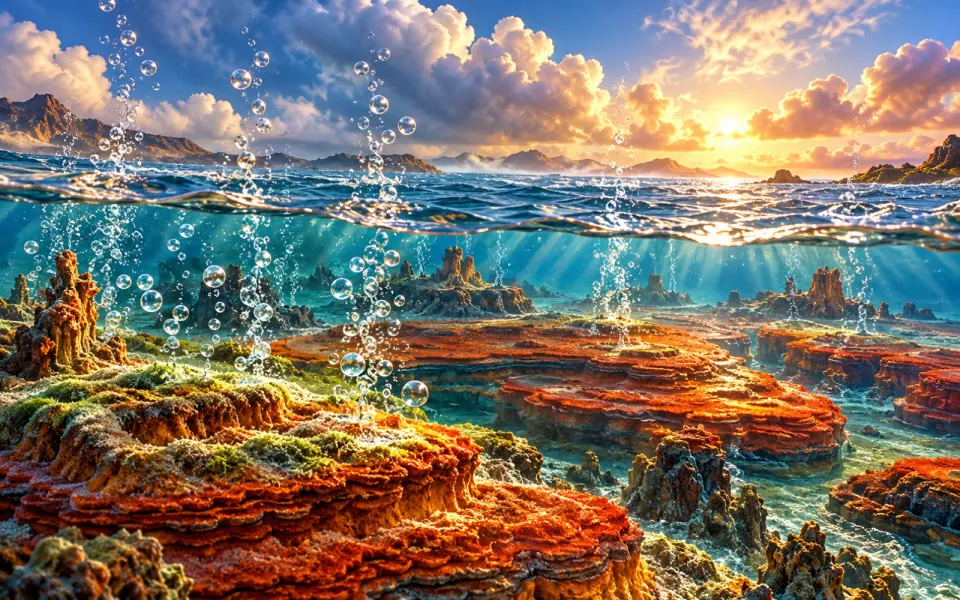
Cyanobacteria had been producing oxygen for hundreds of millions of years, but the air stayed without it. Where did it go? Oxygen is a very reactive gas: if there is something to combine with, it does. In the early seas there was a great deal of dissolved iron, brought by volcanoes and by hot springs on the seabed. As soon as oxygen was produced, it joined with the iron, which turned to rust and sank to the bottom of the sea as reddish minerals.
Layer after layer, over hundreds of millions of years, this process created huge deposits, which we now call banded iron formations: rocks with alternating dark red and grey stripes, with large deposits in Australia, Brazil, Canada and North America. They are among the main mines in the world and supply much of the iron used to make steel, cars and bridges. When the dissolved iron ran out, and the other gases and minerals that soaked up oxygen were also used up, the oxygen produced by the microbes began to stay free in the sea and then to rise into the air.
The evidence in the rocks
How do we know the air changed? The rocks tell us. Before 2.4 billion years ago we find minerals, such as pyrite and uraninite, which in river sands survive only in the absence of oxygen, because otherwise they would be used up in contact with the air. After that period they are no longer found. Instead “red beds” appear, red rocks on the dry land, coloured by the rust that forms when iron is exposed to the air. The traces of sulphur in the rocks also change, with a particular signature that disappears when the atmosphere becomes richer in oxygen.
A cooling world
The Great Oxidation Event had an unexpected effect on the climate. Before, the air contained a little methane, a very effective greenhouse gas, which helped keep the planet warm while the Sun was still weak. Oxygen destroys methane. With less methane, according to many scholars, the Earth cooled, and soon afterwards, between about 2.4 and 2.1 billion years ago, came the glaciations known as “Huronian”, after a region of Canada. Some scholars think the ice covered much of the planet, but the debate is open.
Meanwhile life was adapting. Many microbes that could not stand oxygen retreated to places it still did not reach: the seabed, the mud, hot springs, the gut of animals, which would appear much later. Other microbes, instead, learned to use it. Breathing oxygen lets you get far more energy from food than other methods, and this opened the way to bigger, more active and more complicated organisms.
How much oxygen there was then is not clear. Scientists think it was still a very small fraction of today's, and that the present level was reached in other phases, hundreds of millions of years later. This does not take away from the importance of the Great Oxidation Event: it was the first great transformation of the air caused by living things.
Why it happened
The main cause was the photosynthesis of cyanobacteria, which produced more and more oxygen. For a long time, however, the oxygen was used up by other processes: the reaction with iron dissolved in the sea, with volcanic gases and with newly formed rocks.
The turning point, scholars say, came when the amount of oxygen produced exceeded what these “consumers” could absorb. Why this happened just at that moment is still debated. Some hypotheses speak of changes in volcanoes, which gave off fewer gases that use up oxygen; others of a growth in cyanobacteria, or of more buried organic matter, which does not oxidise and leaves oxygen free.
It was probably a combination of factors, in which life and the geology of the planet interacted. That is why scientists speak of causes that are “still debated”.
What changed
An atmosphere rich in oxygen made possible, much later, the formation of the ozone layer. Ozone is a form of oxygen that absorbs the Sun's dangerous ultraviolet rays. When the layer was thick enough, life could leave the water and live on dry land without being harmed. Air with oxygen is also the reason why fire, rust and breathing exist today.
Breathing with oxygen gives far more energy than methods that do without it. This extra energy was one of the reasons that allowed complex cells to develop and, much later, animals, which use enormous amounts of energy to move, grow and think.
For humanity, the Great Oxidation Event left a gift: the banded iron formations. Almost all the iron we use for steel comes from those rocks. It also reminds us that living things can change a whole planet. Today it is we who are changing the air with the carbon dioxide we emit, in a much shorter time, and understanding how life changed the Earth in the past helps us understand what may happen now.
Key people and places
People
- Preston Cloud
- American geologist (1912–1991). He was among the first to argue that the oxygen in the air had been produced by life and to link it to the iron formations.
- Heinrich Holland
- American geochemist (1927–2012). In his 1984 book he described the history of oxygen in the air and the oceans.
- Ariel Anbar
- American geochemist. With a group of colleagues, in 2007 he found traces of small amounts of oxygen before the Great Oxidation Event (a result later debated).
Places
- Pilbara and Hamersley, Western Australia
- One of the largest regions of banded iron formations: much of the world's iron comes from here.
- Lake Superior, North America
- Around the lake there are great deposits of banded iron, which for more than a century fed the steelworks of the United States.
- Lake Huron, Canada
- The region gives its name to the Huronian glaciations, which came right after the Great Oxidation Event.
Good to know
- Today's air contains 21 per cent oxygen: if it had much more, say 30 per cent, fires would be far more violent and harder to put out.
- For microbes without oxygen the Great Oxidation Event was like a worldwide environmental crisis: some scientists have called it the first case of “pollution” in history, caused by living things.
- The red and grey banded rocks are so beautiful that in some parts of Australia they are cut and polished like ornamental stones.
- Our blood is red because of the iron in haemoglobin, the molecule that carries oxygen: iron and oxygen are a very old pair.
- Each cyanobacterium produces very little oxygen, but billions of billions of microbes, over millions of years, were enough to change the air of the whole planet.
Find out more
- Wikipedia, “Great Oxidation Event” en.wikipedia.org
- Wikipedia, “History of Earth” en.wikipedia.org
- University of California Museum of Paleontology (Berkeley), “Cyanobacteria” ucmp.berkeley.edu
- Wikipedia, “Banded iron formation” en.wikipedia.org
Related events
- Cyanobacteria and photosynthesisabout 2.7 billion years ago · The Earth before usThe oxygen was produced by cyanobacteria through photosynthesis.
- The first complex cellsabout 1.8 billion years ago · The Earth before usWith more energy from oxygen, complex cells could develop.
- The first plants on landabout 475 million years ago · The Earth before usThanks to air with oxygen and ozone, life could live on dry land.
- The Paris Agreement on climate2015 · TodayToday it is we who are changing the air with our emissions: the Paris Agreement tries to limit warming.
Before and after, in the era “The Earth before us”
Event 11 of 25
 BeforeThe Big Bangabout 13.8 billion years ago
 BeforeThe first starsabout 13.5 billion years ago
 BeforeBirth of the Milky Wayabout 13 billion years ago
 BeforeFormation of the Solar Systemabout 4.6 billion years ago
 BeforeBirth of the Earthabout 4.5 billion years ago
 BeforeFormation of the Moonabout 4.5 billion years ago
 BeforeThe oldest pieces of Earthabout 4.4 billion years ago
 BeforeThe first oceansabout 4.3 billion years ago
 BeforeThe first life on Earthabout 3.5 billion years ago
 BeforeCyanobacteria and photosynthesisabout 2.7 billion years ago
- You are hereThe Great Oxidation Eventabout 2.4 billion years ago
 AfterThe first complex cellsabout 1.8 billion years ago
 AfterThe first many-celled living thingsabout 1 billion years ago
 AfterThe Ediacaran creaturesabout 555 million years ago
 AfterThe Cambrian explosionabout 539 million years ago
 AfterThe first plants on landabout 475 million years ago
 AfterThe first fish with jawsabout 440 million years ago
 AfterThe first insectsabout 400 million years ago
 AfterThe first amphibiansabout 375 million years ago
 AfterCarboniferous forestsabout 320 million years ago
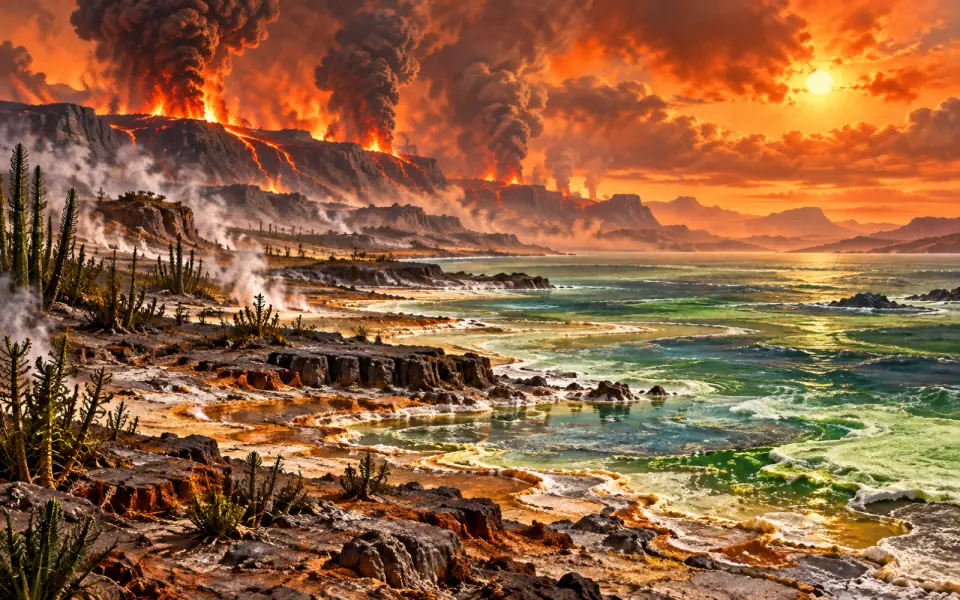 AfterThe great Permian extinctionabout 252 million years ago
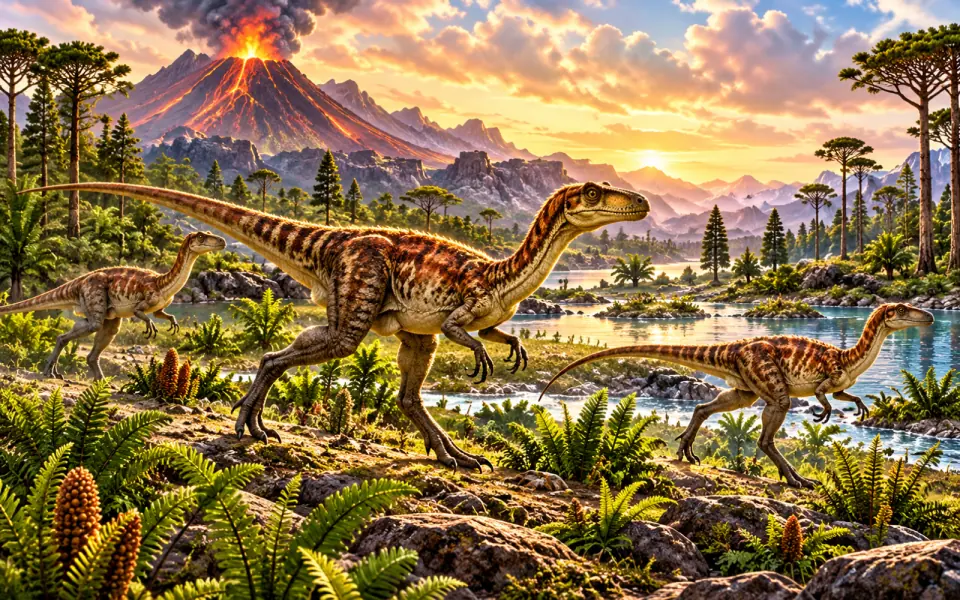 AfterThe first dinosaursabout 230 million years ago
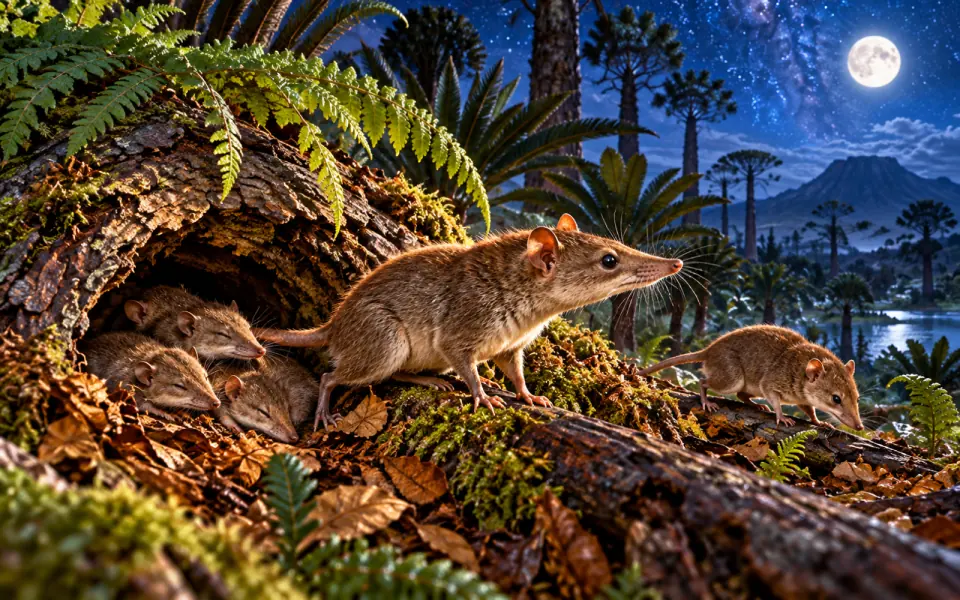 AfterThe first mammalsabout 225 million years ago
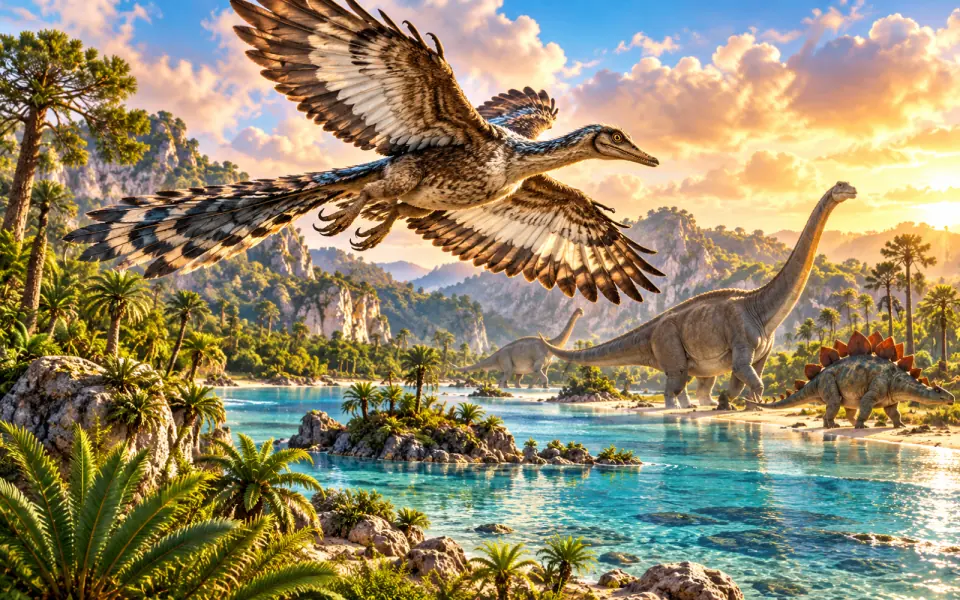 AfterThe first birdsabout 150 million years ago
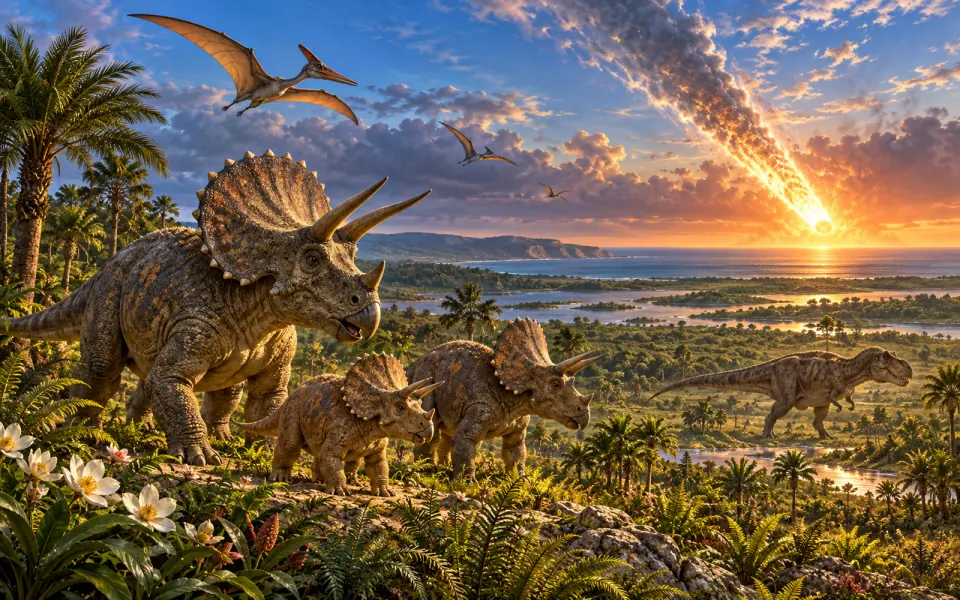 AfterExtinction of the non-avian dinosaursabout 66 million years ago
Listen / Read next
- Music to read by: Cinematic JourneyEpic film-style music, no lyrics, by Ciro Simone IrmiciSpotifyYouTube Music
Meanwhile, elsewhere in the world
Other events of the era “The Earth before us”
- The Big Bang
- The first stars
- Birth of the Milky Way
- Formation of the Solar System
- Birth of the Earth
- Formation of the Moon
- The oldest pieces of Earth
- The first oceans
- The first life on Earth
- Cyanobacteria and photosynthesis
- The first complex cells
- The first many-celled living things
- The Ediacaran creatures
- The Cambrian explosion
- The first plants on land
- The first fish with jaws
- The first insects
- The first amphibians
- Carboniferous forests
- The great Permian extinction
- The first dinosaurs
- The first mammals
- The first birds
- Extinction of the non-avian dinosaurs
