The first stars
about 13.5 billion years ago The young Universe
In short
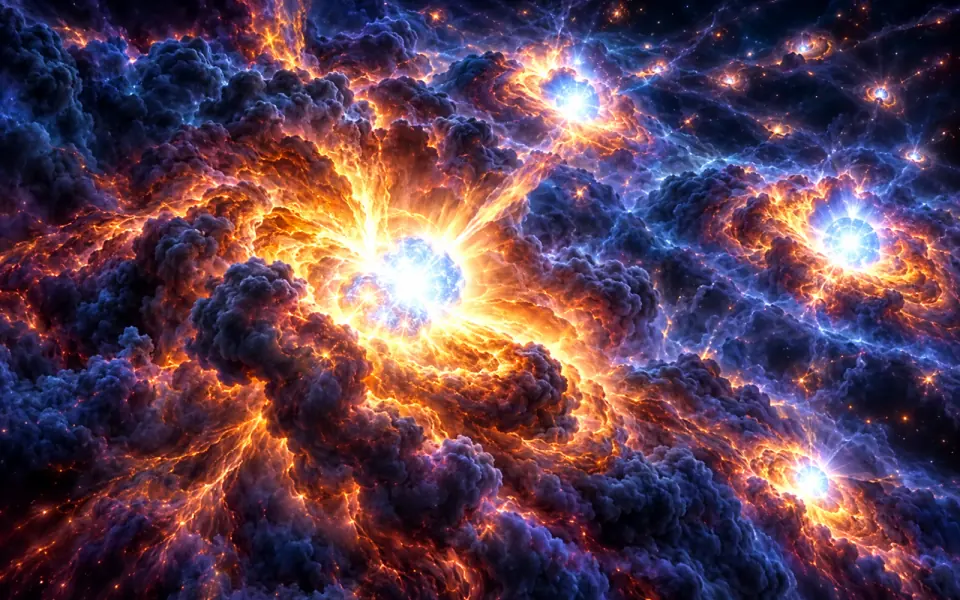
After the first few hundred million years, enormous clouds of hydrogen and helium collapsed under gravity. In their cores the first stars lit up, probably very massive and short-lived. It was these stars that made and scattered many of the elements heavier than helium.
Why it matters Without the first stars, the elements needed for planets and living things would never have formed.
Study card about 5 minutes of reading
The story
Darkness after the light
After the Big Bang, and after the light that was set free 380,000 years later, the Universe went dark. There were no stars yet. There were only enormous clouds of hydrogen and helium, almost without light, drifting through space. Astronomers call this period the “dark ages”, and it is estimated to have lasted about 200 million years. Then, in a way we are only now starting to observe, the first light switched on again.
How a star is lit
A star is born from gravity. In a cloud of gas there are patches that are just slightly denser than the rest. These patches pull in a little more gas, become heavier, and pull in even more, in a process that feeds itself. The cloud shrinks and heats up. When the temperature at the centre rises above ten million degrees, hydrogen atoms start to fuse together and make helium. This fusion releases an enormous amount of energy as light and heat. From that moment the star is lit, and its outward push balances the weight that would otherwise make it collapse.
The first stars formed in clouds made almost entirely of hydrogen and helium. Without heavier elements, the gas found it harder to cool down, and that is why scientists think the first stars were much bigger than the Sun: perhaps tens or hundreds of times heavier. They are called “Population III” stars. Nobody has seen them directly yet: they are ideas built from calculations and computer simulations, and astronomers hope to catch their light with the James Webb Space Telescope.
A short, bright life
The biggest stars use up their fuel quickly. While the Sun lives for about ten billion years, a giant star may last only a few million years. In the end its core can no longer hold up and collapses, and the outer part is hurled away in an explosion called a supernova. For a short time a supernova can shine as brightly as a whole galaxy.
This is where the most important thing in this story happens. Inside stars, and in their explosions, light atoms fuse into heavier ones: carbon, oxygen, nitrogen, silicon, iron. When a star explodes, these elements are scattered through space. The astronomer Carl Sagan used to say that we are made of “star stuff”, and he was right: the calcium in your bones, the iron in your blood and the oxygen you breathe were made inside stars that died long before the Sun was born.
The heaviest elements also have a stellar origin, but not always from a supernova. In 2017 gravitational-wave detectors and telescopes observed for the first time the collision of two neutron stars, and saw that a great deal of gold forms in such an event. Scientists think that some of the gold and other precious metals is born in just this way.
When were they really born?
We do not know exactly when the first star lit up, because its light is extremely faint and extremely far away. Estimates put it somewhere between 50 million and about a billion years after the Big Bang; the most widely used models point to around 100–200 million years. Astronomers call this stage “cosmic dawn”.
The Webb telescope, launched at the end of 2021, observes infrared light, which arrives more “stretched” after the enormous distances, and it has already found surprisingly bright, ancient galaxies, born about 300 million years after the Big Bang. The better the observations get, the more the picture changes: that is why the date on the timeline is approximate.
The first stars had another job, too: their ultraviolet light heated and “ionised” the gas around them, that is, it tore electrons away from atoms. In this way the Universe, which had been a fog opaque to ultraviolet light, became transparent. This period is called “reionisation” and it ended within the first billion years or so.
Why it happened
The first stars were born because gravity works on every difference in density. Right after the Big Bang the Universe was almost smooth, but not quite: there were slightly denser patches, which can be seen as traces in the cosmic microwave background. As time went by, gravity made them stand out more and more.
Astronomers think gravity was not working alone: there also seems to be dark matter, which we cannot see but which makes itself felt through its weight. Simulations show that dark matter was the first to form a network of clumps and filaments, and ordinary gas fell into these clumps, where it gathered and lit up into stars.
When the gas had gathered enough and had been heated by its fall, the fusion of hydrogen began. It is the same process that makes the Sun shine today.
What changed
With the first stars the dark ages ended and the Universe had light again. From those first groups of stars came the first galaxies, great systems in which billions of stars travel together, held by gravity.
The most important consequence for us is chemical. When the first stars died, they enriched the gas with heavy elements. The stars born afterwards, including the Sun, formed from gas that had already been “polluted” with these elements, and rocky planets could be born around them. Without this step there would have been no Earth, no seas, no air and no life. We can say that every atom in us other than hydrogen and helium has passed through a star.
Today astronomers study the first stars to understand when galaxies formed and how quickly the Universe filled up with elements. These are open questions, and Webb has already shown that the young Universe is richer in galaxies than people had thought.
Key people and places
People
- Carl Sagan
- American astronomer and science communicator (1934–1996). He made famous the idea that we are made of “star stuff”.
- Hans Bethe
- German-American physicist (1906–2005). In 1938–39 he explained how stars get their energy from the fusion of hydrogen; Nobel Prize in 1967.
- Fred Hoyle
- English astronomer (1915–2001). With others, in the 1950s, he showed that heavy elements are formed inside stars.
Places
- The gas clouds of the young Universe
- The first stars were born in clouds of hydrogen and helium, in the darkness of the Universe more than 13 billion years ago.
- Lagrange point L2
- A position in space about 1.5 million kilometres from the Earth, where the Webb telescope has been working since 2022, searching for the light of the first galaxies.
Good to know
- The Webb telescope has a 6.5-metre mirror made of 18 hexagonal segments, coated in gold to reflect infrared light well.
- The Sun is a star from a much later generation than the first ones: it contains traces of elements made in older stars.
- The bigger a star is, the shorter its life: a giant may last only a few million years, while small stars, the red dwarfs, can shine for trillions of years, according to theoretical estimates.
- In 2017 the collision of two neutron stars, about 130 million light-years from us, was observed both with gravitational waves and with light: since then we know that it produces a great deal of gold.
- The gas of that time contained no oxygen and no carbon: in that world there could have been neither rocky planets nor water.
Find out more
- NASA, “Stars” science.nasa.gov
- Wikipedia, “Stellar population” en.wikipedia.org
- NASA, the James Webb Space Telescope (in English) science.nasa.gov
- Wikipedia, “Big Bang” en.wikipedia.org
Related events
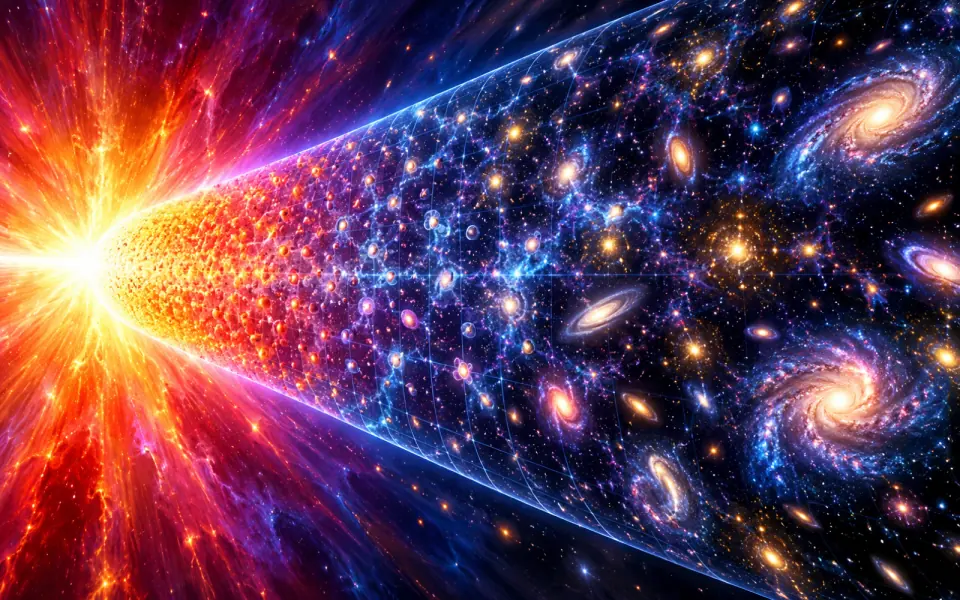
- The Big Bangabout 13.8 billion years ago · The Earth before usThe first stars lit up in the hydrogen and helium gas that came out of the Big Bang.
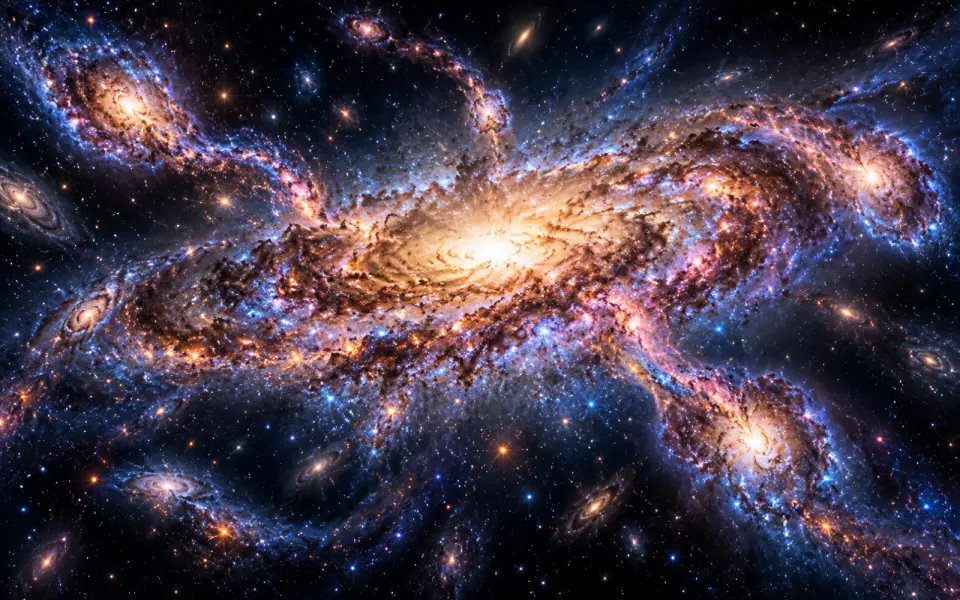
- Birth of the Milky Wayabout 13 billion years ago · The Earth before usFrom groups of stars and gas joined together, galaxies were born, such as the Milky Way.
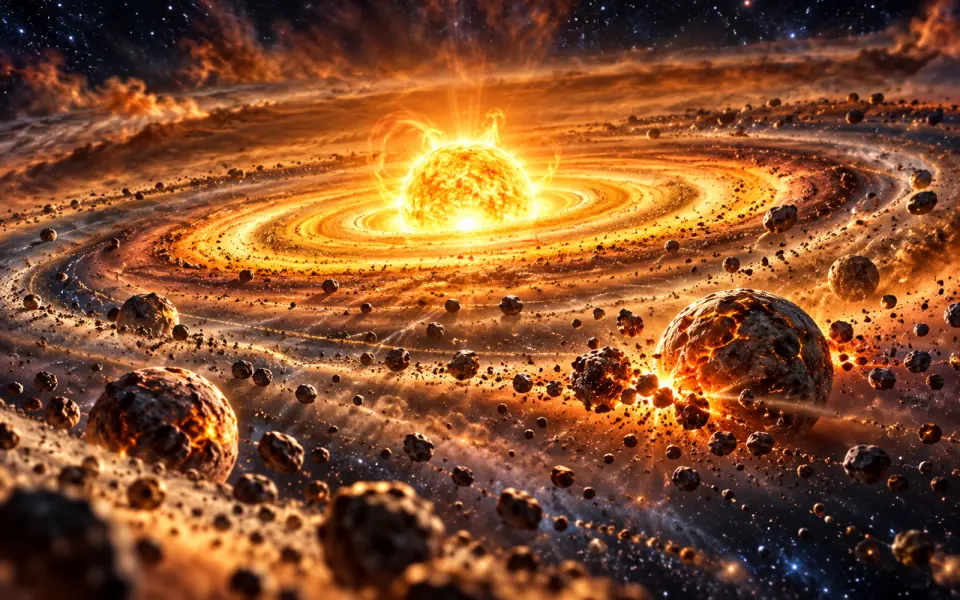
- Formation of the Solar Systemabout 4.6 billion years ago · The Earth before usThe Sun was born much later, from gas already enriched with elements made in stars.
- The Webb telescope starts observing2022 · TodayThe Webb telescope is searching for the light of the first stars and the first galaxies.
- Galileo turns his telescope to the sky1609 · Early modern ageWith Galileo's telescope came the discovery of stars that cannot be seen with the naked eye.
Before and after, in the era “The Earth before us”
Event 2 of 25
 BeforeThe Big Bangabout 13.8 billion years ago
- You are hereThe first starsabout 13.5 billion years ago
 AfterBirth of the Milky Wayabout 13 billion years ago
 AfterFormation of the Solar Systemabout 4.6 billion years ago
 AfterBirth of the Earthabout 4.5 billion years ago
 AfterFormation of the Moonabout 4.5 billion years ago
 AfterThe oldest pieces of Earthabout 4.4 billion years ago
 AfterThe first oceansabout 4.3 billion years ago
 AfterThe first life on Earthabout 3.5 billion years ago
 AfterCyanobacteria and photosynthesisabout 2.7 billion years ago
 AfterThe Great Oxidation Eventabout 2.4 billion years ago
 AfterThe first complex cellsabout 1.8 billion years ago
 AfterThe first many-celled living thingsabout 1 billion years ago
 AfterThe Ediacaran creaturesabout 555 million years ago
 AfterThe Cambrian explosionabout 539 million years ago
 AfterThe first plants on landabout 475 million years ago
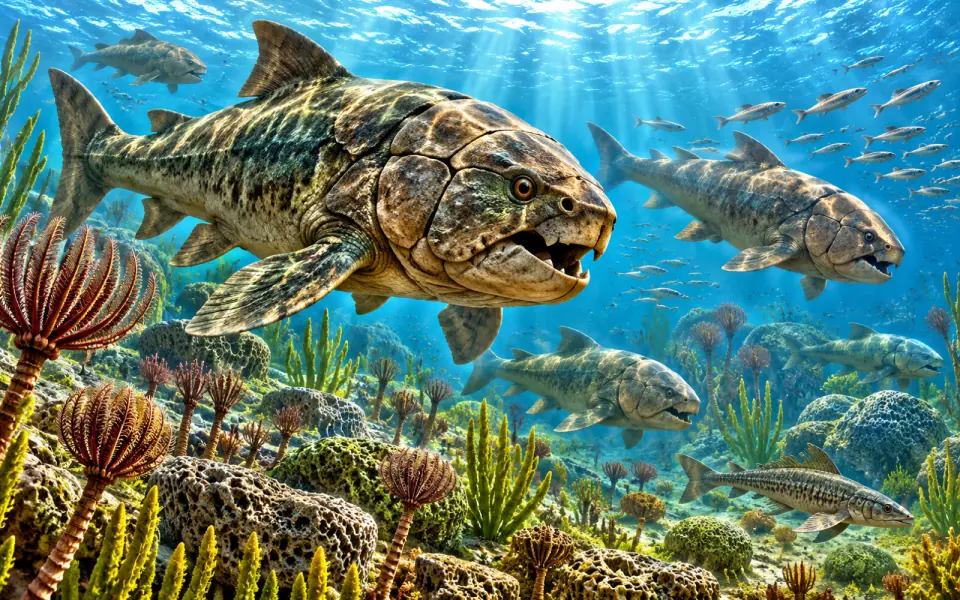 AfterThe first fish with jawsabout 440 million years ago
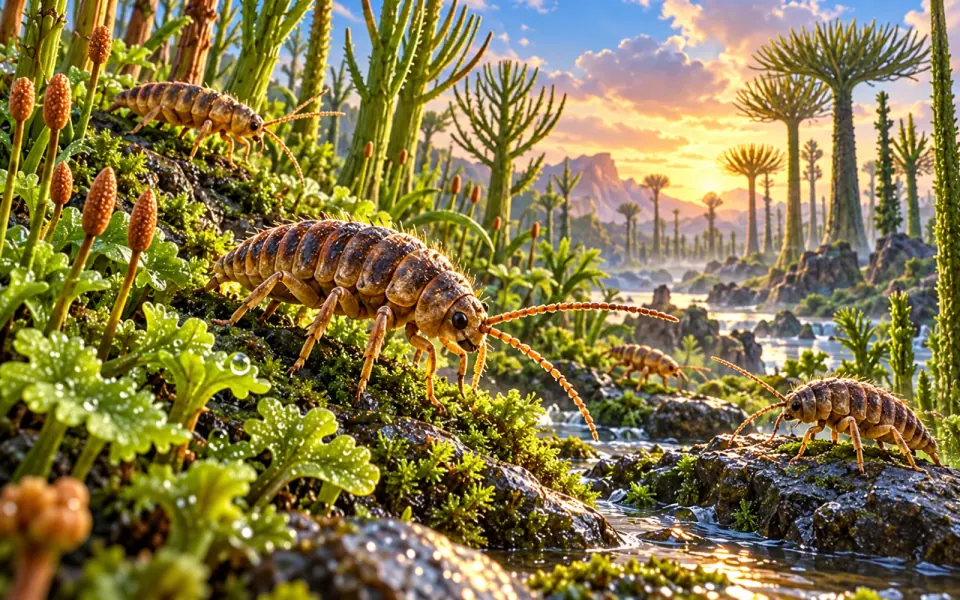 AfterThe first insectsabout 400 million years ago
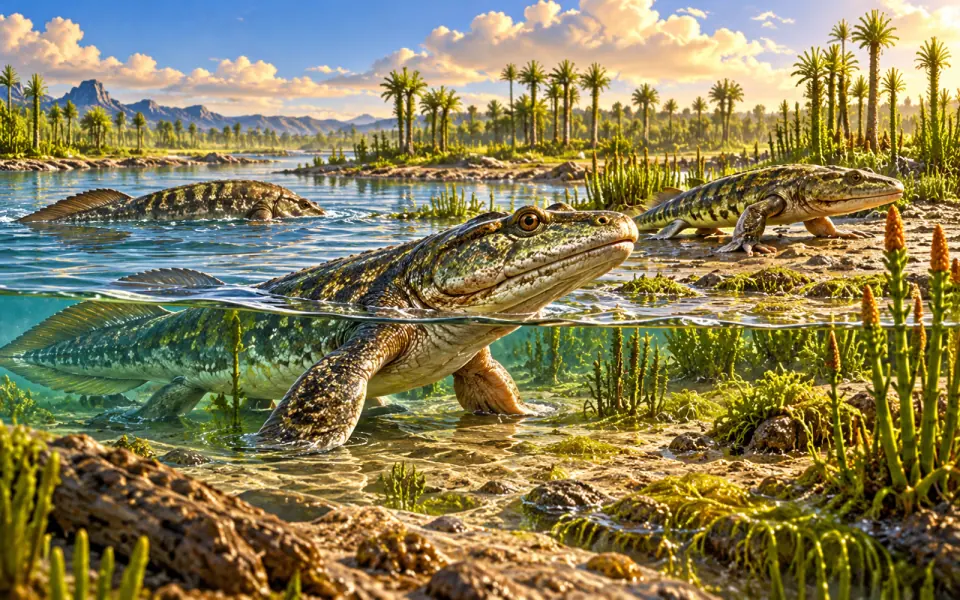 AfterThe first amphibiansabout 375 million years ago
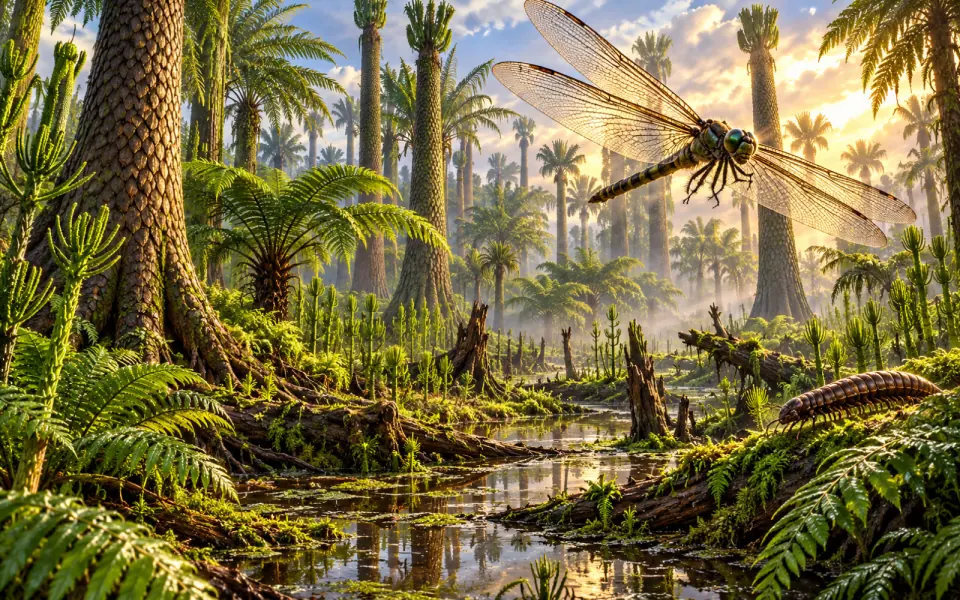 AfterCarboniferous forestsabout 320 million years ago
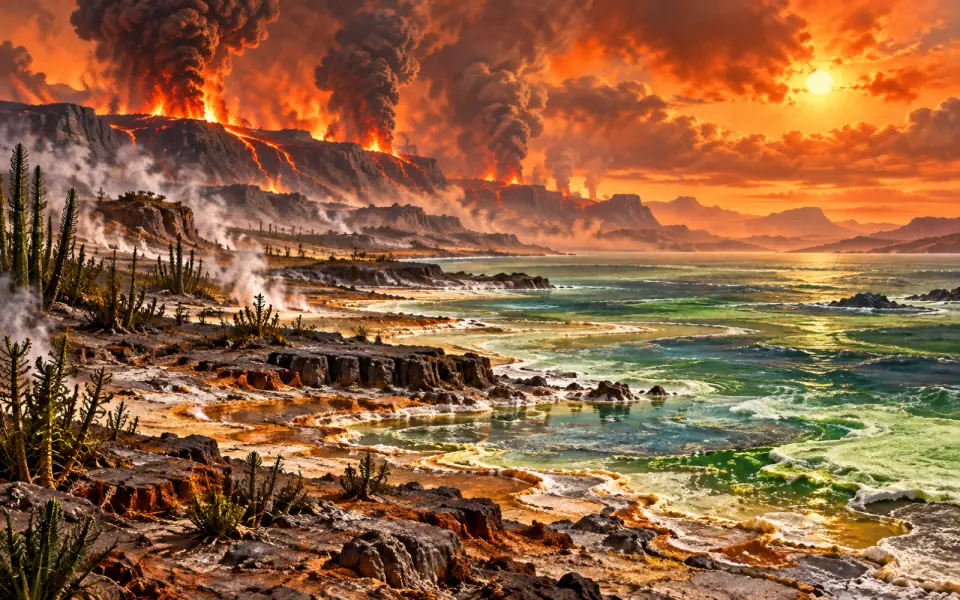 AfterThe great Permian extinctionabout 252 million years ago
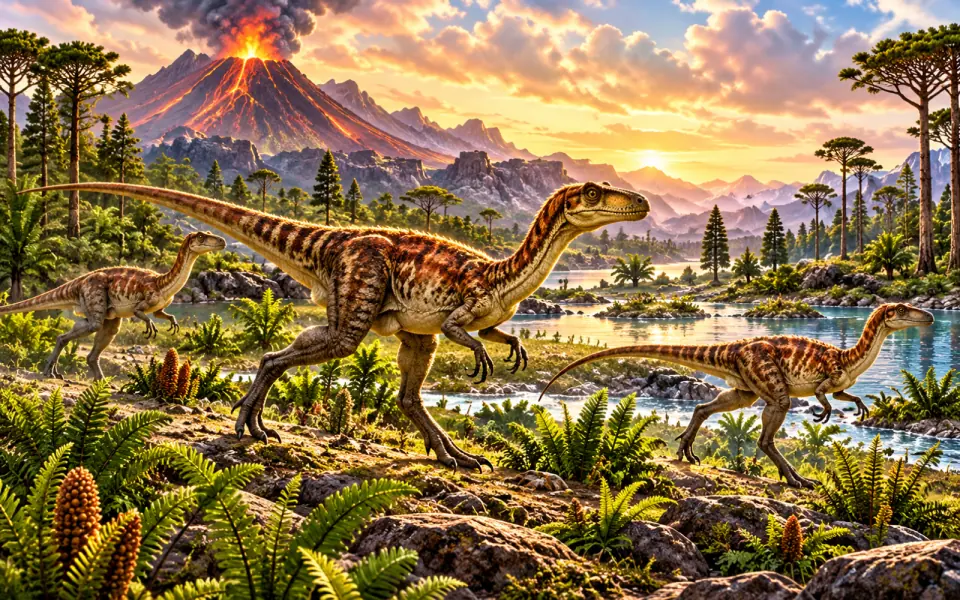 AfterThe first dinosaursabout 230 million years ago
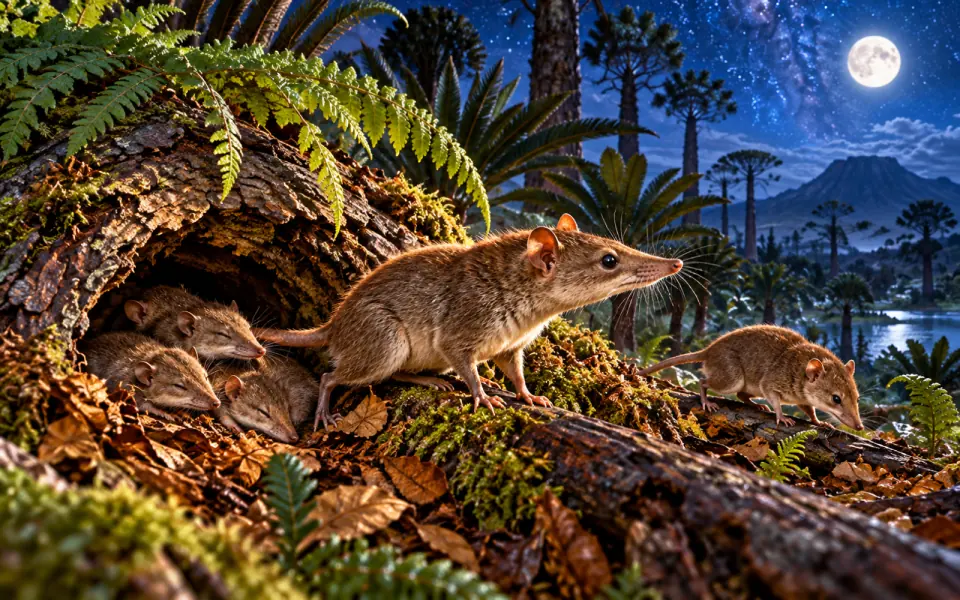 AfterThe first mammalsabout 225 million years ago
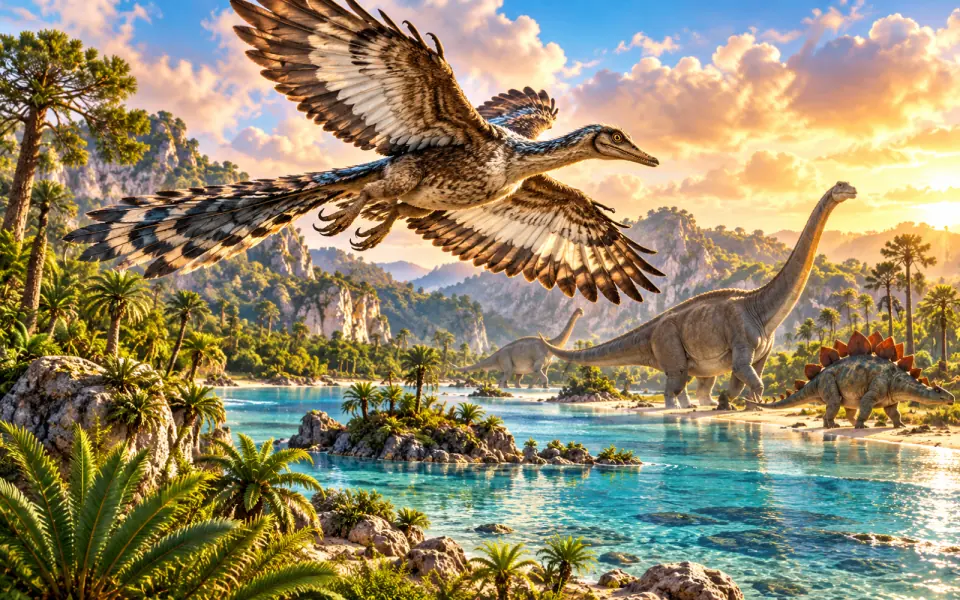 AfterThe first birdsabout 150 million years ago
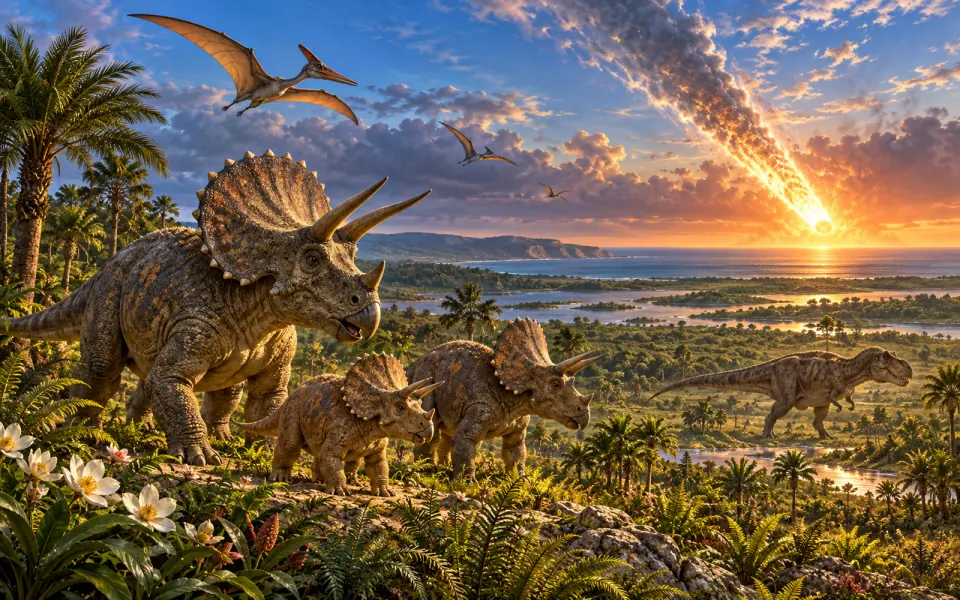 AfterExtinction of the non-avian dinosaursabout 66 million years ago
Listen / Read next
- Music to read by: Cinematic JourneyEpic film-style music, no lyrics, by Ciro Simone IrmiciSpotifyYouTube Music
Other events of the era “The Earth before us”
- The Big Bang
- Birth of the Milky Way
- Formation of the Solar System
- Birth of the Earth
- Formation of the Moon
- The oldest pieces of Earth
- The first oceans
- The first life on Earth
- Cyanobacteria and photosynthesis
- The Great Oxidation Event
- The first complex cells
- The first many-celled living things
- The Ediacaran creatures
- The Cambrian explosion
- The first plants on land
- The first fish with jaws
- The first insects
- The first amphibians
- Carboniferous forests
- The great Permian extinction
- The first dinosaurs
- The first mammals
- The first birds
- Extinction of the non-avian dinosaurs
