Formation of the Moon
about 4.5 billion years ago The Earth and the Moon
In short
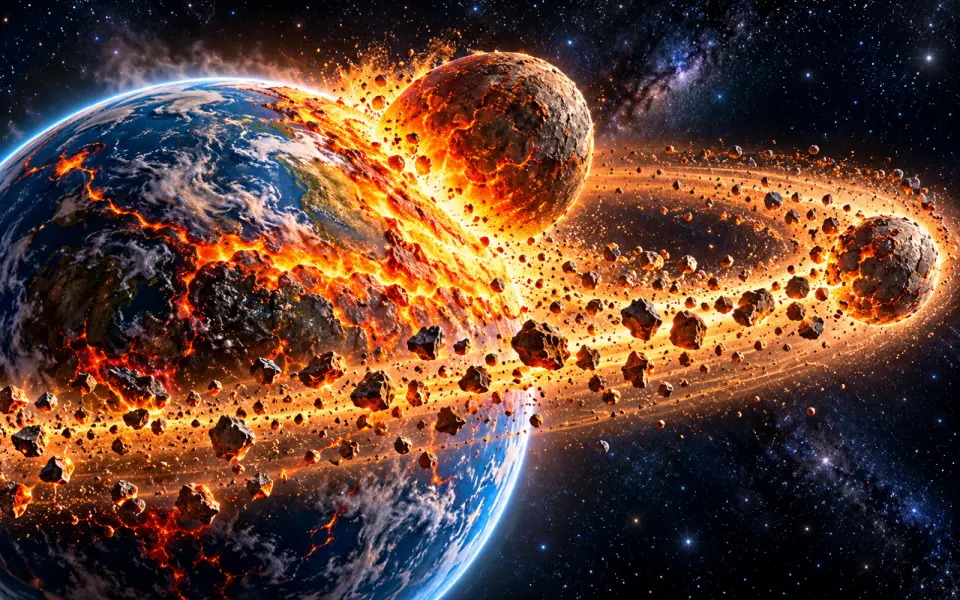
According to the most widely accepted idea, a body almost as big as Mars crashed into the young Earth. A great deal of material was flung into orbit and came together to form the Moon. Moon rocks brought back by astronauts have helped scientists compare what the two worlds are made of.
Why it matters The Moon affects the tides and has kept the Earth company for almost all of its history.
Source: NASA, “Moon Formation”
Study card about 5 minutes of reading
The story
The Moon: where does it come from?
When you look at it, the Moon always seems the same. Yet for a long time scientists wondered where it came from, and there were several possible answers. Perhaps it had split off from the Earth, still soft, because the Earth was spinning too fast. Perhaps it was a body passing by that was captured by gravity. Or perhaps it had formed next to the Earth, from the same material. Each of these ideas had a flaw, and none explained everything.
The Apollo missions changed everything. Between 1969 and 1972 American astronauts brought back to Earth about 382 kilograms of Moon rocks and dust. Analysing them showed that the Moon is made of materials very like those of the Earth's mantle, with identical amounts of certain kinds of oxygen, but it has very little iron and almost no water or other substances that evaporate easily. It was as if it were made of Earth material that had been baked for a long time and was left without its lighter parts.
The giant impact
The hypothesis that almost all scholars now consider the best was put forward in the mid-1970s, independently, by two groups of American astronomers: William Hartmann and Donald Davis on one side, Alastair Cameron and William Ward on the other. It is called the “giant-impact hypothesis”. It says that when the Earth was still very young, a body about the size of Mars, named Theia (in Greek myth the mother of the Moon), hit it with a glancing blow at high speed.
In the violent collision, a large part of Theia and part of the Earth's mantle were melted and hurled into space. The material, partly vaporised, formed a disc around the Earth, and in a short time, perhaps within a few years or a few centuries, the pieces gathered into a single body, the Moon. Theia's heavier iron core, instead, was mostly absorbed by the Earth. This explains why the Moon has so little iron.
Right after the impact the Moon was only a few tens of thousands of kilometres from the Earth, much closer than today, and the young Earth spun in a few hours: a day may have lasted only five or six hours. Since then the Moon has moved away. We know this precisely because the Apollo astronauts left special mirrors on the lunar surface. By pointing a laser from Earth and measuring the time it takes to come back, we have seen that the Moon is moving away by about 3.8 centimetres a year. That is roughly the speed at which fingernails grow.
The questions still open
The hypothesis is not a certainty. For many years it had a problem: if the Moon is made largely of Theia's material, why is it so like the Earth? The material of a body born in another part of the Solar System should be different. Some scholars think Theia was born close to the Earth and so was similar; others suggest more violent impacts, with more mixing. In 2023 a study suggested that two enormous dense zones in the Earth's mantle, under Africa and under the Pacific Ocean, are remains of Theia, but the matter is debated.
The date is approximate too. The oldest Moon rocks are about 4.4–4.5 billion years old, and estimates for the impact give something between 4.43 and 4.51 billion years ago. We do not know the exact moment, but we know that it happened very early, a few tens of millions of years after the Earth was born.
Why it happened
In the early days of the Solar System there were a great many bodies orbiting the Sun, of all sizes, and close encounters were frequent. The rocky planets grew in just this way: through collisions, some of them very big. That is why scientists consider it normal that a body as big as Mars hit the young Earth.
Computer simulations have shown that a glancing impact, at the right speed and angle, can throw enough material into orbit to form the Moon. This is indirect evidence, but it fits with the rocks brought back by the astronauts, with the Moon's composition and with the fact that it has a very small iron core.
Not all the details fit yet, and so every new discovery, a new Moon rock or a new simulation, may change the story.
What changed
The Moon has left a deep mark on the Earth. Its gravity lifts the waters of the seas twice a day and produces the tides, which have shaped the coasts. According to some scholars the pools left by the tides may have helped life to appear and evolve near the shores, but that is a hypothesis.
The Moon also helps to keep the tilt of the Earth's axis steady, so that it varies only a little, between about 22 and 24.5 degrees. This stability, studied by the French astronomer Jacques Laskar in 1993, keeps the seasons regular. Without a large Moon, the axis might wobble far more and the climate might change violently.
For human beings the Moon has been a calendar, a guide for sailors and a source of myths and poetry. In 1969 it became the first world, besides the Earth, on which human beings landed. Today new missions are preparing to go back, and Moon rocks, which preserve the craters of the impacts of the first billions of years, remain an archive of the history of the Solar System, more intact than the Earth's.
Key people and places
People
- William Hartmann and Donald Davis
- American astronomers who in 1975 suggested that the Moon formed after a collision between the Earth and a large body.
- Alastair Cameron and William Ward
- American astronomers who in 1976 developed the same idea with the first calculations.
- The Apollo astronauts
- Twelve astronauts walked on the Moon between 1969 and 1972 and brought home 382 kilograms of samples.
- Jacques Laskar
- French astronomer. In 1993 he showed that the Moon stabilises the tilt of the Earth's axis.
Places
- Sea of Tranquility, Moon
- The large dark plain where Apollo 11 landed in July 1969, the first mission with people on the Moon.
- South Pole–Aitken basin, Moon
- One of the largest and oldest craters in the Solar System, about 2,500 kilometres across, on the far side of the Moon.
- Orbit around the Earth
- Right after the impact the Moon was a few tens of thousands of kilometres away; today it is about 384,000.
Good to know
- The Moon has a diameter of about 3,475 kilometres, more than a quarter of the Earth's: among the rocky planets none has a moon so large in proportion.
- From the Earth we always see the same face of the Moon, because it takes as long to turn once on its axis as to go once around the Earth.
- The Apollo astronauts left laser reflectors on the Moon, and some observatories still use them today to measure the distance to the Moon to within a few millimetres.
- Moon dust is sharp and sticky: it clung to the spacesuits and caused problems for the astronauts.
- One day, a very long time from now, the Moon will be too far away to make total eclipses of the Sun: they are possible today because the Sun is 400 times bigger than the Moon but also about 400 times further away.
Find out more
- NASA, “Moon” science.nasa.gov
- NASA, how the Moon formed (in English) science.nasa.gov
- Wikipedia, “Moon” en.wikipedia.org
- NASA, “Apollo 11” nasa.gov
Related events
- Birth of the Earthabout 4.5 billion years ago · The Earth before usThe Moon was born from the impact on the young Earth.
- The Moon landing1969 · TodayIn 1969 human beings reached the Moon.
- Galileo turns his telescope to the sky1609 · Early modern ageGalileo was the first to observe the craters and mountains of the Moon through a telescope.
- The first oceansabout 4.3 billion years ago · The Earth before usWhen the planet cooled, the Moon began to move the waters of the new oceans.
Before and after, in the era “The Earth before us”
Event 6 of 25
 BeforeThe Big Bangabout 13.8 billion years ago
 BeforeThe first starsabout 13.5 billion years ago
 BeforeBirth of the Milky Wayabout 13 billion years ago
 BeforeFormation of the Solar Systemabout 4.6 billion years ago
 BeforeBirth of the Earthabout 4.5 billion years ago
- You are hereFormation of the Moonabout 4.5 billion years ago
 AfterThe oldest pieces of Earthabout 4.4 billion years ago
 AfterThe first oceansabout 4.3 billion years ago
 AfterThe first life on Earthabout 3.5 billion years ago
 AfterCyanobacteria and photosynthesisabout 2.7 billion years ago
 AfterThe Great Oxidation Eventabout 2.4 billion years ago
 AfterThe first complex cellsabout 1.8 billion years ago
 AfterThe first many-celled living thingsabout 1 billion years ago
 AfterThe Ediacaran creaturesabout 555 million years ago
 AfterThe Cambrian explosionabout 539 million years ago
 AfterThe first plants on landabout 475 million years ago
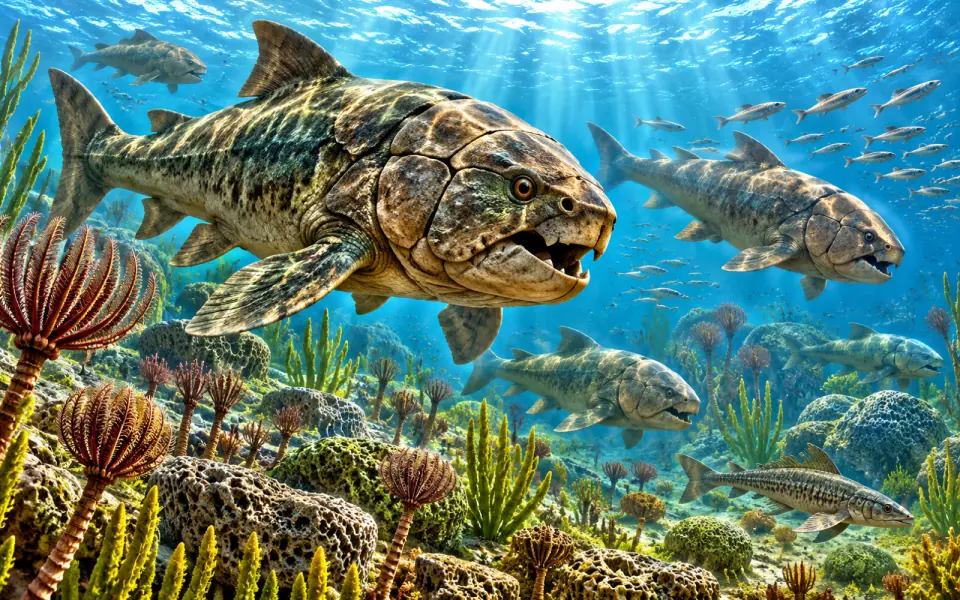 AfterThe first fish with jawsabout 440 million years ago
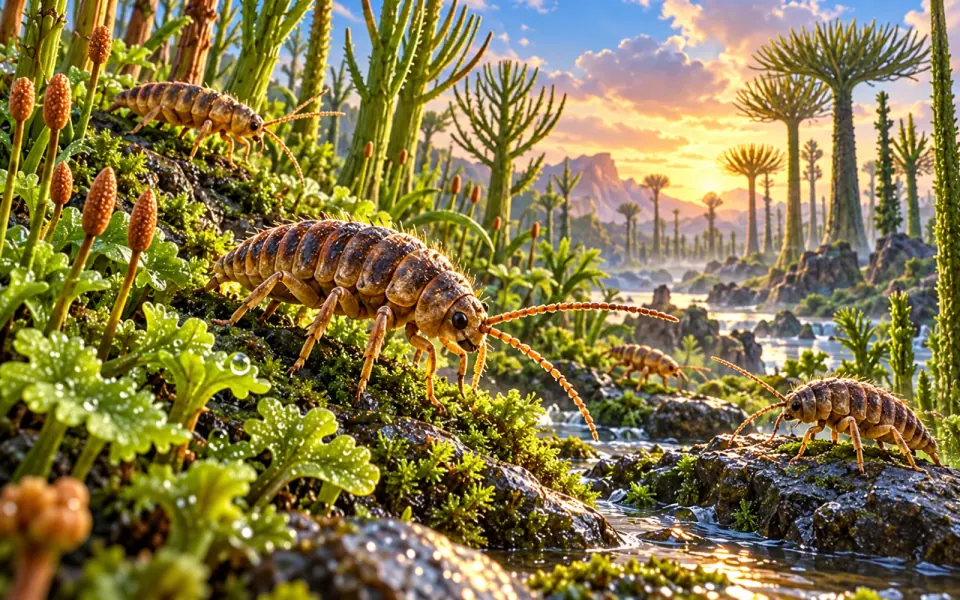 AfterThe first insectsabout 400 million years ago
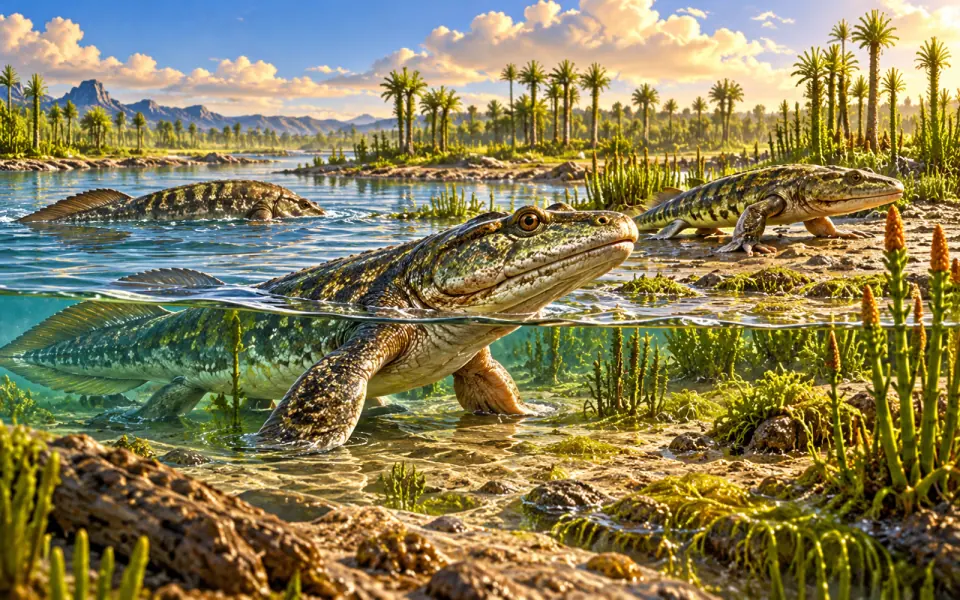 AfterThe first amphibiansabout 375 million years ago
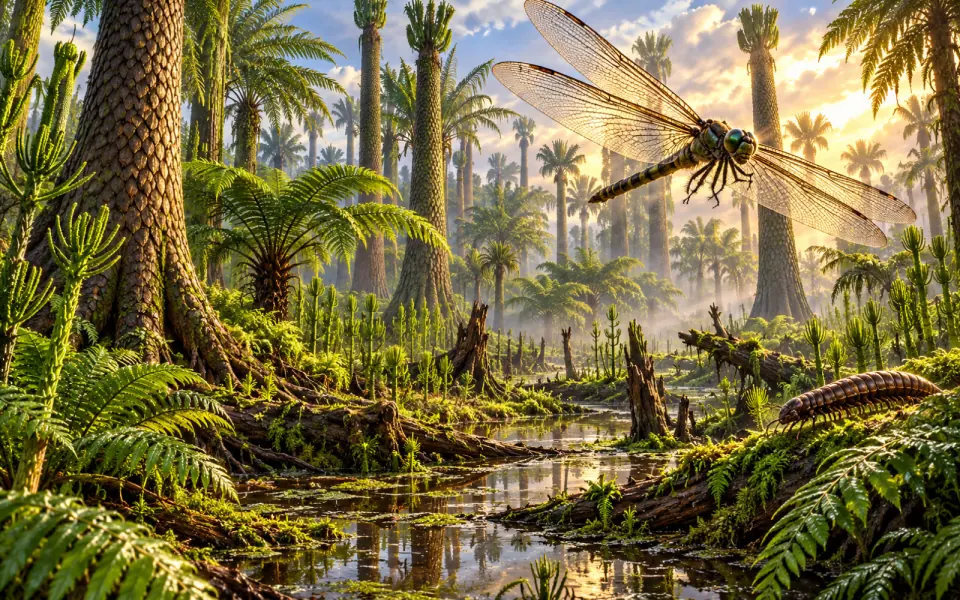 AfterCarboniferous forestsabout 320 million years ago
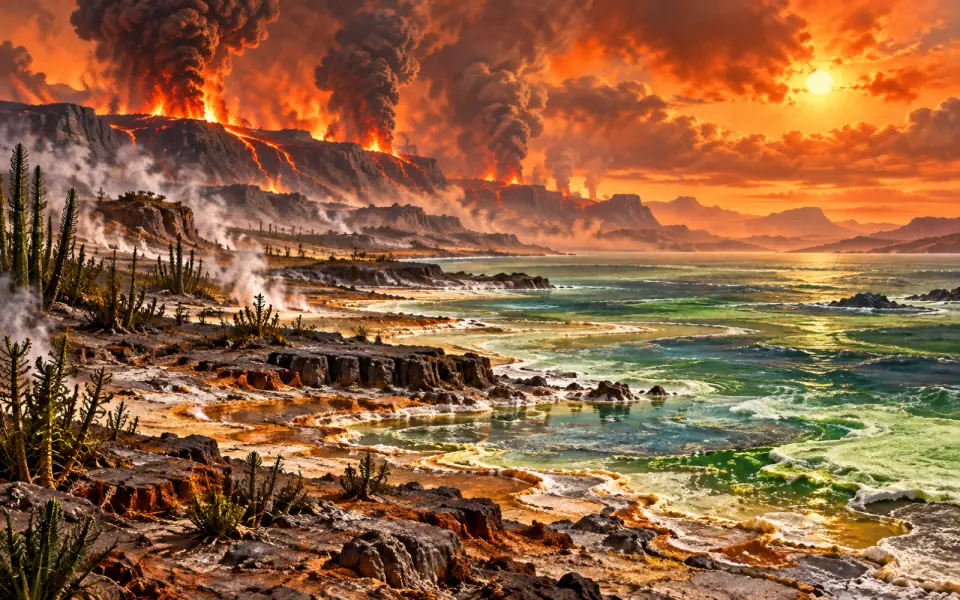 AfterThe great Permian extinctionabout 252 million years ago
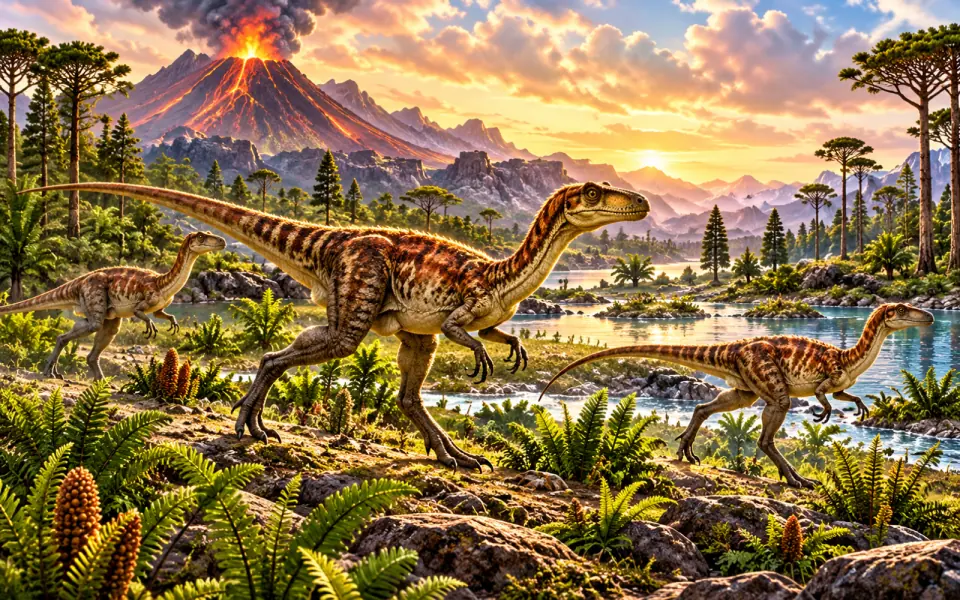 AfterThe first dinosaursabout 230 million years ago
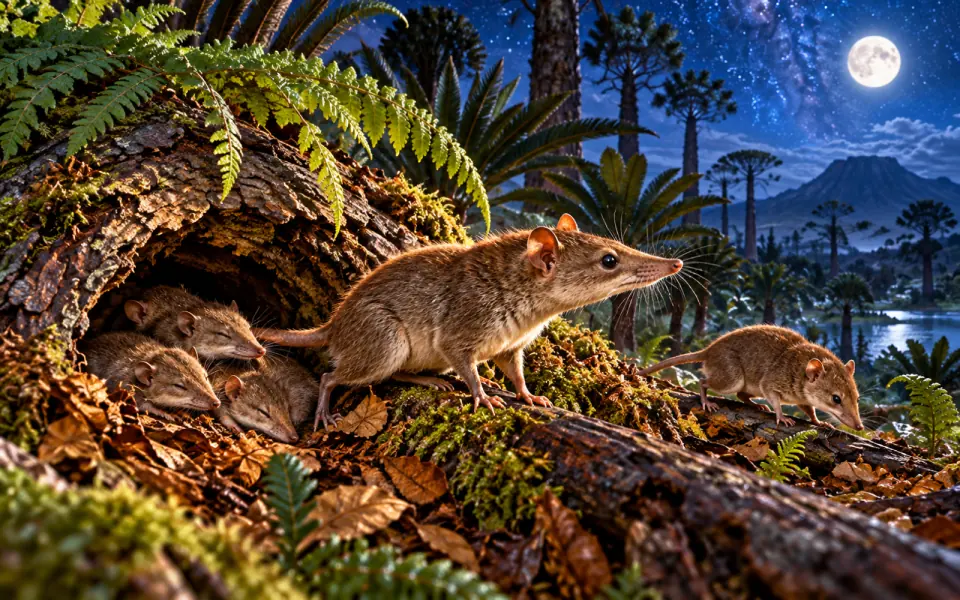 AfterThe first mammalsabout 225 million years ago
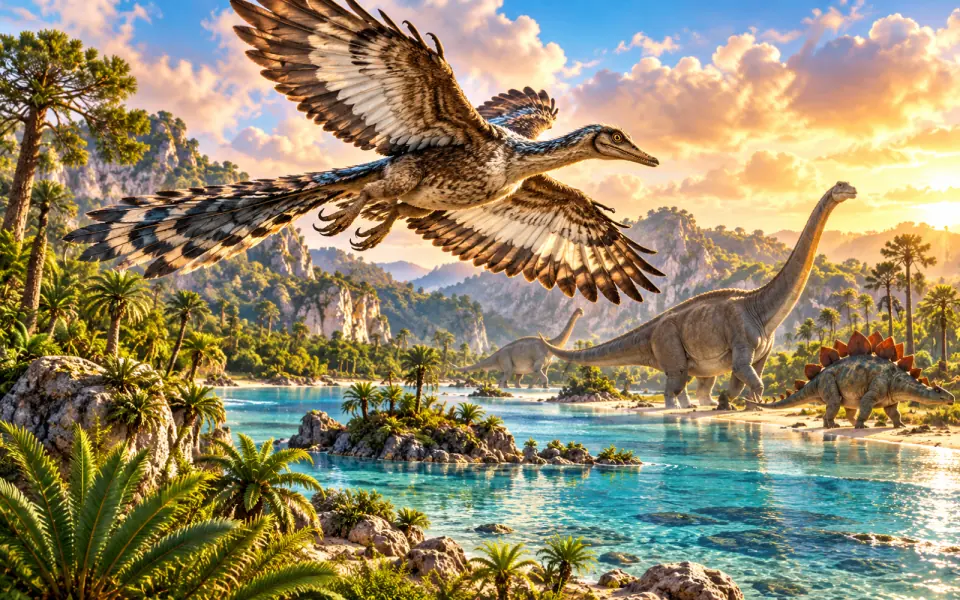 AfterThe first birdsabout 150 million years ago
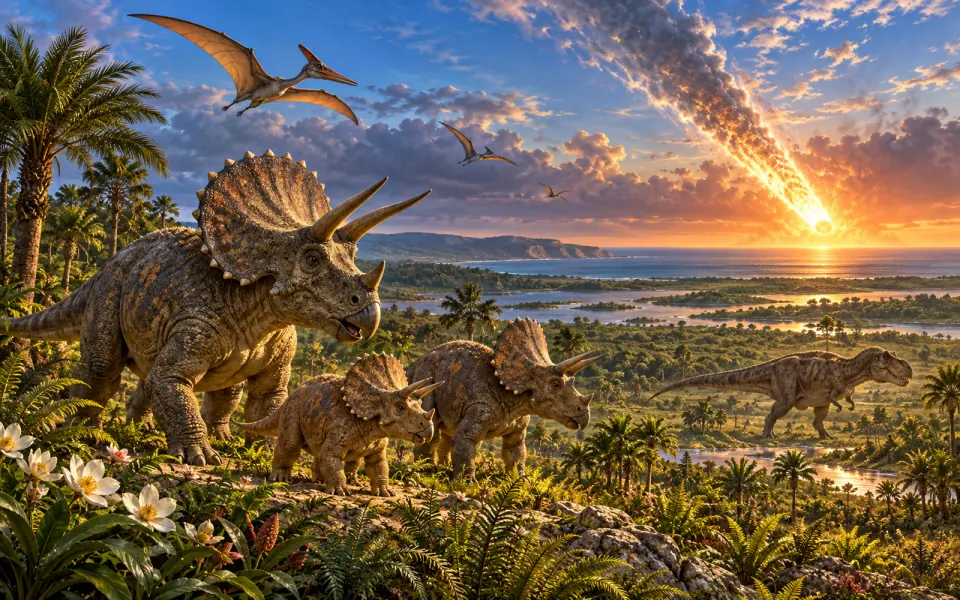 AfterExtinction of the non-avian dinosaursabout 66 million years ago
Listen / Read next
- Music to read by: Cinematic JourneyEpic film-style music, no lyrics, by Ciro Simone IrmiciSpotifyYouTube Music
Meanwhile, elsewhere in the world
Other events of the era “The Earth before us”
- The Big Bang
- The first stars
- Birth of the Milky Way
- Formation of the Solar System
- Birth of the Earth
- The oldest pieces of Earth
- The first oceans
- The first life on Earth
- Cyanobacteria and photosynthesis
- The Great Oxidation Event
- The first complex cells
- The first many-celled living things
- The Ediacaran creatures
- The Cambrian explosion
- The first plants on land
- The first fish with jaws
- The first insects
- The first amphibians
- Carboniferous forests
- The great Permian extinction
- The first dinosaurs
- The first mammals
- The first birds
- Extinction of the non-avian dinosaurs
